How Do Disposable Cameras Work And Why They Are Fun
Disposable cameras are simple, single-use film cameras that capture moments without any digital technology. They work through a basic combination of a fixed lens, manual film advance, and a built-in flash unit that relies on light exposure to create images. The appeal lies in their simplicity, nostalgia, and the surprise of seeing developed photos. Whether you are traveling, partying, or just exploring creative photography, disposable cameras offer a unique and hands-on experience that digital devices simply cannot replicate.
Have you ever picked up a disposable camera and wondered what makes it tick? These simple little devices have been a staple of casual photography for decades, and yet many people do not really understand how they work under the hood.
A disposable camera is a single-use film camera that comes pre-loaded with a roll of film and a basic flash unit. You point it, shoot, and when the roll is done, you send the whole thing off for processing. No settings to adjust, no battery to worry about for the most part, and no complicated menus to navigate. That is the beauty of it.
But there is more going on inside these cameras than you might think. From the way the film advances to how the flash fires, every component plays a specific role in capturing your memories. In this guide, we will break it all down and explain exactly how a disposable camera works, piece by piece.
We will also talk about why people still love using them, what makes them different from digital cameras, and whether they are worth picking up for your next adventure. By the end, you will have a solid understanding of disposable camera mechanics and the charm that keeps them relevant.
Key Takeaways
- Simple Mechanics: Disposable cameras use basic film, a fixed lens, and a manual shutter to capture photos without any digital components.
- Built-In Flash: Most models include a flash cube or flash bulb that activates in low-light conditions for better exposure.
- Film Development Required: Unlike digital cameras, you must take the camera to a lab to get your photos printed or scanned.
- Creative and Nostalgic Appeal: Disposable cameras offer a vintage feel, unexpected results, and a break from screen-heavy photography.
- Affordable and Portable: They are inexpensive, lightweight, and perfect for travel, events, and casual use.
- Limited but Fun: The fixed settings and limited shot count encourage thoughtful, intentional photography.
📑 Table of Contents
- What Is a Disposable Camera?
- The Core Components of a Disposable Camera
- How the Film Captures an Image
- The Role of Light Exposure
- How to Use a Disposable Camera Effectively
- Why People Still Love Disposable Cameras
- Disposable Cameras vs. Digital Cameras
- How to Get Your Photos Developed
- Environmental Impact and Recycling
- Common Mistakes to Avoid
- Expert Tips for Better Disposable Camera Photos
- Final Thoughts
What Is a Disposable Camera?
A disposable camera is a compact, pre-assembled camera designed to be used once and then discarded or recycled. The term “disposable” does not always mean you throw the entire camera in the trash. Many manufacturers encourage you to return the used unit for reloading and reuse, which is a more environmentally friendly approach.
These cameras were first introduced in the late 1980s and quickly became popular because they made photography accessible to everyone. You did not need to know anything about exposure, aperture, or shutter speed. You just aimed and pressed the button.
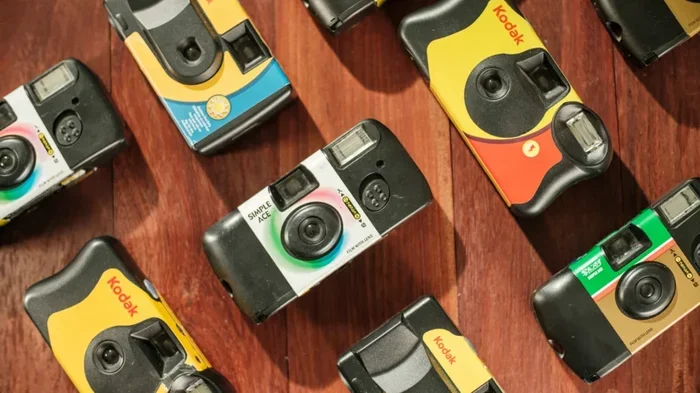
Today, disposable cameras come in several varieties. Some are basic point-and-shoot models with a fixed focus and automatic flash. Others include waterproof housing for underwater use. There are even vintage-style disposable cameras with retro aesthetics that appeal to younger generations discovering analog photography for the first time.
The Core Components of a Disposable Camera
To understand how a disposable camera works, you need to know what is inside it. Despite their simplicity, these cameras contain several carefully engineered components that work together to capture an image.
Film Roll
At the heart of every disposable camera is the film roll. This is a long strip of light-sensitive material coated with emulsion that reacts to light. Most disposable cameras use 35mm film, which is the same format used in traditional analog cameras. The film comes pre-loaded in a light-tight cartridge so you do not have to worry about exposing it to light before you start shooting.
A standard disposable camera holds between 24 and 27 exposures. Once you have taken all your shots, the film must be removed and developed at a photo lab.
Lens
The camera lens on a disposable camera is fixed-focus, which means you cannot adjust the focal length or zoom. The lens is designed to focus at a specific distance range, typically from about one meter to infinity. This works well for most everyday situations, but it does mean that close-up macro photography is not really possible without additional accessories.
The lens gathers light and directs it onto the film. The quality of the lens has a direct impact on how sharp and clear your images will be. While disposable camera lenses are not as sophisticated as those on professional cameras, they are perfectly adequate for casual snapshots and creative experimentation.
Flash Unit
Almost every disposable camera includes a built-in flash unit. This is typically a small bulb or LED that provides a burst of light when you take a photo in dim conditions. The flash is essential for indoor photography and for shooting in the evening or at night.
Some models use a traditional flash cube with multiple bulbs, while others use a single-use flash bulb that pops up when you activate the flash. After the flash fires, it needs a moment to recharge before you can take another flash photo. This is why you should wait for the flash to recharge between shots.
Shutter Mechanism
The shutter is the component that opens and closes to expose the film to light. In a disposable camera, the shutter is usually a simple mechanical design that activates when you press the shutter button. There are no complex electronic shutter systems. This simplicity is part of what makes disposable cameras so reliable and easy to use.
The shutter speed is generally fixed, meaning every photo is taken at the same speed. This is another reason why disposable camera mechanics are so straightforward compared to more advanced cameras.
Film Advance Mechanism
After each photo is taken, you need to advance the film to the next frame. Disposable cameras use a simple gear-driven film advance system that is powered by winding a thumb wheel on the top of the camera. Each time you wind the wheel, the film moves forward by one frame.
Many disposable cameras also include a viewfinder that lets you frame your shot. The viewfinder is typically a simple optical design, meaning it does not show you exactly what the lens sees, but it gives you a close approximation of the composition.
Battery and Electronics
While disposable cameras are often thought of as completely analog, most models do contain a small battery. This battery powers the flash unit and, in some models, the film advance mechanism. The battery is typically a small button cell that lasts for the entire roll of film.
Some newer models include a LED indicator that tells you when the flash is ready to fire or when the film is running low. These small electronic additions make the camera more user-friendly without adding significant complexity.
How the Film Captures an Image
Now that you know the components, let us walk through the actual process of capturing an image with a disposable camera. Understanding this process helps you appreciate the elegant simplicity of these devices.
When you press the shutter button, several things happen in quick succession. First, the shutter opens, allowing light to pass through the lens. The light travels through the lens and strikes the film, which is coated with light-sensitive silver halide crystals. These crystals react to the light, creating a latent image on the film.
At the same time, if you have activated the flash, the flash unit fires and sends a burst of light through the lens as well. This ensures that the scene is properly illuminated, even in dark environments.
Once the shutter closes, the film advance mechanism kicks in, moving the film forward by one frame. This prepares the camera for the next shot. You then wind the thumb wheel to lock the new frame in position.
The entire process is mechanical and relies on the interaction of light with the film emulsion. There is no digital sensor, no image processing chip, and no memory card. Everything is captured chemically on the film strip.
The Role of Light Exposure
Light is the most important factor in how a disposable camera captures images. The film is sensitive to light, and the amount of light that reaches the film determines how bright or dark your photo will be.
This is where the concept of exposure comes in. Exposure is the total amount of light that reaches the film during the moment the shutter is open. Too much light and your photo will be overexposed, appearing washed out. Too little light and the photo will be underexposed, appearing dark and murky.
Disposable cameras handle exposure automatically in most cases. The film speed, also known as ISO, is fixed and chosen by the manufacturer to work well with the built-in flash and the fixed lens. Most disposable cameras use ISO 400 film, which is a versatile speed that performs well in a variety of lighting conditions.
If you want to take better photos with a disposable camera, pay attention to your lighting. Shoot in bright, natural light when possible, and use the flash indoors or at night. Understanding how light affects your images will help you get the most out of your disposable camera.
How to Use a Disposable Camera Effectively
Using a disposable camera is straightforward, but there are a few tips that can help you take better photos and avoid common mistakes.
- Load the camera and wait for the counter. After loading a new disposable camera, make sure the film counter starts at zero or one. If it does not, the camera may not advance properly.
- Use the flash in low light. The flash is your best friend when shooting indoors or after dark. Make sure the flash is charged before taking each shot.
- Hold the camera steady. Because the shutter speed is fixed and the lens is not stabilized, any movement during the shot can cause blur. Brace your arms against your body or use a flat surface for support.
- Focus on subjects within the right range. The fixed-focus lens works best for subjects that are at least one meter away. Do not try to take close-up shots of very small objects.
- Be patient with the process. Unlike digital cameras, you cannot see your photos immediately. Wait until the film is developed to see your results.
Why People Still Love Disposable Cameras
In a world dominated by smartphones and digital photography, you might wonder why anyone would choose a disposable camera. The answer lies in the unique experience they offer.
First, there is the element of surprise. With a digital camera or smartphone, you can immediately review every photo and delete the ones you do not like. With a disposable camera, you do not see your images until they are developed. This creates a sense of anticipation and excitement that many photographers find enjoyable.
Second, disposable cameras encourage you to slow down and think about each shot. You only have 24 to 27 frames, so every photo counts. This constraint fosters creativity and intentionality that is often missing in the age of unlimited digital storage.
Third, there is the nostalgic appeal. Disposable cameras evoke a simpler time when photography was more deliberate and less instant. Many people enjoy the vintage aesthetic of film photos, with their warm tones, slight grain, and occasional light leaks.
Finally, disposable cameras are incredibly durable and portable. They are small, lightweight, and do not require charging. You can toss one in your bag and take it anywhere, which makes them ideal for travel, outdoor adventures, and events.
Disposable Cameras vs. Digital Cameras
To fully appreciate how a disposable camera works, it helps to compare it to a digital camera. While both devices serve the same fundamental purpose, the way they capture and store images is very different.
| Feature | Disposable Camera | Digital Camera |
|---|---|---|
| Image Capture | Film (chemical process) | Digital sensor (electronic process) |
| Image Review | Not possible until developed | Instant review on screen |
| Storage | Physical film roll | Memory card |
| Flash | Built-in single-use or flash cube | Built-in or external, rechargeable |
| Power Source | Small button cell battery | Rechargeable battery |
| Cost per Photo | Low upfront, development costs | No film cost, but device cost is higher |
| Durability | Very durable, no electronics to break | Sensitive to drops and moisture |
As you can see, each type of camera has its strengths. Disposable cameras excel in simplicity, durability, and nostalgic charm. Digital cameras win on convenience, instant feedback, and image quality. The right choice depends on what you value in a photography experience.
If you are curious about how other camera technologies compare, you might want to check out our guide on whether wireless Wi-Fi works anywhere for insights into how connectivity affects modern devices. Similarly, if you are interested in the technology behind other gadgets, we also explore topics like how calls behave in airplane mode and whether you need an app to print from your phone.
How to Get Your Photos Developed
Once you have finished your roll of film, the next step is to get it developed. This is a straightforward process, but there are a few things to keep in mind.
Most drugstores, photo shops, and online services will develop disposable camera film. Simply drop off the entire camera or ask the lab to extract the film. The lab will process the film using chemical baths that reveal the latent images and print them onto photographic paper.
If you want digital copies of your photos, you can ask the lab to scan the negatives as well. This gives you the best of both worlds: physical prints and digital files that you can share online or store on your computer.
Keep in mind that film development takes time, usually a few days to a week depending on the service. This is part of the charm of using a disposable camera. You are not rushing to see your photos. You are waiting for a pleasant surprise.
If you are curious about how other everyday technologies work, you might enjoy our article on whether you need software for a Blue Yeti microphone, which explores the technical side of audio equipment in a similar accessible way.
Environmental Impact and Recycling
One concern with disposable cameras is their environmental impact. After all, the name “disposable” implies that the camera is meant to be thrown away. However, many manufacturers now offer recycling programs that allow you to return used cameras for reloading and reuse.
The film and internal components of a disposable camera can be recycled. The plastic housing is typically recyclable, and the film can be processed and the materials recovered. Some companies even offer refillable disposable cameras that you can reload with new film yourself.
By returning your used disposable camera instead of tossing it in the trash, you can reduce waste and enjoy your hobby more responsibly. It is a small step that makes a big difference.
Common Mistakes to Avoid
Even though disposable cameras are simple to use, there are a few common mistakes that can ruin your photos or your experience.
- Forgetting to wind the film after each shot. If you do not advance the film, your next photo will overlap with the previous one, wasting frames.
- Using the flash in bright sunlight. The flash can overexpose your photos when there is already plenty of light. Most disposable cameras have a flash override switch that lets you turn the flash off.
- Opening the camera back before rewinding. This will expose your film to light and ruin all your photos. Always make sure the film is fully rewound before opening the back.
- Not waiting for the flash to recharge. If you take photos too quickly after the flash fires, the second photo may be underexposed because the flash did not have enough time to recharge.
- Expecting digital-quality images. Film has its own unique look and characteristics. Embrace the analog aesthetic rather than comparing it to digital sharpness.
Expert Tips for Better Disposable Camera Photos
Want to take your disposable camera photography to the next level? Here are some expert tips that can help.
- Shoot during golden hour. The soft, warm light of sunrise and sunset creates beautiful film images with rich tones and gentle shadows.
- Experiment with angles. Because the lens is fixed, you can create interesting compositions by shooting from low or high angles.
- Use the flash creatively. Try bouncing the flash off a ceiling or wall for softer, more diffused lighting.
- Keep the camera steady. Use a tripod or lean against a wall to minimize camera shake, especially in low light.
- Embrace imperfections. Light leaks, slight blur, and grain are all part of the charm of film photography. Do not be afraid of them.
Final Thoughts
The disposable camera is a remarkable piece of engineering that distills the art of photography into its simplest form. With its fixed lens, built-in flash, and manual film advance, it strips away all the complexity and lets you focus on what really matters: capturing moments and creating memories.
Whether you are a seasoned photographer looking to try something different or a complete beginner who wants to learn the basics of how cameras work, a disposable camera is an excellent tool. It teaches you about light, composition, and patience in a way that few other devices can.
So the next time you pick up a disposable camera, take a moment to appreciate the elegant simplicity of its design. Every click of the shutter is a small miracle of chemistry and optics. And when your photos come back from the lab, you will have a tangible keepsake that digital files simply cannot replicate.
If you are interested in exploring more about the technology behind everyday devices, you might also enjoy reading about whether iHome devices only work with iPhones or learning about Apple’s trade-in programs for old Macs.
Frequently Asked Questions
What is How Do Disposable Cameras Work?
How Do Disposable Cameras Work is an important topic with many practical applications.