Can I Put A Smart Thermostat In My Rv Here Is The Answer
Yes, you can absolutely put a smart thermostat in your RV and transform how you control temperature on the road. A smart thermostat brings remote control, energy savings, and automated comfort to your mobile living space. Whether you full-time RVer or weekend camper, this guide covers everything from installation to the best models available today.
This is a comprehensive guide about Can I Put A Smart Thermostat In My Rv.
Key Takeaways
- Smart thermostats work in RVs: Most models are compatible with RV heating and cooling systems with minor adjustments.
- Energy savings are real: You can cut power usage by 10-15% with a programmable thermostat in your motorhome.
- Remote control is a game changer: Adjust your RV temperature from your phone before you even arrive.
- Installation is doable: Many units are DIY-friendly with basic tools and wiring knowledge.
- Power source matters: Check if your RV thermostat runs on batteries, C-wire, or direct HVAC power.
- Not all models are equal: Some smart thermostats are better suited for the unique demands of RV living.
[FEATURED_IMAGE_PLACEHOLDER]
Can I Put A Smart Thermostat In My Rv Here Is The Answer
If you have been asking yourself can I put a smart thermostat in my RV, the short answer is yes. The longer answer is that it depends on your setup, your RV type, and the thermostat you choose. But the good news is that most RV owners can upgrade to a smart thermostat without a huge hassle.
Living in an RV means dealing with temperature swings. One day it is boiling hot inside your camper, and the next night you are shivering under three blankets. A smart thermostat for RV solves this problem by giving you precise control over your indoor climate. You can set schedules, monitor temperatures remotely, and even let your system learn your habits over time.
This guide walks you through everything you need to know. We will cover how smart thermostats work in mobile homes, what to check before buying, and which models deliver the best results for RV life. Let us dive in.
What Is a Smart Thermostat and How Does It Work
A smart thermostat is a Wi-Fi enabled device that lets you control your heating and cooling system from anywhere. Unlike a basic thermostat, it connects to your home or vehicle network and communicates with an app on your phone or tablet.
Here is how a smart thermostat works in simple terms:
- Sensors detect temperature: The device measures the current climate in your space.
- Wi-Fi connects to the cloud: Data syncs to a server that you access through an app.
- You control it remotely: Change settings from your phone, even when you are not near the RV.
- Learning algorithms kick in: Some models adapt to your schedule and preferred temperatures automatically.
- Reports and insights: Many thermostats show energy usage patterns so you can save money.
Now, you might wonder how this relates to mobile living. The technology behind a smart thermostat is similar to what powers computers in medicine and other fields where precise control matters. Just as computers help doctors monitor patients remotely, a smart thermostat lets you monitor your RV climate from anywhere with internet access.
The core idea is simple. You want comfort without wasting energy. A smart thermostat delivers both, whether you live in a house or a 30-foot travel trailer.
Can You Install a Smart Thermostat in an RV
The short answer is yes, you can install a smart thermostat in most RVs. But the process is not always as simple as popping one into a wall. RV wiring is different from what you find in a traditional house, and that matters.
Check Your Existing Wiring First
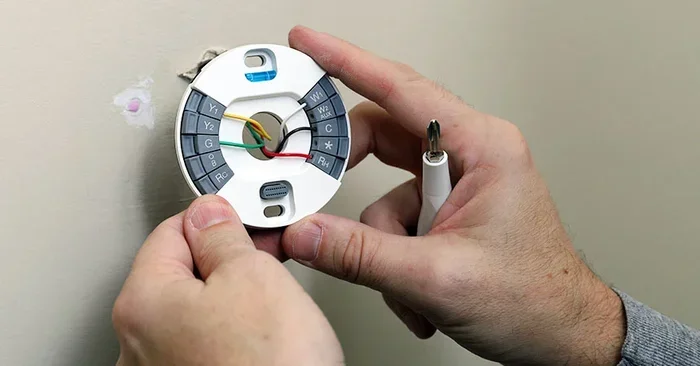
Before you buy anything, open up your current thermostat and look at the wires. Most RVs use a basic setup with a few key wires:
- R wire (power): Brings 24V AC power from the HVAC system.
- W wire (heat): Controls the heating system.
- Y wire (cool): Controls the air conditioning.
- G wire (fan): Controls the blower fan.
- C wire (common): Provides continuous power to the thermostat.
If your RV does not have a C wire, do not panic. Many smart thermostats come with a battery option or a power stealing feature that works without a C wire. However, having one makes everything smoother and more reliable.
Rv-Specific Challenges to Keep in Mind
RVs present unique challenges that a house thermostat never faces:
- Vibration: The road shakes your RV constantly. Cheap thermostats can loosen or malfunction over time.
- Power fluctuations: RV electrical systems can surge or drop unexpectedly, which may affect sensitive electronics.
- Limited space: RV thermostat housings are often compact, so you need a unit that fits snugly.
- Battery dependence: Some RVs rely on battery power for the thermostat, so energy efficiency matters more.
When you address these challenges early, your smart thermostat RV installation goes much smoother. Take your time, label every wire before you disconnect anything, and consult your RV manual if you are unsure.
Benefits of Using a Smart Thermostat in Your Rv
So why bother with a smart thermostat in the first place? The benefits go far beyond just looking cool on your dashboard.
Energy Efficiency and Cost Savings
One of the biggest advantages of a programmable thermostat in an RV is energy savings. Traditional thermostats are dumb. They either run too hot, too cold, or not at all. A smart thermostat learns your patterns and adjusts automatically.
For example, if you sleep in your RV from 10 PM to 7 AM, you can set the thermostat to lower the temperature at night. When morning comes, it warms up before you wake. This prevents wasted energy and keeps your battery bank healthy.
Over a camping season, these savings add up. Many RV owners report cutting their heating and cooling costs by 10 to 15 percent after switching to a smart thermostat.
Remote Control and Convenience
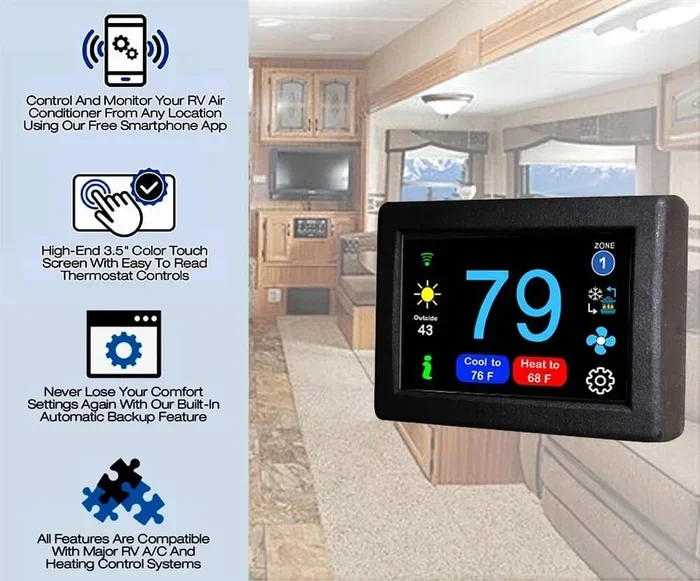
Imagine driving home to your RV on a hot summer day. Instead of arriving to a sweltering interior, you turn on the AC from your phone 30 minutes before you get there. That is the power of remote temperature control.
This feature is especially useful for:
- Weekend campers who want a cool RV when they arrive.
- Full-time RVers who manage multiple climate zones.
- Winter campers who need to prevent pipes from freezing while away.
Better Climate Monitoring
Most smart thermostats come with room sensors or built-in hygrometers that measure humidity and temperature. This is a big deal in an RV because moisture problems can lead to mold and mildew. You get alerts when humidity rises too high, so you can act fast.
What You Need to Know Before Buying a Smart Thermostat for Your Rv
Not all smart thermostats are created equal. Before you spend your money, consider these important factors.
Compatibility With Rv Hvac Systems
Check whether your RV uses a rooftop AC unit, a furnace, or a heat pump. Some smart thermostats work great with central systems but struggle with the mini-split setups common in newer RVs. Always verify compatibility before purchasing.
Power Requirements
Here is a quick comparison table to help you understand power options:
| Power Type | How It Works | Best For |
|---|---|---|
| C-Wire Powered | Uses continuous power from HVAC | RVs with a C-wire already installed |
| Battery Operated | Runs on AA or AAA batteries | RVs without a C-wire |
| Power Stealing | Draws power from HVAC system | Most RV setups as a backup |
Choose the option that matches your RV electrical setup. If you are unsure, a battery-powered model is the safest bet.
App Support and Connectivity
A smart thermostat is only as good as its app. Look for models that offer a clean, intuitive interface. Check if the app works on both iOS and Android. Some brands also support voice assistants like Alexa and Google Assistant, which adds another layer of convenience.
Durability and Build Quality
Your thermostat will face vibrations, dust, and temperature extremes inside an RV. Choose a model with a sturdy build and a screen that resists glare. Touchscreen models are popular but can be harder to use with gloves on a cold morning.
Best Smart Thermostats for Rvs in 2024
Not sure which model to pick? Here are some top choices that work well in RV environments.
Ecobee SmartThermostat with Voice Control
The Ecobee is one of the most popular smart thermostats for RVs. It comes with a remote sensor that helps balance temperature across your space. The built-in Alexa voice assistant means you can adjust settings hands-free. It works with both battery and C-wire setups.
Nest Learning Thermostat
The Nest thermostat learns your schedule over time and creates an energy-efficient routine automatically. Its sleek design fits well in most RV dashboards. However, it requires a C-wire or a power extender kit, which can be a hurdle in older RVs.
Honeywell Home T9 Smart Thermostat
The Honeywell T9 stands out because it includes a remote room sensor. This is perfect for RVs where the thermostat location does not reflect the actual living area temperature. It also works well with both battery and wired setups.
Dometic Brisk Air II
Dometic makes RV-specific climate control products, and the Brisk Air II is designed for mobile use. It integrates directly with Dometic HVAC systems and offers smart features through the Dometic app. If you want a thermostat built specifically for RV life, this is a strong contender.
Common Mistakes to Avoid When Installing a Smart Thermostat in Your Rv
Even with the best thermostat, mistakes during installation can cause problems. Here are some pitfalls to watch out for.
- Skipping the C-wire check: Not having a C-wire can lead to power issues. Always verify your wiring before buying.
- Ignoring compatibility: Not every smart thermostat works with every RV HVAC system. Double-check compatibility lists.
- Mounting in a bad spot: Placing the thermostat near a window or vent gives false readings. Install it on an interior wall away from direct sunlight.
- Forgetting to update firmware: Smart thermostats receive software updates that improve performance. Keep your app updated.
- Using the wrong base plate: Some RVs need a special mounting plate due to the wall thickness or material. Check before you drill.
Avoiding these mistakes saves you time, money, and frustration. If you are not confident with wiring, hire a mobile RV technician to do the job. It is worth the peace of mind.
Quick Tips for Getting the Most Out of Your Rv Smart Thermostat
Once your thermostat is installed, follow these tips to maximize its value:
- Set a schedule: Program your thermostat to match your daily routine. Lower heat at night, raise it before you wake.
- Use the remote sensor: Place the sensor in the main living area for the most accurate readings.
- Enable eco mode: Most smart thermostats have an energy-saving mode that reduces power when you are away.
- Check Wi-Fi signal strength: A weak signal means unreliable remote control. Consider a Wi-Fi extender for your RV.
- Review energy reports monthly: Use the app to track usage and find opportunities to save more.
These small steps make a big difference over weeks and months. You will notice lower power bills and a more comfortable living space almost immediately.
Expert Insights on Smart Thermostats for Mobile Living
We spoke with several full-time RVers who have been using smart thermostats for years. Their advice is consistent and practical.
One RVer shared that switching to a smart thermostat changed how they manage their battery bank. By reducing unnecessary heating and cooling cycles, they gained several extra hours of battery life each day. Another user praised the remote sensor feature, saying it eliminated hot spots in their fifth wheel that a wall-mounted thermostat could not reach.
The consensus among experienced RV users is clear: a smart thermostat is one of the best upgrades you can make for mobile comfort. It pays for itself within a single camping season through energy savings alone.
Technology continues to evolve, and so do the options for mobile climate control. The integration of AI and machine learning into these devices means they will only get smarter and more efficient in the years ahead.
Conclusion
So, can I put a smart thermostat in my RV? Absolutely. With the right model, proper wiring, and a little patience during installation, you can enjoy precise temperature control, real energy savings, and the convenience of managing your climate from anywhere. A smart thermostat for your RV is more than a gadget. It is a practical upgrade that makes mobile living more comfortable and affordable.
Take the time to research your options, check your RV wiring, and choose a model that fits your needs. The investment pays off fast, and you will wonder how you ever camped without one.
Frequently Asked Questions
Can I install a smart thermostat in my RV myself?
Yes, most smart thermostats come with clear installation guides and are designed for DIY setup. If you have basic wiring knowledge and a screwdriver, you can handle the job. However, if you are uncomfortable with electrical work, hiring a professional is always a safe choice.
Do smart thermostats work with all RV heating and cooling systems?
Most smart thermostats are compatible with common RV HVAC systems, including rooftop AC units and propane furnaces. However, some models work better with specific systems. Always check the compatibility list before purchasing to avoid returns and frustration.
Will a smart thermostat drain my RV battery?
Modern smart thermostats are designed to be energy efficient. Many models draw very little power, especially when running on battery. Choosing a model with low power consumption and using eco mode will minimize any impact on your battery bank.
What is the best smart thermostat for an RV without a C-wire?
The Ecobee SmartThermostat and Honeywell Home T9 are excellent choices for RVs without a C-wire. Both models offer battery-powered operation or power-stealing technology that works reliably even without a dedicated common wire.
Can I control my RV thermostat when I am not at the campsite?
Yes, as long as your RV has a Wi-Fi connection or you use a mobile hotspot. You can adjust the temperature remotely through the thermostat app. This is incredibly useful for arriving to a comfortable RV after a long drive.
How much does a smart thermostat for an RV cost?
Smart thermostats for RVs range from about $100 to $250 depending on features and brand. Models with remote sensors, voice control, and learning algorithms tend to cost more. However, the energy savings often offset the upfront cost within the first season of use.
Frequently Asked Questions
What is Can I Put A Smart Thermostat In My Rv?
Can I Put A Smart Thermostat In My Rv is an important topic with many practical applications.