Top Characteristics Of Integrated Circuits Explained
Integrated circuits are the backbone of modern electronics, and understanding their characteristics of integrated circuits is essential for anyone in tech. These tiny chips offer miniaturization, low power consumption, and remarkable IC reliability. This guide covers everything from basic traits to real-world applications.
Integrated circuits are the tiny chips that power almost everything we use today. From smartphones to cars, these small devices make modern life possible. Understanding the characteristics of integrated circuits helps us appreciate why they work so well. These chips pack millions of transistors into a space smaller than your fingernail. The result is incredible performance in a tiny package.
When you look at a characteristics of integrated circuits breakdown, several key traits stand out. They are small, fast, reliable, and efficient. Engineers design them to handle specific tasks or general purposes. Each type of IC has unique strengths. In this article, we will explore these traits in detail. You will learn what makes each chip special and how they compare.
Whether you are a student, a tech enthusiast, or a professional, this guide has something for you. We will cover the basics and dive into deeper details. By the end, you will have a clear picture of how integrated circuits work and why they matter. Let us get started.
Key Takeaways
- Miniaturization: Integrated circuits pack millions of components into a tiny silicon chip, enabling microelectronics at its finest.
- Low Power Consumption: Modern ICs use very little energy, making them ideal for portable devices and signal processing tasks.
- High Reliability: Fewer connections mean fewer failure points, giving integrated circuits excellent long-term durability.
- Speed And Performance: High transistor density allows chips to process data at incredible speeds.
- Cost Efficiency: Mass production of semiconductor devices keeps the cost per unit very low.
- Versatile Applications: From consumer electronics to medical devices, integrated circuit types serve nearly every industry.
📑 Table of Contents
What Are Integrated Circuits?
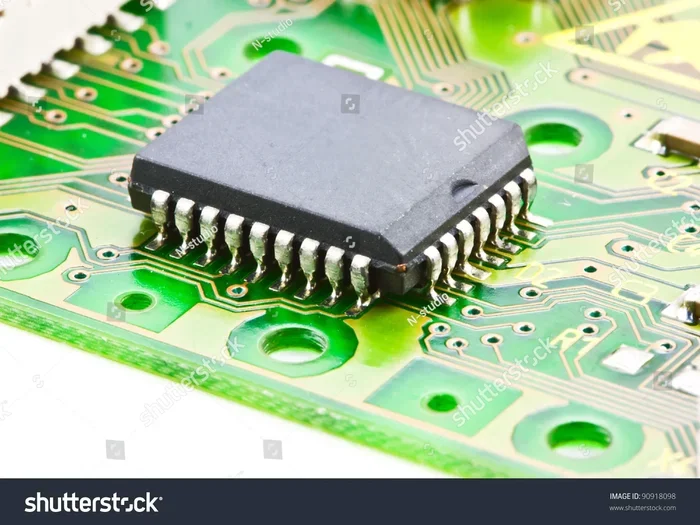
An integrated circuit, often called an IC or a chip, is a small electronic device built on a piece of semiconductor material. Usually, that material is silicon. Manufacturers etch tiny circuits onto this material. These circuits include transistors, resistors, and capacitors. All of these components work together on one small piece.
The Birth Of Modern Electronics
The idea of the integrated circuit came to life in the late 1950s. Before that, engineers built circuits by hand. They connected separate components with wires. This process was slow and prone to errors. The integrated circuit changed everything. It allowed many components to sit on a single chip. This was a huge leap forward for circuit design and microelectronics.
Today, a single chip can hold billions of transistors. This growth follows a trend known as Moore’s Law. The law predicts that chip complexity doubles every two years. While that pace has slowed, the trend continues. Modern semiconductor devices are more powerful than ever. They also cost less to produce. This is why integrated circuits are everywhere in our lives.
Why Understanding IC Traits Matters
Knowing the traits of an IC helps you choose the right chip for your project. Different applications need different chip performance levels. A medical device needs high reliability. A gaming console needs fast processing. A smartwatch needs low power use. By understanding IC characteristics, you can make better choices. You will also troubleshoot problems more easily. This knowledge is valuable for hobbyists and professionals alike.
Key Characteristics Of Integrated Circuits
The characteristics of integrated circuits define how a chip behaves and performs. These traits determine where and how an IC can be used. Let us explore the most important ones in detail.
Miniaturization: The Driving Force
Miniaturization is perhaps the most famous trait of integrated circuits. Early electronic circuits used large separate components. A single radio might have dozens of bulky parts. An integrated circuit shrinks all of that into one small package. Modern nanometer-scale processes allow transistors to be incredibly tiny. This means more features fit in less space. Miniaturization has enabled the smartphones and laptops we use every day.
Smaller chips also mean lighter devices. Think about how heavy old televisions were compared to modern flat screens. The difference comes down to integrated circuit types and their size. Engineers keep pushing the boundaries of how small a chip can be. This trend shows no signs of slowing down.
Low Power Consumption
Power efficiency is another critical trait. Integrated circuits use very little electricity compared to older discrete circuits. This is essential for battery-powered devices like phones and tablets. Low power consumption also reduces heat generation. Less heat means longer device lifespan. It also means simpler cooling systems.
Engineers focus on reducing the operating voltage of modern chips. Lower voltage directly translates to less power draw. This is especially important for IC packaging and thermal management. Devices that run on small batteries benefit the most from efficient ICs. Think about hearing aids and fitness trackers. They need to last for days or even weeks on a single charge.
Reliability And Longevity
IC reliability is one of the biggest advantages of integrated circuits. Because components are etched onto a single chip, there are fewer loose connections. Fewer connections mean fewer points of failure. A well-made IC can last for decades. This is why integrated circuits are used in critical systems like aviation and medicine.
Manufacturers test each chip thoroughly before shipping. They check for defects in the fabrication process. Quality control ensures that every chip meets strict standards. Thermal management techniques also improve longevity. Proper heat dissipation prevents damage over time. When you buy a reliable chip, you can trust it to work for years.
High Speed And Signal Processing Capability
Speed is where integrated circuits truly shine. The high transistor density on modern chips allows lightning-fast data processing. A single IC can perform millions of operations per second. This speed is vital for signal processing tasks. Computers, routers, and communication devices all depend on fast chips.
Bandwidth is closely related to speed. A chip with high bandwidth can handle more data at once. This is crucial for video streaming and large file transfers. The linearity of an IC also affects its speed. Linear circuits process signals without distortion. This is especially important in audio and radio applications. High-speed ICs continue to push the boundaries of what technology can do.
Types Of Integrated Circuits And Their Unique Traits
Not all integrated circuits are the same. Different integrated circuit types serve different purposes. Each type has its own set of traits. Let us look at the three main categories.
Analog Integrated Circuits
Analog ICs work with continuous signals. These signals can vary smoothly over time. Examples include audio amplifiers and radio receivers. Analog circuit design focuses on maintaining signal quality. Linearity is a key trait here. A good analog IC produces output that closely matches its input. This makes them ideal for signal processing in real-world environments.
Analog ICs are sensitive to noise and temperature changes. Engineers must carefully manage these factors during the fabrication process. Despite these challenges, analog ICs remain essential. They are the backbone of communication systems and audio equipment. Without them, our phones and radios would not work well.
Digital Integrated Circuits
Digital ICs process binary signals. These signals are either on or off, represented as ones and zeros. CPUs, memory chips, and logic gates are all digital ICs. The main trait of digital circuits is precision. They handle data with exact accuracy. Transistor density is especially high in digital ICs. Modern processors contain billions of tiny switches.
Speed is another hallmark of digital ICs. They can switch states billions of times per second. This makes them perfect for computing and data storage. Digital circuits also benefit from low power consumption at the transistor level. As Moore’s Law continues, digital ICs keep getting faster and more efficient. They form the brain of every computer and smart device.
Mixed-Signal Integrated Circuits
Mixed-signal ICs combine both analog and digital functions on one chip. This is a powerful trait. It allows a single chip to handle real-world signals and digital processing. Examples include analog-to-digital converters and digital-to-analog converters. These chips are found in smartphones, cameras, and medical equipment.
The challenge with mixed-signal ICs is managing interference. Analog and digital parts can affect each other. Careful circuit complexity management and IC packaging help solve this problem. Mixed-signal ICs represent the cutting edge of microelectronics. They enable compact, multifunctional devices that we rely on daily.
How The Manufacturing Process Shapes IC Characteristics
The way integrated circuits are made directly affects their traits. The fabrication process is a complex and precise art. Let us explore how manufacturing shapes the final product.
Photolithography And Circuit Precision
Photolithography is the primary technique used to build ICs. It uses light to transfer patterns onto silicon. Each layer of the circuit is defined this way. Modern chips may have over 100 layers. The precision of this process determines the transistor density of the final chip. Smaller features mean more transistors and better chip performance.
Extreme ultraviolet lithography is the latest advancement. It uses very short wavelengths of light. This allows for incredibly fine detail. As this technology improves, IC characteristics continue to get better. Chips become smaller, faster, and more efficient. The fabrication process is the foundation of all IC quality.
The Role Of Silicon Wafers
Silicon wafers are the starting point for every integrated circuit. These thin discs of pure silicon serve as the base. The quality of the wafer affects the final chip. Defects in the wafer can ruin an entire batch. Manufacturers use ultra-pure silicon to minimize problems.
Wafer size has also grown over time. Larger wafers allow more chips to be produced at once. This improves cost efficiency. The semiconductor devices built on these wafers benefit from advances in material science. New materials and techniques continue to push the limits of what integrated circuits can achieve.
Quality Control And Testing
Every chip goes through rigorous testing. Automated systems check each IC for defects. They test electrical traits like speed and power use. Chips that fail standards are discarded. This ensures that only reliable products reach consumers. IC reliability starts with strict quality control.
Burn-in testing is another important step. Chips are run at high temperatures for extended periods. This identifies early failures before products ship. The result is a highly reliable final product. Good testing practices are what separate quality ICs from cheap ones.
Advantages Of Integrated Circuits In Modern Technology
The benefits of integrated circuits go far beyond their small size. These chips have transformed nearly every industry. Let us look at the key advantages.
Cost Efficiency At Scale
Once an IC design is ready, production costs drop quickly. A single wafer can produce hundreds of chips. This economies-of-scale effect makes integrated circuits very affordable. Even complex circuit complexity does not dramatically increase the per-unit cost. This is why electronics have become so accessible.
Consumer devices like smartwatches and earbuds cost very little to produce. The chips inside them are mass-manufactured. This keeps retail prices low. Cost efficiency has democratized technology worldwide. Almost everyone can now afford powerful electronic devices.
Scalability And Design Flexibility
ICs are highly scalable. A design can be adapted for different applications easily. Need a chip for a smart thermostat? Modify the existing design. Need one for a car engine? Adjust the specifications. This design flexibility is a major advantage. It saves time and resources during development.
Engineers can also combine multiple functions on one chip. This reduces the need for separate components on a printed circuit board. Fewer parts mean simpler assembly and fewer potential failure points. Scalability ensures that ICs can grow with technology demands.
Continuous Performance Gains
The traits of integrated circuits keep improving over time. Moore’s Law has driven this progress for decades. Each new generation of chips is faster and more efficient. Chip performance gains enable new applications we could not imagine before. Artificial intelligence, cloud computing, and virtual reality all depend on advancing IC technology.
These gains are not just about speed. They also include better thermal management and lower power consumption. Modern chips do more while using less energy. This trend will continue as new materials and techniques emerge. The future of integrated circuits looks incredibly promising.
Common Applications Across Industries
The characteristics of integrated circuits make them useful in countless fields. Here are some of the most common applications.
Consumer Electronics
Smartphones, laptops, tablets, and smart TVs all rely on ICs. The miniaturization trait allows these devices to be thin and light. Low power consumption extends battery life. High bandwidth supports fast data transfer. Consumer electronics would not exist in their current form without advanced integrated circuits.
Audio players, gaming consoles, and home routers also use ICs. Each device leverages different integrated circuit types for its specific needs. The versatility of these chips makes them indispensable in everyday life.
Healthcare And Medical Devices
Medical equipment demands the highest levels of IC reliability. Pacemakers, MRI machines, and blood pressure monitors all use specialized ICs. Low power consumption is critical for implantable devices. Precise signal processing ensures accurate readings. The characteristics of integrated circuits directly impact patient safety and treatment quality.
Wearable health devices like smart rings and glucose monitors also depend on ICs. These devices must be small, efficient, and dependable. The traits of integrated circuits make all of this possible.
Automotive And Industrial Systems
Modern cars contain dozens of ICs. They manage engine control, safety systems, and entertainment. The reliability of these chips is non-negotiable. A failure in a car’s IC can be dangerous. That is why automotive-grade ICs undergo extra testing.
Industrial robots, factory automation systems, and power grids also use ICs. These applications need chips that can handle harsh conditions. Thermal management and durability are key traits in these environments. Integrated circuits continue to drive innovation in manufacturing and transportation.
Conclusion
The characteristics of integrated circuits explain why these tiny chips have transformed the world. From miniaturization to low power consumption, each trait plays a vital role. IC reliability ensures that devices work faithfully for years. The variety of integrated circuit types means there is an IC for nearly every need.
Understanding these traits helps you make smarter choices. Whether you are building a project or buying a device, knowing what makes an IC tick is valuable. The fabrication process continues to push the boundaries of what is possible. As Moore’s Law evolves, we can expect even better chip performance and efficiency.
Integrated circuits are truly the unsung heroes of modern technology. Their characteristics of integrated circuits define the electronics we rely on every single day. Take what you have learned here and apply it. The world of microelectronics is vast, exciting, and always evolving.
Frequently Asked Questions
What are the main characteristics of integrated circuits?
The main traits include miniaturization, low power consumption, high reliability, fast signal processing, and cost efficiency. These traits make integrated circuits essential for modern electronics. Each characteristic plays a specific role in how a chip performs.
Why are integrated circuits so small?
Integrated circuits are small because manufacturers etch all components onto a single piece of semiconductor material. This process, called photolithography, allows millions of transistors to fit in a tiny space. The result is incredible miniaturization that powers today’s compact devices.
What is the difference between analog and digital ICs?
Analog ICs process continuous signals, like audio or radio waves. Digital ICs process binary signals, which are ones and zeros. Both types have unique IC characteristics suited for different applications. Some chips combine both functions as mixed-signal ICs.
How does the fabrication process affect IC traits?
The fabrication process determines the precision, transistor density, and overall quality of a chip. Advanced techniques like extreme ultraviolet lithography allow for smaller and faster circuits. Better manufacturing always leads to improved chip performance and IC reliability.
What role does Moore’s Law play in IC development?
Moore’s Law predicts that the number of transistors on a chip doubles roughly every two years. This has driven continuous improvements in speed, efficiency, and circuit complexity. While the pace has slowed, the trend of better integrated circuits continues.
Are integrated circuits reliable for long-term use?
Yes, integrated circuits are known for their excellent long-term reliability. Fewer connections and robust semiconductor devices mean fewer failure points. Manufacturers also conduct thorough testing and burn-in procedures. This ensures that ICs can last for many years in demanding applications.