Does Google Own Coral The Surprising Answer Inside
Yes, Google does own Coral, but the surprising part is what happened next. Google developed the Coral edge AI platform, then quietly began winding it down. If you have been wondering about Google’s relationship with Coral devices, this guide reveals everything you need to know.
Have you ever heard of Google Coral and wondered if Google actually owns it? It sounds like a simple question, right? But the answer is more surprising than you might think.
Google does own Coral. The company built the entire Coral platform from scratch. It includes hardware, software, and a whole ecosystem of edge AI tools. Yet many people still do not know this connection exists.
Here is the twist. Google has been quietly winding down the Coral business. The Coral website has changed. New product releases have stopped. And many developers are left wondering what happened. In this article, we will uncover the full story behind Does Google Own Coral. We will explain what Coral is, why Google built it, and what the future holds.
If you have been using Coral devices or thinking about starting an edge AI project, this guide is for you. We will cover everything you need to know in plain, simple language. No jargon. No fluff. Just the facts.
Key Takeaways
- Google owns Coral: Google developed and owns the Coral edge AI platform and all related hardware.
- Coral is not dead yet: While Google has been winding down the Coral line, existing products still work and receive some support.
- Edge TPU is the core technology: The Coral platform relies on Google’s Edge TPU chip for fast on-device AI inference.
- Google pivoted away from hardware: The company shifted focus toward software and cloud-based AI solutions.
- Coral products are still usable: Developers and businesses can still buy and use Coral devices for edge AI projects.
- The surprising twist: Many people did not even know Google owned Coral until the wind-down announcement.
📑 Table of Contents
What Is Google Coral?
Before we answer whether Google owns Coral, let us first understand what Coral actually is. Coral is Google’s edge AI platform. It is designed to run machine learning models directly on devices, without needing a cloud connection.
Think of it this way. Most AI today runs on big servers in data centers. You send a request, the server processes it, and sends back a result. That takes time and needs internet. Coral changes this by putting AI power directly onto the device.
The Edge TPU Chip
At the heart of the Coral platform is the Edge TPU. This is a tiny chip designed specifically for AI tasks. It can run TensorFlow Lite models very fast. The Edge TPU delivers up to 4 trillion operations per second (4 TOPS). All while using very little power.
This makes Coral perfect for devices that need real-time AI. Think smart cameras, robotics, sensors, and IoT gadgets. The Edge TPU handles the heavy lifting locally, so there is no delay.
Coral Hardware Products
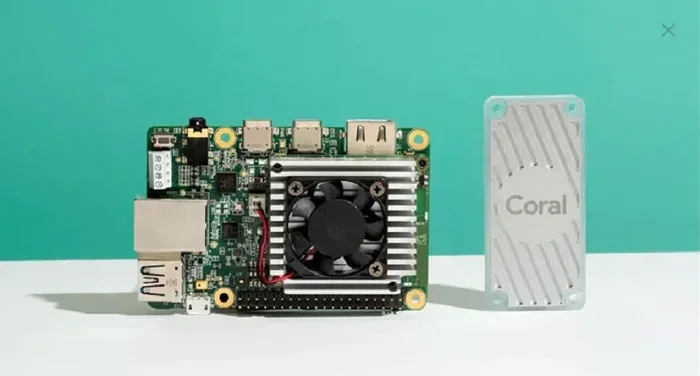
Google released several hardware products under the Coral brand. Each one serves a different purpose:
- Coral Dev Board: A development board with the Edge TPU built in. Great for prototyping and testing.
- Coral USB Accelerator: A small USB stick that adds AI acceleration to any computer.
- Coral Mini PCIe: A card that fits into a computer’s PCIe slot for AI inference.
- Coral SoM (System on Module): A module for embedding AI into custom devices.
- Coral M.2 Accelerator: An M.2 format accelerator for compact devices.
All of these products were designed and manufactured by Google. They are all part of the Coral ecosystem. This is why the answer to Does Google Own Coral is a clear yes.
Yes, Google Owns Coral: The Full Story
Now that we understand what Coral is, let us get to the main question. Does Google Own Coral? The answer is absolutely yes. Google created Coral as an internal hardware project. The company invested significant resources into building the Edge TPU and the Coral platform.
Coral was part of Google’s broader push into AI hardware. Google has a long history of building custom chips. The company designed the TPU (Tensor Processing Unit) for its data centers. Coral took this a step further by bringing edge AI to the masses.
How Google Developed Coral
Google’s Advanced Technology and Projects (ATAP) group played a role in Coral’s development. The company worked on the Edge TPU chip and released the first Coral Dev Board around 2019. The goal was to make edge AI accessible to developers, hobbyists, and businesses alike.
Google also built the software side of Coral. The Coral SDK, the TensorFlow Lite runtime, and the model optimization tools all came from Google. This complete software and hardware stack is a clear sign that Google Own Coral in every sense of the word.
Why People Get Confused
So why do so many people question whether Google Own Coral? There are a few reasons:
- Coral is not a well-known brand: Unlike Pixel phones or Nest, Coral never got major marketing attention.
- The products were niche: Coral targeted developers and engineers, not everyday consumers.
- Google has many hardware brands: People know Google for Pixel, Nest, and Chromecast. Coral was less visible.
- The wind-down created confusion: When Google started pulling back from Coral, many assumed it was a separate company.
The truth is simpler than most people think. Google owns Coral just like it owns any other product line. The surprising part is what Google chose to do with it next.
The Surprising Turn: Google Winding Down Coral
Here is where the story gets interesting. Despite owning Coral, Google began winding down the Coral business. This move caught many people off guard. Let us look at what happened and why.
What Changed?
Around 2023, Google started making significant changes to the Coral platform. The official Coral website was updated. New product launches stopped. Google reduced support for Coral hardware and software updates. Some products became harder to buy.
The Coral online store was eventually redirected. Google did not make a big announcement about killing Coral. Instead, the changes happened gradually. This left many in the developer community confused and concerned.
Why Did Google Pull Back?
There are several reasons why Google decided to wind down Coral:
- Focus on core products: Google chose to concentrate on its main revenue drivers like Search, Cloud, Android, and Pixel devices.
- Hardware is expensive: Running a hardware business requires constant investment. Google decided the Coral line did not justify the cost.
- Competition in edge AI: Companies like NVIDIA, Intel, and Qualcomm were offering strong edge AI solutions. Google may have seen limited market share.
- Strategic shift: Google shifted its edge AI strategy toward software and cloud partnerships rather than selling dedicated hardware.
This is the surprising part. Google Own Coral but chose to step back from it. It is like a chef who opens a restaurant, makes great food, and then closes the kitchen. The food was good. The brand was real. But the business did not fit the long-term plan.
What Happened to Coral Products?
If Google Own Coral and is winding it down, what does that mean for people who already bought Coral devices? Let us break this down clearly.
Are Coral Devices Still Usable?
Yes. Coral devices still work perfectly fine. The Edge TPU hardware has not stopped functioning. The software tools, including TensorFlow Lite and the Coral SDK, are still available for download. If you have a Coral Dev Board or USB Accelerator, you can continue using it for your projects.
However, Google is no longer actively developing new Coral products. Firmware updates and new features are unlikely. The Coral ecosystem is essentially in maintenance mode.
Can You Still Buy Coral Products?
This is where it gets tricky. Some Coral products may still be available through third-party sellers. Google has not officially discontinued all Coral hardware, but new stock is limited. The writing on the wall is clear: Coral is no longer a priority for Google.
If you are looking to buy Coral devices for a new project, you should proceed carefully. Make sure the products are compatible with your needs and that replacement parts or support are still available.
The Future of Coral
What does the future hold for Coral? It is hard to say with certainty. Google has not officially announced the end of Coral. But the signs are clear. The company is moving away from dedicated Coral hardware.
Some experts believe Google may open-source parts of the Coral platform. Others think Google will fold Coral technology into other products like the Pixel line or Google Cloud. Whatever happens, the Coral brand as a standalone platform is fading.
Coral vs. Other Edge AI Platforms
To understand Coral’s place in the market, it helps to compare it with other edge AI solutions. Here is a quick look at how Coral stacks up against the competition.
Key Comparisons
Coral was designed for ease of use and tight integration with Google’s AI tools. The Edge TPU offered fast inference for TensorFlow Lite models. But it had limitations compared to some competitors.
NVIDIA’s Jetson platform offers more raw power and supports a wider range of AI frameworks. Intel’s Movidius and Neural Compute Stick were direct competitors in the USB accelerator space. Qualcomm offers edge AI solutions through its Snapdragon chips.
Coral’s main advantage was its simplicity. If you were already using Google’s AI tools, Coral fit naturally into your workflow. But as the market grew more competitive, Google decided the Coral line was not worth the investment.
Should You Still Use Coral for Edge AI Projects?
This is a great question. If you are starting a new edge AI project today, should you choose Coral? The answer depends on your situation.
When Coral Still Makes Sense
- You already own Coral hardware and have working projects.
- Your project relies on TensorFlow Lite models and the Edge TPU.
- You are building a prototype or proof of concept quickly.
- You need low-power edge AI inference for a simple use case.
When to Look Elsewhere
- You are starting a brand-new project and need long-term support.
- You need a wider range of AI frameworks beyond TensorFlow Lite.
- You want access to the latest hardware innovations and updates.
- You need strong vendor support and active community growth.
For existing Coral users, do not panic. Your devices still work. But if you are starting fresh, you may want to explore other edge AI options. The landscape has changed since Google started pulling back from Coral.
Expert Insights on Google’s Coral Decision
Industry experts have weighed in on Google’s decision to wind down Coral. Many see it as part of a broader trend in big tech. Companies often build hardware products, invest heavily, and then pull back when the market does not meet expectations.
Some analysts point out that Google’s strength has always been in software and cloud services. Hardware has been a challenge for the company. From Google Glass to Nest Hub to Coral, Google has had mixed results in the hardware space.
Others believe the Coral wind-down is a smart strategic move. By focusing on software and cloud AI, Google can serve a much larger market. Edge AI hardware is a niche. Cloud AI and AI software are where the real growth is.
Whatever the reasoning, the decision has left a mark on the edge AI community. Coral was one of the most accessible entry points for developers. Its absence leaves a gap that other platforms are now trying to fill.
Key Takeaways
- Google owns Coral completely: The company built the hardware, software, and entire Coral ecosystem from the ground up.
- The surprising twist: Despite owning Coral, Google has been winding down the platform and reducing support.
- Coral devices still work: Existing hardware remains functional and usable for edge AI projects.
- No new Coral products are coming: Google has stopped releasing new Coral hardware and software updates.
- Edge AI has many alternatives: NVIDIA Jetson, Intel Movidius, and Qualcomm offer strong edge AI solutions today.
- The Coral story teaches a lesson: Even big companies like Google sometimes build products and then walk away from them.
- Check the status before buying: If you are considering Coral hardware, make sure it fits your long-term needs and support requirements.
Conclusion
So, does Google Own Coral? Yes, without a doubt. Google built Coral, owns Coral, and controlled every aspect of the platform. The Edge TPU, the Coral Dev Board, the USB Accelerator, and all the software tools are Google’s creations.
But the surprising answer is what happened next. Google chose to step away from Coral. The wind-down was quiet and gradual. Many people did not even realize Google was pulling back until it was too late.
If you are reading this and wondering what to do with your Coral devices, keep using them. They still work. But if you are planning a new edge AI project, consider the full landscape of options available today. The edge AI world has grown and evolved since Coral first launched.
The story of Coral is a reminder that technology moves fast. Companies build, pivot, and sometimes walk away. What matters most is what you build with the tools you have. And now you know the full story behind Does Google Own Coral.
Stay curious. Keep building. And never stop exploring what edge AI can do for you.
Frequently Asked Questions
Is Google Coral still being sold?
Google has stopped actively selling and promoting Coral products. The official Coral store has been redirected. Some products may still be available through third-party retailers, but new inventory is very limited. Google is no longer investing in the Coral hardware line.
What does Coral stand for in Google Coral?
Coral does not stand for a specific acronym. The name “Coral” was chosen by Google as a brand for its edge AI platform. The name is meant to evoke the idea of something vibrant and connected, much like a coral reef ecosystem.
Can I still get support for Coral products?
Support for Coral products has been significantly reduced. Google is no longer providing active development or updates for the Coral platform. Existing Coral devices will continue to work, but you may not find new features or official assistance for troubleshooting.
What replaced Google Coral for edge AI?
There is no single direct replacement for Coral. Google has shifted its edge AI focus toward software solutions and cloud-based AI services. In the hardware space, developers now look to platforms like NVIDIA Jetson, Intel’s AI tools, and Qualcomm’s edge AI solutions for similar capabilities.
Are Coral devices compatible with TensorFlow Lite?
Yes. Coral devices were specifically designed to work with TensorFlow Lite models. The Edge TPU accelerates TensorFlow Lite inference, making it one of the fastest ways to run AI models on small devices. This compatibility remains even though Google is winding down the Coral line.
Why did Google stop making Coral products?
Google decided to focus its resources on core products like Search, Cloud, Android, and Pixel devices. The Coral hardware line did not align with Google’s long-term strategy. Edge AI hardware is a competitive and expensive market, and Google chose to prioritize its software and cloud AI efforts instead.