Are Fm Transmitters Legal Find Out What The Rules Say
FM transmitters are legal when used within FCC guidelines, but rules vary based on power output, purpose, and location. Understanding Part 15 regulations and broadcast licensing requirements helps you stay compliant and avoid costly fines. This guide breaks down everything you need to know about FM transmitter legality.
Key Takeaways
- FM transmitters are legal for personal and low-power use when they comply with FCC Part 15 rules and power limits.
- Unlicensed broadcasting above legal power thresholds can result in significant fines and equipment seizure.
- Pirate radio stations operate illegally and face serious enforcement actions from the FCC.
- Different FM transmitter types have different rules, including car transmitters, wireless microphones, and broadcast transmitters.
- Getting a broadcast license is required for any FM transmission that reaches the public with higher power.
- Technology advancements have changed regulations, making it easier for hobbyists to stay compliant.
- Medical and healthcare applications of FM technology are regulated separately and often involve specialized equipment. You can learn more about how computers are used in medicine and the role of wireless technology in healthcare settings through our article on 10 Ways Computers Are Used In Medicine.
📑 Table of Contents
- Are FM Transmitters Legal? Here Is Everything You Need To Know
- What Is an FM Transmitter and How Does It Work
- Understanding FCC Rules for FM Transmitters
- When Do You Need a Broadcast License
- Is Pirate Radio Legal
- Common Uses for Legal FM Transmitters
- How to Choose a Legal FM Transmitter
- Common Mistakes People Make With FM Transmitters
- How Technology Is Changing FM Transmitter Regulations
- Final Thoughts on FM Transmitter Legality
Are FM Transmitters Legal? Here Is Everything You Need To Know
Have you ever wondered if you can use an FM transmitter without getting in trouble? The short answer is yes, but with important caveats. FM transmitter legality depends on several factors, including power output, intended use, and local regulations. Many people buy FM transmitters for cars, homes, or small events without realizing the rules that govern them.
Understanding radio frequency regulations is essential if you want to avoid fines or legal trouble. The Federal Communications Commission (FCC) sets clear guidelines for FM broadcasting in the United States. These rules determine what is allowed and what crosses the line into illegal territory. Whether you are a hobbyist, a small business owner, or just someone who wants better sound in your car, knowing the rules matters.
This guide covers everything about FM transmitter legality. We will explore FCC rules, power limits, licensing requirements, and common mistakes people make. By the end, you will have a clear picture of what you can and cannot do with an FM transmitter.
What Is an FM Transmitter and How Does It Work
An FM transmitter is a device that sends audio signals over FM radio frequencies. It takes a sound source, like a phone or microphone, and broadcasts it wirelessly to an FM radio receiver. The technology uses FM radio frequency bands to carry audio content through the air.
FM transmitters come in many shapes and sizes. Some are tiny devices that plug into your phone. Others are powerful units that can broadcast over several miles. The key difference lies in their power output and intended purpose.
Types of FM Transmitters
Not all FM transmitters are the same. Here are the most common types you will encounter:
- Car FM transmitters: Small devices that plug into your phone or aux port and broadcast to your car radio.
- Portable FM transmitters: Battery-powered units for personal use at home or on the go.
- Professional broadcast transmitters: High-power units used by licensed radio stations.
- Wireless microphone transmitters: Used for live performances, presentations, and broadcasting.
- Low-power FM (LPFM) transmitters: Designed for community and nonprofit broadcasting with limited range.
Each type falls under different regulatory categories. The FCC treats them differently based on their power output and intended use. This is where FM broadcasting laws become important.
Understanding FCC Rules for FM Transmitters
The FCC is the government agency that regulates all radio communications in the United States. Their rules determine whether your FM transmitter is legal or not. The Part 15 rules are the most relevant for most FM transmitter users.
Part 15 Regulations Explained
Part 15 of the FCC rules covers unlicensed radio transmitters. These are devices that can operate without a broadcast license, as long as they meet specific technical requirements. Here is what Part 15 means for FM transmitter users:
- Power limits: Most unlicensed FM transmitters must stay below 100 milliwatts (0.1 watts) of effective radiated power.
- Frequency restrictions: Devices must operate on approved FM broadcast band frequencies between 88 MHz and 108 MHz.
- No harmful interference: Your transmitter must not interfere with licensed radio stations or other communications.
- Accept interference: You must accept interference from other devices, even if it disrupts your signal.
Most consumer FM transmitters sold in stores are designed to comply with Part 15 rules. They are legal to use as long as you do not modify them to increase power output. The legal FM transmitter market is full of devices that work within these limits.
What Happens If You Exceed Part 15 Limits
If your FM transmitter broadcasts above the legal power limit, it becomes an unlicensed broadcast station. This is where things get serious. The FCC takes unlicensed broadcasting very seriously because it can interfere with licensed radio services.
Penalties for violating FCC rules can include:
- Monetary fines: These can range from thousands to hundreds of thousands of dollars.
- Equipment seizure: The FCC can confiscate your transmitter and any related equipment.
- Criminal prosecution: In severe cases, you could face criminal charges.
- Device confiscation: Your FM broadcasting equipment may be permanently confiscated.
The FCC has enforcement teams that actively monitor the airwaves for illegal transmissions. They use direction-finding equipment to locate unauthorized broadcasters. So it is not worth the risk of pushing your transmitter beyond legal limits.
When Do You Need a Broadcast License
Not all FM transmission requires a license. But if you want to broadcast at higher power levels or reach a wider audience, you will need proper authorization. Understanding broadcast licensing requirements is key to staying on the right side of the law.
Full Broadcast Licenses
A full broadcast license allows you to operate an FM radio station at higher power levels. These licenses are issued by the FCC and come with specific conditions:
- Frequency allocation: You get a specific frequency assigned to your station.
- Power limits: Your license specifies the maximum power you can use.
- Coverage area: Your station must serve a defined geographic area.
- Content rules: You must follow FCC content guidelines and broadcasting standards.
Getting a full broadcast license is a complex and expensive process. It requires technical knowledge, financial investment, and compliance with many federal regulations. For most hobbyists and small businesses, this is not a practical option.
Low-Power FM (LPFM) Licenses
The FCC offers a simpler path through Low-Power FM licensing. LPFM stations operate at very low power levels and serve local communities. Here is what you need to know:
- Power limit: LPFM stations can broadcast at up to 100 watts (for non-commercial educational stations) or 10 watts (for others).
- Range: Typical coverage is about 3.5 miles at 100 watts.
- Licensing: You must apply through the FCC and receive approval before broadcasting.
- Purpose: LPFM is designed for community organizations, schools, and nonprofits.
LPFM licenses are much more accessible than full broadcast licenses. They allow community groups and small organizations to get on the air legally. However, there is often a long waiting list for available frequencies.
Is Pirate Radio Legal
The term pirate radio refers to illegal broadcasting operations. These are stations that operate without FCC authorization or exceed legal power limits. Pirate radio is a serious violation of radio transmission laws and carries heavy penalties.
Why People Turn to Pirate Radio
Some people start pirate radio stations because they want to share music, talk shows, or community news without the hassle of licensing. Others do it because they live in areas with poor radio coverage. But the consequences can be severe.
Here is why pirate radio is a bad idea:
- Legal consequences: Fines can be enormous, and equipment can be seized.
- Interference risks: Illegal broadcasts can disrupt emergency communications and licensed stations.
- Reputation damage: Being caught operating a pirate station can harm your personal and professional reputation.
- No legal protection: You have no legal standing if someone tries to shut you down or steal your content.
The FCC has conducted many high-profile enforcement actions against pirate radio operators. These operations have resulted in massive fines and equipment confiscations. The agency considers unlicensed broadcasting a priority enforcement area.
Common Uses for Legal FM Transmitters
Many people use FM transmitters every day without breaking any laws. Understanding the legal uses of FM transmitters can help you make the most of your device while staying compliant.
Personal and Home Use
Using a low-power FM transmitter at home is perfectly legal. Common personal uses include:
- Streaming music to a home radio: Connect your phone or computer to an FM transmitter and listen through your stereo.
- Wireless audio in presentations: Use a small transmitter to send audio from a laptop to speakers in a meeting room.
- Sharing audio with family: Broadcast audio from a TV or music player to multiple rooms in your home.
These uses fall well within Part 15 guidelines. As long as you do not modify the device to boost power, you are operating legally.
Car and Vehicle Use
Car FM transmitters are among the most popular devices on the market. They let you play phone audio through your car radio. These transmitters are legal because they operate at very low power levels. Most car FM transmitters output less than 50 milliwatts, which is well under the Part 15 limit.
Tips for using car FM transmitters legally:
- Choose a clear frequency: Pick an FM frequency that is not currently in use by a local station.
- Keep the volume reasonable: High volume can increase the effective radiated power beyond legal limits.
- Do not modify the device: Opening the unit and soldering in a bigger antenna or amplifier can make it illegal.
- Replace your car stereo: Consider upgrading to a stereo with Bluetooth or auxiliary input to avoid interference issues.
Wireless Microphone Transmitters
Wireless microphone transmitters use FM technology to send audio from a microphone to a receiver. These are widely used in live performances, churches, schools, and corporate events. The FCC allows wireless microphone use in specific frequency bands, and there are rules about power output and licensing for professional-grade units.
For most users, wireless microphone transmitters sold for consumer use are legal out of the box. They operate within FCC-approved frequency ranges and power limits. Professional audio teams may need licenses for higher-power units, but consumer models are generally compliant.
How to Choose a Legal FM Transmitter
Shopping for an FM transmitter can be confusing. Many products make claims about range and power that are misleading. Here is how to choose a legal FM transmitter that will not get you in trouble.
Check the Power Output
The most important specification is the transmitter’s power output. Look for devices that advertise less than 100 milliwatts of effective radiated power. Anything higher may require a license or could be illegal for unlicensed use.
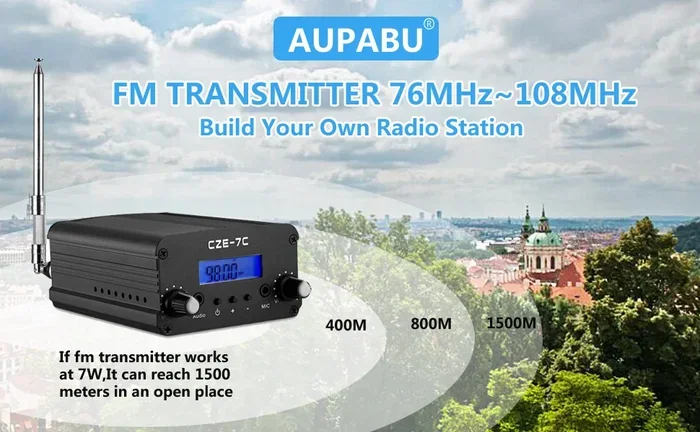
Some cheap transmitters sold online claim to have ranges of 50 miles or more. These are often misleading and may exceed legal power limits. Stick with reputable brands that clearly state compliance with Part 15 rules.
Look for FCC Compliance Statements
Legal FM transmitters will include an FCC compliance statement on the packaging or in the user manual. This statement confirms that the device meets Part 15 requirements. If a product does not have this statement, be cautious about purchasing it.
Read Reviews and Do Your Research
Before buying an FM transmitter, read reviews from other users. Look for feedback about signal quality, range, and compliance. Online forums and tech review sites can help you find devices that are both legal and effective.
Consider Your Actual Needs
Think carefully about what you actually need from your FM transmitter. If you just want to play music in your car, a basic car transmitter will do the job. If you want to broadcast to a larger area, you may need to explore LPFM licensing or other legal options. Buying a high-power transmitter for personal use is unnecessary and potentially illegal.
Common Mistakes People Make With FM Transmitters
Even well-meaning users can accidentally break the law when using FM transmitters. Here are the most common mistakes and how to avoid them.
Modifying the Transmitter
One of the biggest mistakes is modifying an FM transmitter to increase its range or power. People add bigger antennas, boost the amplifier, or hack the firmware to push beyond legal limits. This immediately makes the device illegal under FCC rules.
Quick Tip: Never open or modify your FM transmitter. Keep it exactly as the manufacturer designed it.
Ignoring Frequency Conflicts
Broadcasting on a frequency that a local radio station already uses can cause interference. While this might not always result in an FCC fine, it is still a violation of rules against harmful interference.
Quick Tip: Use an FM frequency finder app to identify clear frequencies in your area before setting up your transmitter.
Assuming All Transmitters Are the Same
Not all FM transmitters are created equal. A device sold as a “personal audio transmitter” is different from one marketed as a “broadcast transmitter.” The latter may exceed Part 15 limits and require a license.
Quick Tip: Read the product description carefully. Look for terms like “Part 15 compliant” or “FCC certified.”
Overestimating Legal Range
Many users assume their FM transmitter can reach several miles. In reality, a legal Part 15 transmitter has a very limited range, often just a few feet to a couple of hundred feet. If your transmitter claims to reach miles, it is likely operating illegally.
Quick Tip: Accept the short range of a legal transmitter. It is designed for personal use, not wide-area broadcasting.
How Technology Is Changing FM Transmitter Regulations
The world of FM broadcasting technology is constantly evolving. New devices, new uses, and new regulations are reshaping the landscape of wireless audio transmission. Understanding these changes can help you stay ahead of the curve.
Digital broadcasting and streaming technologies are reducing the need for traditional FM transmitters. Bluetooth, Wi-Fi, and internet streaming offer alternative ways to share audio wirelessly. However, FM transmitters still have their place, especially in situations where internet access is limited or unreliable.
The FCC continues to update its rules to reflect new technologies. Recent changes have expanded the available spectrum for wireless microphones and low-power devices. These updates create new opportunities for legal FM transmission while maintaining strict rules against harmful interference.
Healthcare and medical applications of wireless FM technology are also growing. Hospitals and clinics use wireless transmitters for patient monitoring, communication systems, and medical equipment coordination. The use of wireless technology in healthcare is regulated separately and often involves specialized equipment that meets medical-grade standards. Technology has transformed many fields, including medicine, where computers are used in ways that rely on reliable wireless communication systems. To explore how computers are used across medical settings, check out our article on 10 Ways Computers Are Used In Medicine.
As the regulatory environment evolves, staying informed is your best defense against accidental violations. The FCC website is an excellent resource for the latest rules and guidelines on FM transmission.
Final Thoughts on FM Transmitter Legality
FM transmitters are legal when you use them responsibly and within FCC guidelines. The key is understanding the rules and following them carefully. Whether you are using a car transmitter, a wireless microphone, or a low-power broadcast unit, compliance is essential.
Remember these core principles:
- Stay within Part 15 power limits for unlicensed use.
- Never modify your transmitter to increase range or power.
- Get proper licensing if you want to broadcast at higher power levels.
- Avoid pirate radio at all costs. The risks far outweigh any benefits.
- Choose compliant devices from reputable manufacturers.
The world of FM broadcasting offers many exciting possibilities. From personal audio streaming to community radio, there are legal paths for almost any use case. The important thing is to know the rules and follow them. With the right approach, you can enjoy your FM transmitter without worry and stay on the right side of the law.
Technology continues to make wireless audio more accessible and affordable. As long as you stay informed and compliant, there is no reason you cannot enjoy the benefits of FM transmission. Keep learning, stay compliant, and happy broadcasting.
Frequently Asked Questions
Can I use an FM transmitter in my car without a license?
Yes, car FM transmitters are legal without a license because they operate at very low power levels that comply with FCC Part 15 rules. These devices are designed for personal use and must stay within strict power limits. As long as you do not modify the device, you are operating legally.
What is the maximum legal power for an unlicensed FM transmitter?
The maximum legal power for an unlicensed FM transmitter under Part 15 rules is 100 milliwatts of effective radiated power. Most consumer FM transmitters operate well below this limit, typically between 10 and 50 milliwatts. Exceeding this limit without a license is illegal and can result in FCC enforcement action.
Can I broadcast music on FM legally?
Yes, you can broadcast music legally using a low-power FM transmitter that complies with Part 15 regulations. Personal and home use of FM transmitters for sharing music is perfectly legal. However, broadcasting music to a large audience or over long distances requires a proper broadcast license from the FCC.
What is the difference between a legal FM transmitter and pirate radio?
A legal FM transmitter operates within FCC Part 15 power limits and does not interfere with licensed stations. Pirate radio refers to illegal broadcasting that exceeds power limits, uses unauthorized frequencies, or operates without proper licensing. Pirate radio operators face fines, equipment seizure, and potential criminal prosecution.
Do I need a license to operate an LPFM station?
Yes, you need a Low-Power FM license from the FCC to operate an LPFM station legally. LPFM licenses are available to community organizations, schools, and nonprofits. The application process is simpler than a full broadcast license, but you must receive FCC approval before broadcasting.
Can FM transmitters interfere with emergency communications?
Yes, illegal FM transmitters that exceed power limits can interfere with emergency communications and licensed radio services. This is one of the main reasons the FCC enforces strict rules against unlicensed broadcasting. Interfering with emergency communications is a serious violation that can result in heavy fines and legal consequences.
=== CONCLUSION ===
FM transmitters are legal when used within the guidelines set by the FCC. Understanding Part 15 rules, power limits, and licensing requirements is the foundation of compliant FM broadcasting. Whether you want better audio in your car or a way to share music at home, legal options are available.
Avoid the temptation to modify your transmitter or push beyond legal power limits. The risks of fines, equipment seizure, and legal trouble are not worth the short-term gains. Choose compliant devices, follow the rules, and enjoy the benefits of FM technology worry-free. Stay informed, stay compliant, and make the most of your FM transmitter experience.