Are There 4k Hdr Projectors That Are Actually Worth It
4k hdr projectors are real, and they deliver incredible picture quality for movies, gaming, and presentations. These projectors combine ultra-high resolution with high dynamic range to bring vivid colors, deep blacks, and stunning detail to your screen. If you want a cinematic experience at home, a 4k hdr projector might be the best upgrade you can make.
Have you been thinking about upgrading your home setup? Maybe you have been watching movies on a old projector or a small TV and wondering if there is a better way. The short answer is yes. 4k hdr projectors are real, they are available right now, and they can transform the way you watch content at home.
But here is the thing. Not all projectors that claim to be 4k hdr are created equal. Some deliver breathtaking visuals. Others fall flat and leave you disappointed. The difference comes down to understanding what actually matters. In this guide, we will break down everything you need to know. We will look at how these projectors work, what to look for, and whether they are truly worth the investment.
By the end of this article, you will have a clear picture of what to expect. You will know which features matter most. And you will feel confident making a smart buying decision. Let us dive in.
Key Takeaways
- 4k hdr projectors exist and are widely available from brands like Epson, BenQ, and Optoma.
- HDR support dramatically improves contrast and color, making images look more lifelike than standard projectors.
- Native 4k resolution is superior to 4k enhancement, but both offer a major upgrade over 1080p.
- Prices range from affordable to premium, so there is a 4k hdr projector for almost every budget.
- Brightness, contrast ratio, and color accuracy are the three most important specs to compare.
- Common buying mistakes include ignoring room lighting and skipping HDR compatibility checks.
📑 Table of Contents
What Exactly Are 4k Hdr Projectors
Before we talk about whether they are worth it, let us make sure we understand what we are dealing with. A 4k hdr projector combines two key technologies. The first is 4k resolution. The second is high dynamic range, commonly known as HDR.
Understanding 4k Resolution
4k resolution means the projector can display about 8.3 million pixels on your screen. That is four times more than a standard 1080p projector. More pixels mean sharper images, finer detail, and a more immersive viewing experience. When you sit close to a large screen, the difference between 1080p and 4k resolution projector quality is very noticeable.
Think of it this way. Imagine looking at a painting from far away. You can see the general image. Now move closer. You start to see individual brushstrokes, texture, and subtle details. That is what 4k does for your screen. It reveals details that a lower resolution simply cannot show.
What Is Hdr and Why It Matters
HDR stands for High Dynamic Range. It is a technology that expands the range of brightness and color a display can produce. A standard projector might show a bright white and a dark black. But an hdr10 or dolby vision projector can show many shades in between. The result is a much more realistic image.
With HDR, you get deeper blacks, brighter highlights, and more vibrant colors. A sunset scene looks like a real sunset. A dark room scene feels genuinely dark without losing detail. HDR support makes a huge difference in how content looks, especially in movies and shows that are mastered in HDR format.
How Do 4k Hdr Projectors Work
Now that you know what they are, let us look under the hood. Understanding how these devices work helps you appreciate why they cost more and why the image quality is so good.
The Role of Lumens and Brightness
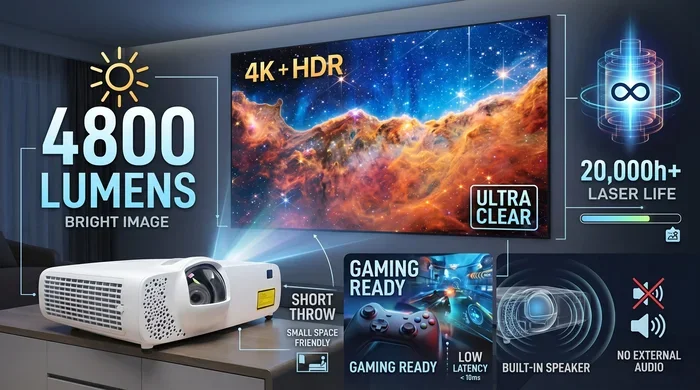
Projector brightness is measured in lumens. A 4k uhd projector needs to be bright enough to showcase HDR content properly. If a projector is too dim, HDR effects get washed out. You lose the bright highlights and the contrast advantage.
For a dark room setup, around 2000 to 3000 lumens is usually enough. For a room with some ambient light, you want 3000 lumens or more. The key is matching brightness to your viewing environment. A bright projector in a dark room can also cause eye strain, so balance matters.
Native 4k Vs 4k Enhancement
This is an important distinction. A native 4k projector has a true 4k chip that displays all 8.3 million pixels. A 4k enhancement projector uses pixel shifting to create a 4k-like image from a lower resolution panel. Native 4k is sharper and more detailed.
That said, 4k enhancement projectors have come a long way. For casual viewers, the difference might be hard to spot. But if you are a cinephile or a serious gamer, native 4k is the way to go. Always check the spec sheet before you buy.
Contrast Ratio and Color Processing
Contrast ratio measures the difference between the brightest white and the darkest black a projector can produce. A high contrast ratio is essential for HDR content. Without it, dark scenes look gray and flat. Color accuracy is equally important. A projector with poor color processing will make skin tones look unnatural and landscapes look dull.
Look for projectors with wide color gamut support. This means they can reproduce a larger range of colors. The result is richer, more lifelike images that draw you into the content.
Are 4k Hdr Projectors Worth the Investment
This is the big question. And the honest answer is it depends on your situation. Let us break it down so you can decide for yourself.
Price vs Performance
4k hdr projectors used to be extremely expensive. You would spend several thousand dollars to get a decent one. Today, the market has changed a lot. You can find solid 4k HDR projectors in the $1000 to $2000 range. Premium models with laser light sources and advanced HDR processing can go well above $3000.
But here is the thing. When you compare the experience to a similar-sized TV, projectors often deliver a bigger screen for less money. A 100-inch image from a projector is hard to beat. The immersion you get from a large screen with HDR is something a 55-inch TV simply cannot match.
Of course, you also need to factor in the cost of a screen, mounting equipment, and possibly a sound system. But the core experience is outstanding.
Who Should Buy a 4k Hdr Projector
4k hdr projectors are a great fit for several types of users. Movie lovers who want a home theater experience will appreciate the cinematic quality. Gamers who want a large, immersive display will enjoy the sharp detail and smooth motion. Professionals who give presentations in large rooms will benefit from the brightness and resolution.
Even in specialized fields, high-resolution displays matter. For instance, the way computers are used in medicine shows how critical image clarity is in professional settings. Medical imaging, surgical planning, and educational presentations all rely on high-resolution displays. If projectors serve such demanding fields, they can certainly serve your home entertainment needs.
On the other hand, if you watch TV in a very bright room and do not want to deal with ambient light, a high-brightness TV might be a better choice. Projectors work best in controlled lighting environments.
Key Features to Look For
When shopping for a 4k hdr projector, not all features are created equal. Here are the specs and capabilities that really matter.
Brightness and Ambient Light Resistance
As we mentioned, lumens determine brightness. But there is more to it. Some projectors handle ambient light better than others. This comes down to the lens quality, the light source, and the internal image processing. Laser projectors, for example, tend to handle ambient light better than lamp-based models.
If you plan to watch content during the day with curtains open, look for a projector with at least 3000 lumens. For a dedicated home theater with blackout curtains, 2000 lumens is usually sufficient.
Smart Projector Capabilities
Many modern 4k uhd projector models come with smart features built in. This means they run on platforms like Android TV or Amazon Fire TV. You can stream 4k streaming content directly from Netflix, Disney+, or Amazon Prime without needing an external device.
Smart features also include voice control, app stores, and screen mirroring. These add a lot of convenience. But keep in mind that smart projectors can sometimes lag or overheat. Choose a brand with a good reputation for software performance.
Throw Distance and Screen Size
Projector throw distance is the distance between the projector and your screen. Short-throw projectors can produce a large image from just a few feet away. Ultra-short-throw models can sit right against the wall.
Your choice depends on your room setup. If you have a small living room, a short-throw model saves space. If you have a dedicated theater room, a standard-throw projector gives you more flexibility in placement. Always measure your space before you buy.
Hdr Compatibility and Format Support
Not all HDR is the same. The most common formats are HDR10, HDR10+, and Dolby Vision. Make sure your projector supports the formats you plan to watch. Most 4K HDR projectors support HDR10 at minimum. Dolby Vision support is a premium feature found in higher-end models.
Also check if the projector has HDMI 2.1 ports. HDMI 2.1 is needed for full 4K HDR at 60Hz or higher. Without it, you might not get the full HDR experience from your source devices.
Common Mistakes Buyers Make
Buying a 4k hdr projector can be tricky. Many people make mistakes that lead to disappointment. Here are the most common ones to avoid.
- Ignoring room lighting. A projector that looks great in a dark store will look washed out in a bright room. Always consider where and when you will watch content.
- Confusing 4k enhancement with native 4k. Marketing can be misleading. Check the specs carefully to see if the projector has a true 4k chip.
- Skipping HDR compatibility checks. A 4k projector without HDR support is not a 4k hdr projector. Make sure both features are present.
- Underestimating the need for a quality screen. A great projector on a wrinkled white sheet will look terrible. Invest in a proper projection screen.
- Forgetting about audio. Most projectors have weak built-in speakers. Plan for a soundbar or external speaker setup to match the visual quality.
- Not checking the lamp or laser life. Projector light sources degrade over time. Laser projectors last much longer than lamp-based ones, often 20,000 hours or more.
Expert Tips for Getting the Best Experience
Once you have your 4k hdr projector set up, a few tips can help you get the most out of it.
Calibrate Your Settings
Out of the box, most projectors are set to vivid or dynamic modes. These modes look flashy in a store but are not ideal for home viewing. Switch to a cinema or movie mode. This gives you more accurate colors and better contrast. If your projector has a calibration tool or settings menu, spend some time adjusting brightness, contrast, and color temperature.
Control Your Room Lighting
Even the best projector cannot compete with direct sunlight. Use blackout curtains or shades to control ambient light. If you cannot darken the room completely, consider a projector with higher lumens. A matte white or gray screen also helps absorb stray light and improve contrast.
Use the Right Cables
To get full 4K HDR quality, you need the right cables. Use High Speed HDMI cables that support 4K at 60Hz and HDR. Cheap or old cables can limit your picture quality and cause flickering or signal drops. A good cable is a small investment that makes a big difference.
Keep Your Projector Clean and Ventilated
Dust can build up on the lens and internal components over time. This affects image quality and can shorten the lifespan of your projector. Clean the lens gently with a microfiber cloth. Make sure the projector has adequate ventilation and is not placed in a cramped cabinet.
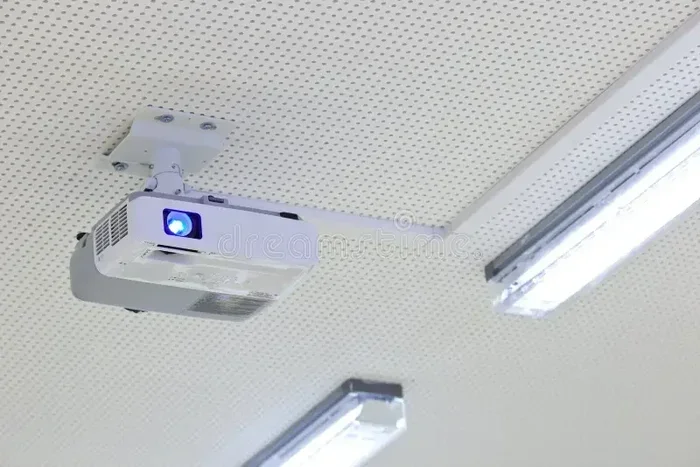
Consider a Ceiling Mount
A ceiling mount keeps your projector out of the way and provides a more immersive viewing angle. Make sure you choose a mount that is compatible with your projector model. Proper positioning also helps reduce keystone distortion, which can degrade image quality.
Comparison: 4k Hdr Projectors vs 4k Hdr TVs
Many people wonder whether they should buy a projector or a TV. Here is a quick comparison to help you decide.
- Screen Size: Projectors can produce images over 100 inches. Most 4K TVs max out at 85 inches. For pure immersion, projectors win.
- Brightness: TVs are much brighter and handle ambient light better. Projectors struggle in well-lit rooms.
- Price per Inch: A projector gives you a huge screen for less money than a comparably sized TV.
- HDR Performance: High-end 4K HDR TVs often have better local dimming and peak brightness. But mid-range projectors with HDR still deliver a cinematic experience.
- Setup and Space: TVs are plug-and-play. Projectors need space, a screen, and careful positioning.
Both options have their place. If you want a dedicated home theater with a huge screen, a 4k hdr projector is hard to beat. If you want a bright, easy-to-use display for everyday viewing, a 4K TV might be the better choice.
Final Thoughts
4k hdr projectors are absolutely worth it for the right user. If you love movies, gaming, or big-screen viewing, the investment pays off in a big way. The combination of ultra-high resolution and high dynamic range creates an experience that feels truly cinematic.
Just remember to do your homework before you buy. Check for native 4k resolution, HDR format support, brightness levels, and smart features. Avoid the common mistakes we covered. And take the time to set up your room and calibrate your projector properly.
The technology has matured, the prices have come down, and the selection is better than ever. Whether you are a casual viewer or a dedicated home theater enthusiast, there is a 4k hdr projector out there that fits your needs. The key is knowing what to look for and making a smart, informed choice.
So go ahead. Upgrade your viewing experience. You will not regret it.
Frequently Asked Questions
What is the difference between 4k and 1080p projectors?
A 4k projector displays about 8.3 million pixels, while a 1080p projector displays about 2 million pixels. That means 4k projectors show much sharper and more detailed images. The difference is very noticeable on large screens.
Do all 4k projectors support HDR?
No, not all 4k projectors support HDR. Some 4k projectors only offer standard dynamic range. Always check the specifications to confirm that the projector has HDR support before you buy.
How much should I spend on a 4k hdr projector?
Prices range widely. Budget models start around $800 to $1000. Mid-range options sit between $1500 and $2500. Premium models with laser light sources and advanced features can exceed $3000. Set a budget based on your needs and room setup.
Can I watch 4k HDR content on any projector?
No. Your projector needs to support 4k resolution and HDR formats like HDR10 or Dolby Vision. You also need a compatible source device, such as a 4K HDR Blu-ray player or a streaming device that supports 4K HDR streaming.
How long do 4k projector lamps last?
Traditional lamp-based projectors typically last between 3000 and 5000 hours. Laser projectors can last 20,000 hours or more. LED projectors fall somewhere in between. Your usage habits will determine how often you need to replace the light source.
Is a 4k hdr projector worth it for gaming?
Yes, especially for gamers who want a large, immersive display. A 4k hdr projector with low input lag and HDMI 2.1 support can deliver a fantastic gaming experience. Just make sure the projector you choose is designed for gaming with minimal latency.