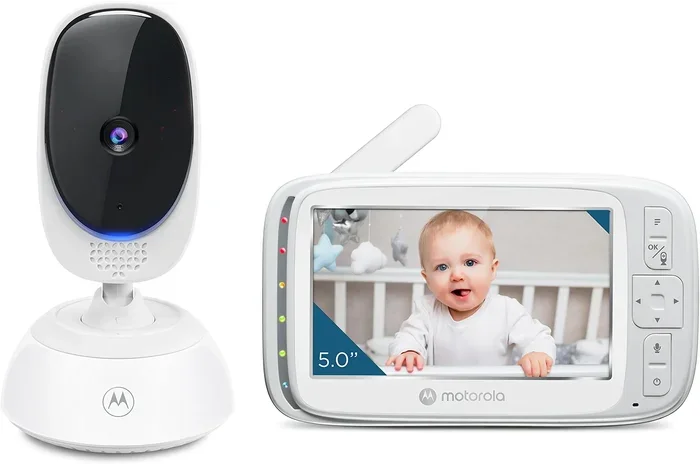
Do All Baby Monitors Really Need To Be Plugged In
Not all baby monitors need to be plugged in. Today’s market offers a wide range of battery-powered baby monitors and cordless baby monitor options that give parents the freedom to move around without being tethered to a wall outlet. Whether you prefer a plug-in baby monitor for continuous reliability or a portable baby monitor with long-lasting rechargeable batteries, understanding your baby monitor power options is the first step toward making the right choice for your nursery.
If you are a new parent or expecting a baby soon, you have probably wondered about one thing: do all baby monitors really need to be plugged in? The short answer is no. But the full answer is much more interesting. Baby monitors come in all shapes, sizes, and power configurations. Some work best when they stay connected to the wall. Others run on batteries for hours on end. And some give you the best of both worlds.
Choosing the right baby monitor is one of the most important decisions you will make for your nursery. The monitor is your eyes and ears when you are not in the same room as your little one. It gives you peace of mind and helps you sleep better at night. But the power source of your monitor matters more than you might think. It affects placement options, battery life, signal quality, and even how long you can rely on the device during a power outage.
In this guide, we will walk through everything you need to know about baby monitor power options. We will compare plug-in monitors with battery-powered ones. We will look at wireless models and how they use wifi. We will also help you figure out which option fits your family best. By the end, you will have a clear picture of what to buy and why.
Key Takeaways
- Plug-in baby monitors offer uninterrupted power and are ideal for stationary nursery setups
- Battery-powered baby monitors provide portability and flexibility for parents on the go
- Rechargeable battery technology has dramatically improved baby monitor battery life in recent years
- Wireless baby monitors rely on wifi and may consume more power than wired alternatives
- Baby monitor runtime varies widely, so always check specifications before purchasing
- Hybrid models let you switch between plug-in and battery power for maximum convenience
- Your nursery monitor choice should match your lifestyle, home layout, and monitoring needs
📑 Table of Contents
- The Short Answer: It Depends on the Type of Baby Monitor
- Plug-In Baby Monitors: The Traditional Choice
- Battery-Powered Baby Monitors: Freedom Without the Cord
- Wireless Baby Monitors: Do They Need to Be Plugged In?
- How Technology Is Shaping Baby Monitoring
- Plug-In vs Battery-Powered: A Side-by-Side Comparison
- Common Mistakes Parents Make When Choosing a Baby Monitor Power Source
- How to Choose the Right Power Option for Your Family
- Final Thoughts on Baby Monitor Power Options
The Short Answer: It Depends on the Type of Baby Monitor
The truth is that not every baby monitor needs a constant connection to a power outlet. The market has changed a lot in recent years. Parents now have more choices than ever before. Some monitors are designed to stay plugged in at all times. Others run entirely on rechargeable batteries. And some give you the option to use either method.
Your choice depends on several factors. Where do you plan to place the monitor? How far do you need the signal to reach? Do you want to carry the monitor from room to room? These are all important questions. Let us break down the main types of baby monitor power options so you can make an informed decision.
Plug-In Baby Monitors
A plug-in baby monitor stays connected to a wall outlet at all times. The parent unit and sometimes the baby unit run on AC power. This means you never have to worry about the battery dying in the middle of the night. These monitors are simple to set up. You plug them in, and they are ready to go.
Most traditional audio monitors and many video monitors fall into this category. They are reliable and consistent. You do not need to remember to charge anything. The trade-off is that you are limited by the length of the power cord. You cannot move the parent unit far from an outlet without extra extension cords.
Battery-Powered Baby Monitors
A battery-powered baby monitor runs on rechargeable or replaceable batteries. These are the cordless baby monitor options that give you true freedom of movement. You can carry the parent unit into the kitchen, the backyard, or even another floor of your home without worrying about a power cord.
Modern battery-powered baby monitors have come a long way. Many now use lithium-ion rechargeable batteries that last for several hours on a single charge. Some high-end models boast long battery life baby monitor capabilities that can run for 10 hours or more. This makes them perfect for parents who like to stay active and mobile.
Hybrid Models
Some baby monitor types offer both plug-in and battery power. You can keep the monitor plugged in for continuous use. When you need to move around, you switch to battery mode. These hybrid baby monitors give you the best of both worlds. They are becoming increasingly popular among tech-savvy parents who want flexibility without sacrificing reliability.
Plug-In Baby Monitors: The Traditional Choice
Plug-in baby monitors have been around for decades. They are the original design and still a favorite for many families. Let us look at why so many parents still choose this option and what the benefits really are.
Why Plugged-In Monitors Remain Popular
The biggest advantage of a plug-in baby monitor is consistency. You never have to charge a battery or replace batteries. The monitor is always on and always ready. This is especially helpful for parents of newborns who may need to check on the baby multiple times during the night.
Plug-in monitors also tend to be more affordable. Without the cost of rechargeable batteries and built-in charging circuits, manufacturers can keep the price lower. For budget-conscious parents, this is a big selling point.
Another advantage is that plug-in monitors often have better video quality. Because they have a constant power supply, they can run higher-resolution cameras without worrying about draining a battery. If you want a clear video baby monitor with night vision, a plug-in model might be your best bet.
The Benefits of Always-Having Power
- No charging required — the monitor is always ready to use
- Consistent video and audio quality — no power-saving modes that reduce performance
- Lower upfront cost — no need for expensive rechargeable battery systems
- Reliable for overnight use — you never wake up to a dead battery
- Simpler design — fewer moving parts means fewer things to go wrong
However, plug-in monitors do have limitations. You are tied to an outlet. If your nursery does not have a convenient power source, you may need to use an extension cord. This can be a tripping hazard or an eyesore in your carefully decorated nursery.
Battery-Powered Baby Monitors: Freedom Without the Cord
Battery-powered baby monitors have exploded in popularity. More parents than ever are choosing cordless baby monitor options for the freedom and flexibility they offer. But how do they work, and what should you know before buying one?
How Rechargeable Batteries Changed the Game
Not so long ago, battery-powered baby monitors were limited. They lasted only a few hours, and the batteries were often expensive to replace. Today, rechargeable battery technology has transformed the landscape. Most modern portable baby monitors use lithium-ion batteries that can last anywhere from 6 to 15 hours on a single charge.
Some models even come with docking stations. You simply place the parent unit on the charger when you are back in the nursery. The next time you need it, it is fully charged and ready to go. This makes baby monitor charging a breeze and eliminates the guesswork.
What Affects Baby Monitor Battery Life?
Several factors determine how long your baby monitor battery life will last on a single charge. Understanding these can help you choose a model that fits your needs.
Screen brightness is one of the biggest battery drainers. A bright screen looks great but uses power quickly. If you turn the brightness down, you can significantly extend the runtime. Wifi connectivity also plays a role. Wireless baby monitors that constantly stream video over a wifi connection use more power than simple audio monitors.
Video versus audio matters too. A pure audio monitor will run much longer on batteries than a video monitor. And features like motion detection, temperature sensing, and two-way talk all consume additional power. If you want the longest possible baby monitor runtime, look for models with power-saving modes that turn off unnecessary features when not in use.
Wireless Baby Monitors: Do They Need to Be Plugged In?
Wireless baby monitors have become the go-to choice for many modern parents. They use wifi or proprietary wireless signals to connect the baby unit to the parent unit. But the question of power is not so simple with these devices. Let us dig deeper.
Wifi Connectivity and Power Consumption
Wifi baby monitors are convenient because they connect directly to your home network. You can check on your baby from your smartphone or tablet from anywhere in the house. But wifi connectivity comes with a power cost. The wireless radio inside the monitor uses electricity to maintain a constant connection.
The wifi antenna technology inside your wireless baby monitor plays a bigger role than most parents realize. A well-designed antenna can maintain a strong signal while using less power. A poorly designed one may drain the battery quickly as it struggles to hold a connection. This is why the quality of the internal components matters so much when choosing a wireless baby monitor.
Signal Strength and Range Considerations
Range is another important factor. A monitor with a weak signal will use more power as it tries to maintain the connection. If you have a larger home or thick walls between the nursery and where you carry the parent unit, you may notice the battery draining faster.
Just like not all wifi antennas are the same, not all wireless baby monitors deliver the same range and reliability. Look for models that specify their range in feet or meters. And consider your home layout before making a purchase. A monitor that works well in a small apartment may struggle in a larger, multi-story home.
Some wireless monitors also offer a plug-in mode where you can keep the baby unit connected to power while using the parent unit on battery. This is a great compromise for parents who want the best of both worlds.
How Technology Is Shaping Baby Monitoring
The world of baby monitoring technology has evolved rapidly. Today’s monitors are far more advanced than the simple audio devices our parents used. They feature high-definition video, two-way audio, temperature sensors, humidity monitors, and even AI-powered sleep tracking. But all of this technology comes with trade-offs, especially when it comes to power.
Smart Monitors and Their Power Demands
Modern smart baby monitors are essentially small computers. They process video, analyze sound, connect to the internet, and run apps on your phone. All of this processing requires energy. A smart monitor will generally use more power than a basic audio monitor, whether it is plugged in or running on batteries.
The evolution of baby monitoring technology mirrors what has happened in other fields. Modern medical monitoring in hospitals, for example, has been transformed by the same advances in computing power that drive today’s smart baby monitors. Computers in healthcare have enabled continuous patient monitoring that was not possible just a generation ago. In much the same way, today’s baby monitors give parents a level of insight into their child’s sleep and well-being that was unimaginable in the past.
The Future of Portable Baby Monitoring
Battery technology continues to improve. We are seeing baby monitors with longer runtimes, faster charging, and more efficient power management. Some manufacturers are experimenting with solar-powered charging docks and low-energy bluetooth connections that sip power instead of draining it.
In the near future, we may see baby monitor types that can run for days on a single charge. The trend is clearly moving toward more portable, battery-friendly designs. But for now, parents still need to make smart choices about power based on their specific needs and living situations.
Plug-In vs Battery-Powered: A Side-by-Side Comparison
Still not sure which option is right for you? Let us compare the two main types of baby monitor power options side by side.
| Feature | Plug-In Monitor | Battery-Powered Monitor |
|---|---|---|
| Power Source | Wall outlet (AC power) | Rechargeable or replaceable batteries |
| Runtime | Unlimited (as long as power is on) | 6 to 15+ hours depending on model |
| Portability | Limited by cord length | Highly portable and mobile |
| Video Quality | Usually higher and more consistent | May reduce quality to save power |
| Cost | Generally lower upfront cost | Slightly higher due to battery tech |
| Maintenance | No charging needed | Regular charging or battery replacement |
| Power Outage Protection | No backup (unless you have a UPS) | Works during outages if charged |
| Best For | Stationary nursery use | Active parents and on-the-go monitoring |
As you can see, both options have clear strengths. The best choice depends on how you live and what matters most to you. There is no single right answer. Only the right answer for your family.
Quick Tips for Making the Decision
- Measure your nursery layout — if you are far from outlets, battery power makes more sense
- Think about your daily routine — do you move around a lot, or do you stay near the nursery?
- Check the runtime specs — do not just trust marketing claims. Look for real-world reviews
- Consider a hybrid model — these give you flexibility for different situations
- Read parent reviews — real-world feedback on battery life and reliability is invaluable
Common Mistakes Parents Make When Choosing a Baby Monitor Power Source
Choosing a baby monitor is not just about features and price. The power source is a critical factor that many parents overlook. Here are some common mistakes to avoid.
Assuming all battery-powered monitors last the same amount of time. This is simply not true. Some cordless baby monitor models run for 8 hours while others last less than 4. Always check the baby monitor runtime before you buy.
Ignoring wifi power consumption. If you buy a wifi baby monitor and plan to use it on battery, you need to understand that the wifi connection will drain the battery faster than a simple audio monitor. Plan your charging routine accordingly.
Forgetting about the baby unit power source. Many parents focus only on the parent unit battery. But if the baby unit is also battery-powered, you need to charge or replace two sets of batteries. Some monitors only have a battery in the parent unit, which is much more convenient.
Not testing the monitor before you need it. Set up your nursery monitor and run it on battery for a full night before your baby arrives. This gives you a real-world sense of how long it lasts and whether you need a backup plan.
Overlooking the charging time. Some rechargeable battery baby monitors take 4 to 6 hours to fully charge. If you forget to charge it overnight, you may not have enough power for the next day. Look for fast-charging models if you tend to forget.
How to Choose the Right Power Option for Your Family
Now that you understand the different baby monitor power options, it is time to think about what works best for your situation. Here are some questions to ask yourself before you make a purchase.
Do you have a dedicated nursery with a nearby outlet? If yes, a plug-in baby monitor is a simple and reliable choice. You will not need to think about charging or battery life at all.
Do you like to move around the house while the baby sleeps? If you carry the baby from room to room or like to check in from the kitchen, a battery-powered baby monitor gives you the freedom to do so without being tethered to an outlet.
Do you travel frequently with your baby? A portable baby monitor with a long-lasting battery is essential for travel. Look for models that come with travel cases and can run for at least 8 hours on a single charge.
How important is video quality to you? If you want the clearest possible picture, a plug-in model will generally deliver better video than a battery-powered one. But if you can live with good-enough quality, a battery-powered video baby monitor will serve you well.
What is your budget? Plug-in monitors tend to be more affordable. Battery-powered and hybrid models cost a bit more, especially if they include advanced features like wifi connectivity and smart alerts.
Final Thoughts on Baby Monitor Power Options
The question of whether all baby monitors need to be plugged in does not have a one-size-fits-all answer. The right choice depends on your lifestyle, your home, and your personal preferences. A plug-in baby monitor offers simplicity and reliability. A battery-powered baby monitor offers freedom and flexibility. And a hybrid model gives you both.
What matters most is that you feel confident in your choice. Your baby monitor is one of the most important tools you will have for keeping your little one safe. Take the time to understand your options, read reviews, and choose the monitor that fits your family best. Whether it stays plugged in or runs on batteries, the right monitor will give you peace of mind and help you be the best parent you can be.
Remember, there is no wrong choice here. Every parent’s situation is different. What works for one family may not work for another. The key is to stay informed, ask questions, and prioritize what matters most to you and your baby. With the right baby monitor and the right power setup, you can rest easy knowing your little one is safe and sound.
Frequently Asked Questions
Can I use a baby monitor without plugging it in?
Yes, many modern battery-powered baby monitors are designed to run entirely on rechargeable batteries. These cordless baby monitor options let you move freely without being connected to a wall outlet. Just make sure to charge the monitor regularly and check the baby monitor runtime before purchasing.
How long does a battery-powered baby monitor last on a single charge?
Baby monitor battery life varies by model and usage. Most battery-powered baby monitors last between 6 and 15 hours on a single charge. Factors like screen brightness, wifi usage, and video quality all affect how long the battery lasts. Look for models with power-saving modes for the longest runtime.
Is a plug-in baby monitor better than a battery-powered one?
Neither option is objectively better. A plug-in baby monitor offers uninterrupted power and consistent performance, making it ideal for stationary nursery use. A battery-powered baby monitor provides portability and flexibility. The best choice depends on your lifestyle, home layout, and monitoring needs.
Do wireless baby monitors use more battery than wired ones?
Yes, wireless baby monitors that use wifi tend to consume more power than simple wired audio monitors. The wireless radio and video streaming require significant energy. If you choose a wifi baby monitor, expect shorter battery life and plan your charging routine accordingly.
Can I leave my plug-in baby monitor plugged in all the time?
Most plug-in baby monitors are designed to be left connected to power at all times. They typically have overcharge protection and automatic power management. However, it is still a good idea to unplug the monitor during electrical storms or when it will not be used for extended periods.
What should I look for in a portable baby monitor?
When choosing a portable baby monitor, look for a long baby monitor runtime of at least 8 hours, a rechargeable battery that is easy to charge, and a lightweight design for easy carrying. Also consider the range, video quality, and whether it offers both plug-in and battery modes for maximum flexibility.
=== CONCLUSION ===
Do all baby monitors really need to be plugged in? The answer is a clear no. Today’s market offers a wonderful range of baby monitor power options to suit every family. Whether you choose a traditional plug-in baby monitor, a modern battery-powered baby monitor, or a flexible hybrid model, the most important thing is that it works for your life.
Take your time, compare your options, and choose the monitor that gives you the most peace of mind. Your baby deserves the best care, and you deserve the confidence that comes with knowing you are fully prepared. Happy monitoring.