Do You Really Need To Buy A Screen For A Projector
You might not need to buy a dedicated projector screen at all. A clean white wall, a bedsheet, or even a painted surface can deliver a great image in many situations. Whether you are setting up a home theater or hosting an outdoor movie night, the right projection surface depends on your room, your projector, and your budget. This guide breaks down every option so you can make a confident choice without overspending.
So you just bought a projector, or maybe you already have one sitting in a closet. The next question hits you right away: do you really need to buy a screen for it? It is a fair question. After all, projector screens can cost anywhere from fifty dollars to several hundred bucks. And if you have a blank wall in your living room, why spend extra money?
The short answer is that you do not always need a dedicated screen. But the full answer is a bit more nuanced. Your room lighting, wall color, projector brightness, and what kind of viewing experience you want all play a role. This guide walks you through everything you need to know about projector screens, wall alternatives, and how to get the best picture without wasting a dime.
Whether you are building a backyard theater for Halloween or setting up a home theater for movie nights, understanding your projection surface options is key. Let us dive in and figure out what works best for you.
Key Takeaways
- You often can skip buying a screen: A plain white wall or a simple DIY surface works surprisingly well for most projectors.
- Room lighting matters a lot: Ambient light can wash out your image, making a proper screen more important in bright rooms.
- Screen gain affects brightness: Higher gain screens reflect more light back to viewers, which helps in less-than-dark environments.
- DIY options are cheap and effective: A wrinkle-free bedsheet or a piece of white blackout cloth can cost almost nothing.
- Portable screens offer flexibility: If you want to move your setup around, a foldable or rollable screen is a great middle-ground option.
- Projector placement changes everything: Throw distance and angle impact image quality, whether you use a screen or a wall.
📑 Table of Contents
- Why a Projector Screen Matters
- When You Do NOT Need a Projector Screen
- When You SHOULD Buy a Projector Screen
- DIY Projector Screen Options
- Projector Screen vs. Wall: A Side-by-Side Comparison
- How to Choose the Right Screen for Your Needs
- Common Mistakes People Make with Projector Screens
- Final Thoughts
Why a Projector Screen Matters
A projector screen is not just a fancy piece of fabric. It is designed to reflect light back to viewers in a way that maximizes image quality. The surface texture, color, and gain all affect how sharp, bright, and colorful your picture looks. When you understand this, the decision to buy or skip a screen becomes much easier.
What Does a Projector Screen Actually Do?
A screen acts as a controlled reflection surface. It takes the light from your projector and bounces it back toward the audience evenly. A good screen reduces hotspots, minimizes wrinkles, and ensures the colors look true. Think of it like this: your wall might work, but a screen is built specifically for this job.
When you project onto a wall, the surface absorbs some light and scatters the rest. This can make your image look dull or faded. A dedicated projection surface is usually coated with a material that reflects more light directly back to the viewers. The result is a brighter, more vibrant picture.
Screen Gain: What It Means for You
Screen gain is a number that tells you how much light the screen reflects back compared to a standard white surface. A screen with a gain of 1.0 is basically a standard white wall. Anything above 1.0 reflects more light, and anything below 1.0 reflects less.
Here is a quick breakdown:
- Gain of 1.0: Standard white surface. Good for dark rooms.
- Gain of 1.1 to 1.3: Slightly brighter. Works well in rooms with a little ambient light.
- Gain of 1.5 and above: Very bright. Great for rooms with windows or lights on.
- Gain below 1.0: Wider viewing angle but dimmer image. Best for large groups.
If your room gets a lot of natural light, a higher gain screen can make a big difference. But if you are projecting in a basement or a room you can fully darken, a standard gain screen works perfectly fine.
When You Do NOT Need a Projector Screen
Not every setup requires a dedicated screen. In fact, many people get great results without buying one. Here are the situations where you can skip the screen and still enjoy a fantastic picture.
You Have a Clean White Wall
This is the most obvious alternative. If you have a smooth, white, and clean wall, you can project directly onto it. The key is that the wall needs to be as flat and smooth as possible. Bumps, paint texture, and cracks will distort your image.
A flat, matte white wall is actually a decent projection surface. It might not match the sharpness of a purpose-built screen, but for casual movie watching or presentations, it works well. Just make sure the wall is free of shadows from furniture or windows during your viewing time.
You Are Setting Up Outdoors
Outdoor movie nights are a blast, and you do not need a screen for them. A white bedsheet stretched tightly between two trees or poles works great. Some people even use a white tarp or a piece of white blackout cloth. The key is to keep the surface as smooth and wrinkle-free as possible.
For Halloween, many people use a projector to create spooky effects on the side of their house. You can check out our guide on Can I Use Any Projector For Halloween for tips on outdoor projector setups. A screen is optional when you are projecting onto a large exterior wall or fence.
You Are on a Tight Budget
Let us be honest: projector screens cost money. A decent one can run you anywhere from fifty to three hundred dollars or more. If you are just getting started with projector ownership, you might want to test the waters first. Try projecting onto your wall or a white sheet before spending cash on a screen.
Many people discover that their wall is perfectly fine for their needs. You can always upgrade later once you know what you are working with.
You Are Using a Very Bright Projector
Modern projectors are incredibly bright. Some models put out 3,000 or more lumens. If you have a bright projector, it can overcome the light absorption of a regular wall pretty easily. In a dim or dark room, a high-lumen projector on a white wall can deliver a stunning picture without any screen at all.
However, if you are projecting in a bright room, even a powerful projector will struggle without the right surface. That is where a screen with higher gain comes in handy.
When You SHOULD Buy a Projector Screen
There are plenty of situations where a dedicated screen is worth the investment. Let us look at when it makes the most sense to buy one.
Your Wall Is Not White or Is Textured
If your wall is painted a bold color or has a textured finish, projecting onto it will hurt your image quality. Dark colors absorb light and make the picture look dim. Textured walls create uneven surfaces that distort the image. In these cases, a screen is almost a must.
A white or light gray screen gives you a neutral, clean surface that displays colors accurately. If you cannot repaint your wall white, a portable projector screen is a practical and affordable solution.
You Want the Best Possible Picture Quality
Even with a perfect white wall, a dedicated screen will almost always deliver better image quality. The materials used in projector screens are engineered to reflect light more evenly and with better color accuracy. If you are a movie buff or a gamer who demands the sharpest, brightest image, a screen is a smart investment.
Think of it this way: you would not buy a fancy television and then watch it through a dirty window. A screen lets your projector perform at its best.
You Have a Dedicated Home Theater Room
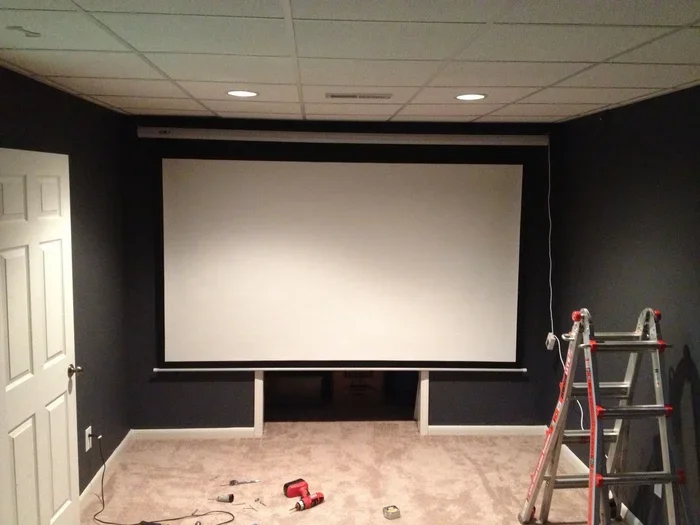
If you are building a dedicated home theater room, a screen is part of the equation. A proper screen ties the whole room together and gives you a true cinema experience. You can mount a fixed screen on the wall or use a retractable screen that rolls up when not in use.
For those who want flexibility, you might also enjoy our article on Can I Use A Projector Instead Of A Tv for more ideas on projector setups.
You Need a Portable or Temporary Setup
Do you move your projector around often? Maybe you set it up in the living room on movie night and then pack it away. A portable screen is lightweight, folds up, and fits in a closet. They come in sizes from 60 inches to 120 inches or more.
Portable screens are also great for people who rent their homes and cannot mount anything permanently. You set it up for the evening and take it down when you are done. It is a simple and effective solution for flexible projector setup needs.
DIY Projector Screen Options
Not ready to buy a commercial screen? You can build your own projection surface for very little money. Here are some popular DIY options that work surprisingly well.
The White Bedsheet Method
Grab a clean white bedsheet and stretch it over a wall or a frame. Make sure it is pulled tight so there are no wrinkles. Wrinkles will create a bumpy surface that distorts your image. You can use thumbtacks or clips to keep the sheet in place.
This method works best indoors in a dark room. The sheet will not be as bright as a proper screen, but it gets the job done for casual viewing.
White Blackout Cloth
White blackout cloth is one of the best DIY screen materials. It is inexpensive, available at fabric stores, and designed to block light. When you hang it on a wall, it creates a smooth, matte white surface that works well for projection.
Many people swear by blackout cloth as a budget-friendly alternative to commercial screens. It is easy to cut to size and hang up. Just make sure to iron out any wrinkles before you start projecting.
Painting a Wall
If you want a permanent solution, consider painting a section of your wall with projector screen paint. This special paint creates a smooth, reflective surface designed for projection. It is more expensive than a bedsheet but cheaper than buying a full screen.
You can find projector screen paint online or at some hardware stores. Apply it evenly to a clean wall, let it dry completely, and you have a DIY screen that looks great and performs well.
Quick Tips for Any DIY Screen
- Always use a matte white material. Shiny or glossy surfaces create glare and hotspots.
- Pull the material as tight as possible to reduce wrinkles.
- Make sure the surface is dust-free before you project.
- Test your setup before your movie night to spot any issues.
- Consider the room lighting. Even the best DIY screen will struggle in a bright room.
Projector Screen vs. Wall: A Side-by-Side Comparison
Still not sure whether to buy a screen or stick with your wall? Here is a quick comparison to help you decide.
| Factor | Projector Screen | White Wall |
|---|---|---|
| Image Brightness | Higher, especially with gain screens | Lower, wall absorbs some light |
| Color Accuracy | Excellent, designed for projection | Good, depends on wall color |
| Cost | 50 to 300+ dollars | Free |
| Portability | Portable options available | Not portable |
| Setup Time | A few minutes | None needed |
| Surface Smoothness | Very smooth and even | May have texture or imperfections |
| Best For | Dedicated viewing spaces | Casual or temporary setups |
As you can see, both options have their strengths. A projector screen wins on image quality and consistency, but a wall wins on cost and convenience. Your choice depends on what matters most to you.
How to Choose the Right Screen for Your Needs
If you have decided that a screen is the right choice, here are some tips to help you pick the right one.
Consider Your Room Size
The size of your room determines how large your screen should be. A small bedroom does not need a 120-inch screen. A large living room or basement can handle a bigger projection. Measure your wall space and think about how far your projector will be from the screen.
The throw distance is the space between your projector and the screen. Check your projector manual for the recommended distance for your desired screen size. If your projector is too close or too far, the image will not look right.
Think About Screen Type
There are several types of projector screens to choose from:
- Fixed frame screens: Mounted permanently on the wall. Best for dedicated home theaters.
- Retractable screens: Roll up when not in use. Great for multi-purpose rooms.
- Pull-down screens: Similar to retractable but simpler. Often mounted on a ceiling or wall bracket.
- Portable folding screens: Lightweight and easy to set up. Perfect for occasional use or travel.
- Inflatable screens: Great for outdoor use. Easy to set up and take down.
Each type has its pros and cons. Think about how often you will use your projector and where you will set it up. That will guide your decision.
Check Your Projector Specs
Not all projectors are the same. Your projector brightness, resolution, and throw ratio all affect which screen works best. A very bright projector can work well with a lower gain screen, while a dimmer projector benefits from a higher gain surface.
If you are connecting your phone to the projector, you might want to check out our guide on Can I Connect My Phone To Projector With Usb Cable for helpful connectivity tips. And if you want to mirror your phone screen wirelessly, our article on Can I Mirror My Iphone To A Projector covers that topic too.
Common Mistakes People Make with Projector Screens
Avoid these common pitfalls to get the best experience from your projector and screen.
Skipping the Test Run
Many people buy a screen, set it up, and assume everything will look perfect. But without testing first, you might discover issues with placement, brightness, or image quality. Always do a test run before your big movie night.
Ignoring Room Lighting
Even the best screen will look bad if the room is too bright. Close curtains, turn off overhead lights, and minimize any light sources that hit the screen directly. A dark room makes a huge difference in picture quality.
Choosing the Wrong Screen Size
Bigger is not always better. A screen that is too large for your room will look pixelated or blurry. Match your screen size to your projector capabilities and your seating distance for the best results.
Forgetting About Aspect Ratio
Projectors typically use a 16:9 aspect ratio, which matches most modern movies and TV shows. Make sure your screen matches this ratio. A screen with the wrong aspect ratio will show black bars on the sides or top and bottom of your image.
Final Thoughts
So, do you really need to buy a screen for a projector? The honest answer is: it depends. For casual viewing on a budget, your wall or a DIY surface might be all you need. But if you want the best possible viewing experience and plan to use your projector regularly, a dedicated screen is a smart investment.
The good news is that you have plenty of options at every price point. From free wall projections to high-end fixed frames, there is a solution for everyone. Start with what you have, test it out, and upgrade when you are ready. The most important thing is to enjoy your movies, games, and presentations on a big, bright screen.
Whether you are setting up a backyard cinema, building a home theater, or just want to watch a movie on a rainy afternoon, you now have the knowledge to make the right call. Your projector deserves a great surface to shine on, and now you know exactly how to give it one.
Frequently Asked Questions
Can I use a projector without any screen at all?
Yes, you can project directly onto a white wall or a smooth white surface. It will not look as sharp or bright as a dedicated screen, but it works fine for casual viewing. Make sure the wall is clean, flat, and as white as possible for the best results.
What is the cheapest alternative to a projector screen?
A plain white bedsheet or white blackout cloth is the cheapest alternative. You can hang it on a wall or frame for almost no cost. Just make sure to stretch it tight to minimize wrinkles and distortions in the image.
Does a projector screen really make a difference in picture quality?
Yes, a projector screen makes a noticeable difference. Screens are designed to reflect light evenly and with better color accuracy than most walls. If you care about image sharpness, brightness, and color, a screen is worth the investment.
Can I use a projector screen outdoors?
Absolutely. Portable and inflatable screens work great outdoors. You can also project onto a white wall or a stretched bedsheet. Just make sure the surface is smooth and the area is as dark as possible for the clearest picture.
How do I know what size projector screen to buy?
Measure your wall space and consider how far your projector will be from the screen. Check your projector manual for the recommended throw distance for your desired screen size. A screen that fills about 60 to 80 percent of your field of view from your seating position is usually ideal.
Is projector screen paint worth trying?
Yes, projector screen paint is a great option if you want a permanent DIY solution. It creates a smooth, reflective surface that improves image quality over a regular wall. It is more affordable than buying a full screen and works well for dedicated viewing spaces.
=== CONCLUSION ===
Buying a projector screen is not always necessary, but it can significantly improve your viewing experience. Whether you choose a commercial screen, a DIY solution, or simply project onto your wall, the key is to match your setup to your room and your needs. Start simple, test your setup, and upgrade when you are ready. With the right projection surface, every movie night, game session, or presentation will look and feel amazing.