Can A Projector Do Everything A Tv Can Do And So Much More
Can a projector do everything a TV can do? The short answer is yes, and in many ways, a home theater projector actually outperforms a television. From massive projector screen size to immersive movie watching experience, a projector delivers cinema-quality visuals that a standard TV simply cannot match. However, there are trade-offs in brightness, placement, and cost that every buyer should understand before making a switch.
Can A Projector Do Everything A Tv Can Do? The short answer is yes, and in many cases, a projector goes far beyond what a television offers. Whether you want a massive projector screen size for movie nights or a flexible setup for your living room, a home theater projector can deliver stunning visuals. But it is not all perfect. There are real challenges with brightness, placement, and ongoing projector maintenance that you need to know about. This guide breaks down every major factor so you can make a smart choice for your entertainment setup.
More and more people are asking whether a projector can replace their television entirely. The truth is that modern projectors have come a long way. They now offer 4K resolution, smart features, and low input lag for gaming. But a TV still has advantages in brightness and convenience. So the real question is not which device is better overall. It is which device fits your specific needs better.
In this article, we will compare projectors and TVs across every important category. We will look at image quality, gaming performance, cost, room setup, and eye comfort. By the end, you will have a clear picture of what a projector can and cannot do compared to a TV. You will also get practical tips to help you decide if making the switch is worth it for your home.
Key Takeaways
- Projectors offer bigger screens: You can easily project images 100 inches or more, far exceeding typical TV sizes.
- TVs win in brightness: Modern TVs maintain clear images even in bright rooms, while projectors struggle with ambient light.
- Projectors can be more cost-effective: Large-screen projector setups often cost less than equivalent-sized TVs.
- Gaming is possible on both: Modern projectors have low projector input lag, but TVs generally offer better response times.
- Eye comfort favors projectors: Projected light is reflected, which is easier on the eyes than direct LED emission.
- Setup matters greatly: Projectors require proper projector placement, a dark room, and regular projector maintenance for best results.
- Both have unique strengths: Your choice depends on room conditions, viewing habits, and budget.
📑 Table of Contents
Can A Projector Do Everything A Tv Can? Here Is The Truth
The idea of replacing a TV with a projector is exciting. You get a huge screen, a cinematic feel, and a unique viewing experience. But can a projector truly do everything a TV can? Let us break this down honestly and look at where projectors shine and where they fall short.
The Screen Size Advantage
Nothing beats the sheer size of a projector image. A typical TV tops out around 75 to 85 inches for most homes. A projector can easily fill a wall with a 100-inch image or more. And if you invest in a quality short throw projector, you can get that massive image even in a small room. This is the single biggest advantage projectors have over TVs. When you watch a movie on a 120-inch screen, the experience feels completely different from watching on a 55-inch TV.
Immersive Viewing Experience
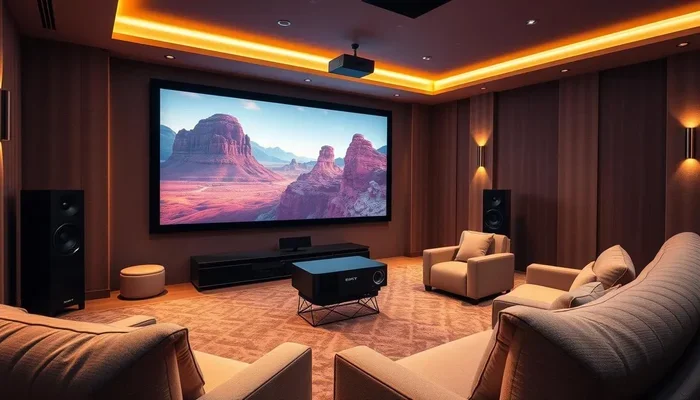
A projector screen size creates a sense of immersion that a TV simply cannot match. When the image fills your field of vision, you feel like you are part of the action. This is why home theaters almost always use projectors. The large image draws you in and makes every movie night feel special. Even a basic smart projector can transform your living room into a mini cinema.
- Place your projector at the recommended projector throw distance for the best image quality.
- Use a matte white wall or a dedicated projector screen for the sharpest picture.
- Consider a short throw projector if you have limited space between the projector and the wall.
Quick Tips For Maximizing Projector Screen Size
Want to get the biggest image possible? Here are a few simple tips. First, position your projector as far back as your room allows. Second, use a high-quality screen instead of a bare wall. Third, choose a projector with at least 1080p resolution or higher. These small steps make a huge difference in your viewing experience.
Image Quality: Projector Vs TV
When comparing a projector vs TV, image quality is where things get interesting. Both devices have strengths and weaknesses. Let us look at the key factors that matter most.
Resolution And Sharpness
Modern projectors and TVs both offer 4K resolution. So in terms of raw pixel count, they are on equal footing. However, TVs tend to have sharper images because the pixels are fixed on a solid panel. Projector images can sometimes look slightly softer, especially at the edges. That said, a quality home theater projector with 4K resolution delivers stunning detail that is hard to beat.
Contrast Ratio And Color Accuracy
Projector contrast ratio is where things get nuanced. Projectors create black by turning off the light, which can produce true blacks in a dark room. TVs, especially OLED models, also produce excellent blacks. However, in a bright room, a TV will maintain better contrast because its brightness overwhelms ambient light. Color accuracy is excellent on both devices when properly calibrated.
Brightness And Ambient Light Handling
This is the biggest weakness of projectors. A typical TV can produce 500 to 2,000 nits of brightness. A standard projector produces far less. This means projectors struggle in bright rooms. If you watch TV during the day with sunlight coming through the window, a TV will look much clearer. Projectors work best in dim or dark environments. Some projectors with ambient light rejection technology do better, but they come at a premium price.
| Feature | Projector | TV |
|---|---|---|
| Max Screen Size | 100-300 inches | 55-98 inches |
| Brightness | 500-3,000 lumens | 500-4,000 nits |
| Best For | Dark rooms, movies | Bright rooms, everyday use |
| Black Levels | Excellent in dark rooms | Excellent on OLED models |
| Viewing Angle | Wide on most models | Excellent on modern panels |
| Setup Complexity | Moderate to high | Low |
Common Mistakes People Make With Projector Image Settings
Many people buy a projector and expect it to look like a TV right out of the box. That is a mistake. Projectors need proper calibration. You should adjust the brightness, contrast, and color settings based on your room lighting. Using the wrong picture mode can make the image look washed out or overly dark. Take the time to set up your projector placement correctly and tweak the settings. The difference is night and day.
Gaming On A Projector: Is It Worth It
Gaming on a projector used to be a joke. Input lag was terrible, and the image was blurry. But those days are over. Modern projectors are surprisingly capable gaming devices. Let us look at how they compare to TVs for gaming.
Input Lag And Response Time
Projector input lag has improved dramatically in recent years. Many modern projectors now offer input lag under 30 milliseconds, which is perfectly fine for casual and even competitive gaming. However, high-end TVs still offer lower input lag, often under 10 milliseconds. If you are a hardcore competitive gamer, a TV will give you a slight edge. But for most gamers, a projector is more than fast enough.
Projector Vs Tv For Gaming Performance
Both devices support HDMI 2.1 and 4K gaming now. TVs generally have better refresh rates, with some models offering 120Hz or 144Hz. Most projectors are limited to 60Hz, though some newer models are starting to offer 120Hz. For console gaming on PS5 or Xbox Series X, both devices work well. For PC gaming, a TV is usually the better choice because of higher refresh rates and faster response times.
Expert Insights On Gaming Projectors
According to home theater experts, the best gaming on projector setups use a short throw model placed close to the screen. This reduces shadows and allows for quick setup. Pairing a projector with a soundbar also enhances the gaming experience significantly. The large screen makes games feel more immersive, especially open-world titles and racing games. Just make sure your projector has low input lag mode enabled.
- Forgetting to enable game mode on your projector, which adds unnecessary processing delay.
- Using a projector in a room with too much ambient light, making the screen hard to see.
- Not checking the projector’s refresh rate before purchasing for gaming use.
Cost And Long Term Value
One of the biggest questions people ask is about cost. Is a projector cheaper than a TV? The answer depends on what you are comparing.
Initial Setup Cost Comparison
A decent 65-inch TV costs between $500 and $2,000. A comparable projector price range is $300 to $1,500 for a quality 4K model. So projectors can actually be cheaper upfront. But remember, you also need a screen, mounting equipment, and possibly a sound system. When you add all of that together, the total projector cost can be similar to a high-end TV. However, for the sheer size you get, projectors often deliver better value for money.
Maintenance And Replacement Costs
Here is where projectors can get expensive over time. Most projectors use lamps that need replacement every 3,000 to 5,000 hours. A replacement projector lamp life costs between $100 and $300. Newer LED and laser projectors last much longer, sometimes up to 20,000 hours. But they cost more upfront. Factor in regular projector maintenance like cleaning filters and replacing bulbs, and the long-term cost can add up.
Energy Consumption Differences
TVs generally use less energy than projectors. A modern LED TV uses about 80 to 200 watts. A projector uses about 150 to 400 watts depending on brightness. Over a year of regular use, a TV will save you money on your electricity bill. If TV energy usage is a concern for you, this is worth considering.
Quick Tips For Saving Money On A Projector Setup
- Buy a projector during sales events like Black Friday or Amazon Prime Day for the best deals.
- Use a plain white wall instead of an expensive screen to cut costs.
- Choose an LED or laser projector for lower long-term maintenance costs.
- Skip the premium sound system initially and upgrade later if needed.
Room Setup And Placement Challenges
A projector is not a plug-and-play device like a TV. It requires more thought and planning. Let us look at the setup challenges you will face.
Projector Throw Distance Explained
Projector throw distance is the distance between the projector and the screen. A long throw projector needs 10 to 15 feet of space to produce a 100-inch image. A short throw projector can produce the same size image from just 3 to 5 feet away. Ultra-short throw models can project from less than 2 feet. Your room size will determine which type of projector works best for you.
Short Throw Vs Long Throw
Short throw projectors are great for small rooms and living areas. They sit close to the screen and reduce shadows from people walking in front of the beam. Long throw projectors need more space but are often less expensive. If you have a dedicated home theater room, a long throw projector can be a great choice. For a living room or bedroom, a short throw model is usually more practical.
Dealing With Ambient Light
Ambient light is the enemy of projectors. Sunlight, ceiling lights, and lamps all wash out the projected image. The best way to deal with this is to control your lighting. Use blackout curtains, dim the lights, or close the blinds during viewing. If you cannot control the light, consider a projector with high brightness and ambient light rejection screen technology. These setups can handle moderate light much better than standard projectors.
Common Placement Mistakes
- Placing the projector too close to the screen, resulting in a small and distorted image.
- Ignoring the keystone correction, which can reduce image quality.
- Mounting the projector at the wrong height, causing the image to be tilted or uneven.
- Not accounting for the projector noise, which can be distracting during quiet scenes.
Eye Comfort And Health Considerations
This is an area where projectors have a clear and surprising advantage over TVs. Let us talk about why projected light is easier on your eyes.
Why Projected Light Is Easier On Your Eyes
A TV emits light directly into your eyes. This is called direct emission. After a few hours of watching, this can cause eye strain, fatigue, and discomfort. A projector works differently. It reflects light off a screen and into your eyes. This is similar to how natural light works. Because the light is not coming directly at you, your eyes feel more relaxed during long viewing sessions. This makes projectors a great choice for families who watch movies for hours at a time.
Blue Light And Screen Time
Both TVs and projectors emit blue light, which can disrupt sleep patterns. However, because projector images are larger and less intense per area of the retina, many people find them less tiring to watch for extended periods. If you or your family members watch a lot of content before bed, a projector might be a gentler option for your eyes.
Expert Insight On Eye Health And Projection
Optometrists often note that reflected light is less straining than direct light. While neither device is perfect for hours of continuous use, a projector with proper brightness settings and a comfortable viewing distance is generally easier on the eyes than staring at a bright TV screen for extended periods. This is especially true for children, whose eyes are more sensitive to direct light exposure.
Conclusion: Should You Switch From A TV To A Projector
So, can a projector do everything a TV can? The honest answer is almost yes. A modern projector can match a TV in resolution, smart features, and even gaming performance. It can deliver a much larger and more immersive movie watching experience. But it also comes with trade-offs in brightness, setup complexity, and long-term maintenance.
If you watch mostly in the evenings or in a dedicated home theater room, a projector is an excellent choice. If you need a screen that works well in bright daylight and requires zero setup effort, a TV is still the better option. The best decision is the one that fits your lifestyle, your room, and your budget.
Both devices have a place in modern entertainment. Some people even use both, with a TV for daytime viewing and a projector for movie nights. There is no single right answer. What matters is that you make an informed choice based on your actual needs. Now that you know the full picture, you are ready to decide what works best for your home.
Frequently Asked Questions
Can A Projector Replace A TV For Everyday Viewing?
Yes, a projector can replace a TV for everyday viewing if your room conditions are right. Projectors work best in dim or dark environments. If you watch TV during the day with lots of natural light, a TV will perform better. But for evening viewing and movie nights, a projector delivers a superior experience that a TV simply cannot match.
Are Projectors Bad For Your Eyes Compared To TVs?
No, projectors are actually easier on the eyes than TVs. This is because projectors use reflected light rather than direct light emission. The large screen size also means your eyes do not focus as intensely on a single point. However, sitting too close to a projector screen or watching in very bright conditions can cause eye strain, just like with any screen.
What Is The Best Projector For Gaming?
The best projector for gaming is one with low projector input lag, at least 1080p resolution, and a high refresh rate if possible. Look for models that offer a dedicated game mode. Short throw projectors are also great for gaming because they can be placed close to the screen, reducing shadows and setup hassle. Brands like BenQ and Epson offer excellent gaming-friendly models.
How Long Do Projector Lamps Last?
Traditional projector lamps last about 3,000 to 5,000 hours before needing replacement. LED and laser projectors last much longer, often up to 20,000 hours or more. This means LED and laser models require far less projector maintenance over time. If long lamp life is important to you, invest in a projector with LED or laser light source technology.
Can You Use A Projector In A Bright Room?
You can use a projector in a bright room, but the image quality will not be as good as in a dark room. Bright projectors with 3,000 lumens or more perform better in ambient light. Using an ambient light rejection screen also helps significantly. However, for the best picture quality, projectors still work best in dim or dark environments where the projected light is not competing with other light sources.
Is A Projector Cheaper Than A TV In The Long Run?
A projector can be cheaper upfront, but long-term costs depend on maintenance. Lamp replacements, screen costs, and energy usage all add up over time. LED and laser projectors have lower ongoing costs than traditional lamp-based models. A TV has virtually no maintenance costs and lasts many years with minimal upkeep. Consider both the initial price and the ongoing expenses when comparing projector cost to a TV price comparison.