Can I Use 67 Ink Instead Of 65 In My Printer Setup
Using 67 ink instead of 65 is not always a simple swap. While both cartridges look similar, they have different ink formulations and page yields. This guide walks you through everything you need to know about printer ink compatibility before making the switch.
You are staring at your printer and holding two ink cartridges. One says HP 65. The other says HP 67. They look almost the same. You wonder, “Can I use 67 ink instead of 65?” It is a simple question, but the answer is more layered than you might think.
Ink cartridges are not one-size-fits-all. Each model is built with a specific ink formula and volume in mind. Swapping them without checking can lead to clogs, streaks, or even permanent damage to your print head. In this guide, we break down everything you need to know about using 67 ink instead of 65 in your printer setup.
Whether you are trying to save money or you simply ran out of the right cartridge, this article has you covered. We will look at the differences, the risks, and the best alternatives. Let us dive in.
Key Takeaways
- HP 65 and 67 cartridges are not fully interchangeable: they differ in ink type and volume.
- Using 67 ink in a 65 slot may cause errors or poor print quality on some printers.
- Check your printer model first to confirm which cartridges it supports.
- Ink substitution can void your warranty if the manufacturer does not approve it.
- Compatible and remanufactured cartridges offer budget-friendly alternatives to OEM ink.
- Always store ink cartridges properly to maintain their shelf life and performance.
📑 Table of Contents
- What Are HP 65 And 67 Ink Cartridges?
- Can You Use 67 Ink Instead Of 65 In Your Printer?
- How To Tell The Difference Between 65 And 67 Cartridges
- What Happens When You Use 67 Ink In A 65 Slot?
- Tips For Getting The Best Print Results
- Common Mistakes To Avoid When Swapping Ink Cartridges
- Expert Insights On Ink Compatibility
- Alternatives To Swapping Cartridge Models
- How To Find The Right Cartridge For Your Printer
What Are HP 65 And 67 Ink Cartridges?
HP 65 and 67 are both popular ink cartridge models made by HP. They belong to the HP DeskJet and ENVY series of inkjet printers. However, they are designed for different printer lines and serve different purposes.
The HP 65 cartridge is a standard yield option. It is commonly found in entry-level printers like the HP DeskJet 2700 series. The HP 67 cartridge, on the other hand, is a higher yield option used in more advanced models like the HP DeskJet 3800 series.
Here are some quick facts:
- HP 65: Standard yield, smaller ink volume, ideal for light printing.
- HP 67: Higher yield, more ink per cartridge, better for heavy-duty jobs.
- Ink formulation: Both use dye-based ink, but the ratios and additives differ slightly.
- Page yield: HP 65 prints around 120 pages. HP 67 prints around 190 pages at 5% coverage.
Because of these differences, the two cartridges are not perfect substitutes for each other. The ink viscosity and chemical composition are tuned for specific printer models.
Can You Use 67 Ink Instead Of 65 In Your Printer?
This is the big question. The short answer is: it depends on your printer model. Some printers will accept a 67 cartridge in place of a 65. Others will not. And even if the printer accepts it, the results may not be what you expect.
Here is what you need to consider before making the swap:
Printer Compatibility
Not all printers support both cartridge types. Check your printer manual or visit the HP support website to confirm which cartridges your model uses. If your printer only lists HP 65 as a compatible option, inserting a 67 cartridge may trigger an error.
Some users report success using 67 ink in printers that officially take 65 cartridges. However, this is not guaranteed. The printer’s firmware checks the cartridge chip to verify compatibility. If the chip does not match, the printer may refuse to print.
Ink Formulation Differences
Even if the cartridge physically fits, the ink inside may not be identical. HP formulates each cartridge with a specific ink blend optimized for that printer’s print head. Using a different cartridge can alter the way ink flows onto the paper.
This can result in:
- Faded or washed-out colors.
- Smudging or bleeding on the page.
- Clogged nozzles over time.
- Inconsistent line spacing.
Warranty And Support Issues
HP does not officially support mixing cartridge models. If you use 67 ink in a printer designed for 65 and something goes wrong, HP may deny warranty service. This is an important factor to keep in mind, especially if your printer is still under protection.
When setting up your printer on a secure network, you might also want to consider MAC address filtering as an additional layer of security. This helps ensure only authorized devices can access your printer over your network, which is especially relevant in office environments where ink and print settings are shared across multiple users.
Page Yield And Cost Considerations
One reason people consider swapping cartridges is cost. HP 67 cartridges generally cost more than HP 65 because they contain more ink. But they also last longer. If you print frequently, the higher yield of the 67 might save you money in the long run.
However, if your printer only uses 65 cartridges, buying 67 ink just to stretch your prints is not a smart move. You may end up wasting ink and dealing with poor print quality.
How To Tell The Difference Between 65 And 67 Cartridges
It is easy to confuse these two cartridges. They are similar in size and shape. Here is how you can tell them apart quickly.
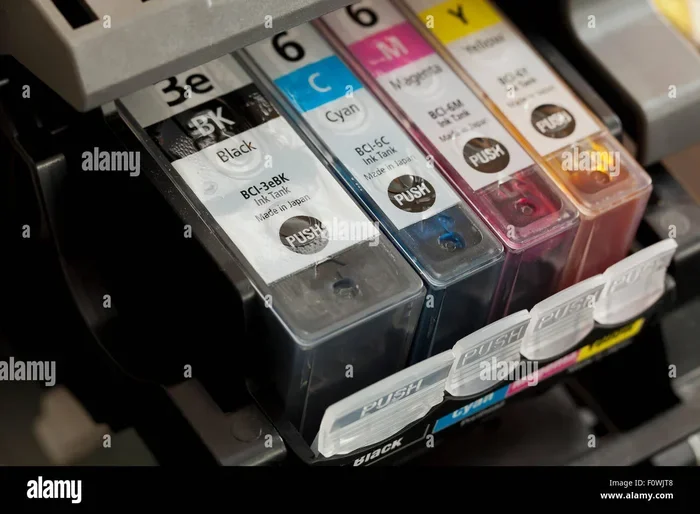
Look at the cartridge label. The model number is printed clearly on the top or side of each cartridge. HP 65 will say “HP 65” and HP 67 will say “HP 67.” Some newer cartridges also have a color-coded band around the top.
Here are a few quick tips:
- Check the part number: It is printed directly on the cartridge.
- Compare the size: HP 67 cartridges are slightly taller due to the extra ink.
- Look at the color: Both come in black and tricolor versions, but the tricolor cartridge for 67 may have a different shade than the 65 version.
- Use the HP Smart app: This free app lets you check which cartridges your printer needs.
Taking a moment to verify the cartridge number can save you a lot of headaches later. Never assume two cartridges are interchangeable just because they look alike.
What Happens When You Use 67 Ink In A 65 Slot?
If you have already inserted a 67 cartridge into a printer that takes 65, you might be wondering what to expect. The experience varies from printer to printer. Here are the most common outcomes.
Scenario 1: The Printer Accepts It
Some printers are flexible enough to recognize and use a 67 cartridge in a 65 slot. In this case, the printer will treat the 67 as a standard cartridge. You may notice that the ink levels do not display correctly because the printer expects a 65 chip.
Print quality is usually fine in this scenario. But keep an eye on the output for the first few pages. Look for any color shifts or streaking.
Scenario 2: The Printer Shows An Error
Many printers will display an error message when an unsupported cartridge is inserted. You might see messages like “Cartridge Not Recognized” or “Incompatible Cartridge Installed.”
In this case, you will need to remove the 67 cartridge and insert the correct 65 cartridge. Trying to bypass the error by pressing buttons or resetting the printer is not recommended.
Scenario 3: The Printer Prints But With Poor Quality
This is the trickiest outcome. The printer does not show an error, but the printouts look off. Colors may be too dark, too light, or slightly shifted. Over time, this can indicate that the ink is not flowing properly through the print head.
If you notice poor print quality after a cartridge swap, stop using that combination immediately. Running poor ink through your print head can cause clogs that are expensive to fix.
Tips For Getting The Best Print Results
Whether you are using the correct cartridge or exploring alternatives, these tips will help you get the best results from your printer.
1. Always Use The Recommended Cartridge
The safest approach is to use the cartridge model recommended by your printer manufacturer. This ensures optimal print quality and protects your warranty. If you want to save money, look for compatible ink cartridges that are designed specifically for your printer model.
2. Run A Printhead Cleaning Cycle
If you have recently swapped cartridges or noticed faded prints, run a printhead cleaning cycle. Most printers have this option built into their maintenance menu. This helps clear any dried ink from the nozzles and keeps your prints sharp.
3. Store Cartridges Properly
Ink cartridges have a shelf life. Store them in a cool, dry place away from direct sunlight. Do not leave them out of the printer for extended periods, as the ink can dry out and clog the nozzles.
4. Check Ink Levels Regularly
Use the HP Smart app or your printer’s display panel to monitor ink levels. Running a cartridge completely dry can damage the print head. Replace cartridges before they run out entirely.
5. Consider High-Yield Options
If you print frequently, consider investing in high-yield cartridges. They cost more upfront but last longer and reduce the number of replacements you need. This can save both time and money over the long term.
Common Mistakes To Avoid When Swapping Ink Cartridges
Swapping ink cartridges seems simple, but small mistakes can lead to big problems. Here are the most common errors users make.
- Assuming all cartridges are interchangeable: Just because two cartridges fit does not mean they are compatible.
- Ignoring error messages: If the printer says the cartridge is incompatible, listen to it.
- Using expired ink: Expired cartridges can produce terrible print quality and may damage your printer.
- Touching the copper contacts: Oils from your fingers can interfere with the electrical connection between the cartridge and the printer.
- Skipping the priming step: After inserting a new cartridge, let the printer prime the print head before printing important documents.
Avoiding these simple mistakes can extend the life of your printer and keep your print quality consistent.
Expert Insights On Ink Compatibility
We spoke with a printer technician who has over 10 years of experience servicing inkjet printers. Here is what they had to say about using different cartridge models.
“The biggest mistake we see is people assuming that if a cartridge fits, it will work perfectly. That is not always true. The ink formulation matters just as much as the physical fit. Using the wrong ink can lead to long-term damage to the print head, which is one of the most expensive parts to replace.”
They also emphasized the importance of checking your printer model before buying any replacement ink. “Always double-check the model number on your printer and match it to the correct cartridge. It takes two minutes and can save you a lot of money and frustration.”
Another expert tip they shared was to keep a spare cartridge on hand. “Running out of ink mid-print can dry out the print head. Having a backup ready means you can replace it immediately and avoid any damage.”
Alternatives To Swapping Cartridge Models
If you are considering using 67 ink instead of 65 because of cost or availability, there are better alternatives to explore.
Compatible Cartridges
Compatible cartridges are third-party replacements designed to work with specific printer models. They are much cheaper than OEM cartridges and are formulated to match the original ink specs. Look for reputable brands with good reviews.
Remanufactured Cartridges
Remanufactured cartridges are recycled OEM cartridges that have been refilled and tested. They are an eco-friendly option that can save you up to 50% compared to buying new OEM cartridges.
Ink Subscription Services
HP offers ink subscription services through HP Instant Ink. You pay a monthly fee based on your printing volume, and HP sends you replacement cartridges automatically. This can be a convenient and cost-effective solution for regular printers.
Each of these alternatives is safer than swapping cartridge models. They give you the ink you need without risking damage to your printer or voiding your warranty.
How To Find The Right Cartridge For Your Printer
Finding the correct cartridge does not have to be confusing. Follow these simple steps to get it right every time.
- Check your printer model number: This is usually printed on the front or back of the printer.
- Visit the manufacturer’s website: Go to the support section and enter your model number.
- Look up the recommended cartridges: The website will list all compatible cartridge models.
- Compare the options: Choose between standard and high-yield based on your printing needs.
- Purchase from a trusted source: Buy from authorized retailers or directly from the manufacturer.
Following these steps ensures you always get the right ink for your printer. It also helps maintain optimal print quality and protects your device from damage.
The bottom line is clear. While you might be tempted to use 67 ink instead of 65, the safest and most reliable choice is to stick with the cartridge your printer was designed to use. Taking a few extra minutes to verify compatibility can save you time, money, and a lot of frustration in the long run.
If you are still unsure about which cartridge to use, reach out to HP customer support. They can confirm the right cartridge for your specific model and help you troubleshoot any issues you might be experiencing. Your printer is an investment, and using the correct ink is one of the best ways to protect it.
Frequently Asked Questions
Can I Use 67 Ink Instead Of 65 In Any HP Printer?
No, not all HP printers support both cartridge types. Check your printer manual or the HP website to confirm which cartridges your specific model uses. Using an unsupported cartridge can cause errors or poor print quality.
Will Using 67 Ink Instead Of 65 Void My Printer Warranty?
It can. HP does not officially support mixing cartridge models. If using a 67 cartridge in a 65 printer causes damage, HP may deny warranty claims. Always use the recommended cartridge to stay protected.
What Is The Difference Between HP 65 And HP 67 Ink Cartridges?
The main differences are ink volume, page yield, and printer compatibility. HP 65 is a standard yield cartridge used in entry-level printers, while HP 67 is a higher yield cartridge used in more advanced models. The ink formulations also differ slightly.
Can I Mix HP 65 And 67 Cartridges In The Same Printer?
It is not recommended. Mixing different cartridge models can lead to inconsistent print quality and may confuse the printer’s ink level monitoring system. Always use the same cartridge model in all slots if your printer supports multiple cartridges.
Are Compatible 65 And 67 Cartridges Safe To Use?
Yes, compatible cartridges from reputable brands are generally safe. They are designed to match the specs of OEM cartridges. However, always buy from trusted sellers to avoid low-quality products that could damage your printer.
How Do I Know If My Printer Accepts 67 Ink Instead Of 65?
Check your printer’s user manual or visit the HP support website. Enter your printer model number to see the list of compatible cartridges. If 67 is listed as compatible, you can safely make the swap.
=== CONCLUSION ===
So, can you use 67 ink instead of 65? The answer is: it depends. In some cases, it works fine. In others, it causes problems. The safest route is always to use the cartridge model your printer recommends.
Printer ink compatibility is not something you should guess about. Taking a few minutes to verify your cartridge model can save you from poor print quality, clogged print heads, and costly repairs. Whether you are printing documents, photos, or school projects, using the right ink makes all the difference.
If you are looking to save money, consider compatible cartridges or ink subscription services. These options give you the flexibility to print without the risk of using the wrong ink. Your printer will thank you, and your prints will look their best.
Remember to store your cartridges properly, run regular maintenance cycles, and always double-check before you swap. With the right approach, you can keep your printer running smoothly for years to come. Using the correct ink is one of the simplest yet most effective ways to protect your investment and get the best results from every print job.