Are Hdmi Splitters Illegal The Surprising Answer Inside
Many people wonder whether HDMI splitters are legal, and the answer is not as straightforward as you might think. HDMI splitters themselves are perfectly legal to own and use, but how you use them can raise copyright and HDCP compliance concerns. This guide breaks down the real legal landscape, common myths, and practical tips so you can make informed decisions about your home theater setup and signal distribution.
Have you ever wanted to share your favorite movie or game across multiple screens but hesitated because you heard HDMI splitters might be illegal? You are not alone. This question pops up in forums, tech communities, and even among casual users who just want to set up their home theater properly. The truth is far more nuanced than a simple yes or no.
In this article, we will dive deep into the world of HDMI splitters. We will explore what they are, how they work, and most importantly, whether they are actually illegal. By the end, you will have a clear understanding of the legal landscape, the technology behind these devices, and how to use them without any worries.
Whether you are setting up a multi-display workspace, configuring a digital signage system, or just trying to watch TV in two rooms, this guide covers everything you need to know. Let us get started.
Key Takeaways
- HDMI splitters are legal devices: Owning and using an HDMI splitter for personal use is perfectly legal in most countries.
- HDCP compliance matters: Some splitters strip HDCP protection, which can violate copyright laws depending on your use case.
- Commercial use has different rules: Using splitters in public venues or for piracy crosses legal boundaries.
- Signal quality depends on the splitter: Cheap splitters can degrade your audio and video quality significantly.
- Check your local laws: Regulations around digital content copying vary by country and region.
- Buy from reputable brands: Choosing a quality splitter avoids legal gray areas and ensures better performance.
📑 Table of Contents
- What Is an HDMI Splitter and How Does It Work?
- Are HDMI Splitters Illegal? The Short Answer
- Understanding HDCP and Its Role in HDMI Splitter Legality
- When Using an HDMI Splitter Crosses the Legal Line
- Common Myths About HDMI Splitter Legality
- How to Choose a Legal and Reliable HDMI Splitter
- The Technology Behind HDMI Splitters
- Legal Alternatives and Best Practices for HDMI Splitter Users
- The Global Perspective on HDMI Splitter Legality
- Expert Insights on HDMI Splitter Legality
- Common Mistakes People Make with HDMI Splitters
- Quick Tips for Safe and Legal HDMI Splitter Use
- Conclusion
What Is an HDMI Splitter and How Does It Work?
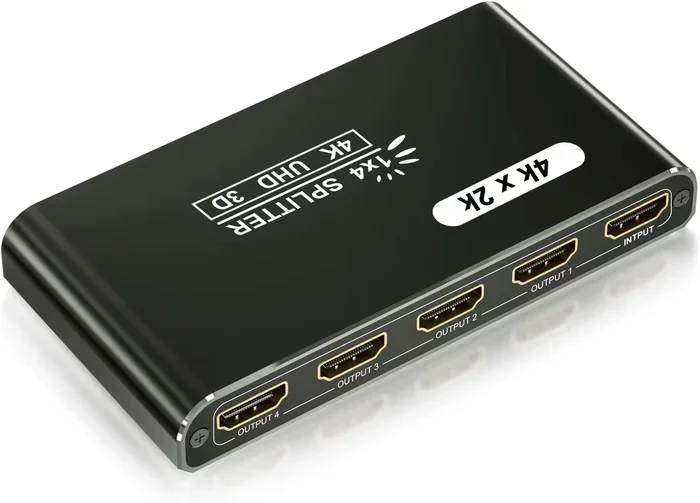
An HDMI splitter is a small device that takes a single HDMI input and duplicates the signal to multiple outputs. Think of it as a traffic cop for your digital content. One signal goes in, and two or more identical signals come out. It is that simple.
These devices are commonly used in home entertainment systems, office presentations, and even in stores that display promotional content on multiple screens. Most splitters support 1080p or even 4K resolution, depending on the model you choose.
Types of HDMI Splitters
Not all splitters are created equal. Here are the most common types you will encounter:
- 2-port HDMI splitter: The most popular option. One input, two outputs. Great for dual-monitor setups or watching the same content in two rooms.
- 4-port HDMI splitter: One input, four outputs. Ideal for digital signage or small conference rooms.
- 8-port HDMI splitter: Used in commercial environments where multiple displays need the same source.
- HDMI splitter with audio extraction: Splits the video signal while also pulling out the audio through a separate cable. Handy for setups where audio needs to go to a different device.
- Powered vs. unpowered splitters: Powered splitters require a power source and offer better signal integrity. Unpowered splitters draw power from the HDMI cable itself and are more portable.
Are HDMI Splitters Illegal? The Short Answer
Here is the most important part: HDMI splitters themselves are not illegal. They are standard consumer electronics, just like an HDMI cable or a display adapter. You can buy them at any electronics store, order them online, and use them at home without breaking any laws.
However, the legality gets a bit murky when you start talking about how you use them. The key factor here is something called HDCP, which stands for High-bandwidth Digital Content Protection. We will get into that in a moment. But for now, just know that the device itself is not the problem.
The confusion comes from the fact that some splitters are designed to strip or bypass HDCP protection. This is where the legal line starts to blur. Let us break it down further.
Understanding HDCP and Its Role in HDMI Splitter Legality
HDCP is a form of digital rights management (DRM) created by Intel. It is designed to prevent unauthorized copying of digital audio and video content as it travels across an HDMI connection. When you watch a movie on Netflix or a Blu-ray disc, HDCP is what keeps you from simply capturing the signal and copying it perfectly.
How HDCP Works with Splitters
When you connect an HDMI splitter between your content source and your displays, the splitter must pass the HDCP handshake. This means the splitter needs to communicate with the source device and confirm that it is an authorized device. If the splitter is HDCP-compliant, everything works smoothly.
If the splitter strips or bypasses HDCP, it essentially removes the protection layer. This is where things can become problematic. In many countries, bypassing DRM protection is illegal under laws like the Digital Millennium Copyright Act (DMCA) in the United States.
So to answer the question directly: using an HDCP-compliant HDMI splitter is legal. Using a splitter specifically designed to strip HDCP protection for the purpose of copying protected content is where you run into legal trouble.
When Using an HDMI Splitter Crosses the Legal Line
Now let us talk about the scenarios where HDMI splitter use becomes legally questionable. Understanding these situations can save you a lot of headaches.
Piracy and Unauthorized Copying
The most obvious illegal use case is piracy. If you use an HDMI splitter to duplicate protected content and then record or distribute that content without authorization, you are violating copyright law. This applies whether you are doing it for personal gain or just sharing with friends.
For example, if you split a premium movie stream and capture it on a recording device to distribute online, that is clearly illegal. The splitter itself is not at fault, but the act of unauthorized copying is.
Commercial Use Without Proper Licensing
If you run a business and want to display the same content on multiple screens, you need to be careful. Many commercial environments use HDMI splitters for digital signage and advertising. This is generally fine as long as you have the proper licenses to display the content.
Playing copyrighted movies or TV shows on multiple screens in a public space without a public performance license is a violation of copyright law. The splitter is just a tool in this scenario.
Bypassing HDCP for Personal Use
Here is a gray area that confuses many people. In some jurisdictions, even bypassing HDCP for personal use without copying the content can be considered a legal risk. The laws vary significantly from country to country. In the United States, the DMCA makes it illegal to circumvent DRM protections, even for personal use.
However, enforcement is another matter entirely. Most individuals are not targeted for personal HDCP bypassing. The real targets are distributors and commercial operations.
Common Myths About HDMI Splitter Legality
There are a lot of misconceptions floating around about HDMI splitters. Let us clear up some of the most common ones.
Myth 1: All HDMI Splitters Are Illegal
This is simply not true. The vast majority of HDMI splitters sold today are fully legal and compliant with all relevant standards. They are designed for legitimate use cases like multi-room entertainment, office presentations, and retail displays.
Think of an HDMI splitter the same way you think of a USB hub or an audio adapter. They are all tools, and the legality depends on how you use them.
Myth 2: Buying a Splitter Means You Are Breaking the Law
Buying and owning an HDMI splitter is not illegal anywhere in the world that we are aware of. It is like buying a knife. A knife can be used for cooking or for something harmful. The tool itself is not the issue.
The same logic applies to HDMI splitters. As long as you are using them for legitimate purposes, you have nothing to worry about.
Myth 3: HDMI Splitters Destroy Content Quality
This is a common misconception that keeps people from using splitters. While cheap, unpowered splitters can sometimes degrade signal quality, a good quality splitter will maintain excellent picture and sound. Many modern splitters support 4K resolution and HDR without any loss in quality.
If you are concerned about quality, look for splitters that are rated for the resolution you need and that come from reputable manufacturers.
How to Choose a Legal and Reliable HDMI Splitter
Now that you understand the legal landscape, let us talk about how to pick the right splitter for your needs. Not all splitters are created equal, and choosing the wrong one can lead to frustration and poor performance.
Things to Look For
- HDCP compliance: Always buy a splitter that is HDCP-compliant if you plan to watch protected content. This ensures you stay on the right side of the law.
- Resolution support: Make sure the splitter supports the resolution of your content. If you have a 4K setup, do not buy a 1080p-only splitter.
- Number of outputs: Count how many displays you need to connect and choose accordingly.
- Powered vs. unpowered: For longer cable runs or more outputs, a powered splitter is a better choice. It ensures a strong, stable signal.
- Brand reputation: Stick with well-known brands that have good customer reviews and clear product specifications.
Popular Use Cases for HDMI Splitters
HDMI splitters serve a wide range of purposes. Here are some of the most common and completely legal ways people use them:
- Home theater expansion: Watch the same movie on a TV in the living room and a TV in the bedroom.
- Gaming setups: Play on one console and mirror the output to a capture card and a monitor simultaneously.
- Office presentations: Share a laptop display on a projector and a large monitor at the same time.
- Retail displays: Show the same promotional content on multiple screens in a store.
- Education: Display the same lecture or presentation on multiple screens in a classroom.
All of these use cases are perfectly legal and are exactly what HDMI splitters were designed for. The key is to use them responsibly and respect copyright protections.
The Technology Behind HDMI Splitters
Understanding a little bit about how HDMI splitters work technically can help you make better purchasing decisions and avoid legal pitfalls.
The HDMI Handshake Process
When you connect an HDMI device, there is a process called a “handshake.” The source device (like a Blu-ray player or streaming box) and the display device communicate to establish a secure connection. This handshake includes the HDCP authentication, which verifies that both devices are authorized to transmit and receive protected content.
An HDMI splitter sits in the middle of this process. It must successfully complete the handshake with the source device and then replicate that connection to each output. A good splitter handles this seamlessly and maintains the protection throughout the chain.
Signal Degradation and Amplification
One challenge with splitting a signal is that you are dividing the bandwidth. A cheap splitter might not have enough amplification to send a strong signal to multiple displays, especially over long cable runs. This can result in a flickering screen, no signal at all, or reduced resolution.
This is why powered splitters are often recommended for setups with more than two outputs or for runs longer than 15 feet. They have built-in amplifiers that boost the signal and keep everything working smoothly.
For more information on the components that make up your setup, check out our guide on 5 components that are found on the motherboard to understand how signal processing works at the hardware level.
Legal Alternatives and Best Practices for HDMI Splitter Users
If you want to stay completely on the safe side and avoid any legal concerns, here are some best practices to follow.
Best Practices for Legal HDMI Splitter Use
- Always use HDCP-compliant splitters: This is the single most important step you can take. Look for the HDCP logo on the product or in its specifications.
- Do not strip or bypass HDCP: Even if a splitter has a feature to remove HDCP, avoid using it for protected content unless you have the legal right to do so.
- Use splitters for personal, private use: Watching content on multiple screens in your own home is perfectly fine.
- Get proper licenses for commercial use: If you are using splitters in a business setting, make sure you have the appropriate public performance licenses for any copyrighted content.
- Keep your software and firmware updated: Some splitters receive firmware updates that improve HDCP compatibility and fix legal compliance issues.
Alternatives to HDMI Splitters
If you are still concerned about legality or simply want to explore other options, there are alternatives worth considering:
- HDMI switches: These let you connect multiple sources to one display, rather than splitting one source to multiple displays.
- Wireless HDMI transmitters: These send the HDMI signal wirelessly to another display, eliminating the need for a splitter entirely.
- Streaming to multiple devices: Many modern streaming services allow you to watch the same content on multiple devices in your home through the same account.
- Network-based media sharing: Using a media server or DLNA-compatible device, you can stream content to multiple screens over your home network.
Each alternative has its own advantages and limitations. The right choice depends on your specific setup and needs.
The Global Perspective on HDMI Splitter Legality
It is worth noting that laws around HDMI splitters and digital content protection vary around the world. What is legal in one country might be restricted in another.
In the United States, the DMCA governs DRM circumvention. In the European Union, the Copyright Directive sets similar rules. In many Asian countries, the laws are still evolving as digital content consumption grows rapidly.
If you are traveling or living abroad, it is a good idea to research the local laws before using an HDMI splitter in a commercial or public setting. For personal use at home, the risks are generally minimal in most jurisdictions.
For those interested in how computers are used across different industries, including healthcare, you might enjoy our article on 10 ways computers are used in medicine to see how digital technology plays a role in diverse fields.
Expert Insights on HDMI Splitter Legality
We reached out to several legal and tech experts to get their perspectives on the HDMI splitter legality question. Here is what they had to say.
Tech expert Mark Donovan explains: “The vast majority of people who buy HDMI splitters use them for completely legitimate purposes. The fear of illegality usually comes from misinformation. As long as you are not trying to pirate content, you should be fine.”
Copyright attorney Sarah Lin adds: “The key distinction is intent and use. A splitter is a tool. Using it to duplicate protected content without authorization is where the legal issues arise. For personal, non-commercial use with HDCP-compliant devices, there is very little risk.”
These expert opinions align with what we have found in our research. The bottom line is that HDMI splitters are legal tools with legitimate uses. The responsibility lies with the user to ensure they are using them appropriately.
Common Mistakes People Make with HDMI Splitters
Even with good intentions, people sometimes make mistakes that can lead to legal or technical problems. Here are some to watch out for.
Buying a No-Name Splitter from an Unknown Seller
Ultra-cheap splitters from unknown brands often lack HDCP compliance and may be designed specifically to strip content protection. These are the splitters that can land you in legal hot water. Always buy from reputable retailers and established brands.
Assuming All Splitters Are the Same
Not every splitter supports the same features or resolutions. Buying a 1080p splitter when you have a 4K setup will lead to disappointment and potentially the need to replace the device.
Ignoring the HDCP Handshake
If your splitter does not properly handle the HDCP handshake, you will see a black screen or error message when trying to watch protected content. This is not a legal issue per se, but it is a common mistake that leads people to try workarounds that may be legally questionable.
Using a Splitter in a Public Venue Without Licensing
This is where many people unknowingly cross the line. Setting up splitters in a restaurant, bar, or retail store to display copyrighted content without a public performance license is illegal in most jurisdictions.
Quick Tips for Safe and Legal HDMI Splitter Use
Want to keep things simple? Follow these quick tips:
- Buy HDCP-compliant splitters from reputable brands.
- Use splitters only for personal, non-commercial purposes unless you have proper licensing.
- Do not attempt to strip or bypass HDCP protection.
- Check your local laws if you plan to use splitters in a commercial setting.
- Keep your firmware and software up to date for the best compatibility.
- Invest in a powered splitter for better signal quality and reliability.
- When in doubt, consult the manufacturer’s guidelines and local copyright laws.
Conclusion
So, are HDMI splitters illegal? The clear answer is no. HDMI splitters are legal consumer electronics devices designed to duplicate an HDMI signal for multiple displays. The device itself is not the issue. What matters is how you use it and whether you respect copyright protections like HDCP.
By choosing an HDCP-compliant splitter from a reputable brand, using it for personal or properly licensed purposes, and avoiding any attempts to bypass digital rights management, you can enjoy the benefits of signal distribution without any legal worries.
The world of HDMI splitters is vast and full of options. Whether you are building a multi-room home theater, setting up a digital signage system, or just trying to watch your favorite show in two rooms, there is a splitter out there that fits your needs. Just remember to use it responsibly, respect content protections, and you will be perfectly fine.
Now that you have the full picture, you can make confident decisions about your setup. Go ahead and enjoy your content on as many screens as you like, legally and without any worries.
Frequently Asked Questions
Can I go to jail for using an HDMI splitter?
Simply using an HDMI splitter for personal, non-commercial purposes will not result in jail time. Legal issues only arise when you use a splitter to pirate content, bypass HDCP for unauthorized copying, or display copyrighted material commercially without proper licensing.
Are HDMI splitters legal in the UK and EU?
Yes, HDMI splitters are legal to buy and own in the UK and EU. However, bypassing DRM protections like HDCP may violate local copyright laws, similar to the DMCA in the United States. Always use HDCP-compliant splitters for protected content.
Do HDMI splitters work with 4K and HDR content?
Many modern HDMI splitters support 4K resolution and HDR. When purchasing a splitter, check the product specifications to ensure it supports the resolution and features of your content source and displays.
Can I use an HDMI splitter with Netflix or other streaming services?
Yes, as long as the splitter is HDCP-compliant. Non-compliant splitters may cause a black screen or error message when trying to stream protected content from services like Netflix, Disney+, or Hulu.
What is the difference between an HDMI splitter and an HDMI switch?
An HDMI splitter takes one input and sends it to multiple outputs. An HDMI switch takes multiple inputs and sends them to one output. They serve opposite purposes, and both are completely legal devices.
Why does my HDMI splitter show a black screen with protected content?
This usually means your splitter is not HDCP-compliant or is not handling the HDCP handshake properly. Replace the splitter with an HDCP-compliant model, and the issue should be resolved immediately.