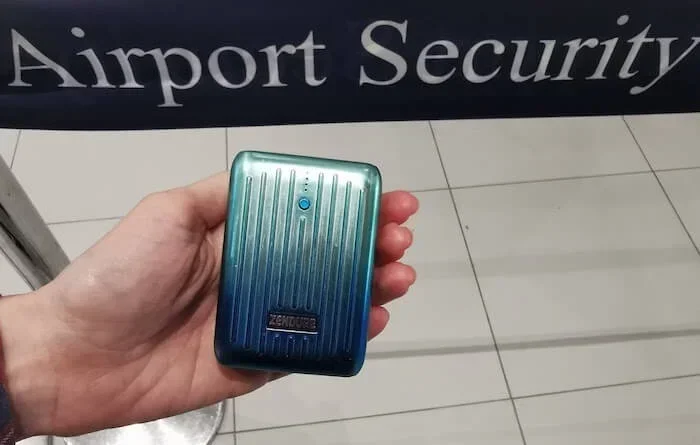
Are Power Banks Allowed On Flights Heres What To Know
Wondering if you can bring a power bank on your next flight? The short answer is yes, but only in your carry-on. Are power banks allowed on flights? They are permitted in hand luggage under strict TSA regulations, with capacity limits and safety rules you must follow. This guide covers everything from battery limits to common mistakes, so you can travel with confidence.
Key Takeaways
- Power banks are allowed in carry-on only: Never pack them in checked luggage.
- Capacity limits apply: Most airlines restrict power banks over 100Wh without approval.
- TSA rules are strict: Security will confiscate non-compliant power banks.
- Label your power bank: Clear markings help avoid confusion at security.
- Airline policies vary: Check your carrier’s specific guidelines before flying.
- Safety first: Damaged or recalled power banks are prohibited.
📑 Table of Contents
- Can You Bring A Power Bank On A Plane?
- Understanding Battery Capacity And Watt-Hour Limits
- Why Power Banks Are Banned In Checked Luggage
- Airline-Specific Rules And Exceptions
- Quick Tips For Stress-Free Travel With A Power Bank
- Common Mistakes Travelers Make With Power Banks
- Expert Insights From Aviation Safety Professionals
- Final Thoughts: Staying Compliant And Powered Up
Can You Bring A Power Bank On A Plane?
The short answer is yes. You can bring a power bank on a flight, but only in your carry-on bag. The rules are clear and they exist for a very good reason. Are power banks allowed on flights in checked luggage? No, they are strictly banned from the cargo hold. This is one of the most common questions travelers ask before a trip. Knowing the rules ahead of time saves you from stress at the airport.
The Transportation Security Administration (TSA) sets the baseline rules in the United States. These rules align with international aviation guidelines. The main concern is lithium batteries. They can overheat and catch fire if damaged. That is why you must keep your portable charger with you, where you can monitor it. The protective circuitry inside a power bank works like other components found on the motherboard, preventing dangerous short circuits. This safety design is exactly why the rules exist.
TSA Rules For Power Banks
The TSA allows power banks in hand luggage only. They are classified as spare batteries. You cannot charge a power bank while on the plane. The device must be turned off during the flight. Security officers may ask you to power it on for inspection. If your power bank has a unclear label, it might be confiscated. Always make sure your device has a visible watt-hour rating or mAh rating printed on it.
Hand Luggage vs Checked Bags
Checked luggage goes into the cargo hold, which is not monitored the same way as the cabin. A fire in the cargo hold is extremely dangerous. That is why airlines enforce a strict no-power-bank policy for checked bags. If you accidentally pack one, remove it before checking your luggage. For healthcare workers, a charged power bank keeps medical laptops running, just as computers are used in medicine to support critical tasks. You need that device within reach at all times.
Understanding Battery Capacity And Watt-Hour Limits
Every power bank has a capacity rating. The two common units are milliampere-hours (mAh) and watt-hours (Wh). The watt-hour rating is the one that matters most for flights. It tells you the total energy stored in the battery. Airlines use this number to decide if your device is allowed.
What Is A Watt-Hour?
A watt-hour measures energy over time. A 1Wh battery can deliver 1 watt of power for 1 hour. Most smartphones have batteries around 10 to 15Wh. A typical travel power bank ranges from 10Wh to 100Wh. The bigger the capacity, the more charges it can hold. But bigger also means stricter rules apply.
How To Check Your Power Bank’s Rating
Look at the label on your power bank or the original box. You will see the mAh and the voltage (V). To calculate watt-hours, use this simple formula:
Wh = (mAh × V) / 1000
For example, a 20,000mAh power bank with a 5V output equals 100Wh. That is the maximum limit you can carry without special approval. If your power bank exceeds 100Wh, you need to check with your airline. Most carriers allow up to 160Wh with prior approval. Anything above 160Wh is not allowed on passenger flights at all.
Here is a quick comparison of the rules:
| Battery Rating | Allowed Without Approval | Airline Approval Needed | Prohibited |
|---|---|---|---|
| Under 100Wh | Yes, in carry-on only | No | N/A |
| 100Wh to 160Wh | No | Yes, ask your airline | N/A |
| Over 160Wh | No | No | Yes, completely banned |
Why Power Banks Are Banned In Checked Luggage
The cargo hold of an aircraft is pressurized but not actively monitored for temperature changes. Lithium batteries can short-circuit if they are crushed or exposed to extreme heat. A fire in the cargo hold is much harder to detect and extinguish. That is why aviation authorities like the FAA and IATA classify power banks as dangerous goods when placed in checked bags. The battery management system in a power bank works similarly to other components found on the motherboard, ensuring safe discharge and preventing thermal runaway. Without that safeguard in the cabin, the risk becomes unacceptable.
Even if your power bank is turned off, it can still malfunction. The internal cells can swell or leak. This is why the rule is absolute. Never put a power bank in your checked suitcase, no matter how small it is.
Airline-Specific Rules And Exceptions
While the base rules come from international standards, individual airlines may add their own restrictions. Always check your carrier’s website before you fly. Here are a few things to keep in mind.
US Airlines
US carriers follow TSA guidelines closely. They generally allow power banks up to 100Wh in carry-on bags. For the 100Wh to 160Wh range, you must contact the airline at least 48 hours before departure. Some major carriers like Delta and American Airlines have clear online forms for battery approval. Budget airlines may be stricter. They might not allow power banks over 100Wh at all.
International Carriers
International flights follow IATA (International Air Transport Association) regulations. European, Asian, and Middle Eastern carriers enforce the same watt-hour limits. However, some countries have additional local rules. For example, certain airlines in the Middle East require power banks to be in a separate protective bag. Always read the terms and conditions of your ticket. The flight regulations section usually lists spare battery policies.
Quick Tips For Stress-Free Travel With A Power Bank
Traveling with a power bank does not have to be complicated. Follow these simple steps to stay compliant and powered up:
- Label your device clearly: Write the watt-hour rating on a piece of tape if the label is fading.
- Carry it in a protective case: A padded pouch prevents accidental activation or damage.
- Know your capacity: Memorize the Wh rating so you can answer security questions quickly.
- Do not charge it on the plane: Using a USB port to charge a power bank is not allowed.
- Bring a backup cable: A short cable keeps your phone charged without needing a wall outlet.
- Keep it accessible: You may need to remove it from your bag at security screening.
Common Mistakes Travelers Make With Power Banks
Even frequent flyers make mistakes. Avoid these common errors to keep your trip smooth.
Packing It In Checked Luggage
This is the number one mistake. You pack your carry-on in a hurry and forget the power bank is in the side pocket. If security finds it in checked luggage, they will confiscate it. You might also face a fine. Always do a final check of your bags before you leave home.
Ignoring The Wh Rating
Many travelers only look at the mAh number. A 20,000mAh power bank is fine, but a 30,000mAh model might exceed 100Wh. If you do not know the rating, ask the manufacturer. Do not guess. Bringing a non-compliant device can cause delays at the gate.
Bringing A Damaged Power Bank
A swollen or leaking power bank is a serious safety hazard. If you drop your charger and the casing bulges, do not fly with it. Damaged lithium batteries are strictly prohibited. Replace it before your trip. The aviation authority takes this rule very seriously.
Expert Insights From Aviation Safety Professionals
Aviation safety experts consistently emphasize that spare batteries are a top risk factor in in-flight incidents. The FAA reports that lithium battery fires are difficult to control in the early stages. This is why the rules around portable chargers are so strict. Experts recommend buying power banks from reputable brands. Look for UL or CE certification. These marks mean the device has passed rigorous safety tests. Cheap, uncertified chargers often lack proper protection circuits. They are more likely to overheat. A little extra cost for a certified travel accessory can save you from a major headache.
Another tip from safety professionals: do not carry too many power banks at once. The general guideline is a maximum of two spare batteries per passenger. This limit applies to both carry-on and personal items. If you are traveling with a group, distribute the chargers. This reduces the total risk and keeps everyone compliant.
Final Thoughts: Staying Compliant And Powered Up
So, are power banks allowed on flights? Yes, they are a welcome travel companion as long as you follow the rules. Keep your device in your carry-on, respect the watt-hour limits, and label it clearly. A little preparation goes a long way. Now you can travel with confidence, knowing your phone, tablet, and laptop will stay powered up throughout your journey. Safe travels and happy charging!
Frequently Asked Questions
Can I bring a power bank in my checked bag if it is turned off?
No. Even if the power bank is turned off, it is not allowed in checked luggage. The risk of a fire in the cargo hold is too high. Always keep your portable charger in your carry-on bag where you can monitor it.
What happens if my power bank exceeds 100Wh?
Power banks between 100Wh and 160Wh require approval from your airline. You must contact the carrier at least 48 hours before your flight. Without approval, the device will be confiscated at the security checkpoint. Anything over 160Wh is completely prohibited on passenger aircraft.
Do I need to remove my power bank from my bag at security?
Yes, in most cases. Security officers may ask you to take your power bank out of your bag for separate screening. This is similar to how you remove laptops and liquids. Keeping your power bank easily accessible speeds up the process.
Can I charge my phone using a power bank during the flight?
Yes, you can use a power bank to charge your phone during the flight. However, you cannot charge the power bank itself using a seatback USB port. The power bank must remain powered off and stowed safely when not in use.
Are there any power banks that are completely banned?
Yes. Power banks without a clear rating label, damaged power banks, and recalled devices are banned. The aviation authority requires all spare batteries to have a visible watt-hour or mAh rating. If your power bank looks swollen or leaks, do not bring it on the plane.
How many power banks can I carry on a flight?
Most airlines allow a maximum of two spare power banks per passenger. This limit applies to carry-on and personal items combined. If you are traveling with a group, spread the chargers across different bags to stay within the rules.