Can I Connect Hdmi To Cpu Everything You Need To Know
Yes, you can connect HDMI to your CPU, but the method depends on your motherboard and graphics setup. Whether you have integrated graphics or a dedicated GPU, there is a straightforward way to get HDMI working. This guide covers everything from basic connections to troubleshooting common problems.
So you have a CPU and a monitor with an HDMI port. You want to connect them. Simple, right? Well, not always. The answer to the question “Can I Connect HDMI To CPU” depends on several factors. Your motherboard model matters. Your graphics setup matters. Even the type of HDMI cable you use matters.
This guide breaks down everything you need to know. We will walk through the connection process step by step. We will cover common problems and their solutions. By the end, you will feel confident plugging in that HDMI cable. Let us get started.
Connecting a display to your computer might seem like a small task. But getting it right the first time saves you hours of frustration. Whether you are building a new PC or setting up an office workstation, understanding your HDMI options is essential. Let us dive in.
Key Takeaways
- Direct HDMI connection is possible: Most modern CPUs and motherboards support HDMI output through integrated graphics or dedicated GPUs.
- Check your motherboard first: Not all CPUs come with built-in HDMI ports. You need to verify your specific model.
- Dedicated graphics cards change the game: If you have a dedicated GPU, the HDMI port is usually on the graphics card, not the motherboard.
- Adapters are your best friend: HDMI to VGA, HDMI to DisplayPort, and USB-C to HDMI adapters solve most compatibility issues.
- Troubleshooting is simple: Most HDMI problems can be fixed with cable reseating, driver updates, or BIOS adjustments.
- Cable quality matters: Using the right HDMI version ensures you get the best resolution and refresh rate.
📑 Table of Contents
- What Is HDMI and Why Does It Matter?
- Can You Connect HDMI Directly to a CPU?
- How to Connect HDMI to Your CPU Setup
- Troubleshooting HDMI Connection Issues
- HDMI vs Other Connection Types
- Best Practices for HDMI Connections
- Common Mistakes People Make When Connecting HDMI
- Expert Insights on HDMI and CPU Connections
- Frequently Asked Questions
- Conclusion
What Is HDMI and Why Does It Matter?
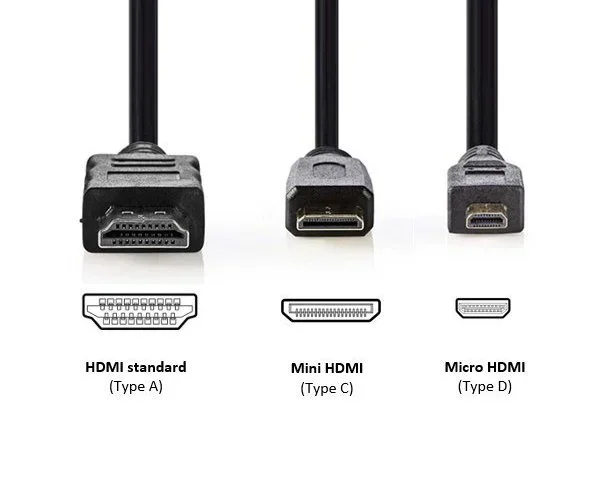
HDMI stands for High-Definition Multimedia Interface. It is the most common cable type used to connect computers to monitors and TVs. One cable carries both video and audio signals. This makes it incredibly convenient. You do not need separate cables for sound and picture.
HDMI has been around since the early 2000s. Over the years, it has evolved. Newer versions support higher resolutions and faster refresh rates. HDMI 1.4 can handle 4K at 30Hz. HDMI 2.0 supports 4K at 60Hz. HDMI 2.1 takes it even further with 4K at 120Hz and 8K support.
When you ask “Can I Connect HDMI To CPU,” you are really asking about your system’s video output capabilities. Your CPU alone does not output video. It is the motherboard or graphics card that does the heavy lifting. Understanding this distinction is the first step to a successful connection.
Different HDMI Versions Explained
Not all HDMI cables are the same. Here is a quick breakdown of the most common versions you will encounter:
- HDMI 1.4: Supports 1080p and 4K at 30Hz. Good for basic setups.
- HDMI 2.0: Supports 4K at 60Hz. Great for gaming and media.
- HDMI 2.1: Supports 4K at 120Hz and 8K at 60Hz. Ideal for high-end setups.
When shopping for cables, look at the version number on the packaging. A higher version number means better performance. Most modern monitors come with HDMI 2.0 or higher. Your CPU and motherboard will also support specific HDMI versions. Check your specs before buying.
Can You Connect HDMI Directly to a CPU?
This is where things get interesting. The short answer is yes, but with a catch. A CPU by itself does not have an HDMI port. The HDMI connection happens through your motherboard or graphics card. Let us explore how this works in different scenarios.
Understanding the Difference Between CPU and Motherboard
Many people confuse the CPU with the entire computer. The CPU is the brain. It processes instructions. But it does not have video output ports. The motherboard is the foundation. It houses the CPU and provides all the ports you see on the back of your computer.
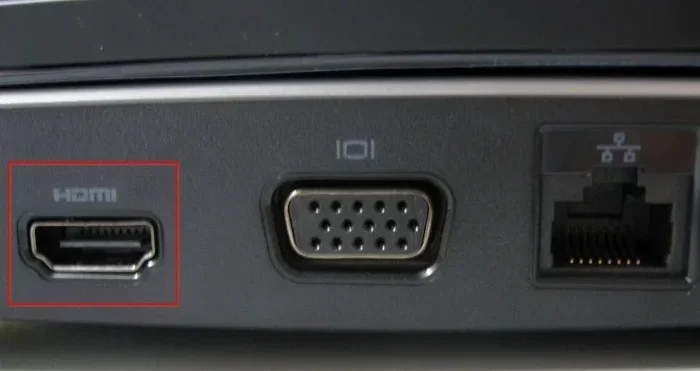
When you look at the back of your PC, the HDMI port is on the motherboard. It is not on the CPU itself. The CPU works with the motherboard to send video signals through that HDMI port. This is why checking your motherboard specs is so important.
Integrated Graphics vs Dedicated Graphics
Not all CPUs have integrated graphics. Integrated graphics means the GPU is built right into the processor. If your CPU has integrated graphics, your motherboard likely has an HDMI port. If it does not, you will need a dedicated graphics card.
Here is how to check. Look up your CPU model online. Search for “integrated graphics” in the specifications. Intel CPUs with an “F” suffix, like the i5-12400F, do not have integrated graphics. AMD Ryzen CPUs with an “G” suffix, like the Ryzen 5 5600G, do have them.
If you have a dedicated graphics card, the HDMI port is on the card itself, not the motherboard. You will plug your HDMI cable into the graphics card. This is a common point of confusion for beginners. Always check where the HDMI port actually is on your system.
How to Connect HDMI to Your CPU Setup
Now that you understand the basics, let us walk through the actual connection process. It is simpler than you might think. Follow these steps and you will be up and running in minutes.
Step-by-Step Connection Guide
- Power off your computer: Always turn off your PC before connecting cables. This protects your components from electrical damage.
- Locate the HDMI port: Check the back of your computer. If you have integrated graphics, look at the motherboard ports. If you have a dedicated GPU, look at the card.
- Insert the HDMI cable: Plug one end into the HDMI port on your computer. Push it in firmly until it clicks.
- Connect the other end: Plug the other end into your monitor or TV.
- Power on your devices: Turn on your computer and your monitor.
- Select the correct input: Use your monitor’s menu to select the HDMI input source.
That is it. In most cases, your computer will automatically detect the display. You should see a picture within seconds. If you do not, do not worry. We will cover troubleshooting in a later section.
Common Adapter Options
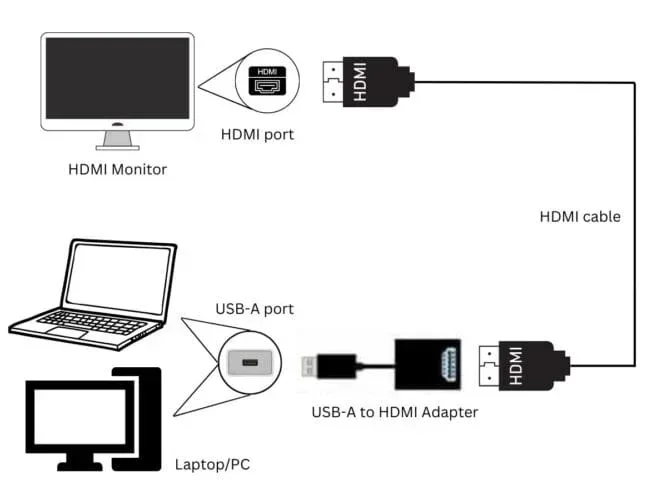
What if your monitor does not have an HDMI port? What if your computer only has DisplayPort or USB-C? Adapters come to the rescue. Here are the most common options:
- HDMI to VGA adapter: Connects older monitors without HDMI to modern computers.
- HDMI to DisplayPort adapter: Bridges the gap between HDMI and DisplayPort systems.
- USB-C to HDMI adapter: Perfect for laptops and modern slim PCs.
- HDMI splitter: Allows you to connect one source to multiple displays.
When buying adapters, always go for quality brands. Cheap adapters can cause signal loss, flickering, or no signal at all. A good adapter costs around 10 to 20 dollars. It is worth the investment.
Troubleshooting HDMI Connection Issues
Sometimes things do not go as planned. Your monitor stays black. You get a “no signal” error. This is frustrating, but it is also very fixable. Let us look at the most common problems and how to solve them.
No Signal Problems
The “no signal” error is the most common HDMI issue. It usually means your computer is not sending a video output. Here is what to check:
- Reseat the cable: Unplug the HDMI cable from both ends. Plug it back in firmly.
- Try a different HDMI port: Your monitor may have multiple HDMI inputs. Switch to another one.
- Test with a different cable: A damaged cable can cause no signal issues. Try a new one.
- Check your graphics card: If you have a dedicated GPU, make sure the HDMI cable goes into the card, not the motherboard.
Sometimes the simplest fix is the right one. A loose connection causes more problems than people realize. Always check your cables first before diving into complex solutions.
Audio and Video Sync Issues
Sometimes your picture looks great but the audio is out of sync. Or you get video but no sound. This happens more often than you might think. Here are a few fixes:
- Check your audio settings: Right-click the sound icon in your taskbar. Select your HDMI output as the default audio device.
- Update your graphics drivers: Outdated drivers can cause audio and video sync problems. Visit your GPU manufacturer’s website for the latest drivers.
- Adjust the audio delay: Some monitors and TVs have settings to adjust audio delay manually.
Audio and video sync issues are annoying but rarely serious. A driver update fixes most of these problems. Give that a try before exploring more complex solutions.
HDMI vs Other Connection Types
HDMI is not the only way to connect your monitor. DisplayPort, VGA, and DVI are all alternatives. Each has its strengths. Let us compare them so you can make an informed choice.
HDMI vs DisplayPort
DisplayPort is the rival to HDMI. It is common on PC monitors and graphics cards. Here is how they compare:
- HDMI: Best for TVs and home theater setups. Widely supported on all devices.
- DisplayPort: Best for high refresh rate gaming monitors. Supports higher bandwidth in newer versions.
For most office and home use, HDMI works perfectly. For competitive gaming at high refresh rates, DisplayPort has the edge. Many monitors now offer both options. You can use either one depending on your needs.
HDMI vs VGA and DVI
VGA and DVI are older connection types. They are still found on some monitors and projectors. Here is what you need to know:
- VGA: Analog signal only. No audio support. Maximum resolution around 2048×1536. It is outdated but still works for basic tasks.
- DVI: Digital signal. Better quality than VGA. No audio support. Common on older graphics cards.
If you have an older monitor with VGA or DVI, you will need an adapter to connect it to a modern computer with HDMI output. These adapters are inexpensive and widely available. They make older monitors work with new systems easily.
Best Practices for HDMI Connections
Once your HDMI connection is working, you want to keep it working well. Follow these best practices to get the best experience from your setup.
Cable Quality Matters
Not all HDMI cables are created equal. A cheap cable might work for basic tasks. But for 4K gaming or high refresh rate monitors, you need a quality cable. Look for cables that are certified for the HDMI version you need.
Here are some tips for choosing the right cable:
- Check the version: Make sure the cable supports HDMI 2.0 or higher for 4K at 60Hz.
- Go for shielded cables: Shielded cables reduce interference and signal loss.
- Buy from reputable brands: Brands like Cable Matters, Belkin, and Amazon Basics offer reliable options.
- Keep cables short: Longer cables can degrade signal quality. Keep your HDMI cable under 6 feet when possible.
Resolution and Refresh Rate Tips
Getting the best picture quality from your HDMI connection involves a few settings tweaks. Here is how to optimize your display:
- Go to Display Settings: Right-click on your desktop and select Display Settings. Scroll down to Display Resolution and choose the highest option available.
- Check refresh rate: Go to Advanced Display Settings. Make sure your refresh rate is set to the maximum your monitor supports.
- Update your GPU drivers: Always keep your graphics drivers up to date. This ensures the best compatibility and performance.
- Enable HDR if supported: If your monitor supports HDR, enable it in your display settings for richer colors and better contrast.
These small adjustments can make a huge difference in your viewing experience. Take five minutes to check your settings. You will notice the improvement immediately.
Common Mistakes People Make When Connecting HDMI
Even experienced PC users make mistakes with HDMI connections. Here are the most common errors and how to avoid them.
- Plugging into the wrong port: If you have a dedicated graphics card, always plug into the GPU’s HDMI port, not the motherboard’s.
- Using an outdated cable: An old HDMI 1.4 cable might not support 4K at 60Hz. Check your cable version before buying.
- Ignoring driver updates: Outdated graphics drivers cause more display problems than people realize. Update them regularly.
- Forcing the cable in: HDMI connectors are delicate. Do not force them. If it does not fit easily, check the angle and try again.
- Assuming all ports are the same: Some motherboards have multiple HDMI ports with different capabilities. Check which one supports your desired resolution.
Avoiding these mistakes will save you time and prevent unnecessary frustration. Take a moment to verify your setup before powering on your system.
Expert Insights on HDMI and CPU Connections
We asked a few PC hardware experts for their tips on HDMI connections. Here is what they had to say.
Check your BIOS settings first. Some motherboards disable integrated graphics by default. If your HDMI connection is not working, enter your BIOS and make sure integrated graphics is enabled. This single setting fixes many “no signal” problems.
Use the right cable for your needs. If you are gaming at 4K, you need an HDMI 2.0 or 2.1 cable. A basic HDMI 1.4 cable will not cut it. Investing in the right cable upfront saves you from upgrading later.
Do not overlook adapters. A good adapter can solve compatibility issues that seem impossible at first glance. USB-C to HDMI adapters are especially useful for modern laptops. They give you HDMI output from a slim, lightweight machine.
These expert tips come from years of hands-on experience. They can help you avoid common pitfalls and get the most out of your HDMI connection.
Frequently Asked Questions
Can I Connect HDMI to CPU Without a Motherboard?
No, you cannot connect HDMI directly to a CPU without a motherboard. The CPU does not have video output ports. The motherboard provides the HDMI port that connects to your display. Even with integrated graphics, the HDMI output is handled by the motherboard chipset.
Why Is There No HDMI Port on My CPU?
CPUs do not have HDMI ports because they are processing units, not output devices. The HDMI port is on your motherboard or graphics card. If your CPU does not have integrated graphics, your motherboard may not have an HDMI port at all. In that case, you need a dedicated graphics card with HDMI output.
Can I Use HDMI to Connect a CPU to a TV?
Yes, you can connect your CPU to a TV using an HDMI cable. Most modern TVs have HDMI inputs. Simply plug one end into your computer and the other into your TV. Make sure your TV is set to the correct HDMI input source. You may also need to adjust your display settings to extend or mirror your screen.
Do I Need a Special HDMI Cable for 4K?
Yes, for 4K at 60Hz, you need an HDMI 2.0 or higher cable. Standard HDMI 1.4 cables only support 4K at 30Hz. Look for cables labeled “High Speed HDMI” or “Premium High Speed HDMI” to ensure they support higher resolutions and refresh rates.
What Should I Do if My HDMI Connection Keeps Disconnecting?
Try these steps: First, reseat the HDMI cable on both ends. Second, try a different HDMI port on your monitor. Third, test with a new HDMI cable. Fourth, update your graphics drivers. If the problem persists, your cable or port may be damaged and need replacement.
Can I Connect Multiple Monitors Using HDMI to My CPU?
Yes, you can connect multiple monitors if your CPU and graphics card support it. You can use multiple HDMI ports if available. If you run out of HDMI ports, use adapters to convert other outputs like DisplayPort or USB-C to HDMI. Check your graphics card specs for the maximum number of supported displays.
Conclusion
The answer to “Can I Connect HDMI To CPU” is a clear yes. You can connect HDMI to your CPU setup through your motherboard or dedicated graphics card. The key is understanding how your system handles video output and choosing the right cable and ports for your needs.
We covered a lot of ground in this guide. From understanding HDMI versions to troubleshooting common issues, you now have the knowledge to connect your display with confidence. Remember to check your CPU for integrated graphics. Always plug into the right HDMI port. Use quality cables and adapters when needed.
Your HDMI connection is the bridge between your computer and your display. Treat it well, and it will serve you reliably for years. Take the time to set it up correctly. Enjoy crisp visuals, clear audio, and a seamless computing experience. Your perfect setup is just one cable away.