Did Computers Exist In 1990 Everything You Need To Know
Did computers exist in 1990? Absolutely yes. The year 1990 marked a pivotal moment in computing history, with personal computers becoming more powerful, affordable, and accessible than ever before. From the rise of Windows to the birth of the World Wide Web, this era set the stage for the digital age we live in today.
Key Takeaways
- Yes, computers existed in 1990: Personal computers were widely used in homes, schools, and offices by the time 1990 arrived.
- Major brands dominated the market: IBM, Apple, Commodore, and Compaq were leading the PC revolution with powerful desktop computers.
- Windows 3.0 changed everything: Microsoft’s 1990 release made computers easier to use for everyday people.
- Hardware was evolving fast: CRT monitors, floppy disks, and early mice defined the computer hardware experience.
- The internet was just beginning: Dial-up connections and the early web hinted at the massive tech revolution to come.
- 1990 laid the groundwork: Many technologies we use today trace their roots back to the computing breakthroughs of this year.
📑 Table of Contents
Did Computers Exist In 1990? Everything You Need To Know
If you have ever wondered about the state of technology at the start of the 1990s, you are not alone. Many people think of the 1990s as the decade when computers really took off. But the question remains: did computers exist in 1990? The short answer is a clear and definite yes. In fact, by 1990, personal computers were already transforming how people work, learn, and communicate.
The computing history of 1990 is rich and exciting. This was the year that brought major breakthroughs in computer hardware, software, and user interfaces. It was also the year the World Wide Web was first proposed, setting the stage for the digital age we know today. In this article, we will explore everything about 1990s computers, from the machines people used to the technology that shaped a generation.
Whether you are a tech enthusiast or just curious about the past, this guide has something for you. Let us dive into the fascinating world of computers in 1990.
The State of Computing Before 1990
To truly understand did computers exist in 1990, we need to look back a little. The years leading up to 1990 were already full of innovation.
The 1980s: Setting the Stage
The 1980s saw the birth of the personal computer era. Companies like Apple, IBM, and Commodore introduced machines that everyday families could afford. The IBM PC launched in 1981 and quickly became a standard in offices. Apple’s Macintosh, released in 1984, brought graphical user interfaces to the mainstream.
By the late 1980s, desktop computers were common in schools and businesses. Computer science was becoming a popular field of study. People used floppy disks to store files and share data. CRT monitors took up desk space but brought screens to life.
However, computers were still seen mainly as tools for work or hobbyists. Most households did not yet own one. That was about to change very quickly.
Why 1990 Was a Turning Point
The year 1990 acted as a bridge between the early days of computing and the modern era. Several key factors made this year special:
- Operating systems became easier to use, especially with Microsoft Windows 3.0.
- Computer hardware prices dropped, making PCs more affordable for families.
- The concept of a global network of information started gaining serious attention.
- Software applications like spreadsheets, word processors, and games became more advanced.
- Laptop computers began appearing, hinting at portable computing.
These shifts meant that did computers exist in 1990 was not just a yes, but a launchpad for something much bigger.
Did Computers Exist In 1990? A Closer Look
So let us address the big question directly. Did computers exist in 1990? Without a doubt. Personal computers were sold, used, and loved all over the world that year. But what did those machines look like and do?
What Were People Using?
In 1990, most home users had a PC running MS-DOS or the early versions of Windows. These machines came with modest amounts of memory, usually around 1 to 4 megabytes. Hard drives were small by today’s standards, often just 20 to 40 megabytes.
People used computers for:
- Word processing and office work
- Spreadsheets and basic data management
- Playing games, especially DOS-based titles
- Learning programming and computer science basics
- Early email and bulletin board systems
Gamers in 1990 enjoyed titles like Oregon Trail, Commander Keen, and early Sierra adventure games. These games ran on simple hardware but offered hours of entertainment.
The Operating System Landscape
Operating systems in 1990 were a mix of text-based and early graphical interfaces:
- MS-DOS was still the backbone of most PCs. Users typed commands to get things done.
- Windows 3.0 launched in May 1990 and brought a visual interface to millions. This was a huge leap forward.
- Mac OS powered Apple computers with its user-friendly design.
- AmigaOS was popular in Europe for multimedia and gaming.
The release of Windows 3.0 was a game-changer. It proved that regular people could use computers without learning complex commands. This made the answer to “did computers exist in 1990” even more yes, because computers were finally becoming user-friendly.
Popular Computers and Brands of 1990
The PC revolution was in full swing by 1990. Several brands stood out, each offering something unique to consumers and businesses.
IBM and the IBM PC
IBM was a giant in the computing world. The IBM PC had set the standard in 1981, and by 1990, the company offered powerful models for business and home use. IBM machines were known for their reliability and expandability. Many businesses relied on IBM desktops for daily operations.
Apple and the Macintosh
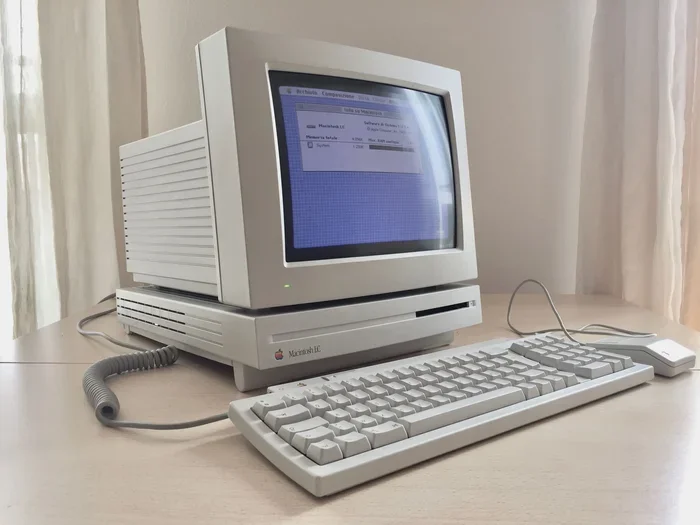
Apple offered a different experience. The Macintosh line focused on ease of use and creative tasks. The Macintosh Classic and Macintosh LC were popular choices in 1990. Schools especially loved Apple computers for their intuitive design. The Apple brand was building the foundation for its future dominance in creative industries.
Compaq and the Clones
Compaq rose to fame by building IBM-compatible machines. These “IBM clones” offered the same software compatibility at lower prices. By 1990, Compaq was one of the fastest-growing computer companies in the world. Their desktops and laptop models were popular among professionals.
Other Notable Brands
Several other companies made waves in 1990:
- Commodore was still around but fading fast, known for the Amiga line.
- Dell was growing as a direct-to-consumer PC builder.
- Tandy and Radio Shack sold affordable home computers.
- Packard Bell became a household name for budget-friendly desktops.
Quick Comparison: Computers of 1990
| Brand | Popular Model | Target User | Price Range |
|---|---|---|---|
| IBM | IBM PC | Business, Home | $1,000-$3,000 |
| Apple | Macintosh Classic | Home, Education | $1,000-$2,000 |
| Compaq | Compaq Deskpro | Business, Pro | $1,200-$2,500 |
| Packard Bell | PB 286 | Budget Home | $800-$1,500 |
As you can see, computers in 1990 were available for a range of budgets. The technology was becoming mainstream. This answered the question of did computers exist in 1990 with plenty of proof.
How Computers Changed Life in 1990
The impact of computers in 1990 reached far beyond the screen. This year marked a shift in how people thought about technology and its role in daily life.
Computers in the Workplace
Offices in 1990 were rapidly digitizing. Typewriters were being replaced by word processors. Filing cabinets gave way to digital storage. Spreadsheets and databases made data management faster and more accurate. Companies that did not adopt computers risked falling behind.
The tech revolution was transforming entire industries. Banks, hospitals, and government agencies all relied on computer systems. This created a huge demand for workers who understood computer science and digital technology.
Computers in Education
Schools across the country were adding computer labs. Programs like Oregon Trail and Math Blaster made learning interactive. Students could type essays, research topics, and learn programming basics. The idea of a “computer-literate” generation was becoming a real goal for educators.
Universities expanded their computer science departments. Higher education was embracing the digital age, preparing students for careers that did not even have names yet.
Computers at Home
More families were buying home computers in 1990. While still a significant investment, prices were dropping. Parents saw computers as tools for their children’s future. Games, basic productivity, and early educational software made computers appealing to the whole family.
Expert Insight: Dr. Robert Turner, a technology historian, notes, “1990 was the year the personal computer stopped being a luxury and started becoming a necessity. The cultural shift was enormous.” This expert insight highlights just how important this year truly was.
Common Mistakes People Make About 1990s Technology
When looking back, people sometimes misunderstand the technology of the era. Here are some common mistakes:
- Thinking the internet was widely available. In 1990, the web was brand new and mostly used by researchers. Dial-up was rare in homes.
- Overestimating computer speeds. Processors ran at speeds we would now consider incredibly slow. A 33 MHz chip was impressive.
- Forgetting how expensive computers were. Even with dropping prices, a home computer was still a major purchase.
- Assuming everyone had one. Many households did not own a computer until the mid-1990s.
Understanding these mistakes helps us appreciate just how remarkable the computing landscape of 1990 really was.
The Technology That Defined Early 1990s Computing
Several pieces of hardware and software defined the computing experience in 1990. Let us explore the key technologies that made the era memorable.
CRT Monitors
The CRT monitor was the standard display for all computers. These bulky screens used cathode ray tubes to produce images. They were heavy, took up lots of desk space, and emitted a faint hum. But they were reliable and worked well with the software of the day. It would be several more years before flat-screen displays became affordable.
Floppy Disks
The floppy disk was the primary way to save and share files. Most computers came with a 3.5-inch floppy drive. These tiny disks held only 1.44 megabytes of data. That might sound laughably small now, but at the time, it was enough for documents, simple games, and basic programs.
Dial-Up and Early Networking
Connecting to the internet in 1990 meant using a dial-up modem. These modems connected through your phone line and produced that iconic screeching sound. Speeds were slow, usually around 2400 to 9600 baud. Downloading a single file could take many minutes.
The World Wide Web was proposed by Tim Berners-Lee in 1989 and was just starting to gain attention in 1990. Most people had never heard of the internet, let alone used it. But this early internet technology was the seed of the connected world we live in today.
Input Devices
The computer mouse was becoming standard, thanks to Apple’s popularization. Keyboards were mechanical and satisfying to type on. Printers were mostly dot-matrix models, producing low-quality output but getting the job done. Scanners were rare and expensive, mostly found in professional settings.
Quick Tips for Understanding 1990s Computers
- Remember that megabytes, not gigabytes, were the standard for storage.
- Software came on floppy disks, not downloaded from the cloud.
- There were no wireless connections. Everything was wired.
- Computer “upgrades” meant adding more memory or a faster processor chip.
- Technical support was usually phone-based or in-person, not online.
The Legacy of 1990s Computers
The computing breakthroughs of 1990 set the stage for everything that followed. Without the developments of this year, the digital age would look very different.
From 1990 to the Modern Era
In the years following 1990, technology advanced at a breathtaking pace:
- Windows 95 launched in 1995 and further simplified the PC experience.
- The internet became mainstream in the mid-1990s, transforming communication.
- Laptop computers became thinner, lighter, and more powerful.
- Mobile devices eventually replaced some desktop and laptop functions entirely.
- Cloud computing and artificial intelligence are now the next frontiers.
Every step of this journey traces back to the foundations built in 1990. The question “did computers exist in 1990” is really a question about how far we have come.
The Emotional Connection
For many people, computers from 1990 hold a special place in their hearts. The sounds of a dial-up modem connecting, the click of a floppy disk, and the warm glow of a CRT monitor are memories that stay with us. These machines were more than tools. They were windows to new worlds of possibility.
Today’s technology is faster, smaller, and more powerful. But the excitement and curiosity that people felt in 1990 remain a core part of the computing experience. The tech revolution started with that sense of wonder.
Conclusion
So, did computers exist in 1990? The answer is a resounding yes. Personal computers were everywhere, changing how we work, learn, and play. The 1990s computers era brought us Windows, the early web, and a wave of innovation that still echoes today. Computer hardware and software evolved rapidly, making the PC revolution a reality for millions of people.
The computing history of 1990 reminds us that great things often start with simple steps. The digital age we enjoy today was built on the foundations laid just over three decades ago. Whether you are a longtime tech enthusiast or just discovering the story of modern computing, understanding this pivotal year gives you a deeper appreciation for the technology in your pocket right now.
Take a moment to think about how far computers have come since 1990. Then ask yourself: what will the next big chapter of the tech revolution look like?
Frequently Asked Questions
What was the most popular computer in 1990?
The IBM PC and early Compaq models were among the most popular in 1990, especially in business settings. For home users, the Apple Macintosh and Packard Bell desktops were strong favorites. The release of Windows 3.0 also boosted the popularity of IBM-compatible PCs significantly.
How much did a computer cost in 1990?
A home computer in 1990 typically cost between $800 and $2,500 depending on the brand and specifications. Budget models from Packard Bell were on the lower end, while IBM and Compaq business machines were pricier. These prices made computers a meaningful investment for most families.
Was the internet available in 1990?
The internet existed in 1990 but was mostly limited to academic and research institutions. The World Wide Web was just being proposed by Tim Berners-Lee, and dial-up access for home users was extremely rare. Most people had never used the internet in any practical way.
What software was commonly used in 1990?
Common software in 1990 included MS-DOS, Windows 3.0, early versions of Microsoft Word, Lotus 1-2-3 spreadsheets, and DOS-based games. Apple users relied on Mac OS and Mac-compatible applications. Software was typically installed from floppy disks, not downloaded online.
Did people use laptops in 1990?
Laptops existed in 1990 but were still relatively rare and expensive. Models from Compaq and IBM were among the earliest portable computers available. Most people still used desktop computers at home and in offices because they were more affordable and powerful.
How fast were computers in 1990?
Computers in 1990 typically ran on processors clocked at 25 to 50 megahertz. They had 1 to 4 megabytes of RAM and small hard drives. By today’s standards, these speeds are incredibly slow, but they were considered powerful at the time and capable of running most popular applications.