Can You Put Any Type Of Speakers In A Car And Save Money
Not all speakers fit every car, but you have more options than you think. You can swap in aftermarket speakers, Bluetooth-enabled units, and even repurpose home audio gear with the right adapters. Putting any type of speakers in a car is possible when you understand size, wiring, and compatibility basics.
This is a comprehensive guide about Can You Put Any Type Of Speakers In A Car.
Key Takeaways
- Speaker compatibility depends on size, impedance, and mounting depth: not every speaker fits every car out of the box.
- Coaxial and component speakers are the two main types: each offers different sound quality and installation complexity.
- You can save money by reusing old speakers: a little DIY know-how goes a long way.
- Wiring and adapter harnesses make swapping easier: you don’t always need professional help.
- Bluetooth upgrades let you modernize an older car: check out how to turn your car radio into Bluetooth for wireless streaming.
- Match speaker wattage to your head unit: mismatched power levels can damage your equipment.
- Test before you commit: temporary wiring lets you preview the sound before a permanent install.
[FEATURED_IMAGE_PLACEHOLDER]
Can You Put Any Type Of Speakers In A Car And Still Save Money?
Most car owners want better sound without spending a fortune. The good news is that putting any type of speakers in a car is more flexible than many people realize. Whether you have a pair of old home speakers, a set of Bluetooth-enabled units, or budget-friendly aftermarket car audio, there is usually a way to make it work.
Saving money on a car audio upgrade is totally doable. You do not need to buy brand-new factory-matched speakers. A little research and some basic tools can help you swap in speakers that sound great and fit your wallet. This guide walks you through everything you need to know about car speaker compatibility, installation, and keeping costs low.
By the end, you will know exactly which speaker types work in cars, how to check fitment, and what pitfalls to avoid. Let us dive in.
Why Speaker Choice Matters for Your Car Audio
Your car’s sound system depends on more than just the head unit. Speakers are the most important part of any car audio setup. They turn electrical signals into the sound you actually hear. Choosing the right ones affects everything from bass response to vocal clarity.
Putting the wrong type of speaker in your car can lead to poor sound quality, distortion, or even damage to your stereo. On the other hand, picking the right aftermarket speakers can transform how your car sounds without costing hundreds of dollars. Understanding the basics helps you make smarter choices.
How Car Speakers Differ from Home Speakers
Home speakers and car speakers are not the same. Car speakers are built to handle vibrations, temperature changes, and moisture. They also need to fit into tight spaces inside doors, dashboards, and rear decks. Speaker impedance is another big difference. Most car audio systems run at 4 ohms, while many home speakers are 8 ohms.
This does not mean you cannot use non-car speakers. It just means you need to account for these differences. A simple speaker adapter or wiring adjustment can bridge the gap in many cases.
The Role of Your Head Unit
The head unit is the brain of your car sound system. It sends power to the speakers. If your head unit is weak, even great speakers will not sound their best. Before swapping speakers, check how much power your head unit puts out. This number is called wattage.
Matching speaker wattage to your head unit is key. Speakers with too low a wattage rating can blow out. Speakers with too high a rating may not get enough power to sound their best. Aim for a close match and your system will thank you.
Types of Car Speakers You Can Install
Not all speaker types are created equal. Some are designed specifically for cars, while others can be adapted. Here is a breakdown of the most common options people use when upgrading their car audio system.
Coaxial Speakers
Coaxial speakers are the most popular choice for car upgrades. They combine a woofer and a tweeter in one unit. This makes them easy to install and affordable. Most factory speakers in cars are coaxial, so swapping them out is straightforward.
You can find coaxial car speakers at almost any price point. Budget options start around $20 a pair. Higher-end coaxials with better materials can cost $100 or more. For most people looking to save money on car audio, coaxial speakers are the go-to choice.
Component Speakers
Component speakers separate the woofer and tweeter into different units. This setup gives you better sound staging and clearer highs. They are the preferred choice for car audio enthusiasts who want premium quality.
However, component speakers cost more and take more effort to install. You need extra crossover parts and more mounting space. If you are on a tight budget, coaxial speakers offer a better value. But if sound quality is your top priority, components are worth the investment.
Subwoofers for Bass Lovers
Want deep, punchy bass? A car subwoofer is the way to go. Subwoofers handle low-frequency sounds that regular speakers cannot reproduce well. They come in different sizes, from compact 8-inch units to large 12-inch or 15-inch woofers.
Adding a subwoofer requires a bit more setup. You will need an amplifier and a sealed or ported enclosure. This can increase the total cost. But even a small powered subwoofer can make a huge difference in your car’s sound without breaking the bank.
Bluetooth and Wireless Speaker Options
Some people wonder if they can use Bluetooth speakers in their car. The short answer is yes, but with limitations. Portable Bluetooth speakers work for casual listening. They are not a permanent replacement for a proper car audio system.
If you want wireless audio without replacing your entire stereo, consider a Bluetooth transmitter for car. These small devices plug into your existing audio output and stream music from your phone. It is a cheap and easy way to modernize an older car. You can also play your car radio on a Bluetooth speaker for a quick, no-wiring solution.
How to Know If a Speaker Will Fit Your Car
Not every speaker fits every car. Speaker size and mounting depth are the two biggest factors. Before buying anything, you need to know what your car can physically accept.
Check Your Car’s Speaker Sizes
Most cars use standardized speaker sizes. Common sizes include 6.5 inches, 6×9 inches, and 5.25 inches for front doors. Rear decks often use 6×9 or 6.5-inch speakers. Check your car’s manual or measure the existing speaker openings with a ruler.
Here are the most common car speaker sizes you will encounter:
- 6.5 inches: the most common size for front doors
- 6×9 inches: popular for rear decks and larger door panels
- 5.25 inches: often found in smaller cars or dash locations
- 3.5 inches: typical for tweeters or compact vehicles
Measure Mounting Depth Carefully
Width is not the only thing that matters. Mounting depth is how deep the speaker sits into the door or panel. If a speaker is too deep, it will not fit or it will push against the door panel. This can cause rattles and poor sound quality.
Use a tape measure from the back of the mounting flange to the back of the speaker cone. Compare this to the available space in your car. A little extra padding can help if the fit is close, but a speaker that is too large simply will not work.
Adapter Rings and Mounting Kits
Can you use a 6.5-inch speaker in a 5.25-inch opening? Sometimes yes, with an adapter ring. These simple rings fill the gap between the speaker and the door panel. They are cheap and easy to install. Many aftermarket speaker kits include adapter rings in the box.
Just make sure the adapter ring is the right size for both the speaker and your car. A loose fit causes vibration and sound distortion. A snug fit keeps everything secure and sounding clean.
Wiring and Compatibility: What You Need to Know
Wiring is where many DIY car audio projects run into trouble. Getting the electrical connections right is essential for both safety and sound quality.
Speaker Impedance and Power Matching
Speaker impedance measures how much resistance a speaker puts up against the electrical signal. Most car speakers are 4 ohms. Some are 2 ohms. Your head unit must be able to handle the impedance you connect to it.
Wiring two 4-ohm speakers in parallel drops the total impedance to 2 ohms. This draws more power from the head unit. If your head unit cannot handle a 2-ohm load, it may overheat or shut down. Always check the specs before wiring multiple speakers together.
Wire Gauge and Connection Types
The thickness of your speaker wire matters. Thicker wire (lower gauge number) carries power more efficiently. For most car speaker installs, 16-gauge wire is plenty. For longer runs or higher-powered systems, 14-gauge is better.
Connection types also vary. Some speakers use spring clips. Others use binding posts or solder points. Make sure your speaker wiring matches your head unit’s outputs. Adapters are available if the connections do not match up perfectly.
Using a Speaker Harness Adapter
A speaker harness adapter is one of the cheapest and smartest upgrades you can make. These adapters plug into your car’s existing wiring and give you standard speaker wire connections. No cutting, no splicing, no mess.
They also make it easy to remove your upgrade later and revert to factory speakers. For anyone who wants to save money and keep things simple, a harness adapter is a must-have tool.
Can You Use Home Speakers in a Car?
Some people ask if they can connect home speakers to a car. Technically, yes, with the right setup. You need a compatible amplifier or head unit that can drive 8-ohm speakers. You also need to fit them into the car’s available spaces.
The sound quality may not be as good as dedicated car speakers. Home speakers are not built to handle the heat, vibration, and moisture inside a car. But for a temporary setup or a budget hack, it can work in a pinch.
Step-by-Step Guide to Swapping Car Speakers
Swapping speakers in your car is easier than most people think. You do not need to be a mechanic. With the right tools and a little patience, you can do it yourself and save on installation costs.
What You Will Need
- New speakers (matched to your car’s size)
- Speaker wire (16-gauge is a safe bet)
- Wire stripper and crimping tool
- Screwdrivers (Phillips and flathead)
- Speaker harness adapter
- Adapter rings (if needed for fitment)
- Electrical tape or heat shrink tubing
Step 1: Remove the Old Speakers
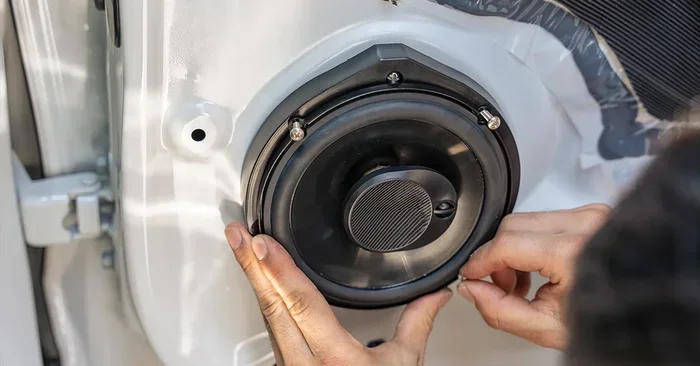
Start by taking off the door panels. Most cars have screws hidden behind the armrest or behind small plastic caps. Remove these screws gently. Use a plastic pry tool to pop off the panel. Avoid using metal tools that can scratch the surface.
Once the panel is off, you will see the old speakers. Disconnect the wiring by pressing the release tabs on the speaker wire connections. Then unscrew the speaker from the door and pull it out carefully.
Step 2: Prepare the New Speakers
Before installing, check that the new speakers match the old ones in size and mounting hole pattern. If they do not match exactly, use the adapter rings to fill any gaps. Strip the ends of your speaker wire and crimp on the appropriate connectors.
Take note of the positive and negative markings on both the speaker and the wire. Matching these correctly is important. Reversed polarity can cause sound quality to suffer and bass response to weaken.
Step 3: Wire and Mount the New Speakers
Connect the speaker wire to the new speaker. Match positive to positive and negative to negative. Push the connections firmly until they click into place. Then mount the speaker into the door using the original screws or the new mounting hardware that came with the speakers.
Test the speakers before you put the door panel back on. Turn on the car stereo and play music at a moderate volume. Listen for any rattling, distortion, or uneven sound. If everything sounds good, reconnect the wiring, secure the door panel, and you are done.
Step 4: Fine-Tune Your Sound
Once the speakers are installed, take a drive and listen. Adjust the equalizer settings on your head unit. Boost the bass slightly if you want more low-end punch. Turn down the treble if the highs sound harsh. Small adjustments make a big difference in how your car audio system sounds day to day.
For an even better experience, consider adding a Bluetooth car adapter so you can stream music wirelessly from your phone. This is a simple add-on that makes any speaker setup feel modern and convenient.
Common Mistakes to Avoid When Upgrading Car Speakers
Even with the best intentions, people make mistakes when swapping car speakers. Avoiding these common errors can save you time, money, and frustration.
Buying Speakers Without Checking Fitment
The biggest mistake is buying speakers without measuring first. A speaker that is too wide or too deep will not fit. Always double-check your car’s specifications and the speaker’s dimensions before ordering. A quick measurement can save you the hassle of returning a product.
Ignoring Impedance and Power Ratings
Mismatching impedance or power ratings can damage your head unit or your new speakers. If your head unit puts out 50 watts RMS, do not pair it with speakers rated for 200 watts. The speakers will not get enough power to sound their best. And if you go the other way, you risk blowing the speakers with too much power.
Skipping the Crossover for Component Speakers
If you install component speakers, do not skip the crossover. The crossover splits the audio signal so the woofer handles lows and the tweeter handles highs. Without it, your speakers will sound muddy and unbalanced. Most quality component speaker sets include a crossover in the box.
Using the Wrong Wire Gauge
Thin wire causes power loss and heat buildup. For runs under 10 feet, 16-gauge wire is fine. For longer runs or higher-powered systems, upgrade to 14-gauge. It is a small cost that protects your investment in car audio equipment.
Forgetting to Seal the Door Panels
After installing speakers, make sure the door panel is sealed tightly. Air gaps behind the speakers cause unwanted vibration and reduce sound quality. Use foam tape or weatherstripping to fill any gaps. This simple step makes a noticeable difference in how your speakers sound.
Expert Insights on Saving Money with Car Speaker Upgrades
Audio professionals agree that you do not need to spend a lot to get great sound. The secret is knowing where to invest and where to save.
Focus on the front speakers first. Your ears sit closest to the front of the car, so this is where you will hear the biggest improvement. Rear speakers add fullness but are less critical for overall sound quality.
Buy during sales or clearance events. Aftermarket speaker brands like Pioneer, JBL, and Rockford Fosgate often run deep discounts. Patience can save you 30 to 50 percent off retail prices.
Consider refurbished or open-box units. Many online retailers sell returned or display speakers at a fraction of the cost. These are often brand new with full warranties.
Upgrade your head unit at the same time. A better head unit unlocks the full potential of your new speakers. Look for models with built-in Bluetooth so you can replace your old car radio with Bluetooth functionality without buying a separate receiver.
Watch video tutorials before you start. YouTube has countless step-by-step guides for almost every car model. Watching someone else do the install first builds confidence and helps you avoid rookie mistakes.
Reuse what you already have. If your car has factory wiring that is still in good condition, you can reuse it with a speaker harness adapter. This eliminates the need to buy new wiring kits and keeps your car speaker installation budget-friendly.
Key Takeaways
- Speaker compatibility depends on size, impedance, and mounting depth: not every speaker fits every car out of the box.
- Coaxial and component speakers are the two main types: each offers different sound quality and installation complexity.
- You can save money by reusing old speakers: a little DIY know-how goes a long way.
- Wiring and adapter harnesses make swapping easier: you do not always need professional help.
- Bluetooth upgrades let you modernize an older car: check out how to turn your car radio into Bluetooth for wireless streaming.
- Match speaker wattage to your head unit: mismatched power levels can damage your equipment.
- Test before you commit: temporary wiring lets you preview the sound before a permanent install.
Conclusion
Putting any type of speakers in a car is absolutely possible when you approach the project with the right knowledge. You do not need to be an audio expert or spend a fortune to enjoy better sound on the road. From coaxial upgrades to Bluetooth-enabled setups, the options are wide open for anyone willing to learn a few basics.
Start by measuring your car’s speaker openings. Check impedance and power ratings. Pick speakers that match your budget and your listening preferences. Follow the wiring steps carefully, and do not skip the test phase before finalizing the install.
The best part is that a car audio upgrade like this can be done in an afternoon with basic tools. You save money on installation, you learn a valuable skill, and you get to enjoy better sound every time you hit the road. So go ahead, pick your speakers, and give your car the audio upgrade it deserves.
Whether you go with a simple coaxial swap or a full component system, the key is to match your setup to your car and your goals. Saving money on car speakers is not about cutting corners. It is about being smart with your choices and doing a little homework before you buy.
FAQs
Can I put any brand of speakers in my car?
Yes, you can mix brands as long as the size, impedance, and mounting depth match your car’s requirements. Brand loyalty matters less than proper fitment and compatible specs. Always check the dimensions and ohm rating before purchasing.
Do I need special tools to install car speakers?
No special tools are required for most speaker swaps. A basic set of screwdrivers, wire strippers, and a drill (for any new mounting holes) is usually enough. A speaker harness adapter makes the wiring even simpler and keeps the job tool-free for most of the process.
Can I use Bluetooth speakers instead of a car stereo?
Bluetooth speakers work for casual listening but are not a permanent replacement for a car stereo system. They lack the power and mounting stability for a proper car setup. A better option is a Bluetooth car adapter that connects to your existing head unit for wireless streaming.
How much does it cost to upgrade car speakers?
A basic coaxial speaker pair can cost as little as $20 to $50. Component speakers range from $100 to $300 for a good set. Add a harness adapter for around $10 to $15. Total DIY cost is often under $100, which is a fraction of what professional installation would charge.
Will bigger speakers always sound better?
Not necessarily. Bigger speakers can produce more bass, but they must fit properly in your car. A well-matched 6.5-inch speaker will often sound better than a poorly fitting 10-inch speaker. Fitment, power matching, and installation quality matter more than size alone.
Can I install car speakers myself if I have no experience?
Absolutely. Speaker replacement is one of the easiest DIY car upgrades. Most projects take less than an hour and require only basic tools. Watch a few video tutorials for your specific car model, follow the wiring guide, and test before you finalize. Most people are surprised at how simple it really is.
Frequently Asked Questions
What is Can You Put Any Type Of Speakers In A Car?
Can You Put Any Type Of Speakers In A Car is an important topic with many practical applications.