Can You Connect A Bluetooth Subwoofer To A Receiver
Yes, you can connect a Bluetooth subwoofer to a receiver and enjoy wireless bass without extra cables. This guide walks you through every method, from Bluetooth adapters to built-in wireless transmitters. You will learn about pairing, compatibility, setup, and how to avoid common issues that ruin your audio experience.
You are watching your favorite movie. The explosions rumble. The music hits hard. And then… nothing. Your Bluetooth subwoofer just won’t connect to the receiver. Sound familiar?
Here is the good news. Connecting a Bluetooth subwoofer to a receiver is absolutely possible. You do not need expensive equipment or a degree in audio engineering. Whether you are setting up a home theater or upgrading your living room sound system, this guide has you covered. We will walk through every method, every tip, and every mistake to avoid.
Let us get into it. By the end of this article, you will know exactly how to make your wireless subwoofer work with your receiver. No guesswork. No frustration. Just great sound.
Key Takeaways
- It works: You can connect a Bluetooth subwoofer to most receivers using adapters, transmitters, or built-in Bluetooth.
- Multiple methods exist: Choose from Bluetooth transmitters, wireless subwoofer adapters, or smart receivers with native Bluetooth support.
- Compatibility matters: Not all receivers support Bluetooth out of the box, so check your model first.
- Audio quality stays high: Modern Bluetooth codecs like aptX and LDAC deliver near-wireless sound quality.
- Latency can be an issue: Some setups introduce a slight delay, but there are easy fixes.
- Placement is key: Position your wireless subwoofer correctly for the best bass response in your room.
📑 Table of Contents
- Why Connect a Bluetooth Subwoofer to a Receiver?
- How to Connect a Bluetooth Subwoofer to a Receiver
- Compatibility: Does Your Receiver Support Bluetooth?
- Step-by-Step Setup Guide
- Common Problems and How to Fix Them
- Best Bluetooth Subwoofers for Receiver Setups
- Expert Tips for the Best Wireless Subwoofer Experience
- Conclusion
Why Connect a Bluetooth Subwoofer to a Receiver?
You might wonder why bother going wireless at all. Plenty of subwoofers come with cables. So what is the big deal about Bluetooth connectivity?
First, it is about convenience. No cables running across your floor. No tripping hazards. No ugly wires visible behind your TV stand. A wireless subwoofer setup keeps your space clean and your sound system looking sleek.
Second, flexibility matters. With a Bluetooth subwoofer, you can place it anywhere in the room. You are not stuck behind a couch or tucked under a desk. Find the sweet spot for the best bass response and go with it.
Third, modern Bluetooth technology has come a long way. Codecs like aptX and LDAC deliver high-quality audio streaming that rivals wired connections. You do not have to sacrifice sound quality for convenience anymore.
The Rise of Wireless Audio in Home Entertainment
Wireless audio has transformed how we set up sound systems. A few years ago, people laughed at the idea of a wireless bass setup. Today, it is the norm. Soundbars, home theater systems, and even affordable receivers now support Bluetooth connectivity out of the box.
This shift happened for a reason. People want simplicity. They want to enjoy deep, rich low-frequency effects without drilling holes in their walls or crawling behind furniture to plug in cables.
So yes, connecting a Bluetooth subwoofer to a receiver is not just possible. It is the future of home audio.
How to Connect a Bluetooth Subwoofer to a Receiver
There are several ways to make this connection work. The right method depends on your equipment. Let us break down each option so you can pick what fits your setup best.
Method 1: Using a Bluetooth Transmitter
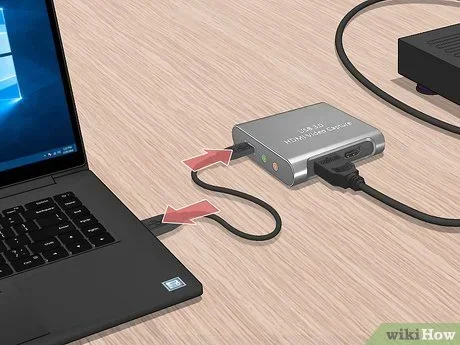
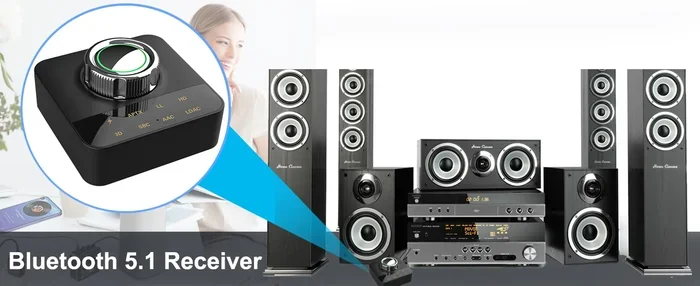
This is the most common approach. If your receiver does not have built-in Bluetooth, a Bluetooth transmitter bridges the gap. It plugs into your receiver’s audio output and sends the signal wirelessly to your subwoofer.
Here is how it works:
- Plug the transmitter into your receiver’s headphone jack, optical output, or RCA output.
- Power on the transmitter and put your subwoofer in pairing mode.
- Select the Bluetooth source on the transmitter.
- The two devices pair automatically.
- Test the connection and adjust the bass levels.
Quick Tip: Look for a transmitter that supports aptX Low Latency. This reduces audio latency and keeps your bass perfectly in sync with the video on screen.
Method 2: Using a Wireless Subwoofer Adapter
Some subwoofer brands sell their own wireless adapters. These adapters plug directly into the subwoofer and communicate with a matching transmitter. Brands like Sonos, Klipsch, and Samsung often include these in their packages.
This method is the simplest if your subwoofer supports it. You just need to buy the matching transmitter for your receiver model. The setup is plug-and-play, and audio quality is usually excellent because the adapter is designed specifically for that subwoofer.
Method 3: Using a Receiver with Built-in Bluetooth
If you are shopping for a new receiver, look for one with built-in Bluetooth. Many modern AV receivers and stereo receivers now include wireless connectivity as a standard feature.
This method is the easiest of all. You simply go into the receiver’s Bluetooth settings, search for your subwoofer, and pair them. No extra cables. No adapters. No hassle.
Popular brands like Denon, Yamaha, and Sony offer receivers with native Bluetooth connectivity. These often support multiple Bluetooth codecs, giving you the best sound quality possible.
Method 4: Using a Smart TV or Streaming Device as a Bridge
Here is a clever workaround. If your TV or streaming device supports Bluetooth, you can use it as a bridge between your receiver and subwoofer.
The chain works like this: Receiver connects to your TV via HDMI or optical cable. Your TV connects to the Bluetooth subwoofer via its built-in Bluetooth. The TV receives the audio signal from the receiver and forwards it wirelessly to the subwoofer.
This is not the most elegant solution, but it works in a pinch. Just be aware that there may be a slight delay in the audio latency because the signal passes through two devices.
Compatibility: Does Your Receiver Support Bluetooth?
Not all receivers are created equal. Before you buy any equipment, you need to know whether your receiver can handle a Bluetooth subwoofer connection.
Receivers with Native Bluetooth
These receivers have Bluetooth built right in. You do not need any extra gear. Just pair your subwoofer and start listening. Models from brands like Denon, Marantz, and Yamaha often include this feature in their mid-range and high-end lines.
When shopping for a receiver with native Bluetooth, look for these features:
- Support for multiple Bluetooth codecs (aptX, aptX HD, LDAC, AAC)
- Bluetooth 5.0 or higher for better range and stability
- Dedicated Bluetooth input options
- Low-latency mode for video sync
Receivers Without Bluetooth
If your receiver does not have Bluetooth, do not worry. You still have options. A Bluetooth transmitter or wireless adapter will do the job. These devices are affordable and widely available.
Check the back panel of your receiver for these outputs:
- 3.5mm headphone jack
- Optical digital output
- RCA stereo outputs
- USB output (on some modern models)
Any of these can feed into a Bluetooth transmitter, which then sends the signal to your subwoofer. It is a simple and effective solution.
Quick Comparison Table
| Receiver Type | Bluetooth Support | Extra Equipment Needed | Ease of Setup | Audio Quality |
|---|---|---|---|---|
| Built-in Bluetooth Receiver | Yes | None | Very Easy | Excellent |
| Non-Bluetooth Receiver | No | Bluetooth Transmitter | Easy | Very Good |
| Older Analog Receiver | No | Bluetooth Transmitter + RCA Cable | Moderate | Good |
| AV Receiver with HDMI ARC | Sometimes | Bluetooth Transmitter (if needed) | Easy | Excellent |
Step-by-Step Setup Guide
Now that you know your options, let us walk through a complete setup. We will use the Bluetooth transmitter method since it works with the widest range of equipment.
Step 1: Gather Your Equipment
Before you start, make sure you have everything you need:
- A Bluetooth subwoofer
- A receiver (with or without built-in Bluetooth)
- A Bluetooth transmitter (if your receiver lacks Bluetooth)
- The right cables (RCA, 3.5mm, or optical)
- A power source for all devices
Step 2: Connect the Transmitter to the Receiver
If you are using a Bluetooth transmitter, plug it into your receiver’s audio output. The 3.5mm jack or RCA outputs on the back of your receiver are the most common connection points. Make sure the connection is secure.
Step 3: Power On and Enter Pairing Mode
Turn on both the transmitter and the subwoofer. Put your subwoofer into pairing mode. Most subwoofers have a dedicated Bluetooth button or a pairing indicator light. Check your subwoofer’s manual if you are unsure how to do this.
Step 4: Pair the Devices
On the transmitter, select Bluetooth as the input source. The transmitter will search for available devices. When your subwoofer appears on the list, select it to pair. You should hear a confirmation tone or see a light change on both devices.
Step 5: Test and Adjust
Play some music or a movie scene with heavy bass. Listen carefully. Is the bass reaching your subwoofer? Is it in sync with the video? Adjust the volume and crossover settings on your receiver until everything sounds right.
Expert Insight: “The biggest mistake people make is placing their subwoofer too far from the transmitter. Keep the distance under 30 feet for the best Bluetooth range and stable connection,” says audio engineer Mark Dawson.
Common Problems and How to Fix Them
Even with the best setup, you might run into issues. Here are the most common problems and their solutions.
Problem 1: Subwoofer Won’t Pair
This is the most frequent complaint. If your Bluetooth subwoofer will not connect, try these fixes:
- Make sure both devices are in pairing mode
- Turn Bluetooth off and back on on both devices
- Move the subwoofer closer to the transmitter
- Reset the subwoofer to factory settings
- Check if the subwoofer is already connected to another device
Problem 2: Audio Lag or Delay
Nothing is more annoying than bass that arrives a split second after the action on screen. This audio latency issue is common with Bluetooth connections.
Here is how to fix it:
- Use a transmitter that supports aptX Low Latency
- Reduce the distance between the transmitter and subwoofer
- Avoid placing the transmitter near Wi-Fi routers or microwaves
- Check your TV’s audio delay settings
Problem 3: Poor Bass Quality
If your bass sounds weak or distorted, the issue is usually placement or settings. Try moving the subwoofer to a different corner of the room. Adjust the crossover frequency on your receiver. A low-frequency effects (LFE) channel setting between 80Hz and 120Hz works well for most rooms.
Problem 4: Connection Drops Frequently
Intermittent connections are frustrating. They usually happen because of interference or distance.
Quick Tips to stabilize your connection:
- Keep the subwoofer within 15 to 20 feet of the transmitter
- Remove obstacles between the two devices
- Use a transmitter with Bluetooth 5.0 or higher
- Avoid placing the transmitter near other wireless devices
Common Mistakes to Avoid
Even experienced users make these errors. Do not let them ruin your setup.
- Skipping firmware updates. Both your receiver and subwoofer may have firmware updates that fix Bluetooth bugs and improve audio quality. Always check for updates before troubleshooting.
- Placing the subwoofer against a wall. This causes bass to boom and muddy. Pull the subwoofer at least 6 inches away from walls for cleaner bass response.
- Using cheap transmitters. A $10 Bluetooth transmitter will not deliver the same results as a quality one. Invest in a good transmitter for reliable wireless audio.
- Ignoring room acoustics. The shape of your room affects how bass travels. A wireless subwoofer placement that works in a small room may not work in a large one.
- Forgetting about the crossover. Your receiver’s crossover setting determines which frequencies go to the subwoofer. Set it correctly or your bass response will suffer.
Best Bluetooth Subwoofers for Receiver Setups
If you are in the market for a new Bluetooth subwoofer, here are some top picks that pair well with receivers.
Klipsch R-120SW
This subwoofer offers powerful bass and comes with a wireless transmitter option. It pairs easily with most receivers and delivers excellent low-frequency effects for movies and music.
Sonos Sub (Gen 2)
The Sonos Sub is a premium choice for wireless audio streaming. It connects via Wi-Fi rather than Bluetooth, but it works beautifully with Sonos-compatible receivers and sound systems. The bass is deep, tight, and distortion-free.
Yamaha NS-SW100
An affordable option that still delivers impressive bass response. The Yamaha NS-SW100 includes a wireless rear-orbital subwoofer kit and works seamlessly with Yamaha receivers.
Samsung HW-Q700B Soundbar with Wireless Subwoofer
This is a complete package that includes a soundbar and a wireless subwoofer. It connects to your TV via Bluetooth and HDMI, making it one of the easiest home theater setups available today.
Expert Tips for the Best Wireless Subwoofer Experience
Want to get the most out of your Bluetooth subwoofer and receiver setup? Follow these expert tips.
- Place the subwoofer in a corner. Corners naturally amplify bass. Try the front corner of your room for the deepest bass response.
- Use the subwoofer’s volume controls. Do not rely solely on your receiver’s volume. Adjust the subwoofer’s built-in volume knob for the perfect balance.
- Experiment with placement. The “subwoofer crawl” method is a pro trick. Place the subwoofer in your listening position, play bass-heavy content, and crawl around the room to find where the bass sounds best. That is where the subwoofer should go.
- Keep firmware updated. Manufacturers regularly release updates that improve Bluetooth connectivity and audio quality.
- Consider a wired backup. Even with a wireless subwoofer, having the option to connect via cable gives you a backup if the Bluetooth connection fails.
Key Takeaways from the setup process:
- A Bluetooth subwoofer connects to a receiver through a transmitter, adapter, or built-in Bluetooth.
- Choose the method that matches your equipment.
- Keep the devices close for a stable wireless connection.
- Use aptX Low Latency transmitters to reduce audio latency.
- Place the subwoofer thoughtfully for the best bass response.
Conclusion
Connecting a Bluetooth subwoofer to a receiver is easier than most people think. Whether you use a Bluetooth transmitter, a wireless adapter, or a receiver with built-in Bluetooth connectivity, the process is straightforward and rewarding.
You now know all the methods, the common problems, and how to fix them. You understand compatibility, setup, and placement. You are ready to enjoy deeper bass, richer sound, and a cleaner living space without the clutter of cables.
The world of wireless audio has opened up new possibilities for home entertainment. A Bluetooth subwoofer paired with your receiver gives you the freedom to place the bass exactly where you want it. The result is a more immersive surround sound experience that makes movies, music, and games come alive.
So go ahead. Set up your wireless subwoofer. Adjust the crossover. Find the perfect spot in your room. And then sit back, relax, and let the bass hit you right.
Your sound system is about to get a serious upgrade. Enjoy every note, every rumble, and every beat. You have earned it.