Are 5g Routers Safe And What Experts Want You To Know
Are 5g routers safe? The short answer is yes — they are designed to meet strict safety standards set by global health organizations. 5G router safety depends on proper use, placement, and understanding how radio frequency waves work. This guide covers what experts want you to know so you can make an informed decision about your home network.
Key Takeaways
- 5G routers are safe: They emit non-ionizing radiation well within limits set by the FCC and WHO.
- Placement matters: Keeping your router a few feet away from where you sleep or spend most of your time reduces exposure.
- Expert consensus supports 5G safety: Major health organizations worldwide agree that current 5G technology poses no known health risks.
- Simple steps boost safety: Turning off your router at night and using wired connections when possible are easy ways to limit exposure.
- Myths cause unnecessary fear: Many concerns about 5G radiation come from misinformation, not scientific evidence.
- Home network security is separate: Router safety also means protecting your network from hackers and unauthorized access.
- Stay informed: Keep up with updates from trusted sources like the WHO and FCC for the latest research on wireless router safety.
📑 Table of Contents
What Exactly Are 5G Routers?
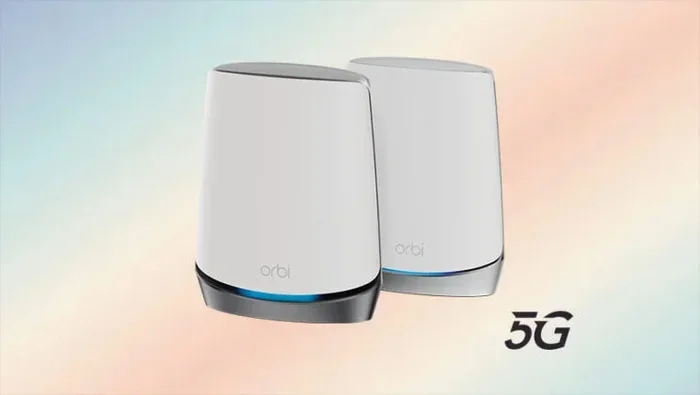
A 5G router is a device that connects to the 5G cellular network and shares that internet connection with your phones, laptops, and smart home gadgets. Think of it as a bridge between the cellular tower outside and the devices inside your home.
These routers have become very popular in recent years. People use them when they do not have access to cable or fiber internet. They also use them as backup connections or for travel. The idea is simple. You get a 5G signal from a carrier, and the router turns it into Wi-Fi that your devices can use.
But with any new technology, questions arise. People want to know if these devices are safe. They wonder about 5G radiation and whether long-term use could affect their health. These are fair questions. Let us look at what the science and experts actually say.
The term 5G router safety covers a few different topics. It includes the radiation the device emits. It also covers how the device protects your data. And it includes how you should set it up in your home. We will cover all of these areas in detail.
Understanding how 5G routers work is the first step. Once you know what they do and how they do it, the safety question becomes much easier to answer.
How Do 5G Routers Work?
5G routers use radio frequency waves to send and receive data. These waves are part of the electromagnetic spectrum. They are the same kind of energy used by FM radio stations, microwaves, and your old Wi-Fi router.
The key difference with 5G is speed and capacity. 5G uses higher frequency bands than previous generations. This allows faster data transfer and more devices to connect at once. But the fundamental nature of the waves has not changed.
Non-Ionizing vs. Ionizing Radiation
This is where many people get confused. There are two types of radiation. Ionizing radiation includes things like X-rays and gamma rays. These have enough energy to damage DNA. They are known to cause health problems in large doses.
Non-ionizing radiation is completely different. It does not have enough energy to damage DNA. The radiation from 5G routers falls into this category. So do FM radios, baby monitors, and visible light. The electromagnetic fields produced by a 5G router are very low energy.
Think of it this way. Sunlight is non-ionizing radiation. You can get a sunburn from too much of it. But you do not get radiation sickness from sitting in your backyard. The same principle applies to 5G routers. The energy levels are far too low to cause the kind of damage associated with ionizing radiation.
The Role of the FCC and WHO
Government agencies around the world set limits on how much radiation devices can emit. In the United States, the FCC (Federal Communications Commission) sets these rules. In Europe, it is the International Commission on Non-Ionizing Radiation Protection (ICNIRP).
The World Health Organization (WHO) also reviews the science. All of these organizations agree that 5G routers, when used as intended, are safe. They set exposure limits far below levels where any harmful effects have been observed.
Every 5G router sold in the market must meet these standards before it can be sold. This is not optional. Manufacturers must test their devices and prove compliance. So when you buy a 5G router from a reputable brand, you are getting a device that has been tested and certified.
Understanding 5G Radiation And Safety
Let us get into the details of 5G radiation and what it means for your health. This is the part most people are curious about. And it is also where a lot of misinformation spreads.
The radiation from a 5G router is measured in units called watts per square meter. The further you are from the router, the less exposure you receive. This is called the inverse-square law. Doubling your distance from the router reduces your exposure to one-quarter.
What the Research Says
Thousands of studies have looked at the health effects of radio frequency radiation. The vast majority of these studies have found no link between low-level exposure and health problems. Major reviews by the National Cancer Institute and the FDA support this conclusion.
Some studies have looked at very high levels of exposure. These are levels far above what any router or phone would ever produce. At those extreme levels, there can be heating effects. But no router or phone gets anywhere near those levels during normal use.
The International Agency for Research on Cancer (IARC) classified radio frequency radiation as “possibly carcinogenic.” This sounds scary. But it is important to understand what that category means. It is the same category as pickled vegetables and aloe vera. It means there is limited evidence, not that something is proven to be dangerous.
When you look at the full body of evidence, the picture is clear. 5G router safety is well-supported by current science. The radiation levels are too low to cause the kind of cellular damage that leads to cancer or other diseases.
How Much Radiation Does a 5G Router Actually Emit?
A typical 5G router emits far less radiation than a cell phone. Here is why. When you make a call, your phone is pressed right against your head. The EMF exposure from your phone is much higher because of the close distance.
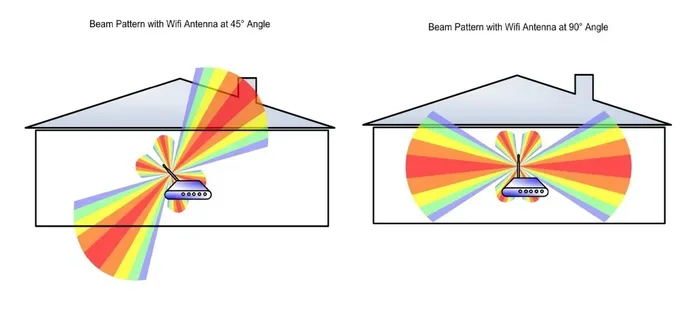
A router sits on a table or shelf. It broadcasts in all directions. By the time the signal reaches where you are sitting, it has spread out significantly. The exposure you receive from a router is tiny compared to what you get from your own phone.
To put this in perspective. A 5G router might produce around 0.1 to 1 watt of power. A cell phone can produce up to 2 watts when the signal is weak. And you hold the phone much closer to your body. So the router is actually one of the lowest-emitting devices in your home.
Expert Opinions On 5G Router Safety
What do the actual experts say? We asked this question because not all opinions carry the same weight. When it comes to health and technology, you want to listen to researchers, not influencers.
What Health Organizations Say
The World Health Organization has reviewed hundreds of studies on radio frequency fields. Their conclusion is that no adverse health effects have been established as being caused by exposure to low-level wireless router radiation. This is a strong statement backed by decades of research.
The American Cancer Society also states that there is no convincing evidence that 5G technology safety is a concern at normal exposure levels. They note that more research is always ongoing, which is good scientific practice. But they do not flag 5G as a risk.
The FDA and the EPA both agree. The current safety limits for radio frequency exposure are protective of public health. These limits include large safety margins. So even if someone is unusually sensitive, the limits are designed to protect them.
What Independent Researchers Say
Independent researchers have studied this topic for decades. Dr. David Robert Grimes, a physicist and science writer, has written extensively about wireless technology safety. He explains that the power levels from routers are so low that they cannot cause the biological effects that people worry about.
Dr. Ken Foster, a bioengineering professor at the University of Pennsylvania, has studied EMF exposure for over 40 years. He states that there is no consistent evidence of harm from low-level radio frequency fields. He also notes that the fear around 5G is not supported by the data.
These experts are not paid by router companies. They are independent scientists whose careers are built on studying this exact topic. Their consensus is clear. 5G routers are safe when used as intended.
Expert Tips for Peace of Mind
Even though experts say 5G routers are safe, some people still want extra peace of mind. That is completely fine. Here are some tips that experts recommend.
- Keep the router away from your bed. Place it in a central location, not right next to where you sleep.
- Use the router as intended. Do not disassemble it or modify it in any way.
- Take breaks if you are concerned. Turn off the router at night. This is an easy way to reduce exposure to zero while you sleep.
- Use wired connections when possible. Ethernet cables provide internet access without any wireless radiation. This is a great option for desks and home offices.
- Stay informed. Follow updates from trusted sources like the WHO, FCC, and your national health agencies.
Tips To Use 5G Routers Safely
Using a 5G router safely is straightforward. You do not need expensive gadgets or special equipment. A few simple habits make a big difference.
Router Placement Matters
Where you put your router affects your exposure. The further you are from it, the less radiation you receive. Here are some placement tips.
- Place the router in a central area of your home. This gives good coverage and keeps you at a reasonable distance.
- Do not place the router on your nightstand or headboard. A few feet of distance makes a big difference.
- Keep the router elevated. Signals spread out better when the router is on a shelf or table, not on the floor.
- Avoid placing the router against a wall where children sleep. Give it some breathing room.
Reduce Exposure When Not in Use
You can turn off your router at night. Most 5G routers have a power button or a timer function. This is the simplest way to eliminate EMF exposure while you sleep. Your internet will reconnect automatically when you turn it back on in the morning.
Some smart routers let you schedule Wi-Fi hours. You can set the router to turn off from 11 PM to 6 AM, for example. This is a great feature if you want to reduce exposure without thinking about it every night.
Secure Your Network
Network security is part of router safety too. An unsecured network can be accessed by strangers. This is not a radiation issue, but it is a safety issue. Here is what you should do.
- Change the default password on your router. Use a strong, unique password.
- Enable WPA3 encryption if your router supports it. This is the latest and most secure Wi-Fi encryption standard.
- Keep your router firmware updated. Updates patch security vulnerabilities.
- Disable WPS if you do not need it. It can be a weak point in your security.
Use Wired Connections for Critical Devices
If you are concerned about wireless radiation, use Ethernet cables for devices that stay in one place. Desktop computers, smart TVs, and gaming consoles all work great with wired connections. This reduces the number of wireless devices in your home and gives you a faster, more stable connection at the same time.
Common Myths About 5G Router Safety
There is a lot of misinformation out there about 5G and wireless technology. Let us clear up some of the most common myths.
Myth 1: 5G Routers Cause Cancer
This is probably the biggest fear people have. But there is no scientific evidence that 5G routers cause cancer. The radiation they emit is non-ionizing. It does not damage DNA the way ionizing radiation does. Decades of research have not found a link between low-level radio frequency exposure and cancer.
Myth 2: 5G Radiation Is New and Untested
5G uses frequencies that have been studied for years. The technology is an evolution of what came before. The radio frequency bands used by 5G are similar to those used in 4G, Wi-Fi, and other wireless technologies. They have all gone through extensive testing and safety reviews.
Myth 3: You Should Avoid All Wireless Devices
Avoiding all wireless devices is not practical. And it is not necessary. The radiation levels from these devices are extremely low. The benefits of connectivity, convenience, and access to information far outweigh any theoretical risks. Focus on sensible habits like proper placement and turning off the router at night.
Myth 4: 5G Is More Dangerous Than 4G
5G does use some higher frequency bands. But these higher frequencies do not penetrate the body as deeply as lower frequencies. In fact, most of the 5G signal is absorbed by the skin and does not reach internal organs. The overall exposure from a 5G router is comparable to or lower than what you get from a 4G router.
Final Verdict: Are 5G Routers Safe?
So, are 5G routers safe? Based on the current body of scientific evidence, the answer is yes. They are safe when used as intended and within the guidelines set by regulatory agencies.
The radiation they emit is non-ionizing and well below levels that could cause harm. Major health organizations worldwide support this conclusion. Independent researchers agree. The safety standards are built with large margins to protect all users, including children and people with sensitivities.
This does not mean you should ignore wireless router safety entirely. Taking simple precautions like proper placement and turning off the router at night is smart. These steps give you peace of mind without any extra cost.
Also remember that network security is a separate but important part of router safety. Keep your network password-protected, use strong encryption, and update your firmware regularly. These steps protect your data and your privacy.
If you are shopping for a new router, look for reputable brands that meet FCC standards. Read 5G router reviews from trusted sources. Check for certifications and compliance marks. A good router from a trusted brand will be safe and reliable.
The bottom line is this. You can use your 5G router with confidence. The technology is well-studied, well-regulated, and safe. Focus on the simple habits that reduce exposure, and enjoy the fast, reliable internet that 5G provides.
Technology moves fast. New research will continue to come out. Stay curious, stay informed, and trust the science. The experts have spoken. 5G routers are safe. Now go set up your network and enjoy the speed.
Frequently Asked Questions
Do 5G routers emit harmful radiation?
No. 5G routers emit non-ionizing radiation, which is the same type used by Wi-Fi and cell phones. The radiation levels are far below safety limits set by the FCC and WHO. No scientific evidence links this type of radiation to health problems.
How far should I sit from my 5G router?
Keeping your router at least 3 to 5 feet away from where you sit or sleep is a good practice. The further you are, the less exposure you receive. Placing the router on a shelf or table in a central room works well for most homes.
Can I turn off my 5G router at night?
Yes, absolutely. Turning off your router at night is one of the easiest ways to reduce exposure to zero while you sleep. Most routers have a simple power button or a scheduling feature in their settings.
Are 5G routers safer than regular Wi-Fi routers?
Both types of routers emit non-ionizing radiation at similar low levels. 5G routers are just as safe as standard Wi-Fi routers. The difference is the source of the internet connection, not the radiation type or level.
What do health experts say about 5G router safety?
Health experts from the WHO, FDA, and American Cancer Society all agree that 5G routers are safe. They base this on decades of research and strict safety standards. No adverse health effects have been linked to normal use of 5G routers.
How can I improve my home network security?
Change your default router password, enable WPA3 encryption, keep firmware updated, and disable WPS if you do not need it. These steps protect your network from unauthorized access and keep your data safe.
=== CONCLUSION ===
Are 5G routers safe? Yes, they are. The science is clear. The experts agree. 5G routers emit low levels of non-ionizing radiation that are well within safe limits. Regulatory agencies like the FCC and WHO have set standards that protect public health.
You do not need to fear your 5G router. Instead, focus on simple habits that promote wireless router safety. Keep it at a reasonable distance, turn it off at night if you want, and secure your network with strong passwords and encryption.
The myths surrounding 5G technology can cause unnecessary worry. But the facts do not support those fears. Thousands of studies have looked at radio frequency radiation. The consensus is clear. Current 5G technology is safe.
Use your 5G router with confidence. Enjoy the fast speeds and reliable connectivity it provides. And remember, staying informed is the best way to make smart decisions about the technology in your home. Trust the science, follow the guidelines, and keep your network secure.