Can I Use Black Cloth For Projector Screen At Home
Yes, you can use black cloth for a projector screen, but it comes with trade-offs you should know about. Black fabric absorbs light instead of reflecting it, which can reduce overall brightness but improve contrast in dark rooms. This guide covers everything you need to know about using black cloth for your projector screen at home, from fabric choices to setup tips and common mistakes to avoid.
So you are sitting there with a projector and a piece of black cloth, wondering if this could actually work as a screen. Maybe you are trying to save money. Maybe you want a custom look for your home theater. Or maybe you just have a bunch of black fabric lying around and thought, why not?
The truth is, can I use black cloth for projector setups is a question a lot of people ask. And the answer is more nuanced than a simple yes or no. Black cloth can work as a projection surface, but it comes with real trade-offs that you need to understand before you hang it up on your wall.
In this guide, we are going to break it all down. You will learn how black fabric affects your image quality, when it makes sense to use it, what types of black cloth work best, and the mistakes most people make. By the end, you will know exactly whether a black cloth screen is the right move for your projector setup at home.
Key Takeaways
- Black cloth works for projector screens: It can deliver great results in dark rooms by boosting contrast and reducing glare.
- White screens remain the standard: For most home theater setups, a white projection surface offers better overall brightness and color accuracy.
- Fabric choice matters a lot: Matte black fabric with a tight weave performs best as a DIY projector screen material.
- Room lighting is critical: Black cloth shines in rooms with controlled ambient light but struggles in bright environments.
- Gain factor affects performance: Understanding the gain of your screen material helps you make the right choice for your projector.
- DIY setups are totally doable: You can build a simple black cloth screen with basic materials and a little effort.
📑 Table of Contents
- Why People Consider Using Black Cloth for a Projector Screen
- Can I Use Black Cloth For Projector Screens Without Losing Quality?
- Black Cloth vs White Screen: Which One Delivers Better Results
- Best Types of Black Fabric for a DIY Projector Screen
- Tips for Setting Up Your Black Cloth Projector Screen at Home
- Common Mistakes to Avoid When Using Black Cloth for Projection
- Key Takeaways for Your Black Cloth Projector Screen Decision
Why People Consider Using Black Cloth for a Projector Screen
There are several reasons why someone might reach for black fabric instead of a traditional white screen. Let us explore the most common motivations behind this choice.
The Appeal of Dark Projection Surfaces
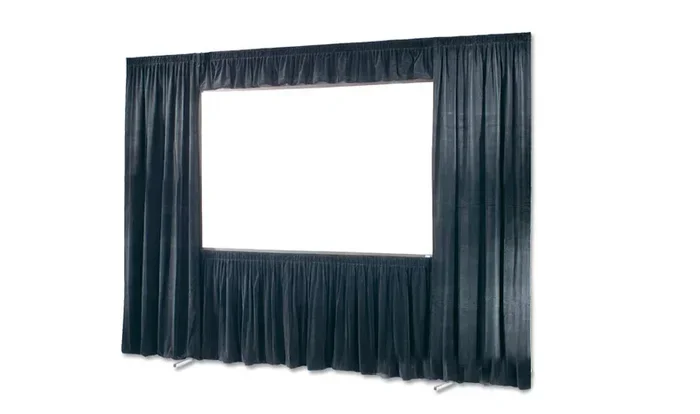
Black cloth has a certain aesthetic appeal. It looks sleek, modern, and minimalist. When you are building a dedicated home theater room, the last thing you want is a bright white rectangle dominating your wall. A dark projection surface blends in when the projector is off, which many people find very appealing.
Beyond looks, there is a practical reason too. Black fabric absorbs light rather than bouncing it back. In a room with some ambient light, this can reduce washout and glare. The result is a projection surface that looks more focused and less scattered.
When Black Cloth Makes Sense
Not every viewing situation calls for a bright white screen. Here are scenarios where black cloth can actually be a solid choice:
- Dedicated home theater rooms: When you can control the lighting completely, black fabric can deliver deep blacks and excellent contrast.
- Rear projection setups: Black cloth works well for rear projection because the light passes through the fabric, and the dark backing helps absorb stray light.
- Budget DIY projector screen projects: If you already have black fabric at home, it is a free option to test before investing in a proper screen.
- Gaming setups: Dark environments with a projector work great with black cloth, especially for immersive gaming experiences.
Quick Tip
If you are testing black cloth for the first time, hold it up to your projector in a dim room and compare the image side by side with a white sheet. The difference will be immediately obvious, and you will get a real sense of what to expect.
Can I Use Black Cloth For Projector Screens Without Losing Quality?
This is the big question, isn’t it? You want to know if hanging up a piece of black fabric will ruin your image. The honest answer depends on several factors, and understanding them will help you make the best decision for your setup.
Understanding Light Absorption and Reflection
Here is the science behind it in simple terms. A white projection surface reflects most of the light your projector sends at it. That is why white screens look bright and vibrant. Black cloth, on the other hand, absorbs a large portion of that light. It does not bounce the light back as efficiently.
This means your image will appear dimmer on black cloth compared to a white screen. The screen brightness you get from a black fabric is noticeably lower. For some viewers, this is not a big deal. For others, especially in rooms where they want vivid colors, it can be a dealbreaker.
Impact on Contrast Ratio and Color Accuracy
Now here is where black cloth gets interesting. While it may reduce overall brightness, it can actually improve your contrast ratio. How? Because black fabric stays black. On a white screen, areas that are supposed to be dark can look gray or washed out, especially in rooms with some light.
Black cloth keeps those dark areas truly dark. This means deeper blacks, richer shadows, and a more cinematic look. For movies and shows with dark scenes, this can be a real advantage. However, color accuracy can take a hit because the fabric absorbs some of the color-producing light as well.
The gain factor of black cloth is typically lower than that of a white screen. Gain refers to how much light the screen reflects back to the viewer. A standard white screen has a gain of about 1.0, while black cloth might have a gain of 0.5 or lower. This means you need a brighter projector to get the same result.
| Feature | Black Cloth | White Screen |
|---|---|---|
| Brightness | Lower | Higher |
| Contrast | Better blacks | Washed-out darks |
| Color Vibrancy | Slightly reduced | More vibrant |
| Ambient Light Handling | Better in dark rooms | Better in bright rooms |
| Gain Factor | 0.3 to 0.7 | 0.8 to 1.2 |
| Aesthetic Look | Sleek, modern | Classic, bright |
Expert Insight
AV professionals often recommend black cloth for viewers who prioritize contrast over raw brightness. If your projector has high lumens and your room is light-controlled, a dark surface can actually elevate your viewing experience significantly.
Black Cloth vs White Screen: Which One Delivers Better Results
This is the comparison that matters most. When you are deciding between a black fabric screen and a traditional white one, the right answer depends on your specific situation. Let us break down the key differences.
Front Projection vs Rear Projection Considerations
The type of projection you are using changes everything. For front projection, where the projector sits in front of the screen and shoots light at it, white screens generally perform better. They reflect more light back to your eyes, giving you a brighter and more colorful image.
For rear projection, where the projector sits behind the screen and light passes through the material, black cloth can work well. The dark backing helps absorb light that passes through, preventing a washed-out look. If you are building a rear projection setup, black fabric is a much more viable option.
Performance in Different Room Conditions
The lighting in your room plays a huge role in which screen material wins. Here is a quick breakdown:
- Completely dark room: Black cloth can deliver stunning contrast and deep blacks. The image may be dimmer, but the cinematic feel is hard to beat.
- Room with some ambient light: Black cloth handles moderate light better than white, which tends to wash out. However, a gray screen might be an even better middle ground.
- Bright room with windows: Neither black cloth nor white screen will perform well here. You need to block the light or invest in a high-gain screen material.
Common Mistakes
One of the biggest mistakes people make is assuming black cloth will perform like a commercial projector screen. It will not. Commercial screens are engineered with specific coatings and materials that control light in ways plain black cloth cannot. Do not expect the same results from a bedsheet as you would from a purpose-built screen.
Best Types of Black Fabric for a DIY Projector Screen
If you have decided to go with black cloth, your next question is probably, “Which black fabric should I use?” Not all black cloth is created equal. The wrong material can ruin your image quality no matter how good your projector is.
Matte Black Fabric Options
Matte finish is the way to go for a projection surface. Glossy or shiny black fabric will create hot spots and uneven reflections. You want a material that scatters light evenly across the surface. Matte black fabric does exactly that, giving you a consistent image without glare.
Some good options include:
- Matte black blackout fabric: This is widely available at fabric stores. It is thick, light-blocking, and has a smooth matte finish that works well for projection.
- Felt fabric: Black felt absorbs light beautifully and has a soft, even surface. It is inexpensive and easy to work with for a DIY projector screen.
- Velvet-like black cloth: These materials have a plush texture that absorbs light very effectively. Just make sure it is not too thick, or it can reduce image sharpness.
- Specialized projection cloth: Some brands sell black projection fabric specifically designed for this purpose. It costs more but delivers the best results.
What to Look for in Projection Cloth
When shopping for black fabric, keep these factors in mind:
- Weave tightness: A tight weave prevents light from bleeding through and gives you a sharper image. Hold the fabric up to a light source and check if light passes through easily.
- Thickness: Thicker fabric absorbs more light, which is good for contrast. But too thick and it can muffle fine details in the image.
- Color consistency: Make sure the black is uniform across the entire fabric. Patches of lighter or darker areas will show up in your projection.
- Wrinkle resistance: You want a fabric that stays smooth when stretched. Wrinkles create uneven surfaces that distort the image.
Quick Tip
Before committing to a large piece of fabric, cut a small square and test it with your projector. Project a test image and check for brightness, color accuracy, and any uneven spots. This simple test can save you a lot of frustration later.
Tips for Setting Up Your Black Cloth Projector Screen at Home
You have your black fabric and you are ready to set up your screen. Great! But how you hang and prepare the cloth matters just as much as the fabric itself. Here are some practical tips to get the best results.
Stretching and Framing the Fabric
A wrinkled black cloth will ruin even the best projector image. You need to stretch the fabric tight and keep it smooth. Here is how:
- Use a frame: Build a simple wooden frame or use a PVC pipe frame to stretch the fabric over. This keeps it taut and wrinkle-free.
- Use a staple gun: If you are mounting the fabric directly to a wall, a staple gun works well. Pull the fabric tight before stapling it in place.
- Add tension rods: For a removable setup, stretch the fabric over a tension rod. This lets you take the screen down when you are not using it.
- Iron or steam the fabric first: Before mounting, remove any wrinkles from the fabric. A quick pass with an iron or steamer makes a big difference.
Room Lighting and Placement Tips
Where you place your black cloth screen and how you manage the light in your room will have a huge impact on the viewing experience:
- Position the projector correctly: Since black cloth absorbs light, you may need to place the projector closer or increase its brightness settings to compensate for the lower gain.
- Block outside light: Close curtains or blinds to minimize ambient light. Even small amounts of light can wash out a black cloth screen significantly.
- Paint your walls dark: If possible, paint the walls around the screen a dark color. This reduces light reflection and helps maintain the contrast of your image.
- Avoid shiny surfaces nearby: Mirrors, glass, and glossy furniture can bounce light onto the screen and degrade the image quality.
Expert Insight
Many home theater enthusiasts recommend using a black border around your black cloth screen. This creates a frame effect that makes the image appear to float on the wall, enhancing the immersive feel of your home theater setup.
Common Mistakes to Avoid When Using Black Cloth for Projection
Even with the best intentions, it is easy to make mistakes when setting up a black cloth screen. Here are the most common pitfalls and how to avoid them.
Ignoring Ambient Light Issues
Black cloth does not perform well in bright rooms. If you set up your black fabric screen in a living room with large windows and lots of natural light, your image will look dull and washed out. Black cloth needs a controlled light environment to shine.
Before you commit to a black cloth screen, honestly assess your room. Can you dim the lights? Can you close the curtains? If the answer is no, you might be better off with a white or gray screen.
Choosing the Wrong Fabric Weight
Not all black fabric is suitable for projection. Very thin black cloth will let too much light pass through, creating a translucent mess. Very thick fabric can muffle details and reduce sharpness.
The sweet spot is a medium-weight matte black fabric that blocks light but still allows enough reflection to produce a visible image. Test different weights if you can before making your final choice.
Forgetting About Projector Placement
Because black cloth absorbs light, your projector placement becomes even more important. If the projector is too far away, the image will be too dim. If it is too close, the image may be distorted. Take the time to find the right throw distance for your specific setup.
Using Dirty or Wrinkled Fabric
This one seems obvious but it happens all the time. Dust, wrinkles, and creases in the fabric will show up as spots, lines, and uneven areas in your projected image. Always make sure your black cloth is clean, smooth, and wrinkle-free before you start projecting.
Common Mistakes
Another frequent error is using black cloth that has a slight color tint. Even a subtle purple or brown undertone will affect the color balance of your projected image. Always choose pure black fabric with no color variations.
Key Takeaways for Your Black Cloth Projector Screen Decision
Let us pull everything together so you can make a confident decision about whether black cloth is right for your projector setup.
Black cloth can absolutely work as a projection surface at home. It offers a sleek look, excellent contrast in dark rooms, and a unique cinematic feel that white screens simply cannot match. However, it comes with trade-offs in brightness and color vibrancy that you need to accept.
If you have a dedicated home theater room where you can control the lighting, black cloth is a fantastic option. If your viewing area gets lots of natural light, you might want to stick with a white or gray screen. The key is understanding what you value most in your viewing experience and choosing the material that best supports those priorities.
Experiment if you can. Test different fabrics, compare them side by side, and trust your own eyes. There is no single perfect answer for everyone. The best projector screen is the one that makes you happy every time you turn on your projector.
So go ahead, grab that black cloth, set up your DIY projector screen, and enjoy your movies. With the right fabric and the right setup, you will be surprised at just how good a black cloth screen can look.
Frequently Asked Questions
Can I use any black cloth for a projector screen?
Not all black cloth works equally well. You need matte finish fabric with a tight weave and medium weight. Shiny, thin, or textured black fabrics will produce poor results. Always test a small piece with your projector before committing to a full screen.
Will a black cloth screen make my projector image too dim?
It can, especially if your projector is not very bright. Black cloth absorbs a lot of light, which reduces overall screen brightness. If you have a high-lumen projector and a dark room, this is less of an issue. For dim projectors or bright rooms, a white screen may be a better choice.
Is black cloth better than a white screen for watching movies?
For movies in a dark room, black cloth can deliver a more cinematic experience with deeper blacks and better contrast. But for general use or bright environments, a white screen provides better brightness and color accuracy. It really depends on your viewing conditions and priorities.
Can I use black cloth for rear projection?
Yes, black cloth works well for rear projection setups. The dark backing absorbs light that passes through the fabric, preventing a washed-out look. This makes it a solid choice for DIY rear projection screens, especially in dedicated media rooms where you can control the lighting.
What is the best way to stretch black cloth for a projector screen?
The best method is to use a wooden or PVC frame and stretch the fabric tightly over it. A staple gun works well for mounting directly to a wall. Always iron or steam the fabric first to remove wrinkles, and pull it taut during installation for the smoothest surface possible.
How do I improve the brightness of a black cloth projector screen?
You can improve brightness by using a brighter projector, reducing ambient light in the room, placing the projector closer to the screen, and increasing the projector’s brightness settings. Painting the walls around the screen a dark color also helps by reducing light reflection.
=== CONCLUSION ===
Can I use black cloth for projector screen at home? The answer is a clear yes, with some important caveats. Black cloth can create a stunning projection surface when used in the right conditions. It delivers deep blacks, excellent contrast, and a sleek, modern look that elevates any home theater setup.
But it is not a one-size-fits-all solution. Black cloth absorbs light, which means less overall brightness and potentially reduced color vibrancy. It works best in dark, controlled environments where you can minimize ambient light. If your room is bright and you need maximum screen brightness, a white or gray screen might serve you better.
The type of black fabric you choose matters enormously. Matte black blackout fabric, felt, and specialized projection cloth all offer different levels of performance. Test your fabric before committing, stretch it tightly, and set up your projector at the right distance for the best results.
Whether you are building a budget DIY projector screen or crafting a premium home theater experience, black cloth gives you a versatile and affordable option. Just remember the tips and avoid the common mistakes outlined in this guide, and you will be well on your way to a fantastic viewing experience with your black cloth projector screen at home.