Can I Use Rca Cables If The Coaxial Connector Broke On My Tv
Yes, you can use RCA cables if the coaxial connector broke on your TV. This guide covers every option available, from simple adapter solutions to full signal conversion methods. You will learn how to identify your TV inputs, choose the right cables, and avoid common mistakes that waste time and money.
Your TV coaxial connector just broke, and now you are staring at the back of your screen wondering what to do next. The good news is that you are not stuck. RCA cables can absolutely fill the gap when a coaxial connector fails, and there are several straightforward ways to make it work. In this guide, we will walk you through every option, from simple adapters to full signal conversion setups.
Whether you watch cable TV, use an antenna, or connect a streaming device, a broken coaxial port does not mean your TV is useless. RCA cables offer a reliable alternative that most people already have lying around the house. Let us dive into the details and get your setup running again.
Key Takeaways
- RCA cables work as a replacement: Most TVs with a broken coaxial input can still receive signals through RCA composite or component connections.
- An RF modulator is your best friend: It converts coaxial signals into RCA-friendly outputs when the original connector is damaged.
- Check your TV back panel first: Many modern TVs have multiple input options beyond coaxial, including HDMI and AV ports.
- Avoid common mistakes: Using the wrong adapter or forcing a damaged connector can cause further harm to your TV.
- Signal quality matters: RCA cables may offer lower resolution than coaxial, but they still deliver reliable audio and video for most setups.
📑 Table of Contents
- Understanding Your TV Connection Options
- Can You Use RCA Cables When the Coaxial Connector Broke?
- Step-by-Step Guide to Connecting RCA Cables
- Comparing Coaxial vs RCA for TV Connections
- Common Mistakes to Avoid
- Expert Tips for the Best Results
- When to Call a Professional
- Long-Term Solutions for Damaged TV Connectors
- Frequently Asked Questions
- Conclusion
Understanding Your TV Connection Options
Before you grab any cables, it helps to understand what is happening behind the scenes. A coaxial connector carries a specific type of signal that is different from what RCA cables transmit. Knowing this difference makes the whole process much easier.
What Does a Coaxial Connector Do?
A coaxial connector on your TV handles RF (radio frequency) signals. These signals come from cable boxes, satellite dishes, or antennas. The coaxial port, often labeled as “ANT IN” or “RF IN,” sends a combined audio and video signal through a single cable. It is a simple, all-in-one solution that has been around for decades.
When that connector breaks, the signal path gets interrupted. You lose the ability to receive over-the-air channels or cable input through the coaxial route. But here is the key point: the signal itself is still available. You just need a different way to get it into your TV.
How RCA Cables Work Differently
RCA cables, also known as composite cables, use separate connectors for audio and video. You typically get three cables: yellow for video, white for left audio, and red for right audio. These cables carry a lower-resolution signal compared to coaxial, but they work well for standard definition content.
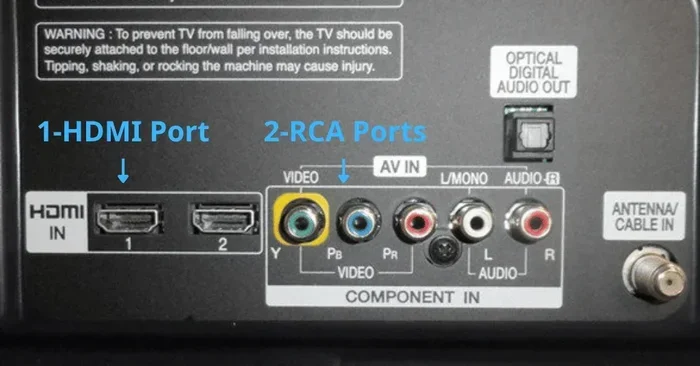
Most TVs manufactured after 2005 include RCA input ports, often grouped together as AV inputs. If your TV has these ports, you can connect RCA cables directly without needing any special equipment. This makes RCA a practical and accessible backup option.
Can You Use RCA Cables When the Coaxial Connector Broke?
The short answer is yes. But the full answer depends on a few factors, including your TV model, the type of signal source you use, and whether you need additional equipment. Let us break this down step by step.
Direct RCA Connection Without a Coaxial Port
If your TV still has working RCA AV inputs, you can connect devices directly using composite cables. This works great for DVD players, older gaming consoles, and VCRs. Simply plug the yellow, white, and red connectors into the matching color-coded ports on the back of your TV.
However, this approach does not solve the problem of receiving cable TV or antenna signals through the broken coaxial port. For that, you need a signal conversion method. This is where things get interesting.
Using an RF Modulator to Convert Signals
An RF modulator is a small device that takes RCA inputs and converts them into a coaxial-style output. But in your case, you need the reverse. You want to take the coaxial signal from your cable box or antenna and convert it into an RCA signal your TV can read.
Some cable boxes and satellite receivers already have RCA output options built in. Check the back of your cable box for composite ports. If they are there, you can connect RCA cables directly from the box to your TV. This bypasses the broken coaxial connector entirely.
For antenna users, a digital converter box often includes RCA outputs. These boxes receive the coaxial signal, decode it, and output it through RCA or HDMI. This is one of the simplest and most affordable solutions available.
When Your TV Only Has a Coaxial Input
Some older or budget TVs only have a coaxial input and no RCA ports. In this situation, you have a few options:
- Use an external tuner: A standalone TV tuner with RCA outputs can receive coaxial signals and convert them for your TV.
- Connect through a VCR: An old VCR can act as a signal bridge, converting coaxial input to RCA output.
- Repair or replace the coaxial port: A professional technician can solder a new connector onto your TV board.
Each option has its pros and cons. The external tuner is the most reliable, while the VCR method works well if you already own one. Repairing the port is the most permanent fix but costs more upfront.
Step-by-Step Guide to Connecting RCA Cables
Follow these steps to get your RCA cables connected and your TV working again. The process is simple and takes less than ten minutes in most cases.
Step 1: Gather Your Equipment
You will need the following items:
- A set of RCA composite cables (yellow, white, red)
- Your signal source (cable box, antenna, or converter box)
- An RF modulator or digital converter box if needed
- A clean, well-lit workspace
Step 2: Identify Available Inputs on Your TV
Look at the back or side panel of your TV. Find the RCA AV inputs. They are usually color-coded and grouped together. Some TVs label them as “AV,” “Video In,” or “Composite In.” Make sure the ports are not damaged or obstructed.
If you are unsure which ports are which, consult your TV manual or look up the model number online. Most manufacturers provide detailed diagrams of the input panel.
Step 3: Connect the Cables Properly
Plug the RCA cables into your signal source first. Match the colors: yellow to video, white to left audio, and red to right audio. Then connect the other end into the corresponding TV input ports.
Make sure each connector clicks into place firmly. Loose connections cause flickering video or no sound at all. Once everything is plugged in, power on your TV and switch to the correct input channel.
Step 4: Configure Your TV Settings
Use your TV remote to switch the input source. Look for labels like “AV,” “Video,” “Composite,” or “Input 1/2/3.” The exact label depends on your TV brand and model.
If you see a picture but no sound, double-check the white and red audio connections. If you see sound but no picture, check the yellow video cable. These small troubleshooting steps save a lot of frustration.
Comparing Coaxial vs RCA for TV Connections
Not all cable connections are created equal. Here is a quick comparison of coaxial and RCA connections to help you understand what you are working with.
| Feature | Coaxial Connector | RCA Cables |
|---|---|---|
| Signal Type | RF (combined audio/video) | Composite (separate audio/video) |
| Quality | Higher resolution potential | Standard definition |
| Number of Cables | Single cable | Three cables (AV) |
| Common Use | Cable TV, antenna input | DVD players, gaming consoles |
| Ease of Connection | One plug-in | Color-coded, simple plug-in |
| Availability on TVs | Common on older models | Very common |
As you can see, both connection types serve their purpose. Coaxial offers a cleaner setup with fewer cables, but RCA provides flexibility and wide compatibility. RCA cables are the go-to backup option when your coaxial connector is broken.
Common Mistakes to Avoid
When dealing with a broken coaxial connector, it is easy to make mistakes that cause more problems. Here are the most common errors people make and how to avoid them.
Forcing the Damaged Connector
Never try to plug a coaxial cable into a broken port. This can damage the internal circuitry of your TV and make the problem worse. If the connector is loose or cracked, stop using it immediately and switch to an alternative input method.
Using the Wrong Adapter
Not all adapters are created equal. Some cheap adapters claim to convert coaxial to RCA but do not handle the signal properly. This results in poor picture quality or no signal at all. Always buy adapters from reputable brands and check reviews before purchasing.
Ignoring Signal Quality
RCA cables carry a lower-quality signal than coaxial connections. If you are a stickler for high-definition picture quality, you might notice a difference. However, for standard definition viewing, cable TV, and most antenna channels, RCA cables deliver perfectly acceptable results.
Overlooking the Cable Box Features
Many modern cable boxes and streaming devices offer multiple output options. Before giving up on your setup, check the back of your cable box for HDMI, RCA, or even optical audio outputs. You might already have a working connection available.
Expert Tips for the Best Results
Here are some insider tips that can make your RCA cable setup work better and last longer.
- Use shielded RCA cables: Shielded cables reduce interference and deliver a cleaner signal. They cost a little more but make a noticeable difference.
- Label your cables: Use colored tape or labels on your cables so you always know which is video and which is audio.
- Keep cable lengths short: Longer RCA cables can degrade signal quality. Keep runs under 6 feet for the best picture.
- Check your TV firmware: Some TVs need a firmware update to recognize new input sources properly. A quick settings check can save hours of troubleshooting.
- Consider an HDMI converter: If your TV has HDMI but no RCA inputs, a simple HDMI-to-converter box can bridge the gap between your RCA source and your TV.
These small steps go a long way in ensuring a smooth and reliable viewing experience. Most of these tips cost nothing or very little, but they prevent a lot of headaches down the road.
When to Call a Professional
Sometimes, a broken coaxial connector is more than just a cable problem. If the port itself is damaged on the circuit board inside your TV, no amount of external cables or adapters will fix it. Here are signs that you need professional help:
- The coaxial port is physically crushed or missing from the TV panel
- You see burn marks or discoloration around the port area
- None of the alternative input methods produce any signal
- Your TV was dropped or impacted, and the connector broke as a result
A qualified TV repair technician can assess the damage and determine whether the port can be resoldered or replaced. In most cases, this repair is affordable and takes less than an hour. Before you decide to buy a new TV, get a repair estimate first.
Long-Term Solutions for Damaged TV Connectors
If you find yourself dealing with a broken coaxial connector often, consider these long-term solutions that prevent future problems.
Upgrade to HDMI
HDMI is the modern standard for audio and video connections. It carries high-definition signals through a single cable and is far more durable than coaxial or RCA connections. If your TV supports HDMI, this is the best long-term upgrade path.
Most streaming devices, cable boxes, and gaming consoles now use HDMI as their primary output. Switching to HDMI means fewer cables, better quality, and a more reliable connection overall.
Use a Universal Remote with Input Switching
A universal remote makes switching between input sources effortless. Instead of hunting for the right input button on your TV remote, a universal remote puts all your options at your fingertips. This is especially helpful if you use multiple devices connected through different cable types.
Protect Your TV Ports
Simple habits can extend the life of your TV connectors. Avoid yanking cables out by the cord. Always pull the plug gently. Keep your TV in a stable position where cables are not under stress. These small precautions prevent many connector problems before they start.
Frequently Asked Questions
Can I use RCA cables if my TV only has a coaxial input?
Yes, but you will need an additional device. An RF modulator or digital converter box can take the coaxial signal and convert it to RCA output. This lets you use RCA cables even when your TV only has a coaxial port built in.
Will RCA cables give me the same picture quality as coaxial?
Not exactly. Coaxial connections can carry higher-resolution signals, especially for digital cable and antenna broadcasts. RCA cables deliver standard definition video, which is perfectly fine for most viewing but may not match the sharpness of a coaxial digital signal.
How much does it cost to fix a broken coaxial connector on a TV?
Professional repair typically costs between $50 and $150, depending on your TV model and the extent of the damage. The repair itself usually takes less than an hour. Always get a quote before committing to a repair, especially if your TV is older.
Can I use component cables instead of RCA cables?
Yes, component cables are an upgraded version of RCA composite cables. They use three separate cables for video (red, green, blue) and two for audio (white, red). Component cables offer better picture quality than standard RCA composite connections and work well as an alternative to coaxial.
Do I need any special tools to connect RCA cables?
No special tools are needed. RCA cables plug directly into the matching color-coded ports. You just need to match yellow to video, white to left audio, and red to right audio. A flashlight can help if the ports are hard to see behind your TV.
Can a broken coaxial connector damage my TV further?
It is unlikely, but forcing a cable into a damaged port could cause internal short circuits. If the port is visibly broken, stop using it and switch to an alternative input method. Using RCA cables or a converter box is a safe and effective workaround.
Conclusion
Dealing with a broken coaxial connector on your TV is frustrating, but it is far from the end of the road. RCA cables offer a simple, affordable, and effective alternative that gets you back to watching your favorite shows in no time. Whether you use a direct composite connection, an RF converter, or a digital converter box, there is a solution that fits every budget and setup.
Start by checking what inputs your TV still has working. Then choose the method that best fits your signal source and viewing needs. Avoid the common mistakes we covered, and do not hesitate to call a professional if the damage goes beyond a simple connector issue.
RCA cables are your reliable backup plan when the coaxial connection fails. With the right approach, you will be watching TV again within minutes, not hours. Try the steps outlined in this guide today, and you will wonder why you did not switch to RCA sooner.