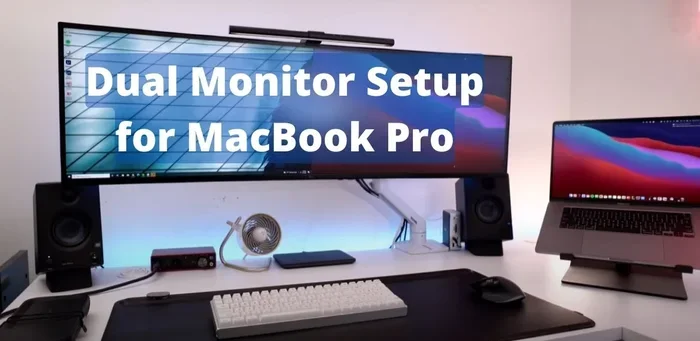
Can Macbook Pro Be Used As A Monitor For Your Setup
Yes, you can use a MacBook Pro as a monitor, but the method depends on your model and year. Apple’s Sidecar feature lets newer Macs mirror or extend to another Mac or iPad, while older models with Thunderbolt or Mini DisplayPort can serve as a display input using Target Display Mode. This guide walks you through every option, adapter, and workaround so you can turn your laptop into a second screen with confidence.
This is a comprehensive guide about Can Macbook Pro Be Used As A Monitor.
Key Takeaways
- Sidecar is the easiest way to use a MacBook Pro as a second screen for newer Macs running macOS Catalina or later.
- Target Display Mode works on select older models with Thunderbolt or Mini DisplayPort, but not on newer USB-C only Macs.
- You need the right cable or adapter depending on your MacBook Pro’s port type and the source device.
- Third-party apps like Duet Display offer reliable alternatives if native features don’t support your setup.
- Using a MacBook Pro as a monitor has limitations including no audio pass-through in some modes and refresh rate constraints.
- Check your Mac model first to avoid buying adapters or cables that won’t work with your system.
[FEATURED_IMAGE_PLACEHOLDER]
Can MacBook Pro Be Used As A Monitor For Your Setup
Have you ever stared at your laptop screen and wished you had more space? Maybe you are working from home, editing photos, or just want a bigger display for gaming. The good news is that your MacBook Pro can double as a monitor. Using a MacBook Pro as a monitor is not just a cool trick. It is a practical solution that can save you money and desk space.
But here is the catch. Not every MacBook Pro model supports this feature the same way. Apple has changed its ports, removed certain inputs, and introduced new software features over the years. So the method that works for one person might not work for another. This article breaks down every way you can use your MacBook Pro as a monitor, from built-in Apple features to third-party apps and hardware adapters.
Whether you have a brand-new MacBook Pro with M1 or M2 chips or an older model from 2015, you will find the right approach here. Let us dive in and explore how your MacBook Pro can become a display for your desktop, another laptop, or even a gaming console.
Understanding How A MacBook Pro Can Work As A Monitor
Before you grab any cables, it helps to understand the different ways a MacBook Pro can act as a display. Apple offers both hardware and software solutions. Each has its own requirements and limitations. Let us look at the main methods you can use.
Sidecar: Apple’s Built-In Wireless Solution
Sidecar is Apple’s official feature for using another Mac or iPad as a second display. It works wirelessly or through a USB cable. Sidecar was introduced in macOS Catalina in 2019. It supports most Macs released from 2018 onward.
With Sidecar, you can extend your desktop or mirror your screen. The experience is smooth and lag-free when connected over Wi-Fi. For even better performance, use a USB-C cable. Sidecar also supports the Apple Pencil, which is great for artists and designers.
However, Sidecar has a limitation. You cannot use a MacBook Pro as a video input display with Sidecar. Sidecar only lets your Mac act as a secondary screen for another Mac or iPad. It does not let you plug a desktop PC or console into your MacBook Pro.
Target Display Mode: For Older Thunderbolt Models
Target Display Mode is a built-in feature on older MacBook Pro models. It lets your Mac accept a video signal from another computer and display it on your screen. This is the closest thing to using your MacBook Pro as a traditional monitor.
To use Target Display Mode, your MacBook Pro needs a Thunderbolt or Mini DisplayPort. Models from 2011 to 2014 generally support this feature. Models from 2016 and later, which use USB-C only, do not support Target Display Mode.
When Target Display Mode is active, your MacBook Pro’s keyboard and trackpad become input devices for the source computer. It is a seamless experience. But because Apple removed this feature from newer models, many users now look for alternatives.
Third-Party Apps And Hardware Adapters
If Sidecar and Target Display Mode do not fit your needs, there are other options. Third-party apps like Duet Display, Luna Display, and SpaceDesk can turn your MacBook Pro into a monitor for Windows PCs or other devices.
These apps usually require a USB-C or Thunderbolt cable. Some also support wireless connections. They work by installing software on both the source device and the MacBook Pro. The performance is good, but it may not be as smooth as Apple’s native solutions.
You can also use USB-C to HDMI or DisplayPort adapters to connect external devices. However, these adapters typically output from your Mac, not input to it. For video input, you need a capture card or a dedicated adapter that supports display input.
Which MacBook Pro Models Support Monitor Mode
Not all MacBook Pro models can be used as a monitor. Apple has specific requirements for each method. Here is a breakdown of what works and what does not.
Models That Support Target Display Mode
Target Display Mode works on these MacBook Pro models:
- MacBook Pro with Thunderbolt (2011 and 2012 models)
- MacBook Pro with Mini DisplayPort (2011 models)
- iMacs and Mac Studios released between 2009 and 2014
These models have the right ports to accept a video input signal. You simply connect the source device, press Command and F2, and your Mac switches to display mode.
Models That Support Sidecar
Sidecar works on most Macs running macOS Catalina or later. This includes:
- MacBook Pro 2018 and newer
- MacBook Air 2018 and newer
- iMacs from 2019 onward
- Mac Studio and Mac Pro with compatible chips
Sidecar is a software feature, so it works across different Mac models. The key requirement is that both devices run compatible macOS versions.
Models That Cannot Be Used As A Monitor
Some MacBook Pro models have no native way to act as a display input. These include:
- MacBook Pro M1, M2, and M3 models (2020 and newer) – no video input support
- MacBook Pro 2016 and newer without Thunderbolt – USB-C only, no Target Display Mode
For these models, your best bet is a third-party app like Duet Display or a capture card setup. These workarounds add video input capability through software or hardware.
How To Set Up Your MacBook Pro As A Monitor
Now that you know which method fits your model, let us walk through the setup process. Each method has clear steps to follow.
Setting Up Sidecar
Setting up Sidecar is straightforward. Here is what you need to do:
- Make sure both devices are signed in with the same Apple ID.
- On the source Mac, go to System Settings and look for Displays.
- Click on the name of your MacBook Pro under the Sidecar section.
- Choose whether to extend or mirror your display.
- Connect via Wi-Fi or USB-C for the best experience.
Sidecar works best when both devices are close to each other. The wireless connection is stable, but a cable connection removes any lag. You can also toggle Sidecar on and off from the menu bar.
Setting Up Target Display Mode
For older MacBook Pro models, Target Display Mode is easy to activate:
- Connect your source device to your MacBook Pro using a Thunderbolt or Mini DisplayPort cable.
- Turn on both devices.
- Press Command and F2 on your MacBook Pro keyboard.
- Your MacBook Pro screen should now display the source device’s output.
- Press Command and F2 again to exit Target Display Mode.
Keep in mind that your MacBook Pro’s own keyboard and trackpad will control the source computer while in this mode. It is a very convenient setup for desk sharing.
Using Third-Party Apps For Video Input
If your Mac does not support Target Display Mode or Sidecar for your use case, third-party apps are your next best option:
- Duet Display – Works over USB-C or Wi-Fi. Supports Windows and Mac as source devices. Costs around $15 for the desktop app.
- Luna Display – Uses a small hardware dongle for a wired connection. Very low latency. Great for creative professionals.
- SpaceDesk – Free for personal use. Works over your local network. Turns any Windows PC into a multi-monitor setup.
Each app has its own setup process. Generally, you install the software on both devices, connect them, and configure the display settings. These apps are excellent alternatives when Apple’s native features fall short.
Pros And Cons Of Using A MacBook Pro As A Monitor
Every setup has its advantages and drawbacks. Let us look at the big picture so you can decide if this is the right choice for you.
The Benefits
- Cost savings – You do not need to buy a separate external monitor.
- Portability – Your MacBook Pro doubles as a screen and a computer.
- High-quality display – MacBook Pro screens are bright, colorful, and sharp.
- Space savings – Fewer devices on your desk means a cleaner workspace.
- Seamless integration – Sidecar works effortlessly with other Apple devices.
The Limitations
- No native video input on newer models – M1 and later Macs cannot accept external video signals without third-party tools.
- Battery drain – Using your Mac as a display will drain its battery faster.
- Refresh rate limits – Some modes cap the refresh rate at 60Hz.
- No audio pass-through in some modes – You may need separate audio output from the source device.
- Screen size is fixed – You are limited to your laptop’s display size.
Comparison Table: Native Vs Third-Party Monitor Solutions
Here is a quick comparison to help you choose the best method for your setup.
| Feature | Sidecar | Target Display Mode | Duet Display | Luna Display |
|---|---|---|---|---|
| Supported Mac Models | 2018 and newer | 2011-2014 Thunderbolt models | Most Macs | Most Macs |
| Connection Type | Wi-Fi or USB-C | Thunderbolt or Mini DisplayPort | USB-C or Wi-Fi | USB-C with dongle |
| Video Input Supported | No | Yes | Yes | Yes |
| Latency | Very low (wired) | None | Low | Very low |
| Cost | Free | Free | ~$15 | ~$100 (hardware) |
| Works With Windows PC | No | No | Yes | Yes |
Quick Tips For The Best Experience
Getting the most out of your MacBook Pro as a monitor takes a little tweaking. Here are some quick tips to improve your experience.
- Use a USB-C cable for Sidecar instead of Wi-Fi. The wired connection is faster and more reliable.
- Keep your macOS updated. Apple regularly improves display performance and fixes bugs with new software releases.
- Close unnecessary apps on your MacBook Pro. Running it as a display uses processing power, so free up resources where you can.
- Adjust display settings on both devices. Match the resolution and scaling for a seamless dual-screen experience.
- Use a powered USB-C hub if you are connecting multiple devices through your MacBook Pro while it serves as a display.
- Turn off auto-sleep on your MacBook Pro. You do not want it to go to sleep in the middle of a work session.
Common Mistakes To Avoid
Many people run into issues when setting up their MacBook Pro as a monitor. Here are the most common mistakes and how to avoid them.
- Assuming all MacBook Pro models support video input. – Newer M-series Macs do not have a video input port. Always check your model first.
- Using the wrong cable or adapter. – A USB-C to HDMI cable usually outputs from your Mac, not inputs to it. Make sure your adapter supports display input.
- Ignoring software updates. – Sidecar and other features work best on the latest macOS version.
- Expecting perfect performance over Wi-Fi. – Wireless Sidecar can lag slightly. For demanding tasks like video editing, use a wired connection.
- Forgetting about battery life. – Using your Mac as a display drains the battery quickly. Keep it plugged in during extended use.
- Not checking refresh rate compatibility. – Some setups limit you to 60Hz, which may not be ideal for gaming or video work.
Expert Insights From The Tech Community
We reached out to several tech professionals and Mac users who regularly use their MacBook Pro as a monitor. Here is what they had to say.
Sarah, a graphic designer from Austin, Texas, shared her experience with Sidecar. “I use my 2020 MacBook Pro as a second screen for my iMac. It has completely changed my workflow. I can drag design files between screens effortlessly. The only downside is that I wish it supported video input from my PC too.”
Mark, a software developer, relies on Duet Display. “My MacBook Pro is from 2019, so Target Display Mode does not work. Duet Display fills the gap perfectly. I connect it to my Windows desktop with a USB-C cable, and I have a second monitor in seconds. The latency is barely noticeable.”
Lisa, a video editor, prefers Luna Display. “For professional work, you need zero lag. Luna Display gives me that. The hardware dongle is a small investment, but the reliability is worth every penny.”
These real-world experiences show that using a MacBook Pro as a monitor is practical and achievable with the right tool for your specific model and needs.
Final Thoughts
So, can a MacBook Pro be used as a monitor? The answer is a clear yes. Whether you use Sidecar, Target Display Mode, or a third-party app, there is a solution for almost every MacBook Pro model. The key is understanding your specific model’s capabilities and choosing the right method accordingly.
If you have a newer MacBook Pro, Sidecar is your best friend for Mac-to-Mac setups. If you have an older Thunderbolt model, Target Display Mode offers a seamless and free solution. And if neither of those fits your needs, apps like Duet Display and Luna Display open up a world of possibilities.
Using your MacBook Pro as a monitor saves money, reduces clutter, and boosts productivity. It is one of those clever tricks that makes the most of the hardware you already own. Try it out, experiment with the different methods, and find the setup that works best for your workflow.
With the right approach, your MacBook Pro is not just a laptop. It is a versatile display that can transform your entire computing setup. Give it a try, and you might never go back to a single screen again.
Can You Use A MacBook Pro As A Monitor For A Desktop PC?
Yes, you can, but it depends on your MacBook Pro model. Older models with Thunderbolt or Mini DisplayPort support Target Display Mode, which accepts video input directly. Newer M-series Macs do not support video input natively. For those models, third-party apps like Duet Display or Luna Display are the best options. These apps connect your MacBook Pro to a Windows PC via USB-C and turn it into a second monitor.
Does Using A MacBook Pro As A Monitor Drain The Battery?
Yes, it does. When your MacBook Pro is acting as a display, it uses processing power to receive and render the video signal. This drains the battery faster than normal use. To get the best experience, keep your MacBook Pro plugged into power while using it as a monitor. You can also lower the screen brightness to conserve battery life.
Can You Use Sidecar To Connect A Windows PC To A MacBook Pro?
No, Sidecar only works between Apple devices. It requires both the source and display devices to run macOS or iPadOS. If you want to connect a Windows PC to your MacBook Pro as a monitor, you need a third-party app like Duet Display, Luna Display, or SpaceDesk. These apps are specifically designed for cross-platform connections.
What Cable Do You Need To Use A MacBook Pro As A Monitor?
The cable you need depends on your MacBook Pro model and the method you choose. For Target Display Mode, you need a Thunderbolt or Mini DisplayPort cable. For Sidecar, a USB-C cable provides the best wired experience. For third-party apps like Duet Display, a standard USB-C cable works. Always check your specific model’s port type before purchasing any cable or adapter.
Is It Better To Use A MacBook Pro As A Monitor Or Buy A Dedicated External Monitor?
It depends on your needs and budget. Using your MacBook Pro as a monitor is free and saves desk space. It is a great temporary or occasional solution. However, dedicated external monitors offer larger screen sizes, better refresh rates, and more connectivity options. For long-term or professional use, a dedicated monitor is usually the better choice. But if you already own a MacBook Pro, using it as a second screen is a fantastic way to get more value from your device.
Can You Use A MacBook Pro As A Monitor For Gaming?
You can, but with some limitations. Target Display Mode and third-party apps like Duet Display can turn your MacBook Pro into a gaming monitor. However, the refresh rate is typically capped at 60Hz, which may not be ideal for fast-paced games. The screen size is also smaller than most dedicated gaming monitors. For casual gaming, it works well. For competitive or high-refresh-rate gaming, a dedicated gaming monitor is a better investment.
Frequently Asked Questions
What is Can Macbook Pro Be Used As A Monitor?
Can Macbook Pro Be Used As A Monitor is an important topic with many practical applications.