Can Wi Fi Signals Cause Cancer What You Need To Know
Can WiFi signals cause cancer? The short answer is no — current scientific evidence does not support a link between WiFi radiation and cancer. WiFi uses non-ionizing radio frequency radiation, which lacks the energy to damage DNA the way ionizing radiation does. Major health organizations like the WHO and FDA say WiFi routers are safe for everyday use. That said, it is smart to understand electromagnetic fields and RF radiation so you can make informed choices about your home and health.
Can WiFi signals cause cancer? This question has been floating around the internet for years, and it is completely understandable why people worry. We live surrounded by wireless devices, routers, and signals every single day. So it is natural to wonder whether all this invisible energy could harm our health.
The good news is that decades of research point toward one clear answer: WiFi signals do not cause cancer. The science behind this is well studied, and major health organizations around the world agree. In this article, we will walk through exactly what WiFi radiation is, what the research says, and what you can do if you still feel concerned. You will walk away with facts, not fear.
Let us start by understanding what WiFi actually is and how it works. Then we will dive into the science of electromagnetic radiation, look at what studies have found, and clear up some of the most common myths. By the end, you will have a solid, honest picture of WiFi radiation and cancer risk.
Key Takeaways
- No proven link: Current research does not show that WiFi signals cause cancer.
- Non-ionizing radiation: WiFi uses low-energy radio waves that cannot damage DNA like ionizing radiation can.
- Low exposure levels: WiFi router radiation is far below international safety limits set by organizations like the WHO and FCC.
- Trusted sources agree: The WHO, FDA, and CDC all state that WiFi is safe for regular use.
- Practical tips help: Simple steps like increasing distance from your router can further reduce any concerns.
- Stay informed: Understanding the science helps you separate fact from fear and myth.
📑 Table of Contents
What Are WiFi Signals and How Do They Work?
WiFi is a technology that lets devices like phones, laptops, and smart TVs connect to the internet without wires. It uses radio frequency energy to send and receive data. Think of it like a radio station — just at a much smaller scale and much lower power.
Your WiFi router sends out radio waves that carry information to your devices and back. These waves are part of the electromagnetic spectrum, which includes everything from visible light to X-rays. But here is the key point: WiFi signals sit at the very low-energy end of that spectrum.
Understanding Radio Frequency Radiation
Radio frequency radiation, or RF radiation, is a type of non-ionizing radiation. This is a crucial distinction. Non-ionizing radiation does not have enough energy to remove electrons from atoms or break chemical bonds in your body. That is very different from ionizing radiation like X-rays or gamma rays, which absolutely can damage DNA and raise cancer risk.
Here is a simple way to think about it:
- Non-ionizing radiation — low energy, cannot damage DNA. Includes WiFi, cell phones, microwaves, and visible light.
- Ionizing radiation — high energy, can damage DNA. Includes X-rays, gamma rays, and ultraviolet rays from the sun.
WiFi signals fall firmly in the non-ionizing category. Their energy is millions of times weaker than what is needed to cause the kind of cellular damage that leads to cancer.
The Science Behind WiFi and Cancer Concerns
So why do people worry that WiFi signals cause cancer? Partly because the word “radiation” sounds scary. But radiation simply means energy traveling through space. Light is radiation. Heat is radiation. WiFi signals are radiation too — just a very gentle, low-energy kind.
Let us look at what the actual research says.
Non-Ionizing vs Ionizing Radiation
The difference between ionizing and non-ionizing radiation is the single most important thing to understand here. Ionizing radiation has enough energy to knock electrons out of atoms, which can damage the DNA inside your cells. Damaged DNA can sometimes lead to cancer over time.
Non-ionizing radiation like WiFi does not do this. It can cause molecules to vibrate or warm up slightly, but that is it. The energy is simply too low to break chemical bonds or alter your DNA in any meaningful way.
To put it in perspective, the electromagnetic fields from your WiFi router are vastly weaker than the electromagnetic fields from sunlight hitting your skin. And no one worries that their WiFi router gives them sunburn!
What Research Studies Say
Hundreds of studies have looked at whether WiFi radiation health effects exist. Here is what the big ones found:
- World Health Organization (WHO): After reviewing all available evidence, the WHO states that exposure to low-level RF radiation from WiFi is not harmful to human health.
- American Cancer Society: They note that there is no consistent evidence linking non-ionizing radiation from WiFi or cell towers to cancer.
- Federal Communications Commission (FCC): The FCC sets safety guidelines for radio frequency exposure, and WiFi devices operate well within those limits.
- Large-scale reviews: Multiple systematic reviews published in peer-reviewed journals have found no link between wireless technology and cancer risk.
One important thing to note: some studies have looked at very high levels of RF exposure in lab settings. But those levels are far, far above what any WiFi router ever produces in a real home. The results from those extreme lab conditions do not apply to everyday WiFi use.
WiFi Radiation Exposure Levels
Let us talk numbers for a moment. How much radiation does a WiFi router actually give off?
A typical home WiFi router emits RF radiation at levels between 0.1 and 1 watt. That sounds like a lot until you compare it to other things. A microwave oven, for example, uses about 1,000 watts — but it is sealed and designed to contain that energy. Even a cell phone held to your ear emits more power than a WiFi router does from across the room.
How Much Radiation Does a WiFi Router Emit?
Here are some real-world comparisons to put things in perspective:
- WiFi router: About 0.1 to 1 watt of RF power
- Cell phone (during a call): About 0.1 to 2 watts
- Microwave oven: About 1,000 watts (but shielded)
- Visible light from a bulb: Uses more energy than a WiFi router emits in RF
Also, signal strength drops off very quickly with distance. Doubling your distance from a WiFi router reduces your exposure to about one-quarter. So even if you are sitting a few feet away, the exposure is tiny.
Radiation safety standards set by international bodies like the International Commission on Non-Ionizing Radiation Protection (ICNIRP) are designed to protect people from any known harmful effects. WiFi routers comply with these standards by a wide margin.
Common Myths and Misconceptions
There is a lot of misinformation out there about WiFi and cancer. Let us clear up some of the most common ones.
Myth 1: “WiFi Radiation Is the Same as Nuclear Radiation”
This is probably the biggest misunderstanding. Nuclear radiation is ionizing radiation — the kind that can damage cells and DNA. WiFi radiation is non-ionizing. They are completely different in terms of energy and biological effect. Comparing them is like comparing a candle flame to the surface of the sun.
Myth 2: “Sleeping Near a WiFi Router Will Give You Cancer”
There is no scientific evidence to support this claim. The RF exposure from a WiFi router at a typical bedroom distance is extremely low. If you are concerned about sleeping near your router, you can simply move it a few feet farther away — but the health risk, if any, is essentially zero.
Myth 3: “Children Are Especially Vulnerable to WiFi Signals”
Some people worry that children are more susceptible to electromagnetic fields. While it is always wise to be cautious with kids, the scientific consensus does not show that children face extra risk from WiFi exposure. The WHO and other agencies have reviewed the evidence and found no special vulnerability in children related to WiFi radiation.
Myth 4: “WiFi Causes Tumors in the Brain”
You may have seen headlines or videos claiming that WiFi causes brain tumors. These claims are not supported by credible science. Large population studies have looked at brain tumor rates in areas with high WiFi use and found no increase. The American Cancer Society and the National Cancer Institute both confirm this finding.
Expert Insights and Health Organizations’ Stance
It helps to hear what the real experts say, not just random internet posts. Here is what the leading health and science organizations around the world conclude about WiFi signals and cancer:
- World Health Organization (WHO): “Based on a recent in-depth review of the scientific literature, the WHO concluded that current evidence does not confirm the existence of any health consequences from exposure to low-level electromagnetic fields.”
- Food and Drug Administration (FDA): States that WiFi radiation from consumer devices is within safe limits and does not pose a known health risk.
- Centers for Disease Control and Prevention (CDC): Notes that there is no consistent evidence that non-ionizing radiation causes cancer in humans.
- International Agency for Research on Cancer (IARC): Classified RF radiation as “possibly carcinogenic,” but this classification applies to very high levels of exposure (like those from heavy cell phone use held against the head for years), not to typical WiFi exposure.
- British Health Security Agency: Concluded that WiFi exposure in schools and homes is well within safety guidelines and poses no known health risk.
Notice that even the IARC’s “possibly carcinogenic” label does not mean WiFi causes cancer. It means there was not enough evidence to rule it out completely — and that was based on high-level RF exposure scenarios, not your home router.
What Do Experts Recommend?
Most experts take a practical, balanced approach. They say that WiFi radiation safety is well established, but if you want to reduce exposure further, simple steps work. There is no need for expensive “anti-radiation” stickers or special paint. Distance and moderation are all you need.
Practical Tips to Reduce WiFi Exposure
Even though the science says WiFi is safe, some people still prefer to minimize exposure. That is completely reasonable. Here are some easy, practical steps:
- Increase distance: Place your router in a central area of your home, not right next to where you sit or sleep. Distance is your best friend when it comes to reducing RF exposure.
- Turn off at night: If you want peace of mind, simply turn off your WiFi router before bed. This also improves sleep quality by reducing any potential electronic interference.
- Use wired connections when possible: Ethernet cables provide a direct internet connection without any wireless signals. This is a great option for desks and home offices.
- Limit device time: While WiFi itself is safe, spending too much time on wireless devices can affect posture, sleep, and eye health. Take regular breaks.
- Keep routers updated: Modern routers are more energy-efficient and emit lower radiation levels than older models. If your router is very old, consider upgrading.
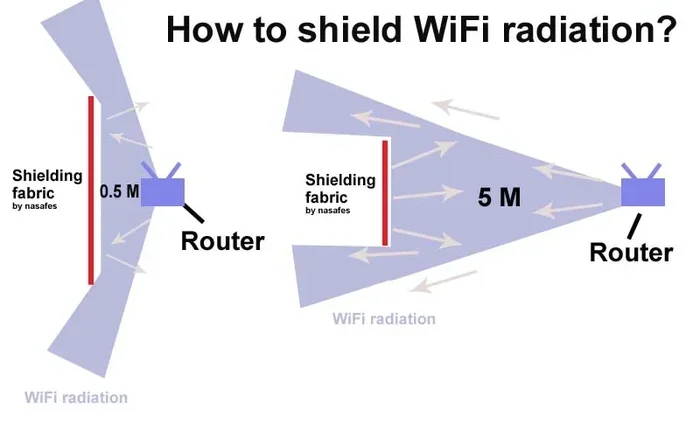
- Do not use “anti-radiation” products: Many products marketed as WiFi radiation blockers are unnecessary and can even interfere with your signal. Save your money.
These tips are simple, low-cost, and give you peace of mind without any need to panic about your WiFi setup.
The Bottom Line
So, can WiFi signals cause cancer? Based on all the evidence available today, the answer is a clear and confident no. WiFi radiation is low-energy, non-ionizing, and operates far below safety limits set by international health agencies. Decades of research have not found any credible link between WiFi exposure and cancer risk.
That does not mean you should ignore the topic entirely. Staying informed and taking simple, practical steps to manage your exposure is always a good idea. But fear and anxiety about WiFi signals are not supported by science.
The world of wireless technology is not going away. WiFi is a part of modern life, and it is here to stay. Understanding the real science — not the scare stories — helps you make smart, calm decisions for yourself and your family. Trust the evidence, not the hype.
If you have concerns about electromagnetic fields in your home, start with the practical tips above. Talk to your doctor if you have specific health questions. And remember: the best thing you can do for your health is to focus on what the science actually says — and that is reassuring news for anyone who loves their WiFi.
Frequently Asked Questions
Is WiFi radiation the same as nuclear radiation?
No, they are completely different. Nuclear radiation is ionizing and can damage DNA. WiFi uses non-ionizing radio frequency radiation, which does not have enough energy to harm your cells or DNA.
Can sleeping near a WiFi router be harmful?
There is no scientific evidence that sleeping near a WiFi router is harmful. The radiation levels are extremely low, and distance quickly reduces any exposure even further.
What do health organizations say about WiFi and cancer?
Major organizations like the WHO, FDA, CDC, and American Cancer Society all agree that WiFi radiation is safe and does not increase cancer risk based on current evidence.
Are children more at risk from WiFi signals?
Current research does not show that children face extra risk from WiFi exposure. Health organizations say WiFi is safe for people of all ages when used normally.
Do WiFi routers emit a lot of radiation?
No, WiFi routers emit very low levels of RF radiation, typically between 0.1 and 1 watt. This is far below international safety limits and much lower than many everyday household devices.
Should I turn off my WiFi router at night?
It is not necessary for health reasons, but turning it off at night can give you peace of mind and may slightly reduce your overall exposure to RF signals. It is a simple and easy step if it helps you feel more comfortable.
=== CONCLUSION ===
The question “Can WiFi signals cause cancer?” is one of the most common health concerns in the age of wireless technology. After reviewing the science, the research, and the guidance from trusted health organizations, the answer is clear: WiFi signals do not cause cancer. The radiation they use is non-ionizing, low-energy, and well within all established safety limits.
Understanding electromagnetic radiation, RF exposure, and the difference between ionizing and non-ionizing energy empowers you to make informed decisions. You do not need to fear your WiFi router. You do not need expensive protection products. You just need the facts.
Stay curious, stay informed, and remember that science is on your side when it comes to WiFi safety. Share this information with anyone who is worried — because knowledge is the best defense against fear.