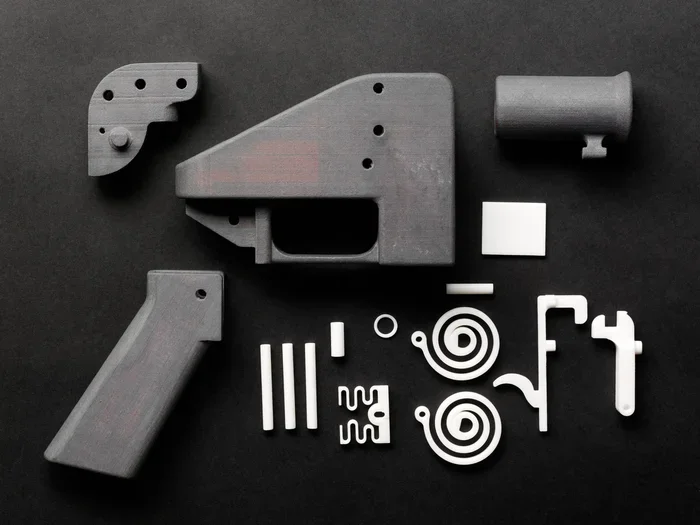
Can You 3d Print A Gun Everything You Need To Know Today
Yes, it is technically possible to 3d print a gun using specialized additive manufacturing technology and digital blueprints. However, 3d printed firearms come with serious legal restrictions, safety hazards, and regulatory challenges that every curious person should understand before exploring this topic. This guide breaks down everything you need to know about 3d printed guns in a clear and honest way.
This is a comprehensive guide about Can You 3d Print A Gun.
Key Takeaways
- 3d printing guns is technically feasible: Additive manufacturing can produce functional firearm components using plastic and metal materials.
- Legal risks are significant: Manufacturing firearms without proper licenses violates federal and state laws in most countries.
- Safety is a major concern: 3d printed guns have a high failure rate and can cause serious injury or death.
- Ghost guns are a growing issue: Unserialized firearms made through digital manufacturing bypass traditional tracking systems.
- Regulations are evolving: Governments worldwide are updating gun control laws to address 3d printing technology.
- 3d printing technology has many legal uses: The same additive manufacturing skills apply to countless safe and creative projects.
[FEATURED_IMAGE_PLACEHOLDER]
Can You 3d Print A Gun? The Short Answer
The question “can you 3d print a gun” has exploded in popularity over the last few years. The short answer is yes. You can use a 3d printer to create firearm components or even a complete working gun. But the full answer is much more complicated. It involves technology, law, safety, and ethics all tangled together.
3d printed firearms are real. They exist. People have built them. But that does not mean you should try. The risks are enormous. The legal consequences can be severe. And the safety dangers are very real. This article will walk you through everything you need to understand about this topic in 2024 and beyond.
We will cover how the technology works, what the laws say, why safety matters, and what the future looks like for additive manufacturing in the firearms world. Whether you are curious out of sheer interest or researching for a project, this guide has you covered.
How 3d Printing Firearms Actually Works
The Basics of Additive Manufacturing
3d printing, also called additive manufacturing, builds objects layer by layer. A digital file guides the printer to deposit material exactly where it is needed. For firearms, the most common materials are strong plastics like ABS and nylon. Some advanced setups use metal filaments too.
The process starts with a digital blueprint. Someone designs the gun part using computer-aided design software. This file gets sent to the printer. The printer then heats and deposits the material in precise layers. Over several hours, a physical object emerges.
Not all parts of a firearm are easy to print. The lower receiver is the most common component people attempt to print. This is the part that houses the trigger and fire control group. It is technically the regulated part of a firearm in the United States.
What Materials Are Used?
Most early 3d printed guns used plastic because it is cheap and easy to print. But plastic has serious limitations. It cannot handle the pressure of firing bullets reliably. Modern polymer guns often mix plastic with metal reinforcements. Some creators use metal inserts during the printing process to strengthen critical areas.
Here are the most common materials used in 3d printed gun production:
- ABS plastic: Durable and heat resistant but still risky for firing
- Nylon (PA12): Stronger than ABS but requires higher printing temperatures
- Carbon fiber reinforced filaments: Added stiffness and strength
- Metal-infused filaments: Contain real metal particles for extra durability
- Steel and titanium: Used in high-end industrial additive manufacturing for full metal parts
Each material has trade-offs. Plastic is accessible but dangerous under fire. Metal is safer but requires expensive equipment. The choice of material directly affects both performance and safety.
Digital Blueprints and Online Sharing
One of the most controversial aspects of 3d printed firearms is the sharing of digital blueprints. These files contain the exact instructions a printer needs to create gun parts. They can be shared across borders instantly through the internet.
The digital blueprints raise huge questions about gun control and export laws. When a file travels freely online, traditional border controls become nearly useless. Governments struggle to regulate something that exists as data. This creates a complex challenge for lawmakers and law enforcement alike.
Some websites host these files openly. Others have been taken down due to legal pressure. The cat-and-mouse game between sharing and regulation continues to evolve rapidly.
The Legal Landscape of 3d Printed Guns
Federal Laws in the United States
The legal status of 3d printed guns in the United States is a gray area. Federal law requires a license to manufacture firearms for sale or distribution. But making a gun for personal use is technically legal in many cases. However, there are important exceptions and conditions.
The lower receiver is classified as the firearm itself under federal law. If you print a lower receiver, you are legally manufacturing a firearm. You must comply with all applicable regulations. This includes passing background checks in most states.
Here are the key federal rules that apply:
- Gun Control Act of 1968: Regulates who can manufacture and sell firearms
- National Firearms Act: Taxes and registers certain types of weapons
- Undetectable Firearms Act: Bans guns that cannot be detected by metal detectors
- State-specific laws: Many states have their own restrictions on homemade firearms
The Undetectable Firearms Act is especially relevant to 3d printed guns. Because plastic guns can slip past metal detectors, this law makes it illegal to manufacture firearms that are undetectable by standard screening equipment. Most 3d printed guns violate this law unless they include a metal block or other detectable component.
International Laws and Regulations
Outside the United States, the legal picture varies widely. Some countries have strict bans on homemade weapons of any kind. Others focus on licensing and registration. The global nature of digital files makes enforcement incredibly difficult.
Many nations treat the sharing of firearm blueprints as a criminal act. They view it the same as exporting weapons. This is where the connection to broader technology regulation becomes relevant. The same digital communication networks used to share 3d printing files are also used for electronic commerce communication and other regulated activities. Governments apply similar oversight frameworks to control the flow of sensitive digital content.
The regulatory framework is still catching up to the pace of technology. Laws written decades ago did not anticipate that anyone with a printer could build a weapon at home. This gap creates ongoing legal uncertainty.
Safety Concerns with 3d Printed Firearms
Why 3d Printed Guns Are Dangerous
Safety is the most important reason to think carefully about 3d printed firearms. These guns fail at alarming rates. The materials simply cannot handle the extreme pressure and heat of a gunshot the way a properly manufactured firearm can.
When a 3d printed gun fails, it can explode. The shooter can suffer severe injuries. Broken plastic fragments can cause cuts, burns, and even blindness. In the worst cases, deaths have occurred from 3d printed gun failures.
Here are the main safety risks you should know about:
- Barrel rupture: The barrel can burst under firing pressure, sending shrapnel outward
- Receiver failure: The frame can crack or split during use
- Screw and fitting failures: Small components can loosen or break mid-firing
- Material degradation: Plastic weakens over time, even without being fired
- No quality control: Factory-made guns undergo rigorous testing; printed guns do not
Even experienced gunsmiths warn against using 3d printed firearms. The risks are simply too high. A commercial firearm undergoes thousands of dollars in testing and quality assurance. A printed gun gets no such treatment.
Common Mistakes That Lead to Failures
Many people who attempt to build 3d printed guns make avoidable mistakes. Understanding these errors helps illustrate why this technology is so dangerous in the wrong hands.
First, using the wrong material is a huge problem. Standard plastic filament is not designed to handle explosive forces. Second, skipping proper testing before firing is reckless. Third, ignoring design flaws in free online blueprints leads to structural weaknesses. Fourth, not understanding the pressure limits of printed materials causes catastrophic failures.
These mistakes are not just theoretical. Real people have been hurt because of them. The 3d printing technology community itself often warns against using printed guns and emphasizes responsible use of the technology.
Expert Insights on Firearm Safety
Firearm safety experts consistently advise extreme caution when it comes to 3d printed weapons. The consensus among professionals is clear. These untested firearms should never be used by anyone. The risks far outweigh any perceived benefit.
Many experts point out that the same 3d printer used to create gun parts can be used for thousands of safe and productive projects. From prototyping to creating custom tools, additive manufacturing has incredible potential when used responsibly. The technology itself is not the problem. It is the application that creates danger.
The Technology Behind 3d Printed Gun Parts
Types of 3d Printers Used
Not all printers can handle firearm production. Consumer-grade printers found in homes are generally not strong enough. Industrial-grade machines with higher temperatures and better precision are needed for reliable results.
The most common printer types used for this purpose include:
- FDM printers: Fused deposition modeling printers that melt and deposit plastic filament
- SLA printers: Stereolithography printers that use lasers to cure resin into solid parts
- SLS printers: Selective laser sintering machines that fuse powder materials together
- Metal additive printers: Industrial machines that print with actual metal powders
FDM printers are the most accessible and affordable. They are also the most commonly associated with 3d printed gun projects. However, they produce the weakest results. SLS and metal printers offer far better quality but cost tens of thousands of dollars.
Comparison: Traditional Manufacturing vs. 3d Printing
| Feature | Traditional Manufacturing | 3d Printing (Additive Manufacturing) |
|---|---|---|
| Cost per unit | Low at high volume | High per unit but no mold cost |
| Material strength | Consistent and tested | Variable and often weaker |
| Production speed | Fast for large runs | Slow for single items |
| Customization | Expensive to change | Easy to modify digital files |
| Regulatory oversight | Strict licensing required | Difficult to track and regulate |
| Quality control | Rigorous testing standards | No standardized testing |
This comparison shows why traditional manufacturing dominates the firearms industry. The consistency and safety cannot be matched by current 3d printing technology. The regulatory framework also heavily favors licensed manufacturers over individual producers.
What the Future Holds for 3d Printed Firearms
Evolving Technology and Materials
The 3d printing technology behind firearms is improving every year. Stronger materials, better printers, and more sophisticated designs are all on the horizon. This progress raises important questions about regulation and safety.
Some researchers are developing advanced polymers that can better withstand firing pressures. Others are working on hybrid manufacturing that combines printed plastic with metal components. The goal is not always malicious. Many of these innovations have legitimate applications in aerospace, automotive, and medical fields.
The same proprietary operating system technology that controls modern 3d printers also evolves constantly. Printer firmware updates can add new features, improve precision, and enhance safety. These software advancements affect every aspect of what can be produced on a 3d printer, including both legal and problematic applications.
Regulatory Trends to Watch
Governments around the world are paying closer attention to 3d printed firearms. New laws and regulations are being proposed regularly. Some focus on banning certain types of blueprints. Others target the sale of printer modifications designed for gun production.
The digital nature of this technology makes enforcement a unique challenge. Traditional weapons regulation relies on physical checkpoints and serial numbers. A digital file shared over the internet bypasses both of these controls entirely.
Experts predict that regulation will focus more on digital distribution channels and less on individual printers. This shift mirrors how governments approach other technology challenges, including controlling the flow of sensitive information through digital communication networks and value-added networks that support secure electronic transactions.
Responsible Uses of 3d Printing Technology
It is important to remember that 3d printing is a powerful and versatile technology with countless positive applications. The same skills and equipment used in any manufacturing project can create amazing things when used responsibly.
Here are some legitimate and exciting uses for additive manufacturing:
- Prototyping new products: Engineers and designers test ideas quickly and affordably
- Custom medical devices: Prosthetics and surgical tools tailored to individual patients
- Educational models: Schools and universities create anatomical and engineering models
- Replacement parts: Homeowners and mechanics print hard-to-find components for appliances and vehicles
- Art and sculpture: Artists push creative boundaries with complex geometric designs
- Consumer accessories: Custom phone cases, organizers, and household items
The vast majority of 3d printing activity is completely legal and highly beneficial. The technology empowers individuals and small businesses to innovate without massive capital investment. Focusing on these positive applications helps ensure that 3d printing continues to be seen as a force for good.
Conclusion
So, can you 3d print a gun? The technical answer is yes. But the practical, legal, and safety answers paint a very different picture. 3d printed firearms carry enormous risks that should not be taken lightly. The legal consequences can be severe. The safety dangers are real and well-documented. And the regulatory landscape is still evolving to catch up with the technology.
If you are interested in 3d printing, there are countless safe and rewarding ways to explore this technology. From creating custom accessories to building functional tools, the possibilities are vast. Focus on those positive applications and let the dangerous aspects remain in the realm of informed awareness rather than action.
Understanding how 3d printed guns work helps you make better decisions. It helps you stay informed about the technology that shapes our world. And it helps you appreciate both the incredible potential and the serious responsibilities that come with powerful manufacturing tools.
Stay curious, stay informed, and always prioritize safety and legality in everything you create. The future of additive manufacturing is bright, and it belongs to those who use it wisely.
Frequently Asked Questions
Is it illegal to 3d print a gun at home?
In the United States, manufacturing a firearm for personal use is legal in many states without a federal license. However, you must still comply with all state and local laws. Some states have strict bans on homemade firearms. The Undetectable Firearms Act also makes it illegal to create guns that cannot be detected by metal detectors. Always check your local regulations before attempting any kind of firearm manufacturing.
What is a ghost gun?
A ghost gun is a firearm that has no serial number and is untraceable. Many 3d printed guns fall into this category because they are made outside of licensed manufacturing channels. Ghost guns are a growing concern for law enforcement because they cannot be tracked through traditional serial number databases. This makes them attractive to individuals who want to avoid background checks and registration requirements.
Can a 3d printed gun actually fire a bullet?
Yes, some 3d printed guns have successfully fired bullets. However, they are extremely unreliable and dangerous. The printed components often crack, rupture, or explode after just a few shots. Most experts strongly advise against firing any 3d printed firearm. The materials used in consumer printers are simply not rated to handle the pressures involved in firing ammunition safely.
What materials work best for 3d printing gun parts?
Strong plastics like ABS and nylon are the most common materials for 3d printed firearms. However, they are not safe for sustained use. Metal-infused filaments offer better durability but still fall short of traditional manufacturing standards. Industrial metal printers can produce real metal parts, but these require expensive equipment and specialized knowledge. No consumer-level material is truly safe for reliable firearm production.
Are digital blueprints for 3d printed guns legal to share?
The legality of sharing digital blueprints varies by country and jurisdiction. In the United States, the export of technical data related to firearms is regulated under federal law. Some countries treat the online sharing of weapon blueprints as a serious criminal offense. The global nature of the internet makes enforcement challenging, but that does not mean sharing is without legal risk. Always research the laws in your specific location.
What other things can I 3d print instead of firearms?
3d printing has an enormous range of positive applications. You can print custom phone cases, replacement household parts, educational models, medical prosthetics, artistic sculptures, and functional tools. Many hobbyists and professionals use additive manufacturing daily for productive and creative projects. The technology is incredibly versatile and most of its applications are completely legal and beneficial to society.
Frequently Asked Questions
What is Can You 3d Print A Gun?
Can You 3d Print A Gun is an important topic with many practical applications.