Can You Overclock RAM on B460 Motherboard Yes or No
Can you overclock RAM on B460 motherboard? The short answer is yes, but with some important limitations. The B460 chipset does not support CPU overclocking, but it still allows memory overclocking through XMP profiles and manual adjustments. In this guide, you will learn exactly how to push your DDR4 RAM speeds higher, what limits to watch for, and how to keep your system stable.
Key Takeaways
- B460 supports RAM overclocking: While CPU overclocking is locked, memory overclocking works through XMP and manual BIOS settings.
- XMP is the easiest method: Enabling XMP profiles in BIOS lets you hit rated speeds with zero hassle.
- Manual overclocking gives more control: You can push frequencies and tighten timings beyond XMP for extra performance.
- Voltage matters: Proper DRAM voltage settings are critical for stable overclocks and preventing crashes.
- Stability testing is essential: Always test with MemTest86 or Prime95 after any overclock to confirm reliability.
- Know the limits: B460 motherboards have a memory controller ceiling, typically around DDR4-3733 to DDR4-4000 depending on the CPU.
- Avoid common mistakes: Skipping stability tests, ignoring thermals, and cranking voltage too high are the top errors to dodge.
📑 Table of Contents
- Can You Overclock RAM on B460 Motherboard? The Full Breakdown
- What Is RAM Overclocking and Why Does It Matter?
- The B460 Motherboard: What Can and Cannot Do
- How to Overclock RAM on a B460 Motherboard: Step by Step
- Optimizing Your Settings for the Best Performance
- Common Mistakes When Overclocking RAM on B460 (And How to Avoid Them)
- Expert Tips for Overclocking RAM on B460 Motherboards
- Real-World Performance Gains You Can Expect
- Conclusion: Is Overclocking RAM on B460 Worth It?
Can You Overclock RAM on B460 Motherboard? The Full Breakdown
If you have spent any time in PC building forums, you have probably seen the debate about overclocking RAM on B460 motherboards. Some people say it is completely locked down. Others claim you can squeeze out solid performance gains. So who is right?
The truth is somewhere in the middle. The B460 chipset, part of Intel’s 400-series lineup, was designed with specific limitations. It locks CPU overclocking entirely. However, memory overclocking remains accessible through XMP profiles and, in some cases, manual tuning. This means you absolutely can improve your RAM speeds and timings without needing a Z-series motherboard.
In this guide, we will walk you through everything you need to know. We will cover how memory overclocking works on B460, the step-by-step process to enable it, common mistakes that trip up beginners, and expert tips that help you get the best possible performance from your hardware.
What Is RAM Overclocking and Why Does It Matter?
Understanding Memory Overclocking Basics
RAM overclocking means running your memory modules at speeds higher than their rated specifications. For example, if you buy a DDR4-3200 kit, overclocking would push it to DDR4-3600 or beyond. This increases the memory bandwidth and can reduce DRAM latency, both of which directly affect how fast your system handles data.
Think of it this way. Your RAM is like a highway. Overclocking widens the road and allows cars (data) to move faster. The CPU still does the heavy thinking, but it needs data delivered quickly. Faster RAM means fewer traffic jams and smoother overall performance.
Why Speed and Latency Are Important
RAM frequency and latency work together to determine real-world performance. Higher frequency means more data transfers per second. Lower latency means shorter waits between requests. When you improve both, your system feels snappier in everyday tasks and demanding applications alike.
Here is a quick look at how different DDR4 speeds compare:
- DDR4-2666: Entry-level speed. Fine for basic tasks but holds back modern CPUs.
- DDR4-3200: The sweet spot for most Intel builds. Solid performance for gaming and productivity.
- DDR4-3600: A strong boost for Intel systems. Helps reduce CPU bottleneck in many scenarios.
- DDR4-4000+: Enthusiast territory. Marginal gains beyond this point for most users.
Reaching these higher speeds on a B460 board is entirely possible. Let us look at how the chipset handles it.
The B460 Motherboard: What Can and Cannot Do
B460 Chipset Limitations
The Intel B460 chipset was released alongside the 10th and 11th Gen Intel Core processors. It was positioned as a mid-range option. One of its biggest restrictions is that it does not support CPU overclocking. This means you cannot adjust multipliers or core voltages on your processor. That feature is reserved for Z490 and Z590 boards.
However, Intel left memory overclocking unlocked on B460. This is an important distinction. You can still enable XMP (Extreme Memory Profile) and, on many boards, manually adjust memory settings. The memory controller integrated into the CPU handles these tasks, and B460 does not block that path.
What Makes B460 Different from Z-Series Boards?
The main difference lies in CPU-related settings. On a Z-series motherboard, you can tweak CPU multipliers, load-line calibration, and advanced power delivery options. On B460, those options simply do not exist in the BIOS. Your memory overclocking options are still robust, but they focus entirely on DRAM settings rather than processor tuning.
Here is a quick comparison:
- B460: Memory overclocking enabled. CPU overclocking locked. XMP support included.
- Z490/Z590: Full CPU and memory overclocking. All advanced tuning options available.
For most users who just want faster RAM without buying an expensive Z-series board, B460 does the job well.
How to Overclock RAM on a B460 Motherboard: Step by Step
Method 1: Enabling XMP (The Easiest Way)
XMP stands for Extreme Memory Profile. It is a feature built into your RAM modules that stores pre-tested overclock settings. The manufacturer has already validated these speeds and timings. Enabling XMP is the fastest way to get better RAM performance on your B460 board.
Here is how to do it:
- Restart your computer and press the BIOS key during boot. This is usually DEL or F2, depending on your motherboard brand.
- Navigate to the overclocking or memory section in BIOS. On most boards, this is labeled something like “DRAM Settings” or “Memory Tweaker.”
- Find the XMP option. It is usually set to “Disabled” by default.
- Change it to “Profile 1” or “Enabled.”
- Save and exit BIOS. Your system will reboot at the new speed.
That is it. Enabling XMP alone can take your DDR4-2666 kit to DDR4-3200 or your DDR4-3200 kit to DDR4-3600, depending on what your RAM supports. The entire process takes less than two minutes.
Method 2: Manual Memory Overclocking
If you want even more control, manual overclocking lets you push past XMP limits or fine-tune specific settings. This method requires patience and some testing, but it can yield excellent results on B460.
Follow these steps:
- Enter BIOS using the same method described above.
- Switch the memory mode from “Auto” to “Manual” or “Overclocking” mode. Some brands call this “User Override.”
- Adjust the DRAM frequency. Start with a modest increase, such as going from 3200 MHz to 3400 MHz. Do not jump too high right away.
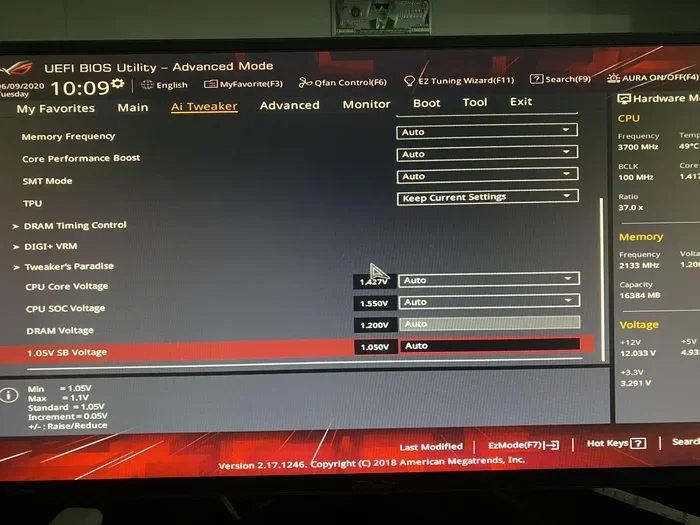
- Set the DRAM voltage. DDR4 typically needs 1.2V to 1.35V for stable overclocks. Do not exceed 1.4V unless you know what you are doing.
- Tighten the DRAM timing values. These include CAS Latency (CL), tRCD, tRP, and tRAS. Lower numbers mean lower latency. Change one value at a time and test.
- Disable any features that might interfere, such as “Memory Training” or “Auto” power-saving modes.
- Save, reboot, and test stability.
Method 3: Using BIOS Frequency Options
Some B460 motherboards offer a simplified “memory frequency” dropdown. Instead of manually editing every parameter, you simply select a target speed, and the board adjusts the rest automatically. Check your BIOS for options like “Memory Frequency” or “Memory OC.” This is a nice middle ground between XMP and full manual control.
Optimizing Your Settings for the Best Performance
Finding the Right DRAM Voltage
Voltage is the backbone of any stable overclock. Too little voltage and your system crashes or fails to POST. Too much and you risk long-term hardware degradation. For DDR4 on B460, 1.30V to 1.35V is the sweet spot for most manual overclocks. XMP profiles typically use 1.35V, which is safe for daily use.
Keep these tips in mind:
- Stay at or below 1.4V for daily use. Higher voltages are for extreme testing only.
- If your kit runs stable at 1.25V, that is even better for longevity.
- Always increase voltage in small increments, such as 0.025V at a time.
Tightening Timings for Lower Latency
DRAM timing adjustments can give you a noticeable boost, especially in CPU-sensitive tasks like gaming. The primary timings to focus on are:
- CAS Latency (CL): The delay between a request and data delivery. Lower is better.
- tRCD (RAS to CAS Delay): How long the row must be open before column access. Tightening this helps memory responsiveness.
- tRP (Row Precharge Time): How long a row must close before opening another. Lower values improve efficiency.
- tRAS (Active to Precharge Delay): Total time a row stays active. This can usually be set to roughly CL + tRCD + 2.
For example, a DDR4-3600 kit with timings of CL16-19-19-39 could be tightened to CL14-16-16-32 with careful testing. Every improvement matters.
Leveraging Memory Bandwidth Gains
Faster RAM increases your overall memory bandwidth. This is especially visible in benchmarks and applications that stream large amounts of data. Video editors, 3D renderers, and gamers on Intel platforms all benefit from higher bandwidth. On B460, reaching DDR4-3600 or even DDR4-4000 through XMP or light manual tuning delivers meaningful improvements.
Common Mistakes When Overclocking RAM on B460 (And How to Avoid Them)
Skipping Stability Testing
This is the number one mistake new overclockers make. They set a high frequency, boot into Windows, and assume everything works. The truth is, many instabilities only show up under load. A system that boots fine can crash during a gaming session or while running a heavy workload.
Always test your overclock with tools like:
- MemTest86: Boots outside of Windows and thoroughly tests memory. Run at least four full passes.
- Prime95 (Small FFTs): Pushes memory hard. Monitor temperatures and errors closely.
- OCCT Memory Test: Great for finding subtle errors that other tools miss.
- Real-world gaming or productivity: Run your usual tasks for a few hours. Crashes during specific games often point to memory issues.
Ignoring CPU Limitations
Your CPU has a built-in memory controller. On Intel 10th and 11th Gen chips, this controller has a natural ceiling. Pushing past what the CPU can reliably handle will not matter, even if the B460 board technically supports it. As a general rule, DDR4-3733 is a safe upper limit for most Intel 10th Gen chips. 11th Gen chips can sometimes handle DDR4-4000 or slightly more.
Trying to force DDR4-4400 on a B460 build usually results in boot failures or extreme instability, regardless of how much voltage you add. Know your hardware limits and respect them.
Setting Voltage Too High
Some guides online recommend cranking DRAM voltage to 1.5V or higher. This is dangerous for daily use. Excessive voltage generates heat, degrades memory cells over time, and can even damage your modules. Stick to safe ranges. If your kit does not stabilize at 1.35V, you have likely hit the maximum capability of your hardware, and further attempts will not help.
Forgetting to Update BIOS
Motherboard manufacturers frequently release BIOS updates that improve memory compatibility and add new XMP profiles. Before you start overclocking, make sure your BIOS is up to date. A simple BIOS update can unlock support for higher frequencies or fix known stability issues. Check your motherboard manufacturer’s website for the latest version.
Expert Tips for Overclocking RAM on B460 Motherboards
Start Conservative and Work Up
The golden rule of overclocking is patience. Do not jump straight to the highest frequency your RAM claims. Start at the rated XMP speed and test. If stable, try a small increase. Repeat until you find the limit. This approach saves hours of troubleshooting and protects your hardware.
Use the Right RAM for Your Platform
Not all RAM kits are created equal. For B460 builds, look for kits specifically marketed as “Intel Desktop” or “XMP-ready.” These modules have been tested on Intel platforms and tend to overclock more predictably. Generic or server-grade RAM may not respond well to overclocking at all.
Some well-regarded options for B460 systems include:
- Crucial DDR4-3200 (easy XMP to DDR4-3600)
- G.Skill Ripjaws V DDR4-3600 (great manual overclocking headroom)
- Kingston Fury Beast DDR4-3200 (solid XMP performance out of the box)
Monitor Temperatures Throughout
Memory temperature affects stability. DDR4 modules generally run fine at ambient room temperature, but heavy overclocking increases heat output. Use software like HWiNFO64 to keep an eye on DRAM thermals. If your modules exceed 50 degrees Celsius during stress testing, consider improving case airflow or adding a small fan near the RAM area.
Enable XMP Before Touching Manual Settings
Many users skip XMP and jump straight to manual tuning. This is a waste. XMP already gives you a tested, stable overclock. Only go manual if you want to push beyond what XMP offers or if you want to fine-tune specific timings for lower latency. Enabling XMP first gives you a strong baseline to build from.
Keep a Log of Your Changes
Write down every setting you change. Note the frequency, voltage, and timings. When something crashes, you can quickly identify which change caused the problem. This simple habit saves enormous time, especially during multi-day overclocking sessions.
Real-World Performance Gains You Can Expect
Gaming Performance
Overclocking RAM on B460 delivers noticeable gaming improvements, especially on Intel platforms. Games that are memory-sensitive, such as Cyberpunk 2077, Call of Duty: Warzone, and Microsoft Flight Simulator, show measurable frame rate gains when moving from DDR4-2666 to DDR4-3600. Expect roughly a 5 to 15 percent improvement in average frame rates, with bigger gains in 1080p gaming where the CPU and memory matter more.
Productivity Workloads
Applications like Adobe Premiere Pro, Blender, and large spreadsheet workbenches benefit from higher memory bandwidth. Compile times, render previews, and file transfers all speed up. While the gains are not as dramatic as in gaming, they add up over long work sessions and make your system feel more responsive overall.
System Responsiveness
Even basic tasks feel snappier with faster RAM. Application launches load quicker, browser tabs switch faster, and Windows updates complete more efficiently. These everyday improvements are often overlooked but represent one of the best reasons to enable XMP or overclock your memory on B460.
Conclusion: Is Overclocking RAM on B460 Worth It?
So, can you overclock RAM on B460 motherboard? Absolutely yes. While the B460 chipset locks CPU overclocking, it fully supports memory overclocking through XMP profiles and manual adjustments. This gives you a cost-effective path to better performance without spending on a Z-series motherboard.
The process is straightforward. Enable XMP for instant gains, or go manual for deeper control. Stay within safe voltage limits, test thoroughly, and respect your CPU’s memory controller ceiling. Avoid the common pitfalls of skipping stability tests or pushing voltage too high, and you will enjoy a fast, reliable system.
Whether you are a gamer chasing extra frames or a professional looking for snappier workflows, overclocking RAM on your B460 motherboard is one of the simplest and most impactful upgrades you can make. Give it a try. The performance boost is well worth the effort.
Frequently Asked Questions
Can I overclock RAM on B460 without XMP support?
Yes, many B460 motherboards allow manual memory frequency adjustments even without using XMP. You can enter the BIOS and set the DRAM frequency directly in the memory settings. However, XMP is the easiest and most reliable method since the timings and voltage are pre-validated by the manufacturer.
What is the maximum RAM speed supported by B460?
The B460 chipset officially supports DDR4-2933 on most 10th Gen Intel CPUs and DDR4-3200 on 11th Gen models. However, through XMP and manual overclocking, many users successfully run DDR4-3600 or even DDR4-4000, depending on their specific CPU’s memory controller limits and the quality of their RAM modules.
Will overclocking RAM void my warranty?
In most cases, enabling XMP does not void your warranty since it uses manufacturer-tested profiles. However, manual overclocking that causes hardware damage may void coverage depending on the manufacturer’s policy. RAM overclocking within safe voltage ranges (1.35V or below for DDR4) is generally considered safe and is rarely an issue for warranty claims.
Do I need a specific CPU to overclock RAM on B460?
Any Intel 10th or 11th Gen Core processor works with B460 for memory overclocking. The memory controller is built into the CPU, so results vary by chip. 11th Gen CPUs generally handle higher frequencies better than 10th Gen. Both support XMP profiles and manual DRAM tuning on B460 boards.
How much performance gain can I expect from overclocking RAM on B460?
You can expect a 5 to 15 percent improvement in gaming performance, especially at 1080p resolution where memory bandwidth matters most. Productivity tasks like video editing and rendering see moderate gains. Everyday system responsiveness also improves noticeably when moving from DDR4-2666 or DDR4-3200 to DDR4-3600 or higher.
Is it safe to run DDR4 voltage above 1.35V on B460?
Running DDR4 above 1.35V increases heat and can shorten module lifespan. While it may be necessary for extreme overclocks, it is not recommended for daily use. B460 users should aim to stay within the 1.25V to 1.35V range for reliable, long-term stability. Anything above 1.4V should only be attempted by experienced users for short testing sessions.