Do I Really Need To Buy A Screen For My Projector
Do I Really Need To Buy A Screen For My Projector? The short answer is: it depends on your setup and expectations. A dedicated projector screen delivers sharper images, better colors, and a more immersive viewing experience compared to a bare wall. However, several alternatives can work well if you are on a budget or have limited space.
If you have been staring at your projector and wondering do I need to buy a screen for my projector, you are not alone. This is one of the most common questions new projector owners ask. The honest truth is that the answer is not a simple yes or no. It depends on several factors, including your room, your budget, and what kind of experience you want.
A projector screen is not just a piece of fabric. It is a carefully designed projection surface that affects how your images look. The right screen can make colors pop, improve sharpness, and reduce glare. On the other hand, a plain white wall might be good enough for casual movie nights. Let us walk through everything you need to know so you can make the best decision for your setup.
Key Takeaways
- A projector screen is not always mandatory: a clean white wall can work in many situations.
- Screen material matters: the right screen gain and material significantly boost image quality.
- Ambient light is your biggest enemy: a proper screen handles light much better than a wall.
- Portable screens are affordable: you do not need to spend a fortune to get a great setup.
- Size and aspect ratio should match your projector: mismatched settings lead to poor viewing experience.
- DIY alternatives exist: black cloth and other materials can serve as budget projection surfaces.
- Location and placement affect everything: even the best screen fails if your projector setup is wrong.
📑 Table of Contents
- Understanding Your Projector Setup Needs
- Can You Skip the Screen and Use a Wall?
- Types of Projector Screens Worth Considering
- When Buying a Screen Really Makes Sense
- Projector Screen Alternatives You Should Know About
- How to Choose the Right Projector Screen
- Common Mistakes to Avoid When Choosing a Projector Screen
- Expert Insights: What the Pros Recommend
- Final Thoughts
Understanding Your Projector Setup Needs
Before you spend a single dollar, it helps to understand what a screen actually does and why it exists. A projector screen is designed to reflect light back to viewers in a controlled way. Walls, especially painted ones, scatter light in different directions. This difference might seem small, but it has a big impact on what you see.
What Does a Projector Screen Actually Do?
A projector screen serves one main purpose: it reflects light evenly back toward the audience. Good screens have a special coating or texture that helps distribute light uniformly. This means every part of the image looks equally bright. A wall, by contrast, might absorb some light or reflect it unevenly. The result is often a dull or patchy image.
The screen material also plays a huge role. Some screens are designed to boost brightness, while others focus on improving contrast. If you want the best image quality, understanding screen gain is important. Screen gain measures how much light the screen reflects back compared to a standard white surface. A higher gain means a brighter image, but it can also narrow your viewing angle.
How Projector Screens Affect Image Quality
Here is where things get interesting. A good screen can transform a mediocre projector into something that looks stunning. The projection surface matters just as much as the projector itself. Think of it this way: even the best chef cannot make a great meal with bad ingredients. Similarly, even the most expensive projector will struggle on a poor surface.
Several factors determine how your screen impacts image quality:
- Color accuracy: quality screens reproduce colors more faithfully.
- Contrast ratio: a good screen helps dark areas look deeper and richer.
- Brightness uniformity: no hot spots or dim corners.
- Flatness: a wrinkle-free surface prevents image distortion.
- Gain level: brighter does not always mean better.
When you ask yourself do I really need to buy a screen for my projector, remember that the screen is half the equation. Your projector creates the light, but the screen shapes how that light reaches your eyes.
Can You Skip the Screen and Use a Wall?
The simplest answer is yes, you can use a wall instead of a screen. Many people do it every day without any issues. But whether it is a good idea depends on your situation. Let us look at when a wall works and when it does not.
White Walls vs. Projector Screens
A clean, flat, white wall is the most common alternative to a projector screen. If your wall is smooth and free of cracks, it can produce a decent image. The key is the color. White reflects the most light, which is exactly what you want for a projection surface. Dark or colored walls will absorb light and make your image look dim and washed out.
However, walls have limitations. Most walls are not perfectly flat. Even small bumps and uneven patches create distortions in the projected image. Paint texture also matters. A matte white paint works best. Glossy or semi-gloss paints create hotspots and glare. If your wall has any of these issues, you will notice the difference immediately.
When a Wall Works and When It Does Not
A wall can work well in certain situations. If you are using your projector casually, for presentations, or for watching movies in a dim room, a wall might be perfectly fine. Here are some scenarios where a wall is acceptable:
- You are on a tight budget and need a quick solution.
- Your wall is smooth, flat, and painted matte white.
- You watch movies in a room with controlled lighting.
- You only use the projector occasionally.
- Image perfection is not a top priority for you.
On the other hand, a wall falls short when you need high-quality visuals. For a dedicated home theater setup, a proper screen makes a noticeable difference. If you are projecting in a bright room, a wall will struggle badly. The ambient light washes out the image, and a screen with the right gain can handle this much better.
Also consider the size of your wall. A small wall limits your screen size, which affects the overall viewing experience. If you want a large, cinematic image, a wall might not be big enough. This is where investing in a screen becomes worthwhile.
Types of Projector Screens Worth Considering
If you decide that a screen is the right choice, you will find many options. Not all screens are the same, and each type has its own strengths. Let us break down the most common types so you can pick the one that fits your needs.
Fixed Frame Screens
Fixed frame screens are the most popular choice for dedicated home theater setups. They mount to the wall permanently and stay stretched tight at all times. The result is a perfectly flat, wrinkle-free projection surface. These screens deliver the best image quality because the surface never moves or sags.
Fixed frame screens come in various sizes and materials. You can choose from wrinkle-free options that ensure a smooth picture every time. The downside is that they are not portable. Once installed, they stay in place. If you rent or move frequently, this might not be the best option.
Portable and Pull-Down Screens
Portable screens are a fantastic middle ground. They are lightweight, easy to set up, and affordable. Most pull-down screens come with a tripod or wall-mount bracket. You can set one up in minutes and take it down when you are done.
These screens are great for people who want flexibility. You can use them in the living room for movie nights and store them in a closet the rest of the time. Portable screens also work well for outdoor events and presentations. They are not as perfectly flat as fixed frame screens, but modern versions look very good.
Motorized and Retractable Options
Motorized retractable screens are the premium choice. You can lower the screen when you want to watch something and roll it back up when you are done. This is perfect for rooms that serve multiple purposes. A motorized screen disappears when not in use, keeping your room looking clean and stylish.
The downside is cost. Motorized screens are more expensive than manual options. They also require an electrical outlet nearby for the motor. However, if you want convenience and a polished look, they are hard to beat. The smooth, tensioned projection surface ensures excellent image quality every time.
When Buying a Screen Really Makes Sense
Not every situation calls for a projector screen. But there are clear cases where buying one is the right move. Let us explore when a screen truly adds value to your setup.
Home Theater Setups
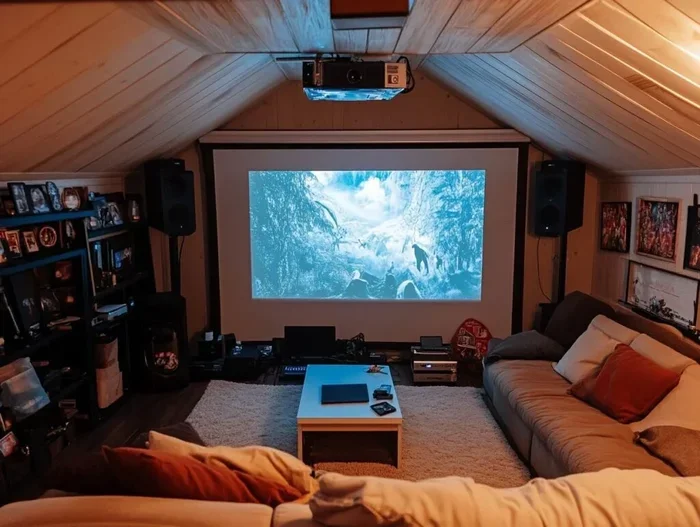
If you are building a dedicated home theater, a screen is essential. A wall simply cannot match the performance of a purpose-built projection surface. The colors will be richer, the contrast will be deeper, and the overall viewing experience will be significantly better.
For a home theater, consider a fixed frame screen with a matte white or gray surface. Gray screens absorb ambient light better, which helps maintain deep blacks. Pair your screen with proper lighting control, and you will have a cinematic experience right in your living room.
Outdoor Movie Nights
Planning outdoor movie nights is a lot of fun, and a screen makes a huge difference outdoors. A white bedsheet might work in a pinch, but it wrinkles easily and produces a distorted image. A portable screen designed for outdoor use gives you a smooth, bright picture even under open sky.
If you are setting up for events like parties or community gatherings, a sturdy screen is a smart investment. It is also worth noting that for outdoor setups, you might want to explore whether any projector works for outdoor events like Halloween. Not all projectors handle outdoor conditions equally, and pairing the right projector with a proper screen ensures the best results.
Business and Presentation Use
If you use your projector for work, meetings, or classroom presentations, a screen improves professionalism. A clean, sharp image makes your content easier to read and more engaging. Portable screens are especially useful in business settings because they are easy to transport and set up quickly.
For business use, look for screens with good brightness and wide viewing angles. You want everyone in the room to see the image clearly, regardless of where they are seated. A wrinkle-free surface ensures your presentation always looks polished.
Projector Screen Alternatives You Should Know About
If buying a traditional screen does not appeal to you, there are several alternatives worth considering. These options can save you money while still delivering a solid viewing experience.
Using Black Cloth as a Screen Alternative
One popular DIY approach is using black cloth as a projection surface. Black cloth absorbs stray light and reduces glare, which can actually improve contrast in some setups. This technique works especially well in rooms with lots of ambient light.
You can find affordable black cloth at fabric stores or online. Simply stretch it tightly over a frame or hang it on a wall. The result is surprisingly good for the price. If you want to learn more about this approach, check out our guide on using black cloth for your projector screen. It covers the pros, cons, and step-by-step tips for getting the best results.
Projector vs. TV: Which Is Better for You?
Some people skip the screen entirely and go straight to comparing projectors with TVs. Both have strengths and weaknesses. A projector with a screen can produce a much larger image than most TVs. This makes it ideal for home theater setups and big rooms.
However, TVs perform better in bright rooms. They do not need a dark environment to look good. If you are trying to decide between the two, it helps to understand the full picture. You can read more about whether you can use a projector instead of a TV to compare both options side by side.
The bottom line is that a projector with a proper screen gives you a bigger, more cinematic feel. A TV gives you convenience and brightness. Your choice depends on your room, your preferences, and how you plan to use the equipment.
How to Choose the Right Projector Screen
Once you decide to buy a screen, choosing the right one can feel overwhelming. There are so many options available. Here is a simple guide to help you make the best choice.
Screen Size and Aspect Ratio
Your screen size should match your projector’s capabilities and your room size. Measure the distance between your projector and the wall or screen location. This distance, known as the throw ratio, determines how large your image can be.
The aspect ratio is equally important. Most modern projectors use a 16:9 aspect ratio, which matches most movies and TV shows. Some older projectors use 4:3, which is better for presentations. Make sure your screen matches your projector’s native aspect ratio for the best results.
Screen Gain and Material
Screen gain is one of the most important specs to understand. A screen with a gain of 1.0 reflects light the same way a standard white wall does. Screens with higher gain reflect more light back, making the image brighter. However, higher gain often comes with a narrower viewing angle.
For most home theater setups, a gain between 1.0 and 1.3 works well. If you need a brighter image for a bright room, look for screens with a gain of 1.3 or higher. The screen material also matters. Matte white surfaces work well in controlled lighting. Gray surfaces improve contrast in rooms with some ambient light.
Placement and Viewing Angle
Where you place your screen matters more than most people realize. The screen should be at a comfortable viewing height, usually with the bottom edge at about waist level when seated. This ensures everyone in the room has a good viewing experience.
Also consider the viewing angle. If your audience sits off to the sides, a screen with a wide viewing angle is essential. Some screens maintain image quality even at steep angles, while others lose brightness and color accuracy quickly. Proper placement also includes making sure your projector setup is aligned correctly. For tips on positioning your projector, check out our guide on mounting your projector off center to avoid common alignment mistakes.
Common Mistakes to Avoid When Choosing a Projector Screen
Even with the best intentions, many people make mistakes when buying a projector screen. Avoiding these pitfalls saves you money and frustration.
- Buying a screen that is too small: a small screen limits your viewing experience and makes the projector look weak.
- Ignoring ambient light: if your room gets a lot of natural light, you need a screen that handles brightness well.
- Choosing the wrong material: not all screens work in all environments. Match the material to your room conditions.
- Skipping the aspect ratio check: a mismatched aspect ratio leads to black bars or cropped images.
- Forgetting about portability: if you move your projector around, a portable screen might serve you better than a fixed frame.
- Overlooking screen flatness: wrinkles and folds distort the image and ruin the experience.
Take your time when shopping. Measure your space, check your projector specs, and read reviews before you buy. A well-chosen screen lasts for years and makes a real difference in how your content looks.
Expert Insights: What the Pros Recommend
Home theater enthusiasts and AV professionals agree on a few key points when it comes to projector screens. First, they emphasize that the screen is just as important as the projector. Many people invest thousands in a projector but then project onto a wrinkled bedsheet. This wastes the potential of their equipment.
Second, experts recommend starting with a portable screen if you are unsure. Portable screens are affordable and let you test different setups before committing to a permanent installation. Third, they stress the importance of matching your screen to your room environment. A dark room benefits from a different screen than a bright living room.
Finally, professionals suggest that for the absolute best experience, you should invest in a quality fixed frame screen with the right material for your space. The difference in image quality is dramatic, and once you see it, going back to a wall feels like a step backward.
Final Thoughts
So, do I need to buy a screen for my projector? The answer comes down to your personal situation. If you want the best possible image quality, a dedicated projector screen is worth every penny. It makes colors richer, blacks deeper, and the overall viewing experience far more immersive.
But if you are watching casually in a dim room on a tight budget, a clean white wall can work just fine. And if you want something in between, portable screens and DIY alternatives like black cloth offer great value without breaking the bank.
The most important thing is to understand your needs. Consider your room, your projector, your budget, and how often you will use the setup. With the right projection surface, your projector will deliver its full potential. Whether you choose a premium fixed frame screen or a simple pull-down model, the investment pays off in better image quality and a more enjoyable viewing experience every single time.
Take the time to research your options, measure your space, and pick the screen that fits. Your eyes will thank you the first time you see a movie on a proper projector screen. It is a small upgrade that transforms the entire experience.
Frequently Asked Questions
Can I use a white bedsheet instead of a projector screen?
A white bedsheet can work in a pinch, but it is not ideal. Sheets often wrinkle, which creates distortions in the projected image. They also may not reflect light as evenly as a dedicated projection surface. If you must use a sheet, choose a smooth, wrinkle-free white fabric and stretch it as tight as possible.
How much does a good projector screen cost?
Portable screens can cost anywhere from $50 to $150. Fixed frame screens range from $100 to $500 or more, depending on size and material. Motorized retractable screens tend to be the most expensive, starting around $200 and going up to $1,000 or more. You do not need to spend a fortune to get a solid screen that improves your viewing experience.
Does a projector screen make a big difference in image quality?
Yes, a proper screen makes a noticeable difference. It improves brightness, color accuracy, contrast, and overall sharpness. The screen material and gain level directly affect how your images look. If you have invested in a good projector, adding a quality screen lets you get the most out of it.
Can I project onto a painted wall?
Yes, a painted wall can work as a projection surface, especially if it is matte white. Avoid glossy or semi-gloss paints because they create hotspots and glare. The wall should also be as smooth and flat as possible. Any texture or imperfections will show up in the projected image.
What is the best screen for a bright room?
For bright rooms, look for a screen with a higher screen gain (1.3 or above). Gray screens also help by absorbing ambient light and improving contrast. You might also consider ambient light rejecting (ALR) screens, which are specifically designed to handle bright environments. These screens direct light back toward the viewer while rejecting light from other sources.
Do I need a special screen for 4K projectors?
A 4K projector benefits from a high-quality screen, but you do not necessarily need a special one. Look for a screen with a smooth, fine-weave surface that can reproduce fine details. The screen material should be wrinkle-free and uniformly textured. Any quality screen that matches your projector’s resolution and aspect ratio will work well for 4K content.