How Are Resistors Made The Complete Manufacturing Guide
Learning how resistors are made reveals the fascinating science behind everyday electronics. This guide walks you through every stage of resistor manufacturing, from raw materials to final testing. You will explore carbon film, wire wound, and surface mount production methods used in modern factories.
Have you ever wondered what goes into making the tiny components inside your phone, laptop, or TV? The answer starts with how resistors are made. These small but mighty parts control the flow of electricity in nearly every electronic device you own. Without them, circuits would overload, signals would scatter, and modern technology would simply not work. This complete manufacturing guide breaks down the entire process in a way that is easy to follow and genuinely interesting.
Whether you are a curious hobbyist, a student studying electronics, or just someone who likes to know how things work, this article has you covered. We will explore the raw materials, the step by step production process, the different types of resistors, and the quality control methods that ensure every unit performs reliably. By the end, you will have a clear picture of the science and craft behind resistor manufacturing. Let us dive right in.
Key Takeaways
- Resistors start as simple raw materials: ceramic, carbon, metal films, and wire are the building blocks of every resistor.
- Multiple manufacturing methods exist: carbon composition, metal film, wire wound, and thick film processes each serve different needs.
- Precision matters in resistor production: tolerance ratings and resistance values are carefully controlled during manufacturing.
- Quality control testing is essential: every batch goes through rigorous checks to meet industry standards.
- Surface mount technology changed everything: automated assembly lines now produce resistors faster and more accurately than ever.
- The future is smart and miniaturized: advanced materials and AI-driven processes are shaping next generation resistor manufacturing.
📑 Table of Contents
- What Is a Resistor and Why Does It Matter?
- The Raw Materials Behind Resistor Production
- How Resistors Are Manufactured: Step by Step
- Different Types of Resistors and Their Making Process
- Quality Control and Testing in Resistor Manufacturing
- The Future of Resistor Production
- Common Mistakes to Avoid in Understanding Resistor Production
- Quick Tips for Anyone Interested in Resistor Manufacturing
- Expert Insights on Resistor Manufacturing
- Conclusion
What Is a Resistor and Why Does It Matter?
A resistor is an electrical component that limits the flow of current in a circuit. Think of it like a valve in a water pipe. It controls how much current passes through at any given time. Every resistor has a resistance value measured in ohms, and a tolerance rating that tells you how precise that value is. These ratings are critical because even small variations can affect how a device performs.
Resistors come in many shapes and sizes. Some are big enough to hold in your hand, while others are smaller than a grain of rice. The way a resistor is made directly affects its performance, durability, and cost. Understanding the manufacturing process gives you a deeper appreciation for the engineering that goes into every electronic gadget around you. It also helps you choose the right component when you are building or repairing something.
Why Learning About Manufacturing Matters
When you understand how resistors are made, you can make better decisions as a consumer or a maker. You will know why some resistors cost more than others. You will understand why certain types are better for specific applications. This knowledge also helps you troubleshoot problems faster. Instead of guessing, you can trace issues back to the component level with confidence.
The Raw Materials Behind Resistor Production
Every resistor starts with raw materials. The type of material used determines the resistor’s properties, including its stability, precision, and power handling capacity. Let us look at the most common materials used in resistor production today.
Carbon Based Materials
Carbon is one of the oldest and most widely used materials in resistor manufacturing. Carbon composition resistors use a mixture of carbon powder and a binding agent, usually clay or resin. This mixture is molded into a solid cylinder and then fired in a kiln. The result is a cheap, reliable resistor that works well for general purpose applications. Carbon based resistors are still popular in low cost consumer electronics.
Metal Films and Metal Oxide
Metal film resistors offer much higher precision than carbon types. A thin layer of metal, often nickel chromium or tantalum nitride, is deposited onto a ceramic substrate. This process creates a very uniform coating, which translates into a stable and accurate resistance value. Metal oxide resistors use a similar approach but with metal oxide compounds. They handle higher temperatures and are often used in power supply circuits.
Wire and Ceramic Substrates
Wire wound resistors use a thin wire of resistive alloy, such as nichrome, wrapped around a ceramic or fiberglass core. These resistors are known for their high precision and ability to handle large amounts of power. The ceramic substrate acts as an insulator and heat dissipater. It keeps the resistor stable even under heavy load conditions. Other substrates like alumina and silicon are also used depending on the application.
Other Essential Materials
Beyond the resistive element, several other materials play a role. Coating materials protect the resistor from moisture and physical damage. End caps connect the resistor to circuit boards. Printing inks mark the resistance value and tolerance on the body. Each of these materials is carefully selected to ensure the final product meets strict performance standards.
How Resistors Are Manufactured: Step by Step
The actual process of how resistors are made varies depending on the type. However, most manufacturing lines follow a similar sequence of steps. Let us walk through the general production flow that factories use around the world.
Step One: Mixing and Compounding
For carbon based resistors, raw carbon powder is mixed with a binder material. The ratio of carbon to binder determines the final resistance value. More carbon means lower resistance. The mixture is blended thoroughly to ensure consistency. This step is crucial because any unevenness will show up as defects in the finished product.
Step Two: Forming the Resistor Body
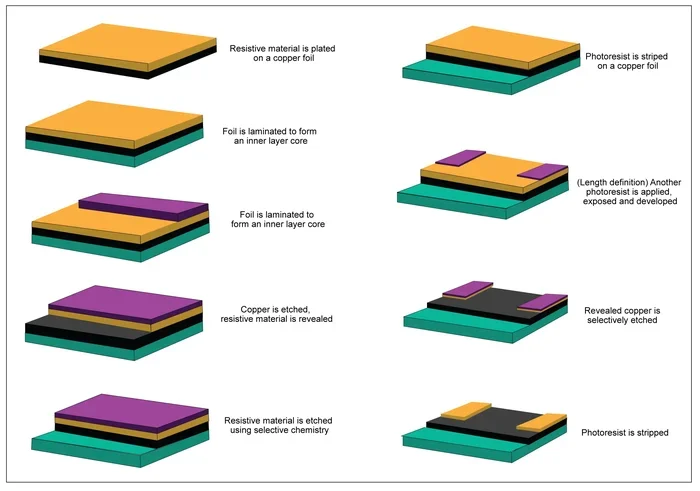
The mixed compound is pressed into molds under high pressure. For wire wound resistors, the resistive wire is wound around a core in a precise pattern. For film resistors, the metal or carbon layer is deposited onto the substrate using vacuum coating or sputtering. Each method requires tight control over temperature, pressure, and speed to maintain quality.
Step Three: Trimming and Adjusting
Once the basic shape is formed, the resistor needs to be trimmed to hit its target resistance value. This is done using laser trimming or mechanical cutting. A laser removes a tiny amount of the resistive material to increase resistance. This step is what gives precision resistors their tight tolerance ratings. A resistor rated at one percent tolerance must fall within a very narrow range, and trimming makes that possible.
Step Four: Coating and Protection
After trimming, the resistor is coated with a protective layer. This coating shields the component from humidity, dust, and physical damage. It also provides electrical insulation. The coating material is applied through spraying, dipping, or painting. Once applied, it is cured in an oven to harden it completely.
Step Five: Marking and Printing
The resistance value, tolerance, and manufacturer information are printed onto the resistor body. This is usually done with inkjet printers or laser markers. The markings must be clear and durable so they remain readable throughout the life of the component. For surface mount resistors, which are too small for traditional markings, codes are printed on the packaging instead.
Step Six: Lead Forming and Packaging
For through hole resistors, leads are formed and bent to match standard spacing. This makes them easy to insert into circuit boards. All resistors are then packaged in tape and reel, trays, or tubes depending on how they will be used in assembly. Packaging protects the components during shipping and storage. It also enables automated pick and place machines to handle them efficiently.
Step Seven: Final Inspection and Testing
Before leaving the factory, every batch undergoes final testing. Electrical measurements confirm that each resistor meets its specifications. Visual inspections check for physical defects like cracks, discoloration, or misaligned leads. Only components that pass all checks are approved for shipment. This final gate ensures that customers receive reliable and consistent products.
Different Types of Resistors and Their Making Process
Not all resistors are created equal. Different types use different manufacturing methods, and each has its own strengths. Here is a closer look at the most common kinds and how they are produced.
Carbon Composition Resistors
These are the oldest type of resistor still in production. They are made by mixing carbon powder with a ceramic binder, pressing the mixture into a shape, and baking it at high temperatures. The result is a sturdy and inexpensive component. Carbon composition resistors have higher tolerance values, usually five to ten percent. They are commonly found in older equipment and low cost consumer products.
Carbon Film Resistors
Carbon film resistors are made by depositing a thin layer of carbon onto a ceramic rod. The thickness of the carbon layer controls the resistance value. These resistors offer better precision than carbon composition types, with tolerances as tight as two percent. They are widely used in general electronics and are one of the most popular choices for hobbyists and manufacturers alike.
Metal Film Resistors
Metal film resistors use a thin coating of nickel chromium or similar alloy deposited onto a ceramic core. The deposition process happens inside a vacuum chamber. This method produces extremely uniform and stable resistance values. Tolerances can reach as low as zero point one percent. Metal film resistors are the go to choice for precision circuits, audio equipment, and measurement instruments.
Wire Wound Resistors
A resistive wire, typically nichrome, is wound tightly around a ceramic or fiberglass mandrel. The number of turns and the wire gauge determine the resistance. These resistors can handle high power levels and maintain accuracy over a wide temperature range. They are commonly used in power supplies, motor controls, and industrial equipment. The manufacturing process is more labor intensive, which is why wire wound resistors tend to cost more.
Thick Film and Thin Film Resistors
Thick film resistors use a paste made of glass and conductive particles that is screen printed onto a substrate. Thin film resistors use vacuum deposited metal layers. Both methods are widely used in surface mount technology. Thick film resistors are cheaper and suitable for general applications. Thin film resistors offer better precision and are used in demanding circuits where accuracy is critical.
Surface Mount Resistors
Surface mount resistors, or SMD resistors, are tiny rectangular chips designed to sit directly on circuit boards. They are manufactured using thick film or thin film processes and are packaged in reels for automated assembly. Their small size allows designers to pack more components into a smaller space. Most modern electronics, from smartphones to medical devices, rely heavily on surface mount resistors.
Quality Control and Testing in Resistor Manufacturing
Making a resistor is only half the battle. Ensuring that every unit performs correctly is equally important. Quality control in resistor manufacturing involves multiple stages of testing and inspection.
Electrical Testing
Every resistor must be tested for its actual resistance value. Automated test equipment measures the ohm rating under controlled conditions. Components that fall outside the specified tolerance are rejected. This testing happens at multiple points during production, not just at the end. Catching defects early saves time and reduces waste.
Environmental Stress Testing
Resistors are exposed to temperature extremes, humidity, and vibration during their lifetime. Factories simulate these conditions in environmental chambers. Components are heated, cooled, and subjected to moisture to see how they hold up. Only resistors that survive these tests without drifting in value are approved for sale.
Visual Inspection
Automated optical inspection systems scan each resistor for physical defects. Cracks, discoloration, misaligned leads, and coating flaws are all detected by cameras and analyzed by software. Human inspectors also review samples from each batch. This dual approach catches issues that machines might miss and ensures a high overall standard.
Lot Sampling and Certification
Manufacturers use statistical sampling methods to check entire production lots. A sample from each batch is tested thoroughly. If the sample passes, the whole lot is approved. This approach balances thoroughness with efficiency. Many resistor manufacturers also comply with international standards like ISO 9001, which adds another layer of confidence for buyers.
The Future of Resistor Production
The world of resistor manufacturing is evolving fast. New materials, smarter processes, and greater automation are changing how resistors are made. Here are some trends shaping the future.
Automation and Smart Factories
Modern factories use robots and AI driven systems to handle every stage of production. Automated assembly lines can produce millions of resistors per day with minimal human intervention. Machine learning algorithms monitor quality in real time and adjust parameters instantly. This level of automation improves consistency and reduces costs.
Advanced Materials
Researchers are developing new materials that could make resistors even better. Graphene, for example, offers excellent conductivity and stability. Thin film technologies are pushing precision to new levels. These advances could lead to resistors that are smaller, more accurate, and more reliable than anything available today.
Miniaturization Trends
As electronic devices get smaller and more powerful, the demand for tiny resistors grows. Surface mount resistors now come in sizes as small as zero two zero one inches. Manufacturing these micro components requires extraordinary precision. Advances in photolithography and nano coating are making it possible to produce them at scale.
Sustainability and Green Manufacturing
The industry is also focusing on reducing waste and energy use. Factories are adopting cleaner production methods and recycling materials wherever possible. Lead free coatings and eco friendly substrates are becoming standard. These efforts help reduce the environmental footprint of electronic manufacturing as a whole.
Common Mistakes to Avoid in Understanding Resistor Production
There are a few misconceptions that people often have about how resistors are made. Being aware of these can save you confusion and help you make better choices.
- Assuming all resistors are the same: Different types serve different purposes. A carbon composition resistor is not suitable for precision circuits, just as a wire wound resistor is overkill for a simple LED.
- Ignoring tolerance ratings: A resistor with a five percent tolerance might not work in a sensitive analog circuit. Always check the tolerance before selecting a component.
- Overlooking power ratings: A resistor that cannot handle the power in your circuit will overheat and fail. Match the power rating to your application.
- Skipping quality checks: Cheap resistors from unverified suppliers may have inconsistent values. Always buy from reputable manufacturers or distributors.
- Confusing through hole with surface mount: These two types require different assembly methods and are not interchangeable on the same board design.
Quick Tips for Anyone Interested in Resistor Manufacturing
- Start with the basics: Learn what carbon, metal film, and wire wound resistors are before diving into factory processes.
- Use a multimeter: Testing resistance values yourself gives you hands on understanding of how these components behave.
- Follow industry standards: Look up IEC and EIA standards for resistor specifications. They provide a common language for comparing components.
- Visit a factory or watch videos: Seeing the production line in action makes the process come alive and deepens your understanding.
- Experiment with different types: Build simple circuits with various resistors to feel the difference in performance and behavior.
Expert Insights on Resistor Manufacturing
Industry professionals emphasize that resistor production is as much an art as it is a science. Experienced engineers note that the smallest details, like the humidity in a factory or the purity of raw carbon powder, can affect the final product. Maintaining clean room conditions, controlling temperature precisely, and following strict protocols are all part of what makes modern resistor manufacturing so reliable. These experts also point out that the industry is constantly innovating, with new materials and methods emerging every few years to meet the growing demands of the electronics market.
Conclusion
The journey from raw materials to a finished resistor is a remarkable process that combines chemistry, physics, and precision engineering. From mixing carbon compounds to laser trimming metal films, every step in how resistors are made is designed to deliver reliable and accurate performance. Whether it is a simple carbon composition resistor or a tiny surface mount chip, each component plays a vital role in the electronic devices we use every day.
Understanding the manufacturing process gives you a new perspective on the components you work with every day. It helps you choose the right resistor for your projects and troubleshoot problems with greater confidence. As technology continues to advance, resistor manufacturing will only get more sophisticated, more precise, and more efficient. The next time you pick up a resistor, you will know the story behind it. And that knowledge is genuinely empowering.
Take what you have learned here and apply it. Whether you are building a circuit on a breadboard or designing a product for mass production, knowing how resistors are made puts you ahead. The world of electronic components is vast, and resistors are the perfect place to start exploring it.
Frequently Asked Questions
What are resistors made of?
Resistors are made from a variety of materials including carbon powder, metal films like nickel chromium, resistive wire such as nichrome, and ceramic substrates. The material used depends on the type and intended application of the resistor.
How long does it take to manufacture a resistor?
The production time varies by type and complexity. Simple carbon film resistors can be produced in minutes, while precision wire wound resistors may take longer due to the winding and trimming process. Modern automated lines produce thousands per hour.
What is the difference between thick film and thin film resistors?
Thick film resistors use a paste of glass and conductive particles applied through screen printing. Thin film resistors use vacuum deposited metal layers. Thin film offers better precision and stability, while thick film is more cost effective for general applications.
Are resistors tested before shipping?
Yes, every batch of resistors goes through electrical testing, visual inspection, and often environmental stress testing. Only components that meet their specified resistance value and tolerance are approved for shipment to customers.
Can I make resistors at home?
While you cannot replicate factory production at home, you can make simple resistors using materials like graphite pencil lead wrapped around a ceramic dowel. These homemade versions work for basic experiments but will not match the precision of commercial components.
What is the smallest resistor size available today?
Modern surface mount resistors come in sizes as small as 0201 inches, which is roughly the size of a grain of sand. These ultra small components are used in smartphones, wearables, and other compact electronic devices where space is extremely limited.
=== META TITLE ===
How Are Resistors Made: The Complete Manufacturing Guide
=== SEO TITLE ===
How Are Resistors Made: Complete Manufacturing Guide
=== URL SLUG ===
/how-are-resistors-made-complete-manufacturing-guide