How Bright Is 7500 Lumens And What It Can Light Up
7500 lumens is an extremely bright light output that can easily illuminate large rooms, outdoor spaces, and even stages. This level of brightness is commonly found in high-end projectors, powerful flashlights, and commercial lighting fixtures. If you are wondering what a 7500 lumen device can actually do, this guide breaks it down with real-world examples and practical advice.
Key Takeaways
- 7500 lumens is very bright: It can light up a large living room, a backyard, or even a small outdoor stadium.
- Projectors are the most common use: A 7500 lumen projector delivers a clear image even in rooms with ambient light.
- Brightness depends on many factors: Beam angle, throw distance, and ambient light all affect how 7500 lumens feels in practice.
- Multiple device types offer this output: From LED floodlights to portable projectors, many products hit the 7500 lumen mark.
- Watch out for fake claims: Not all 7500 lumen products are equal. Check for ANSI lumen ratings to get accurate brightness.
- Power and heat matter: High-lumen devices often draw more wattage and generate more heat. Plan for proper ventilation.
📑 Table of Contents
What Does 7500 Lumens Actually Mean?
Lumens measure the total amount of visible light a source produces. When we say a device outputs 7500 lumens, we mean it throws out a very high level of light output. To put this in perspective, a standard 60-watt incandescent bulb produces about 800 lumens. A 7500 lumen device is roughly nine times brighter than that.
The concept of brightness can feel confusing. Lumens are not the same as watts. Watts measure energy consumption. Lumens measure actual light produced. So a low-wattage LED can still produce a massive lumen count. This is why LED light technology has revolutionized the industry.
Another term you will encounter is ANSI lumens. This is a standardized measurement. It ensures that the lumen rating comes from a real test, not a marketing guess. Always look for ANSI-certified ratings when buying a projector or light fixture.
The human eye perceives brightness in a non-linear way. Doubling the lumens does not mean the light looks twice as bright. But going from 1000 to 7500 lumens is a massive jump. You will absolutely notice the difference.
Here are a few key terms that help explain how 7500 lumens works in real life:
- Lumen output: The total light a source emits in all directions.
- Lux: Lumens per square meter. It tells you how much light hits a surface.
- Candela: Measures the intensity of light in a specific direction.
- Beam angle: The width of the light cone. A wider angle spreads light over more area but reduces intensity.
- Throw distance: How far the light travels before it reaches the target surface.
What Can 7500 Lumens Light Up?
This is the question most people really want answered. The answer depends on the type of device, the room size, and the ambient light conditions. Let us explore the most common scenarios where 7500 lumens shines.
Large Living Rooms and Home Theaters
A 7500 lumen projector can easily cover a screen sized 100 to 150 inches. Even in a room with some window light, the image stays visible and vibrant. You do not need to blackout the room completely. This makes it ideal for family movie nights where the kids are still moving around.
For a home theater setup, 7500 lumens gives you flexibility. You can watch during the day with curtains partially open. At night, the image pops with incredible detail and color depth.
Outdoor Events and Backyards
Outdoor lighting is where high-lumen devices really shine. A 7500 lumen LED floodlight can illuminate a full backyard, a basketball court, or a parking area. The light intensity at this level keeps spaces safe and visible after dark.
Think about hosting a backyard barbecue or a birthday party. String lights create ambiance, but they do not provide task lighting. A powerful floodlight at 7500 lumens fills the entire yard with clean, bright light. Guests can move around safely, and you can see every detail.
Stages and Performance Spaces
Concert venues, school auditoriums, and community theaters often rely on high-lumen lighting. Stage lighting at 7500 lumens can wash a medium-sized stage with even illumination. Spotlights and moving heads in this range create dramatic effects that captivate any audience.
For small bands doing a gig, a few 7500 lumen fixtures can transform a dull gymnasium into a vibrant performance space. The illumination covers performers and instruments evenly, making every detail visible from the back row.
Construction Sites and Workshops
Workshops and construction zones need serious lighting. A 7500 lumen flashlight or portable work light helps workers see details clearly. Safety improves dramatically when the workspace is well-lit.
These devices also work well for camping trips or emergency situations. When the power goes out, a 7500 lumen portable light turns a dark room into a comfortable space.
7500 Lumens vs Other Brightness Levels
To truly understand how bright 7500 lumens is, it helps to compare it with other common brightness levels. The table below shows real-world comparisons across different devices and use cases.
| Brightness Level | Typical Device | Best For |
|---|---|---|
| 500 – 1000 lumens | Standard flashlight, desk lamp | Small tasks, reading, walking at night |
| 2000 – 3000 lumens | Mid-range projector, garage light | Medium rooms, dim environments |
| 5000 lumens | Bright projector, large LED panel | Partially lit rooms, workshops |
| 7500 lumens | High-end projector, powerful floodlight | Large rooms, outdoor spaces, stages |
| 10000+ lumens | Commercial projector, stadium lights | Very large venues, outdoor events |
As you can see, 7500 lumens sits in a sweet spot. It is bright enough for demanding environments but not so powerful that it becomes impractical for home use. Most consumer-grade devices top out around this range, making it a popular choice for enthusiasts and professionals alike.
How Ambient Light Affects Perceived Brightness
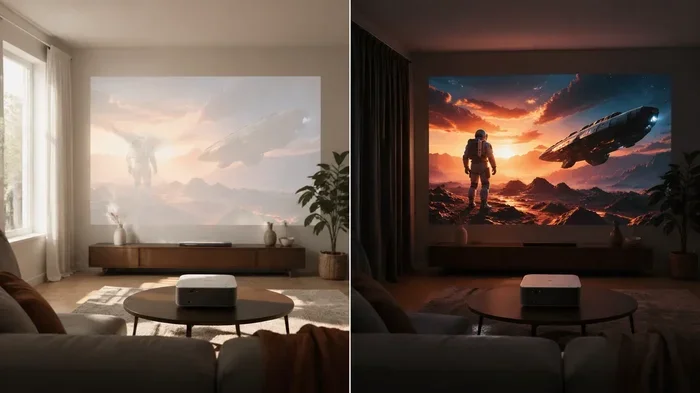
The same 7500 lumen projector will look different in two rooms. In a dark basement, the image feels incredibly vivid. In a sunlit living room, the image might look washed out. This is because ambient light competes with the projected light.
Here is a quick tip: if you plan to use a 7500 lumen projector in a bright room, choose a screen with a high gain rating. A high-gain screen reflects more light back to the viewers, improving contrast and visibility. Matte white screens work well in dark rooms. Silver or gray screens perform better in brighter environments.
Distance and Throw Ratio Explained
The throw distance is how far the projector sits from the screen. A short-throw projector can produce a large image from just a few feet away. A long-throw projector needs more space.
At 7500 lumens, you have more flexibility with throw distance. The high output means the image stays bright even at longer distances. However, the beam angle still matters. A narrow beam concentrates light on a smaller area, making it feel brighter on that surface. A wide beam spreads the same light over a larger area, reducing intensity per square foot.
Best Uses for 7500 Lumens
Now that you understand what 7500 lumens can do, let us look at the best ways to use this level of brightness in everyday life.
Home Entertainment
A 7500 lumen projector turns any large room into a cinema. You get a bright, colorful image that holds up even with some daylight. Pair it with a quality sound system, and you have a home theater that rivals a commercial cinema.
For gaming, high brightness makes a huge difference. The image stays crisp during fast-moving scenes. Colors remain vibrant, and details in dark scenes stay visible. This is especially important for open-world games with dynamic lighting.
Outdoor Adventures
Campers and RV owners love portable lights at this brightness level. A 7500 lumen LED light can illuminate an entire campsite. Cooking, reading, and socializing all become comfortable after sunset.
Fishing trips benefit too. A high-lumen flashlight helps you navigate the boat at night and spot fish in the water. The light source is powerful enough to cut through darkness without needing a generator.
Commercial and Professional Settings
Businesses use 7500 lumen fixtures for warehouses, loading docks, and exhibition halls. The illumination covers wide areas efficiently, reducing the need for multiple fixtures.
Event planners rely on high-lumen lights for weddings, corporate events, and concerts. The brightness ensures every corner of the venue looks professional and well-lit.
How to Choose the Right 7500 Lumen Device
Not all 7500 lumen products are created equal. Here are the factors you should consider before making a purchase.
Check the Lumen Rating Standard
Some manufacturers use peak lumens instead of ANSI lumens. Peak lumens measure the brightest possible output, which is rarely sustained. ANSI lumens represent the average brightness across the entire image. Always prefer ANSI-certified products for accurate brightness expectations.
Consider the Light Source Type
LED lights dominate the 7500 lumen market today. They are energy-efficient, long-lasting, and produce minimal heat. Older technologies like metal halide bulbs can also reach this output but require more maintenance and power.
Wattage is another consideration. A 7500 lumen LED might only draw 80 to 150 watts. A traditional bulb producing the same output could draw 500 watts or more. LED technology saves energy and reduces electricity bills over time.
Look at Build Quality and Durability
High-lumen devices work hard. They generate heat and vibrate during operation. Choose products with metal housings, built-in cooling fans, and solid construction. A light fixture that falls apart after a few months is not worth the savings.
Think About Portability
If you need a portable option, look for battery-powered models. A 7500 lumen flashlight with a rechargeable battery offers incredible mobility. Just keep in mind that high brightness drains batteries faster. Carry spare batteries or a charging pack for extended use.
Common Mistakes When Buying High-Lumen Products
Many buyers make avoidable mistakes when shopping for 7500 lumen devices. Here are the most common ones and how to prevent them.
Trusting Peak Lumens Over ANSI Lumens
This is the number one mistake. Peak lumens can be 30 to 50 percent higher than actual sustained output. Always ask for the ANSI rating or look for independent reviews that test real-world brightness.
Ignoring the Beam Angle
A narrow beam angle makes 7500 lumens feel intense up close but useless at a distance. A wide beam angle spreads the light evenly but reduces the punch. Match the beam angle to your intended use. Narrow beams work for long-distance viewing. Wide beams work for area lighting.
Overlooking Heat Management
High-lumen devices produce significant heat. Without proper cooling, the light output drops over time, and the internal components degrade faster. Look for products with active cooling systems and heat-resistant materials.
Forgetting About Ambient Light
A 7500 lumen projector in a bright room will still struggle if the ambient light is too strong. Consider using blackout curtains or choosing a screen with a higher gain to compensate.
Expert Insights on 7500 Lumens
Lighting professionals agree that 7500 lumens represents a versatile and practical brightness level. It is bright enough for most demanding applications without crossing into commercial-only territory.
Pro tip from industry experts: When setting up a 7500 lumen projector, position it at least 8 to 12 feet from the screen for the best image quality. Closer distances can cause the image to appear blurry or distorted. Test different positions in your room to find the sweet spot.
Another expert recommendation is to always warm up the device for 30 seconds before use. LED projectors and lights reach their full brightness after a brief warm-up period. This ensures you get the true lumen output from the first moment of use.
For outdoor applications, experts suggest mounting high-lumen floodlights at least 10 feet high. This angle provides the best coverage and reduces glare. Aim the lights downward at a 45-degree angle for maximum effectiveness.
Final Thoughts on 7500 Lumens
7500 lumens is a powerful brightness level that opens up a world of possibilities. Whether you are setting up a home theater, lighting up a backyard party, or illuminating a stage, this output delivers stunning results. The key is understanding what the numbers mean and choosing the right device for your specific needs.
Remember that brightness is not just about the raw lumen number. The beam angle, throw distance, ambient light conditions, and screen quality all play a role in how the light performs in practice. Take all of these factors into account before making a purchase.
Start with your intended use case. Measure the space you need to light. Then choose a device that matches those requirements. With the right setup, a 7500 lumen device will transform any environment into a bright, vibrant, and welcoming space.
The technology behind high-lumen lighting continues to improve every year. LEDs are getting more efficient, batteries are lasting longer, and prices are dropping. Now is a great time to invest in a quality 7500 lumen device and experience the difference for yourself.
Frequently Asked Questions
Is 7500 lumens bright enough for a daytime projector?
Yes, 7500 lumens is bright enough for daytime use in most rooms. However, ambient light from windows can reduce perceived brightness. Using blackout curtains or a high-gain screen will help maintain a clear, vibrant image even during the day.
How many watts does a 7500 lumen LED use?
A 7500 lumen LED device typically uses between 80 and 150 watts. This is much less than traditional lighting technologies that produce the same output. The exact wattage depends on the device type and the efficiency of the LED chip used.
Can 7500 lumens blind you?
Looking directly into a 7500 lumen light source can cause temporary discomfort or glare. It is not typically dangerous for brief exposure, but you should never stare directly into any high-lumen light. Use proper shielding and aim lights away from eyes.
What is the difference between 7500 lumens and 10000 lumens?
The difference is about 2500 lumens, which represents a noticeable but not dramatic increase in brightness. 10000 lumens is better suited for very large venues or areas with heavy ambient light. 7500 lumens is ideal for most residential and small commercial applications.
How far can a 7500 lumen flashlight reach?
A high-quality 7500 lumen flashlight can throw light 500 to 1000 meters or more, depending on the beam design. Narrow-beam models reach farther but cover less area. Wide-beam models illuminate a broader space but with less distance.
Are all 7500 lumen projectors the same quality?
No, lumen output is only one factor. Image resolution, contrast ratio, color accuracy, and build quality all matter. A 7500 lumen projector with 1080p resolution and high contrast will deliver a much better experience than one with poor optics and low contrast, even if both claim the same lumen rating.