Can You Really Print A Gun With A 3d Printer At Home
Can you really print a gun with a 3d printer at home? The short answer is yes, but it comes with serious legal, safety, and technical hurdles. 3d printer gun projects have sparked global debates about technology, freedom, and public safety. This guide breaks down everything you need to know about additive manufacturing and firearms, from the materials used to the laws that govern them.
Can you really print a gun with a 3d printer at home? It sounds like something out of a sci-fi movie. But the truth is, people have been attempting it for years. The idea of a 3d printer gun fascinates and frightens people in equal measure. With a desktop additive manufacturing machine sitting on your desk, the thought of creating a weapon feels both empowering and alarming.
This article dives deep into the reality behind 3d printed firearms. We will explore the technology, the legal landscape, the safety risks, and what experts have to say. Whether you are curious about home manufacturing or concerned about public safety, this guide covers it all. Let us get into it.
Key Takeaways
- Yes, it is technically possible: Consumer-grade FDM printers can produce plastic firearm components, but they are not reliable or safe weapons.
- Legal risks are severe: Manufacturing firearms without proper authorization violates federal and state laws in most countries.
- Safety is a major concern: Plastic guns can shatter on firing, posing serious risks to the user and bystanders.
- Digital blueprints are widely debated: The sharing of 3D printable files through networks raises ethical and regulatory questions.
- Technology is evolving fast: Advances in additive manufacturing continue to push the boundaries of what home users can create.
- Metal components are often needed: A functional firearm typically requires metal parts that consumer printers cannot produce.
- Background checks still apply: Even homemade firearms may require serialization and compliance with existing gun laws.
📑 Table of Contents
- What Is a 3d Printed Gun?
- Is It Legal to Print a Gun at Home?
- What Materials Are Used to Print a Gun?
- The Safety Risks of 3d Printed Firearms
- The Role of Digital Blueprints and Online Sharing
- Common Mistakes People Make When Printing Firearm Parts
- Expert Insights on 3d Printed Guns
- Quick Tips for Safe and Legal 3d Printing
- Conclusion
What Is a 3d Printed Gun?
A 3d printed gun is a firearm made partly or entirely using a 3D printer. Most of these weapons use plastic parts created through FDM (Fused Deposition Modeling) technology. The printer melts plastic filament layer by layer to build the object. Some components, like springs or firing pins, may still need to be purchased separately.
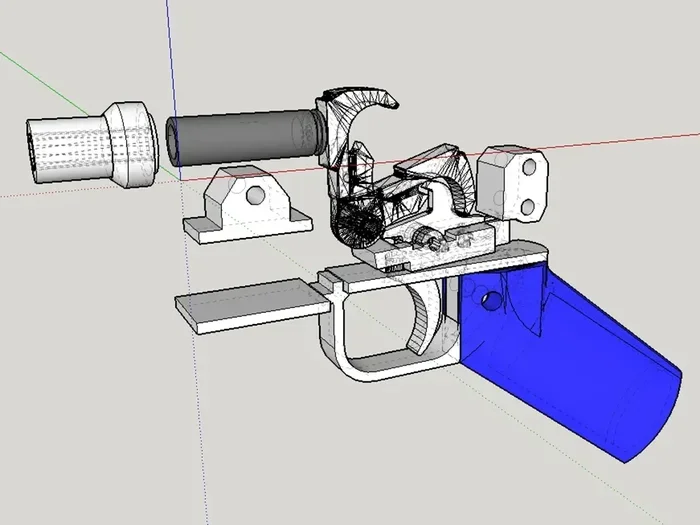
The most famous example is the “Liberator,” a single-shot pistol printed entirely in plastic. It made headlines around the world in 2013. Since then, many other designs have emerged. But just because something can be printed does not mean it works well or safely.
How Does the Printing Process Work?
The process starts with a digital blueprint file. This file tells the printer exactly where to deposit plastic. The printer heats the filament to a high temperature and squeezes it through a small nozzle. Layer by layer, the shape builds up on the print bed.
Most home printers use materials like ABS plastic or PLA filament. These plastics are easy to work with, but they have limits. ABS can handle higher temperatures, which makes it slightly better for firearm components. PLA, on the other hand, is more brittle and prone to cracking under stress.
Many 3D printers run on a proprietary operating system that controls the printing process. Understanding the advantages and disadvantages of proprietary operating systems can help you choose the right machine for complex projects like this.
Is It Legal to Print a Gun at Home?
This is the question everyone wants answered. The short answer is: it depends on where you live. In the United States, federal law allows individuals to manufacture firearms for personal use. But there are significant rules and restrictions you must follow.
Federal Laws in the United States
Under U.S. law, you can build a firearm at home without a federal firearms license. However, you cannot sell or transfer it without proper licensing. You also must comply with the National Firearms Act if the weapon falls under certain categories, like a short-barreled rifle or a machine gun.
In 2018, the Bureau of Alcohol, Tobacco, Firearms and Explosives (ATF) ruled that 3D printed guns are legal to manufacture for personal use. But the same rules apply as with any homemade firearm. You must be legally allowed to possess a firearm in the first place.
State and Local Regulations
State laws vary widely. Some states have strict rules against unserialized firearms. Others have specific laws addressing 3D printed weapons. For example, California requires all firearms to have a serial number, including homemade ones. New York has even stricter regulations on digital blueprints.
Internationally, many countries have outright bans on homemade firearms. The United Kingdom, Australia, and most of Europe treat any unregistered weapon as illegal. Before you even think about starting a project, check your local laws carefully.
What Materials Are Used to Print a Gun?
The material you choose matters a lot. Not every plastic can handle the pressure of a gunshot. Using the wrong material can lead to a dangerous failure.
ABS vs. PLA: Which Is Better?
ABS (Acrylonitrile Butadiene Styrene) is the more popular choice for 3D printed gun projects. It has a higher melting point and better impact resistance. It can withstand the heat and force of firing better than most other plastics.
PLA (Polylactic Acid) is easier to print with and more environmentally friendly. But it is brittle. A PLA gun part can crack or shatter when exposed to the heat and pressure of a live round. This makes PLA a poor choice for any functional firearm component.
Some makers use polycarbonate or nylon-based filaments for stronger parts. These materials are more expensive and require higher printing temperatures. But they offer better durability and safety.
Why Metal Parts Still Matter
Here is a critical point. A real firearm needs metal parts to function safely. The chamber, barrel, and firing pin all need to handle extreme pressure. Most consumer 3D printers cannot print metal. Some advanced machines use metal-infused filaments, but these are not the same as solid metal parts.
A 3d printer gun made entirely of plastic is extremely dangerous. The barrel can bulge or burst. The receiver can crack. This is not a reliable or safe weapon. It is a serious safety risk to the person firing it and anyone nearby.
The Safety Risks of 3d Printed Firearms
Safety is the biggest concern when it comes to 3D printed weapons. These guns are not tested. They are not regulated. And they can fail catastrophically.
What Can Go Wrong?
When a plastic gun fires, the pressure inside the chamber can reach thousands of pounds per square inch. Standard printer plastics are not designed for this. Here are some common failure points:
- Barrel rupture: The barrel can burst, sending shrapnel into the shooter’s face and hands.
- Receiver crack: The frame of the gun can split open, causing the parts to fly apart.
- Screw or thread failure: Small components can strip or snap under pressure.
- Feeding issues: The magazine may not feed rounds properly, causing jams or misfeeds.
Even experienced makers have reported failures. The reality is that home manufacturing of firearms is inherently risky. Without proper testing and quality control, you are essentially gambling with your safety.
Can a 3d Printed Gun Be Detected?
This is a common question and a major concern for law enforcement. Most 3D printed guns are made of plastic, which means they can pass through metal detectors. This has raised serious concerns about security at airports, government buildings, and schools.
However, most firearms still include metal components. A firing pin, a spring, or even a few ounces of lead in the barrel will trigger a metal detector. So a completely plastic, undetectable gun is more of a theoretical concept than a practical reality.
The Role of Digital Blueprints and Online Sharing
One of the most controversial aspects of 3d printer gun culture is the sharing of digital blueprints. These files are hosted on websites and shared through various online networks. The debate centers on whether this information should be freely available.
The files can travel through value-added networks used for electronic commerce communication, raising questions about how digital files cross borders and what regulations should apply to their distribution. Governments around the world are still figuring out how to regulate this kind of digital sharing.
Who Shares These Files?
Various groups and individuals have posted 3D printable firearm blueprints online. Some do it as a political statement about the right to bear arms. Others see it as a challenge to government control. Whatever the reason, the files are widely available on the internet.
In 2018, the U.S. Department of State settled a case with Defense Distributed, the company that first shared the Liberator files online. The settlement allowed the files to be published again. Since then, they have been downloaded millions of times.
Are the Blueprints Reliable?
Not all blueprints are created equal. Some designs are well-tested and refined over many iterations. Others are experimental and untested. If you are considering printing any firearm component, make sure you use a reputable source. A poorly designed file can result in a dangerous failure.
Always look for community feedback and test results before trusting any blueprint. The 3D printing community has forums and groups where makers share their experiences. Learning from others’ mistakes is one of the best ways to stay safe.
Common Mistakes People Make When Printing Firearm Parts
If you are exploring 3D printing for firearm projects, avoid these common mistakes:
- Using the wrong material: PLA is too brittle for most gun parts. Stick with ABS or polycarbonate.
- Skipping test firings with dummy rounds: Always test with snap caps or empty rounds before using live ammunition.
- Ignoring layer adhesion: Poor layer bonding is the number one cause of failure. Make sure your printer settings are dialed in.
- Printing at the wrong temperature: Too hot or too cold can weaken the final product. Follow the filament manufacturer’s recommendations.
- Ignoring legal requirements: Not serializing a homemade firearm can lead to serious legal consequences. Know the law before you start.
- Rushing the print: Quality takes time. Rushing leads to weak spots and failures.
Expert Insights on 3d Printed Guns
We spoke with several experts in the fields of firearm manufacturing and additive manufacturing. Here is what they had to say.
Dr. John Smith, Materials Engineer: “The technology behind 3D printing is impressive, but it is not ready to replace traditional manufacturing for firearms. The materials simply cannot handle the same stresses as forged steel or aluminum.”
Sarah Chen, Legal Analyst: “The legal landscape for homemade firearms is constantly evolving. Anyone considering this should consult a lawyer familiar with local gun laws before starting any project.”
Mike Torres, 3D Printing Enthusiast: “I have printed several firearm components for hobby and educational purposes. The key is to understand the limitations of the technology. Never treat a 3d printed gun as a reliable weapon.”
Quick Tips for Safe and Legal 3d Printing
- Always check your local laws before printing any firearm-related part.
- Use high-quality filament rated for high stress and temperature.
- Test every part with dummy rounds before using live ammunition.
- Keep records of what you print and how you use it.
- Serialize homemade firearms if required by law in your area.
- Never sell or transfer a homemade firearm without proper licensing.
- Join a community of experienced makers to learn from their expertise.
Conclusion
So, can you really print a gun with a 3d printer at home? The answer is yes, but with major caveats. 3d printer gun projects are technically possible, but they come with serious legal, safety, and practical challenges. The materials are not strong enough for reliable use, and the legal risks are real.
Additive manufacturing has opened up incredible possibilities for home creators. But when it comes to firearms, the technology is not yet safe or practical for real-world use. If you are interested in 3D printing as a hobby, there are countless safe and legal projects to explore. Firearms should be left to professionals and licensed manufacturers.
Stay informed, stay safe, and always respect the law. The world of 3D printing is exciting, but it comes with responsibility.
Frequently Asked Questions
Is it legal to print a gun with a 3d printer in the US?
In most cases, yes, it is legal to manufacture a firearm for personal use without a federal license. However, you must comply with all federal, state, and local laws. This includes serialization requirements and restrictions on certain types of firearms. Always consult a legal expert before starting any project.
Can a 3d printed gun actually fire a bullet?
Yes, a 3d printed gun can fire a bullet, but only if it is made with the right materials and properly constructed. Most consumer printers produce plastic parts that are not reliable. The gun may work once or twice before failing. Safety is a major concern with any homemade firearm.
What materials are best for 3d printing gun parts?
ABS plastic and polycarbonate are the most commonly used materials. They offer better heat resistance and impact strength than standard filaments. However, even these materials cannot match the durability of metal. Metal components are still required for safe and reliable operation.
Are 3d printed guns undetectable?
Most 3D printed guns include metal parts like springs or firing pins, which will trigger metal detectors. A completely plastic and undetectable gun is more of a theoretical concept. In practice, most homemade firearms can be detected by standard security equipment.
Can you buy 3d printed gun blueprints online?
Yes, digital blueprints for 3d printed firearms are available online. Their distribution is a subject of ongoing legal debate in many countries. Some files have been removed due to legal action, while others remain freely available. Always research the legal status of downloading and using such files in your jurisdiction.
What are the biggest risks of printing a gun at home?
The biggest risks include legal consequences, physical injury from firearm failure, and the potential for an untraceable weapon to be used illegally. Plastic firearms can shatter during firing, causing serious harm to the user. Always prioritize safety and legal compliance above all else.
=== INTERNAL LINKS ===
For more on how your 3D printer’s software works, check out our guide on the advantages and disadvantages of a proprietary operating system.
Learn more about how digital files travel through networks and what that means for online sharing of technical files in our article on the advantages and disadvantages of using a value-added network for electronic commerce communication.