Can You Get A Money Printer And Legally Print Money
Can you get a money printer and legally print money? The short answer is no. Printing currency without authorization is a serious federal crime that carries heavy fines and lengthy prison sentences. This guide explains why money printing is illegal, how real currency is made, and what the actual consequences look like if you try.
Have you ever wondered if you can get a money printer and start printing your own cash? It sounds like something out of a movie or a wild dream. But the truth is far more complicated and serious than most people realize.
The idea of owning a device that produces real currency is fascinating. Maybe you have seen movies where characters print fake bills in a basement lab. Or perhaps you have heard rumors about people making their own money at home. Whatever sparked your curiosity, this guide will give you the full picture.
In this article, we will explore whether you can actually get a money printer, what the laws say, and what happens if someone tries to print currency illegally. We will also look at how real money is made and why it is so hard to counterfeit. Let us dive in.
Key Takeaways
- It is illegal: Printing money without government authorization is a federal crime in most countries.
- Heavy penalties apply: Counterfeiting can result in up to 20 years in prison and large fines.
- Real currency has advanced security: Features like watermarks, microprinting, and color-shifting ink make copying nearly impossible.
- Prop money exists legally: Movie and training currency is available but must be clearly marked.
- Technology has limits: Even high-end printers cannot replicate the intricate details of genuine banknotes.
- Detection is sophisticated: Banks and businesses use advanced tools to catch fake bills quickly.
📑 Table of Contents
- What Is A Money Printer?
- The Legal Reality Of Printing Money
- How Real Currency Is Made
- Can You Print Money At Home?
- The Technology Behind Currency Printing
- What Happens If You Try?
- Legal Alternatives: Prop Money And Training Currency
- Common Mistakes People Make With Money Printing
- Quick Tips To Stay Safe And Legal
- Expert Insights On Currency Security
- Conclusion
What Is A Money Printer?
A money printer is any device that can reproduce currency. In theory, this could be an inkjet printer, a laser printer, or even a custom-built printing press. In practice, the term usually refers to equipment that someone uses to try to create fake bills.
But here is the thing. Most standard printers you buy at a store are not designed to print currency. They lack the resolution, the special inks, and the precise registration needed to reproduce banknotes. Even professional-grade printers struggle to replicate the tiny details found on real money.
Types Of Printers People Think About
When people talk about getting a money printer, they usually mean one of these:
- Inkjet printers: Common home printers that spray liquid ink onto paper.
- Laser printers: Use toner and heat to fuse images onto paper.
- Offset presses: Industrial printing machines used for mass production.
- Gravure presses: High-end machines used in currency manufacturing.
Each of these has different capabilities. But none of them can legally produce real currency unless operated by an authorized government facility.
The Legal Reality Of Printing Money
The short answer to “can you get a money printer and legally print money” is a firm no. In the United States, counterfeiting currency is a federal crime. The United States Secret Service is the agency that handles counterfeiting investigations. And they take this very seriously.
Under federal law, it is illegal to manufacture, possess, or distribute counterfeit currency. This applies whether you print one fake bill or one million. The law does not care about your intent either. Even if you did not plan to spend the fake money, simply possessing it can lead to charges.
Laws Around The World
Counterfeiting laws are not just a U.S. thing. Most countries have strict rules against reproducing their currency. Here are some examples:
- United States: Up to 20 years in prison and fines up to $250,000.
- European Union: Similar penalties across member states.
- United Kingdom: Counterfeiting can lead to life imprisonment.
- Canada: Up to 14 years in prison for counterfeiting offenses.
The legal consequences are severe because governments view counterfeiting as an attack on the economy. Fake money undermines trust in the financial system. It also reduces the value of real currency. That is why authorities pursue these cases aggressively.
How Real Currency Is Made
To understand why you cannot just print money at home, you need to know how real currency is produced. The process is incredibly complex and highly guarded. It involves multiple layers of security that no consumer printer can match.
The Role Of The Federal Reserve
In the United States, the Federal Reserve works with the Bureau of Engraving and Printing to produce paper currency. These facilities are tightly secured and monitored. Only authorized personnel can access the printing equipment and materials.
The process starts with specially formulated paper. This paper is not like regular printer paper. It contains cotton and linen fibers that give it a unique texture and durability. The paper itself is a security feature that is hard to replicate.
Security Features On Real Money
Modern banknotes include many security features that make them extremely difficult to counterfeit. Here are some of the key elements:
- Watermarks: Images embedded in the paper that are visible when held up to light.
- Color-shifting ink: Ink that changes color when you tilt the bill.
- Microprinting: Tiny text printed on the bill that is nearly impossible to reproduce.
- Security threads: Thin strips embedded in the paper that glow under UV light.
- Serial numbers: Unique identifiers that track each bill.
- Intaglio printing: A raised texture that you can feel with your fingers.
These features work together to make genuine currency easy to verify and hard to fake. Even the most advanced printing technology available to consumers cannot reproduce all of these elements at once.
Can You Print Money At Home?
The honest answer is no. You cannot print real money at home. Even if you have the best printer on the market, you will not be able to replicate the security features of genuine currency.
Many people try to print fake bills using their home printers. But the results are almost always obvious fakes. The colors are wrong. The details are blurry. The paper feels completely different. And the security features are missing entirely.
Why Home Printers Fail At Currency Reproduction
There are several reasons why consumer printers cannot produce convincing copies of money:
- Resolution limits: Most printers max out at 600 to 1200 dots per inch. Currency printing requires much higher precision.
- Ink limitations: Standard inks cannot replicate the special inks used on real bills.
- Paper differences: Regular paper is nothing like the cotton-linen blend used for currency.
- Security features: Home printers cannot produce watermarks, security threads, or microprinting.
- Software locks: Some printers have built-in software that blocks attempts to print currency images.
Even if you could somehow bypass all of these barriers, the result would still be a poor copy. And any attempt to pass off fake money as real is a serious crime.
The Technology Behind Currency Printing
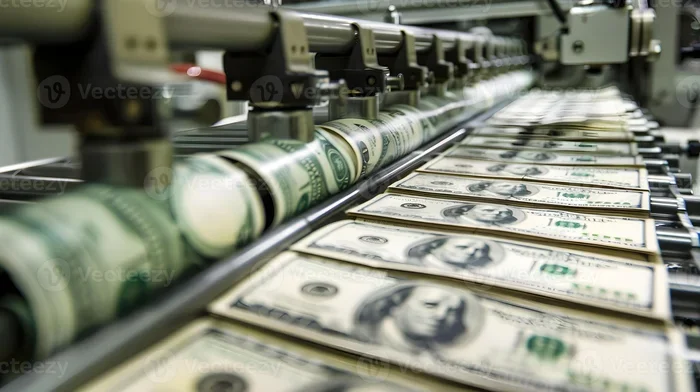
The machines used to produce real currency are marvels of engineering. They use a combination of offset printing, intaglio printing, and lithography. Each method serves a specific purpose in creating the final product.
Offset printing is used for the background colors and patterns. Intaglio printing creates the raised portrait and text that you can feel. Lithography handles the fine details and microprinting. Together, these methods produce a bill that is nearly impossible to counterfeit.
Can A Proprietary Operating System Help?
Some people wonder if specialized software or operating systems could help with currency reproduction. The truth is that the systems used in currency manufacturing are proprietary and highly classified. Even if you could access a system similar to a proprietary operating system, the hardware, materials, and authorization needed would be impossible for a private individual to obtain.
The entire currency production pipeline is designed to be secure from start to finish. From the paper mill to the printing press to the distribution network, every step is monitored and controlled. This makes it virtually impossible for anyone outside the government to produce genuine currency.
What Happens If You Try?
So what actually happens if someone tries to print fake money? The consequences are severe and long-lasting. Let us look at the real-world outcomes.
Criminal Charges And Penalties
If you are caught printing counterfeit currency, you will face federal charges. The penalties depend on the amount of fake money involved and your intent. But even a small-scale operation can lead to serious trouble.
- Prison time: Convictions can result in 10 to 20 years in federal prison.
- Fines: Fines can reach $250,000 or more.
- Probation: Even without prison time, probation can last several years.
- Criminal record: A counterfeiting conviction stays on your record forever.
Real Cases Of Counterfeiting
There have been many high-profile cases of people trying to print fake money. Most of them ended in arrest and conviction. For example, in 2019, a man in Ohio was sentenced to over 10 years in prison for operating a home printing operation. In another case, a group in New York was caught using a commercial-grade printer to produce $100 bills. They received sentences ranging from 5 to 15 years.
These cases show that law enforcement takes counterfeiting very seriously. And they have access to advanced counterfeit detection tools that can identify fake bills quickly.
How Fake Money Gets Caught
Even if someone manages to print a convincing fake bill, it will likely be caught eventually. Banks, businesses, and individuals all use detection methods to spot fakes. Some of the common ways fake money is detected include:
- Pen tests: Counterfeit detection pens react differently to fake paper.
- UV light: Security threads glow under ultraviolet light.
- Magnification: Microprinting is visible under magnification but not in copies.
- Texture checks: Real currency has a distinct feel that copies cannot match.
- Electronic scanners: Many businesses use automated machines to verify bills.
The truth is that most fake bills are caught within hours of being passed. And once caught, the trail usually leads back to the person who printed them.
Legal Alternatives: Prop Money And Training Currency
If you are interested in printing money for legitimate purposes, there are legal options available. Prop money is used in movies, TV shows, and theater productions. Training money is used by banks and businesses to teach employees how to detect fakes.
What Is Prop Money?
Prop money looks similar to real currency but is clearly marked as not legal tender. It often has phrases like “FOR MOTION PICTURE USE ONLY” printed on it. This makes it legal to buy, sell, and use in film productions.
However, there is an important rule. You cannot use prop money to try to pass it off as real. That is still counterfeiting and can lead to criminal charges. The mark on the bill must be visible and clear.
Where To Get Legal Prop Money
Many companies sell prop money for film and educational purposes. These products are designed to look realistic without being actual currency. They are a great tool for learning about currency security features without breaking any laws.
Some people also use prop money for magic tricks, art projects, and educational demonstrations. As long as the money is clearly marked and not used for fraud, it is perfectly legal.
The Role Of Digital Payments
It is also worth noting that the world is moving toward digital payments. Many people now use electronic methods to send and receive money. This reduces the need for physical currency in many transactions. Some experts believe that digital payments make counterfeiting less relevant in the modern economy.
However, digital transactions have their own risks. Online fraud, identity theft, and hacking are all real concerns. The advantages and disadvantages of using a value added network for electronic commerce communication highlight how digital systems can both help and hinder secure transactions.
As technology evolves, so do the methods used to fight fraud. Whether it is physical currency or digital payments, security remains a top priority.
Common Mistakes People Make With Money Printing
There are several mistakes that people make when they think about printing money. Avoiding these can save you a lot of trouble.
- Thinking modern printers can copy money: They cannot. The security features are too advanced.
- Believing small amounts are not a crime: Even one fake bill is a federal offense.
- Ignoring the markings on prop money: Using unmarked prop money can lead to charges.
- Underestimating detection methods: Fake bills are caught quickly and easily.
- Thinking you will not get caught: Law enforcement has sophisticated tools and methods.
Quick Tips To Stay Safe And Legal
If you are curious about currency and printing, here are some tips to keep yourself out of trouble:
- Only use printers for their intended purpose.
- Never attempt to reproduce currency images with the intent to deceive.
- Buy prop money only from reputable suppliers.
- Learn about currency security features through legitimate educational resources.
- Report any suspicious bills you receive to local authorities.
- Teach others about the dangers and consequences of counterfeiting.
Expert Insights On Currency Security
Experts in the field of currency security agree that modern banknotes are incredibly difficult to counterfeit. The combination of advanced materials, intricate designs, and multiple security features makes genuine currency one of the hardest documents to fake.
“The security features on modern currency are the result of decades of research and development,” says Dr. James Richardson, a currency security expert. “They are designed to be easy to verify but nearly impossible to replicate. This is by design.”
The ongoing arms race between counterfeiters and currency designers shows no signs of slowing down. Each new security feature makes it harder for fake bills to circulate. And each new printing technology gives authorities better tools to catch fakes.
Conclusion
So, can you get a money printer and legally print money? The answer is a clear and definitive no. Printing currency without government authorization is a serious crime that carries severe penalties. The technology required to produce genuine bills is far beyond what any consumer can access.
Real currency is made with advanced security features that are impossible to replicate with standard printers. And even if someone could produce a convincing copy, it would almost certainly be caught before it could cause any real damage.
The best thing you can do is appreciate the incredible engineering that goes into making real money. And if you are interested in printing, use your skills and equipment for legal and creative projects instead. The risks of trying to print money are simply not worth the consequences.
Stay curious, stay legal, and keep learning. The world of currency and printing is fascinating, and there is plenty to explore without breaking any laws.
Frequently Asked Questions
Can I buy a printer that can print real money?
No. No consumer printer is capable of reproducing real currency. The security features on genuine banknotes require specialized equipment and materials that are not available to the public. Any claim otherwise is false and potentially illegal.
What happens if you accidentally spend a fake bill?
If you unknowingly receive and spend a counterfeit bill, you will likely not face criminal charges. However, you will lose the value of the bill. It is important to check bills carefully and report any suspected fakes to your bank or local authorities.
Is prop money legal to buy and use?
Yes, prop money is legal as long as it is clearly marked and not used to deceive anyone. Using prop money in movies, plays, or educational settings is perfectly fine. But passing it off as real currency is illegal and can result in counterfeiting charges.
How can I tell if a bill is real or fake?
You can check for several security features including watermarks, color-shifting ink, security threads, and microprinting. Feel the texture of the bill, hold it up to light, and use a counterfeit detection pen if needed. When in doubt, compare it to a known genuine bill.
Can digital money be counterfeited?
Digital money uses encryption and blockchain technology to prevent counterfeiting. While digital fraud like hacking and phishing exists, the actual replication of digital currency is extremely difficult due to advanced cryptographic security measures.
Why is counterfeiting such a serious crime?
Counterfeiting undermines the economy by reducing the value of real currency. It also funds other criminal activities and erodes public trust in financial systems. Governments treat counterfeiting as a serious offense because of its wide-reaching impact on society.
=== INTERNAL LINKS ===
For more information about specialized systems, check out our article on Advantages and Disadvantages of a Proprietary Operating System to understand how secure systems work behind the scenes.
You might also find our piece on Advantages and Disadvantages of Using a Value Added Network for Electronic Commerce Communication helpful for understanding how digital transactions differ from physical currency exchanges.