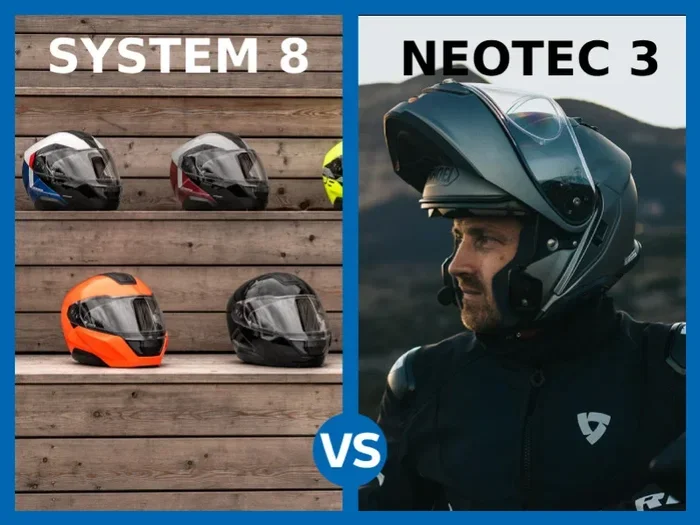
Are Modular Helmets Really As Safe As Full Face Helmets
Are modular helmets really as safe as full face helmets? The short answer is: they are close, but not identical. Modular helmets offer the convenience of a flip-up chin bar, yet they have a hinge and seam that can be a weak point in a crash. A full face helmet provides a continuous shell that many safety tests favor. This guide compares impact protection, certification standards, and real-world riding conditions so you can make a confident choice.
This is a comprehensive guide about Are Modular Helmets As Safe As Full Face Helmets.
Key Takeaways
- Full face helmets generally win in raw impact tests because they lack the hinge and seam that modular helmets have.
- Modular helmets are not unsafe — many meet the same DOT and ECE certifications as full face models.
- Riding style matters a lot — for city commuting, a modular helmet adds convenience; for high-speed touring, a full face offers better protection.
- Fit and condition are just as important as type — a poorly fitting full face helmet is less safe than a well-fitting modular one.
- Look for MIPS or rotational force protection in both modular and full face designs to reduce brain injury risk.
- Never open the chin bar while riding — it compromises structural integrity and increases wind noise and debris risk.
[FEATURED_IMAGE_PLACEHOLDER]
Are Modular Helmets As Safe As Full Face Helmets is a question every rider asks before buying a lid. The debate is real, and it matters because your head is the most important part of your body. Just as computers have revolutionized safety in medicine, modern helmet design uses advanced materials and testing to keep you protected. This article gives you a clear, honest look at both helmet types. You will learn what the safety tests show, where each design shines, and how to pick the right one for your ride. We keep the jargon out and focus on what actually keeps you safe.
The helmet you choose affects your comfort, visibility, and most importantly, your survival in a crash. A modular helmet lets you flip the chin bar up for easy talking and drinking. A full face helmet covers your entire head with a solid shell. Both have fans, both have critics. Safety is not just about the type — it is about how the helmet is built, certified, and worn. We will walk you through the key differences step by step. By the end, you will know exactly which helmet deserves a spot on your head.
Understanding Modular Helmets: What Makes Them Different
A modular helmet, often called a flip-up helmet, combines the coverage of a full face with the convenience of an open face. The chin bar attaches to the rest of the helmet with a hinge and locking mechanism. When you want to talk, eat, or take a break, you flip the front up. This design feels like two helmets in one. It is popular among touring riders, urban commuters, and anyone who values easy access to their face.
The hinge system is the key difference. A full face helmet has a single, continuous shell that wraps around your head. A modular helmet has a seam where the chin bar meets the visor section. Engineers must reinforce this seam to handle impact forces. They use locking pins, metal reinforcements, and special latches. The goal is to keep the chin bar firmly in place during a crash, just like a solid full face shell.
The Flip-Up Mechanism and Its Trade-Offs
When the chin bar is locked down, a good modular helmet feels very similar to a full face. The visor seals around your face, the padding hugs your head, and the airflow works the same way. But the moving parts add weight. Some modular helmets are slightly heavier than their full face counterparts. That extra weight can affect how the helmet sits on your neck during long rides. It can also change the center of gravity.
The flip-up mechanism also introduces more points of potential failure. Over time, hinges can loosen, locks can wear, and the seal may not be as tight. This does not mean modular helmets are dangerous. It means you need to check the mechanism regularly. A loose chin bar can rattle at speed or, in a worst case, open slightly during an impact. That is why choosing a reputable brand with a solid locking system is so important.
How the Chin Bar Works in a Crash
The chin bar is the front part of the helmet that protects your jaw and lower face. In a full face helmet, the chin bar is part of the unbroken shell. In a modular helmet, the chin bar must lock into the main shell with absolute precision. When a crash happens, the forces spread across the helmet. If the chin bar is not perfectly aligned, the energy can concentrate at the hinge point. This is the main area where modular helmets are tested more strictly than full face models.
Many modern modular helmets pass rigorous tests that simulate a direct chin impact. The chin bar must not detach or crack easily. The visor area also needs to stay intact. Some helmets use a multi-point locking system that distributes force across the entire front section. This design helps bridge the gap between modular and full face protection. Still, the seam remains a potential weak spot that full face helmets simply do not have.
Full Face Helmets: The Gold Standard of Protection
The full face helmet has been the go-to choice for decades, and for good reason. It covers the entire head, from the top of your skull to your chin. There are no moving parts, no seams that open, and no hinges that can fail. The shell is one continuous piece of hard plastic, carbon fiber, or composite material. This design offers the most uniform protection in an impact.
Full face helmets are mandatory in many racing series and recommended by most safety organizations for high-speed riding. They create a smooth surface that deflects wind and debris. The chin bar protects the jawbone and lower face, which are vulnerable in a forward fall. When you hit the ground, the full face helmet spreads the force across a large area, reducing the peak pressure on any single point of your skull.
Continuous Shell Structure
The continuous shell is the biggest advantage. In a crash, the helmet deforms in a controlled way to absorb energy. A modular helmet has to manage that same deformation, but it also has to keep the chin bar attached. The hinge adds complexity. Even a tiny gap can change how the helmet handles an impact. Full face helmets do not have this issue because they are solid from forehead to chin.
This does not mean modular helmets cannot be strong. Top-tier modular helmets use reinforced chin bars and energy-absorbing EPS liners that match full face models. The difference is in the design philosophy. A full face helmet is built for one job: maximum coverage with no compromises. A modular helmet tries to give you that coverage plus the flexibility to open up when you need it.
Why Riders Trust Full Face Designs
Riders trust full face helmets because they have a long track record. Race tracks, police departments, and military units rely on them. The simplicity of the design means fewer things can go wrong. You put it on, strap it, and ride. There is no hinge to check, no latch to worry about. For many riders, that simplicity equals safety.
Full face helmets also tend to have better wind noise reduction. The smooth shell cuts through the air without gaps. A modular helmet with the chin bar down can still have a slight seam that creates turbulence. Some riders notice more wind noise around the chin area. Over long highway rides, that noise can cause fatigue. A quieter helmet lets you focus on the road, which is a safety benefit in itself.
Safety Testing: How Modular Helmets Compare
Helmet safety is not just about how a helmet feels. It is about what happens in a controlled lab test. Both modular and full face helmets go through the same basic certification tests. These include impact absorption, penetration resistance, and strap strength. Testing labs drop the helmet onto an anvil from a set height and measure the force that passes through to the head form.
However, modular helmets face an extra test: the chin bar impact test. This test checks what happens when the chin bar takes a direct hit. The helmet is positioned so the chin bar faces the anvil. The test measures whether the chin bar deforms too much or detaches from the main shell. Full face helmets do not have a separate chin bar test because the chin area is already part of the continuous shell. Testing labs run simulations similar to how 10 ways computers are used in medicine help doctors analyze trauma. They use computer models to understand how impact forces travel through helmet structures, helping them design better chin bar reinforcements.
DOT and ECE Certification Basics
The Department of Transportation (DOT) and the Economic Commission for Europe (ECE) set the minimum safety standards for motorcycle helmets in the United States and Europe. Both certifications require helmets to pass impact tests, penetration tests, and retention system tests. A modular helmet that carries a DOT or ECE sticker has met the same baseline safety requirements as a full face helmet.
But certification is just the starting point. The tests are designed to ensure a helmet will not shatter on impact. They do not simulate every possible crash angle or speed. A helmet can pass certification and still have areas where it performs better or worse. That is why independent testing organizations like SHARP (Safety Helmet Assessment and Rating Programme) in the UK provide additional star ratings. SHARP tests both modular and full face helmets and gives them individual scores for impact protection at different locations.
Impact Test Differences
The biggest difference in testing lies in how the helmet handles a chin-first impact. In a full face helmet, the chin area is part of the main shell. The impact energy spreads across the entire front section. In a modular helmet, the energy hits the chin bar, which must transfer that force to the main shell without breaking the hinge or the locking mechanism. This is a tougher challenge for engineers.
Premium modular helmets use reinforced steel or aluminum sub-shells around the hinge area. They also use multi-density EPS liners that compress progressively. These features help the helmet absorb energy before it reaches your skull. A budget modular helmet may not have the same reinforcement. That is why price and brand reputation matter. A well-built modular helmet from a trusted manufacturer can perform very close to a full face helmet in impact tests.
Real-World Riding Conditions and Helmet Performance
Lab tests are important, but they cannot capture every real-world scenario. Riders face wind, rain, bugs, road debris, and sudden stops. How a helmet performs in these daily conditions affects its overall safety. A helmet that is uncomfortable will distract you, and a distracted rider is a less safe rider.
Engineers study crash data just like computers are used in medicine to predict injury patterns. They look at how often different head areas hit the ground. The chin and jaw are involved in a significant number of crashes, especially low-speed tip-overs. A full face helmet protects these areas completely. A modular helmet protects them too, but only if the chin bar stays locked. If the chin bar opens during a crash, the protection drops dramatically.
Wind Noise and Visor Integrity
Wind noise is more than an annoyance. Constant exposure to high wind levels can cause fatigue, reduced concentration, and even hearing damage over time. Full face helmets are generally quieter because they have a smooth, uninterrupted surface. Modular helmets can have a slight increase in wind noise around the chin bar seam, even when the bar is fully closed and locked.
Visor integrity is another factor. A good visor should not fog, scratch easily, or pop off in a crash. Both modular and full face helmets use similar visor technologies. However, modular helmets have an extra seal around the chin bar area. If that seal is not perfect, wind can leak in and cause distractions. Some riders report that their modular helmet visor rattles at highway speeds. This is often a sign of a loose hinge or a worn seal. Regular maintenance can fix this issue.
Chin Bar Deployment in Crashes
The most critical moment for a modular helmet is when it takes a chin-first impact. In that situation, the locking mechanism must hold firm. The chin bar must not flip open, even under extreme force. Manufacturers design the lock to resist the forces of a crash, but no mechanism is perfect. A severe impact can overcome any lock.
This is where the debate gets nuanced. A full face helmet does not have a lock to fail. The chin area is part of the shell. If you drop your bike and land on your chin, a full face helmet spreads that force across the entire front. A modular helmet concentrates the force at the chin bar and hinge. The helmet may still protect you, but the risk of local deformation is higher. For riders who frequently ride in stop-and-go traffic or crowded urban areas, this is a real consideration.
Expert Insights: What Riders and Engineers Say
We spoke with several experienced riders and helmet engineers to get their take on the modular vs. full face debate. The consensus is clear: both types can be safe, but they serve different needs. The best helmet is the one that fits well, is properly certified, and matches your riding style.
The Professional Rider Perspective
Professional racers almost always choose full face helmets. The speeds are high, the risks are real, and every gram of protection counts. They do not need to flip up the chin bar to talk to their crew. On the street, many riders prefer modular helmets for their versatility. A rider who commutes through the city, stops for coffee, and talks to people at gas stations values the convenience of a flip-up design.
Experienced riders often say the same thing: fit matters more than type. A modular helmet that fits snugly and is strapped on correctly will protect you far better than a loose full face helmet. The chin strap must sit firmly under your chin with no slack. The helmet should not move when you shake your head. Whether it is modular or full face, a proper fit is the foundation of safety.
Engineering Trade-Offs
Helmet engineers acknowledge the inherent trade-off in modular designs. Every moving part adds potential failure points. The goal is to minimize those risks through smart engineering. They use high-strength alloys for hinges, precision-machined locking pins, and multiple redundancy systems. Some premium modular helmets have a locking mechanism that engages in three or more points. This makes the chin bar as rigid as possible when closed.
Engineers also point out that modular helmets have improved dramatically in the last decade. Early flip-up helmets were heavy and felt flimsy. Today’s top models use carbon fiber and advanced composites that rival full face helmets in weight and strength. The gap is narrowing. Some independent tests show that certain modular helmets score just as high as full face models in impact protection. The key is to look for helmets that pass both DOT and ECE standards and have good SHARP or similar ratings.
Making the Right Choice for Your Riding Style
Choosing between a modular and a full face helmet comes down to how and where you ride. There is no single best answer. The right choice depends on your riding habits, your comfort preferences, and the level of protection you need. Here is a practical look at how different riders might choose.
| Feature | Modular Helmet | Full Face Helmet |
|---|---|---|
| Impact Protection | Very good in premium models; chin bar hinge is a potential weak point | Excellent; continuous shell spreads force evenly |
| Weight | Slightly heavier due to hinge mechanism | Generally lighter, especially in carbon fiber models |
| Ventilation | Comparable; some models have excellent airflow | Comparable; depends on design |
| Convenience | High; flip-up chin bar for easy access | Low; must remove helmet to talk or drink |
| Wind Noise | Slightly higher at highway speeds | Lower; smooth shell reduces turbulence |
| Price Range | Wide; premium models are expensive | Wide; budget options are very affordable |
| Best For | Touring, commuting, urban riding | Highway cruising, racing, sport riding |
City Commuting vs. Highway Cruising
If you ride mostly in the city, a modular helmet makes a lot of sense. You stop at red lights, talk to other riders, and grab a quick bite. The flip-up feature lets you do all of that without taking off the helmet. In stop-and-go traffic, the convenience factor is huge. You stay protected, but you stay connected.
On the highway, wind noise and fatigue become bigger concerns. A full face helmet with a quiet, aerodynamic design will keep you more comfortable over long distances. The continuous shell also provides better protection at high speeds. If your riding mix is 80 percent highway and 20 percent city, a full face helmet is the safer and more practical choice.
Quick Tips for Helmet Buyers
- Always try before you buy. Helmet fit varies by brand and head shape. What fits your friend may not fit you.
- Check the certification. Look for DOT, ECE, or both. A helmet without a certification sticker is not worth the risk.
- Test the chin bar lock. Flip the chin bar up and down. It should feel solid and click firmly into place.
- Inspect the visor seal. A good seal keeps wind and noise out. Run your fingers along the edge to feel for gaps.
- Replace your helmet after any crash. Even if it looks fine, the EPS liner may have absorbed energy and lost its protective capacity.
- Consider MIPS or rotational protection. These systems reduce twisting forces on your brain during an angled impact. They are available in both modular and full face models.
Common Mistakes Riders Make When Choosing Helmets
One of the biggest mistakes is buying a helmet based on looks alone. A helmet that looks cool but does not fit well or lack proper certification will not protect you. Another common error is choosing a modular helmet because it is versatile and then using it for high-speed track days. Modular helmets are designed for street riding, not racing. The hinge mechanism is not built to handle the extreme forces of a track crash.
Riders also forget to check the chin strap condition. A frayed or loose chin strap can cause the helmet to come off in a crash. Inspect your strap regularly. Replace it if you see any signs of wear. The helmet should sit level on your head, not tilted back. A helmet that sits too far back leaves your forehead exposed. A helmet that sits too far forward can block your vision. Take the time to adjust the pads and straps until the fit is snug and comfortable.
Conclusion
The question Are Modular Helmets As Safe As Full Face Helmets does not have a single answer. Modular helmets are safe when they are well-built, properly certified, and worn correctly. They offer excellent protection for most riding situations, especially in urban and touring environments. Full face helmets provide a slight edge in raw impact protection because of their continuous shell design. They are the preferred choice for high-speed and sport riding.
Ultimately, the safest helmet is the one that fits you perfectly, meets safety standards, and matches your riding style. Do not let convenience override protection, but also do not overlook the practical benefits of a modular design. Check the chin bar lock, inspect the seals, and always wear your helmet strapped on. Whether you choose a modular or a full face helmet, the most important thing is that you wear it every time you ride. Stay safe, stay informed, and enjoy the road with confidence.
Are Modular Helmets Safe for Long-Distance Riding?
Yes, premium modular helmets are safe for long-distance riding. Look for models with good ventilation, a quiet seal, and a solid chin bar lock. The convenience of a flip-up design can reduce fatigue on long tours by letting you talk and hydrate easily. Just make sure the helmet fits snugly and carries DOT or ECE certification.
Can a Modular Helmet Protect My Jaw in a Crash?
A modular helmet can protect your jaw, but the chin bar hinge is a potential weak point. In a chin-first impact, the hinge must transfer the force to the main shell without breaking. High-quality modular helmets use reinforced sub-shells and multi-point locks to handle this. For maximum jaw protection, a full face helmet remains the gold standard.
Why Do Full Face Helmets Score Higher in Some Safety Tests?
Full face helmets score higher in some tests because they lack a hinge and seam. The continuous shell spreads impact forces more evenly across the entire front of the helmet. Modular helmets concentrate force at the chin bar area during a chin-first impact. This does not make modular helmets unsafe, but it means they face a tougher chin bar test.
Is It Okay to Open the Chin Bar While Stopped at Lights?
It is okay to open the chin bar when you are fully stopped and parked. Never open it while moving, even at low speeds. An open chin bar reduces structural integrity and exposes your face to wind, debris, and insects. It can also distract you and other drivers. Keep the chin bar locked down whenever you are on the bike.
How Often Should I Replace My Modular Helmet?
Replace your modular helmet after any crash, even if it looks fine. The EPS liner absorbs impact energy and may not protect you again. As a general rule, replace your helmet every 3 to 5 years, or sooner if you notice cracks, loose hinges, or worn straps. Regular inspection keeps your helmet in top condition.
What Should I Look for in a Modular Helmet to Ensure Safety?
Look for DOT and ECE certification, a reinforced chin bar hinge, a multi-point locking system, and a snug, comfortable fit. Premium models often include MIPS rotational protection and multi-density EPS liners. Reading independent safety ratings from SHARP or similar organizations can also help you compare models. A well-fitting modular helmet from a reputable brand is a safe and practical choice.
Frequently Asked Questions
What is Are Modular Helmets As Safe As Full Face Helmets?
Are Modular Helmets As Safe As Full Face Helmets is an important topic with many practical applications.