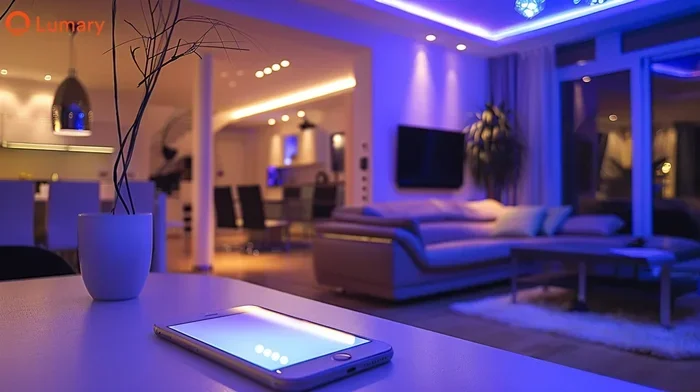
Are Smart Wi Fi Bulbs Safe for Your Health and Home
Are Smart Wi Fi Bulbs Safe? The short answer is yes — when used correctly, smart Wi-Fi bulbs are generally safe for your health and home. These bulbs use low-level radio frequency energy and meet strict safety standards, but understanding Wi-Fi security risks, data privacy, and EMF exposure helps you make informed choices. This guide breaks down everything you need to know about smart home lighting safety.
You have probably walked past the smart lighting aisle and wondered, Are Smart Wi Fi Bulbs Safe? It is a fair question. These little bulbs connect to your home network, talk to your phone, and respond to voice commands. But what does that mean for your health? What about your home network and personal data?
The truth is that smart Wi-Fi bulbs are among the most popular smart home devices on the market today. Millions of households use them every day without issues. Still, it helps to understand what is happening behind the scenes. This article covers everything from electromagnetic radiation to cybersecurity for smart home setups. By the end, you will feel confident about your lighting choices.
Key Takeaways
- Smart Wi-Fi bulbs are safe: They emit low levels of non-ionizing radiation that are well within safety limits.
- Wi-Fi security matters: Unsecured bulbs can be a weak link in your home network.
- Data privacy is real: Some smart bulbs collect usage data that could be shared.
- EMF exposure is minimal: The radio frequency from smart bulbs is far lower than your Wi-Fi router.
- Simple steps boost safety: Updating firmware, using strong passwords, and creating a separate network go a long way.
- Alternatives exist: Zigbee and Z-Wave bulbs offer lower EMF options if you are concerned.
- Blue light is the bigger concern: LED smart bulbs can affect sleep patterns more than their Wi-Fi signals.
📑 Table of Contents
- What Are Smart Wi-Fi Bulbs and How Do They Work?
- Are Smart Wi-Fi Bulbs Safe for Your Health?
- Wi-Fi Security Risks with Smart Bulbs
- Data Privacy Concerns with Connected Lighting
- How to Make Smart Wi-Fi Bulbs Safer at Home
- Smart Wi-Fi Bulbs vs. Other Smart Lighting Options
- Common Myths About Smart Bulb Safety
- Final Thoughts: Are Smart Wi-Fi Bulbs Safe?
What Are Smart Wi-Fi Bulbs and How Do They Work?
Before diving into safety, let us quickly cover what these bulbs actually are. A smart Wi-Fi bulb is an LED light bulb that connects directly to your home wireless network. You control it through a phone app, voice assistant, or automated schedule. No physical switch flipping required.
These bulbs use built-in wireless chips to send and receive data. They communicate with your Wi-Fi router using radio frequency signals. This is the same basic technology your phone, laptop, and tablet use every day. The difference is that a smart bulb uses a very small amount of this energy compared to a phone streaming video.
The Technology Behind Smart Lighting
Inside every smart bulb, there is a tiny computer chip and a radio transmitter. The chip handles your commands, and the radio sends signals over Wi-Fi frequencies, usually the 2.4 GHz band. Some newer bulbs also support 5 GHz networks.
The bulb does not store large amounts of data. It sends small packets of information — things like on/off commands or brightness levels. This means the radio frequency output is very low. In fact, it is much lower than most household electronics.
Most smart bulbs use LED technology, which is already well-studied and considered safe for everyday use. The combination of LED lighting and low-power wireless signals makes these bulbs a practical choice for modern homes.
Are Smart Wi-Fi Bulbs Safe for Your Health?
This is the question most people really want answered. Are Smart Wi Fi Bulbs Safe when it comes to your body? Let us look at the science.
Understanding Electromagnetic Radiation
Every wireless device emits some form of electromagnetic radiation. Smart bulbs are no exception. However, there are two types of radiation to understand:
- Ionizing radiation: This is the dangerous kind — think X-rays and UV rays. Smart bulbs do not produce this at all.
- Non-ionizing radiation: This is the low-energy kind emitted by Wi-Fi devices. It is generally considered safe at normal exposure levels.
Smart Wi-Fi bulbs fall firmly into the second category. The electromagnetic fields they produce are extremely weak. They are far below the levels that any health organization considers harmful.
EMF Exposure From Smart Bulbs
You might hear people worry about EMF exposure from smart bulbs. EMF stands for electromagnetic fields. The concern is understandable, but the numbers tell a reassuring story.
A typical smart bulb produces less than 1% of the EMF that your Wi-Fi router generates. Your router is always broadcasting, often at full power. A smart bulb only transmits when it receives a command. And even then, the signal is very short-range.
To put this in perspective, the radio frequency from a smart bulb is about the same as what you get from a baby monitor or a cordless phone. These devices have been used in homes for decades without proven health risks.
Quick Tip
If you are still concerned about EMF exposure, place your smart bulbs at least a few feet away from your bedside. This simple step reduces your already tiny exposure even further.
Blue Light and Sleep Concerns
Here is a health concern that is actually worth paying attention to. Blue light from LED bulbs can affect your sleep quality. Smart bulbs that emit cool white or blue-tinted light can suppress melatonin production.
This is not unique to smart bulbs. Any LED light with a cool color temperature can do this. The good news is that most smart bulbs let you adjust the color temperature. You can switch to warm light in the evening to support better sleep.
Some smart bulbs even have a “sunset” mode that gradually shifts to warmer tones. This is a great feature for anyone who wants to protect their sleep hygiene while still enjoying smart lighting.
Wi-Fi Security Risks with Smart Bulbs
Now let us talk about the safety of your home network. Are Smart Wi Fi Bulbs Safe from a cybersecurity perspective? This is where things get a bit more nuanced.
How Smart Bulbs Connect to Your Network
Every smart bulb that connects to your Wi-Fi is a potential entry point. In cybersecurity terms, each connected device is called an IoT device — Internet of Things. Your smart bulb is part of the connected home ecosystem.
The problem is that many IoT devices have weaker security than your phone or computer. They may not get regular updates. They might use default passwords that are easy to guess. This makes them attractive targets for hackers.
Can Someone Hack Your Smart Bulb?
Theoretically, yes. A hacker could potentially access a smart bulb if your network is not secure. But what could they actually do? The risk is usually limited.
Most smart bulbs do not store sensitive data. A hacker might be able to turn your lights on and off. In rare cases, they could use a compromised bulb as a bridge to access other devices on your network.
This is why home network safety matters. Your smart bulb is only as secure as the network it connects to. Taking basic precautions makes this risk very small.
Common Security Mistakes
Many homeowners make these mistakes without realizing it:
- Using default Wi-Fi passwords: This is the number one way hackers get into home networks.
- Never updating bulb firmware: Manufacturers release updates that patch security holes.
- Putting smart bulbs on the same network as your computer: This gives hackers a direct path to sensitive files.
- Buying cheap, unbranded bulbs: These often have poor security standards and no update support.
- Leaving the app logged in on shared devices: Anyone with access to your phone can control your lights.
Common Mistakes to Avoid
Do not ignore firmware updates. Do not use the same password for your smart home app that you use everywhere else. And never connect unknown or untrusted devices to your main home network.
Data Privacy Concerns with Connected Lighting
Privacy is another important piece of the puzzle. When you ask, Are Smart Wi Fi Bulbs Safe, you should also ask, “Are they private?”
What Data Do Smart Bulbs Collect?
Most smart bulbs collect some basic data. This can include:
- When you turn lights on and off
- How bright you set your lights
- Your usage patterns and schedules
- Your home Wi-Fi network name
- Your account information and email
This data helps the manufacturer improve their app and services. But it also means your usage habits are being tracked. Some companies share this data with third parties for advertising or analytics.
How to Protect Your Privacy
You do not have to accept every data collection practice. Here is what you can do:
- Read the privacy policy: Look for brands that clearly state they do not sell your data.
- Use the app settings: Many apps let you opt out of data sharing. Take five minutes to check.
- Choose reputable brands: Major brands like Philips Hue, LIFX, and TP-Link have clearer privacy practices.
- Limit app permissions: Only give the app access to what it truly needs.
- Use a local hub when possible: Some smart bulbs work with a hub that keeps data on your home network instead of the cloud.
Being mindful of these steps greatly reduces your smart home privacy risks.
How to Make Smart Wi-Fi Bulbs Safer at Home
You do not need to be a tech expert to use smart bulbs safely. A few simple steps make a big difference.
Step 1: Secure Your Wi-Fi Network
Start with your router. Use WPA3 encryption if your router supports it. If not, use WPA2. Create a strong, unique password that is at least 12 characters long. Change your network name from the default to something that does not reveal your router model.
Step 2: Create a Separate Network for Smart Devices
Many modern routers let you create a guest network. Use this for all your smart home devices. This keeps them separated from your phones, laptops, and computers. Even if a smart bulb gets compromised, the hacker cannot easily reach your other devices.
Step 3: Keep Everything Updated
Check for firmware updates regularly. Most smart bulb apps have an update section. Turn on automatic updates if the option is available. This ensures you always have the latest security patches.
Step 4: Buy from Trusted Brands
Stick with well-known brands that invest in security. Cheap, no-name bulbs from unknown sellers often cut corners on safety and privacy. A few extra dollars for a trusted brand is worth the peace of mind.
Expert Insight
Cybersecurity experts recommend treating every smart device as a potential vulnerability. The good news is that smart bulbs pose very low risk when you follow basic security practices. The biggest threat is usually not the bulb itself, but the network it connects to.
Step 5: Turn Off Features You Do Not Use
If you do not use voice control or remote access, turn those features off. Every active feature is another potential access point. Simplifying your setup reduces your exposure.
Smart Wi-Fi Bulbs vs. Other Smart Lighting Options
If you are worried about Wi-Fi radiation or security, you have alternatives. Let us compare the main options.
Comparison Table
| Feature | Wi-Fi Bulbs | Zigbee Bulbs | Z-Wave Bulbs | Bluetooth Bulbs |
|---|---|---|---|---|
| Connection Type | Wi-Fi | Zigbee Mesh | Z-Wave | Bluetooth |
| EMF Output | Low | Very Low | Very Low | Low |
| Needs Hub | No | Yes | Yes | No |
| Network Security | Moderate | High | High | Low |
| Range | Full home | Medium | Medium | Short |
| Data Privacy | Cloud-based | Local hub option | Local hub option | Local only |
| Price | Low to Medium | Medium | Medium-High | Low |
Which Option Is Safest?
If your top priority is low EMF exposure, Zigbee and Z-Wave bulbs are excellent choices. They use a hub to communicate, which means the radio signal stays within your home and does not broadcast as widely as Wi-Fi.
Zigbee bulbs create a mesh network. Each bulb helps relay the signal. This means the hub can use lower power to communicate. The result is less overall radio frequency in your home.
However, Wi-Fi bulbs offer the most convenience. You do not need a hub, and setup is straightforward. For most people, the safety of Wi-Fi bulbs is more than adequate, especially when you follow the tips in this article.
Common Myths About Smart Bulb Safety
There are a lot of rumors floating around about smart bulbs. Let us clear up the most common ones.
Myth 1: Smart Bulbs Cause Cancer
There is no scientific evidence that smart bulbs cause cancer. The non-ionizing radiation they emit does not damage DNA. Cancer organizations worldwide have not linked Wi-Fi devices to cancer risk.
Myth 2: Smart Bulbs Interfere with Your Brain
Some people claim that smart bulbs cause headaches or brain fog. While blue light can disrupt sleep, there is no evidence that the Wi-Fi signal from a bulb affects brain function. The signal strength is simply too low.
Myth 3: Smart Bulbs Constantly Emit Radiation
Smart bulbs do not emit radiation 24/7 at full power. They only transmit briefly when sending or receiving commands. The electromagnetic fields they produce are intermittent and very weak.
Myth 4: All Smart Bulbs Are the Same
Not all smart bulbs are created equal. Some use more secure protocols. Some have better privacy policies. Some emit lower EMF. It pays to research before you buy.
Key Takeaways
The myths around smart bulb safety often come from a misunderstanding of how wireless technology works. The reality is that smart bulbs operate at very low power levels and meet strict safety standards. The real risks are network security and data privacy, not health effects from radiation.
Final Thoughts: Are Smart Wi-Fi Bulbs Safe?
So, are Smart Wi Fi Bulbs Safe? The answer is a clear yes — with a few caveats. For your physical health, smart Wi-Fi bulbs are safe. The radiation they emit is minimal and well within safety guidelines. For your home network, they are safe as long as you follow basic security practices. For your personal data, they are safe when you choose reputable brands and adjust your privacy settings.
The world of smart home lighting has come a long way. Manufacturers now take security and privacy more seriously than ever. Newer bulbs include better encryption, regular updates, and clearer data policies.
You do not need to be afraid of smart bulbs. But you should be informed. Understanding the connected home landscape helps you make choices that align with your comfort level.
Start small if you are new to smart lighting. Try one or two bulbs in a room you use often. Get comfortable with the app, the controls, and the routines. Then expand your setup at your own pace.
Remember that the biggest health benefit of smart bulbs might actually be the convenience they bring. Being able to automate your lighting supports better routines, reduces energy waste, and makes your home more comfortable. That is a win for your well-being.
So go ahead and enjoy your smart home devices. With the right precautions and a little knowledge, you can light up your home with confidence.
Frequently Asked Questions
Do smart Wi-Fi bulbs emit harmful radiation?
No. Smart Wi-Fi bulbs emit non-ionizing radiation at very low levels. This type of radiation is not known to cause harm. The signal from a smart bulb is far weaker than your Wi-Fi router and much weaker than your phone.
Can smart bulbs be hacked and used to access my network?
It is possible but unlikely if you follow basic security steps. Use a strong Wi-Fi password, keep firmware updated, and consider putting smart bulbs on a separate guest network. These steps make it very difficult for anyone to exploit your bulbs.
Are Zigbee bulbs safer than Wi-Fi bulbs?
Zigbee bulbs emit lower radio frequency signals and use a hub for communication. They can be a good choice if you are concerned about EMF exposure. However, Wi-Fi bulbs are also safe when used properly and do not require a hub.
Do smart bulbs collect personal data about me?
Many smart bulbs collect basic usage data like on/off times and brightness levels. Some brands share this data with third parties. You can protect your privacy by choosing brands with strong privacy policies and opting out of data sharing in the app settings.
Can smart bulbs affect my sleep?
Yes, but not because of Wi-Fi signals. The blue light emitted by LED smart bulbs can interfere with melatonin production and disrupt sleep. Use warm light settings or night modes in the evening to support better sleep.
What is the safest way to use smart bulbs at home?
Buy from reputable brands, secure your Wi-Fi network with a strong password, enable automatic firmware updates, and consider using a guest network for smart devices. These simple steps address the main safety concerns with smart bulbs.
=== CONCLUSION ===
Are Smart Wi Fi Bulbs Safe for your health and home? The evidence says yes. These bulbs use low-power wireless signals that fall well within safety limits. The electromagnetic fields they produce are tiny compared to other household devices. The real safety considerations are Wi-Fi security, data privacy, and sleep-friendly lighting — all of which you can manage with the tips in this guide.
Smart lighting is a fantastic way to upgrade your home. It adds convenience, saves energy, and can even improve your daily routine. By staying informed and taking a few simple precautions, you can enjoy all the benefits of smart home lighting without worry. Your home, your health, and your data are all worth protecting — and smart bulbs can be part of that solution.