Are Usb Power Supplies Isolated What You Need to Know
USB power supplies can be either isolated or non-isolated, and the difference matters more than most people realize. Isolated USB power supplies use a transformer to separate input and output circuits, providing better safety and protection against electrical faults. Non-isolated designs are cheaper and simpler but carry higher risks in certain applications.
Have you ever wondered what happens inside a USB power supply when you plug in your device? The answer might surprise you. Not all USB power supplies are created equal, and one of the biggest differences comes down to a single word: isolation. Whether you are charging a phone, powering a hard drive, or running a medical device, the type of power supply you use can affect safety, performance, and longevity.
In this guide, we will break down everything you need to know about USB power supplies and whether they are isolated. We will cover what isolation means, why it matters, and how to choose the right power supply for your needs. By the end, you will feel confident making informed decisions about the USB power adapters and charging accessories you use every day.
The world of power supplies can feel confusing. There are terms like flyback converters, galvanic isolation, and ground loops that sound like they belong in a textbook. But the truth is, understanding isolation does not require an engineering degree. It just takes a clear explanation and a willingness to learn. So let us dive in and make sense of it all.
Key Takeaways
- Isolated USB power supplies provide a safety barrier between input and output, reducing shock and surge risks.
- Non-isolated USB power supplies are more affordable but lack the protective isolation transformer found in isolated designs.
- Choosing between isolated and non-isolated depends on your device type, usage environment, and safety requirements.
- Medical and industrial applications almost always require isolated USB power supplies for compliance and safety.
- Look for safety certifications like UL, CE, and FCC when buying any USB power supply.
- USB-C Power Delivery standards have raised expectations for safe and efficient power delivery.
- Understanding galvanic isolation helps you make smarter choices about powering sensitive electronics.
📑 Table of Contents
- What Does It Mean for a USB Power Supply to Be Isolated?
- Why Isolation Matters for Safety
- Isolated vs. Non-Isolated USB Power Supplies: A Comparison
- The Role of USB-C Power Delivery in Isolation
- Safety Certifications to Look For
- Common Mistakes People Make with USB Power Supplies
- Expert Insights on USB Power Supply Isolation
- Conclusion
What Does It Mean for a USB Power Supply to Be Isolated?
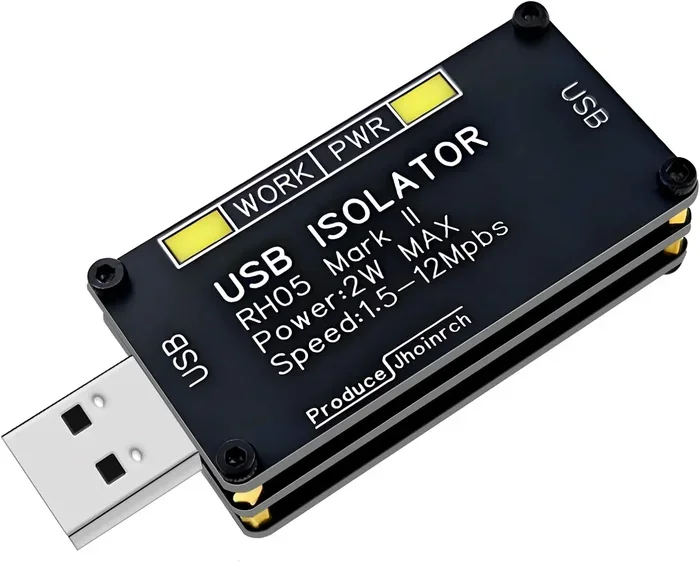
When we talk about isolation in a USB power supply, we are describing a physical and electrical separation between the input side (where power comes from the wall) and the output side (where power reaches your device). This separation is created by a component called a transformer. The transformer transfers energy without a direct electrical connection between the two sides.
Think of it like a bridge with a moat around it. The bridge lets things pass through, but the moat keeps the two sides separate. In an isolated power supply, the moat prevents any dangerous voltage from your wall outlet from reaching your device. This is a critical safety feature that protects both you and your electronics.
How Isolation Works in Practice
Inside an isolated USB power supply, the incoming alternating current (AC) from the wall is first converted to direct current (DC). Then a transformer steps the voltage down to the level needed by your device. The transformer creates that all-important barrier. After the voltage is stepped down, it is converted back to DC and delivered through the USB cable to your device.
This process might sound complex, but it happens in milliseconds. The result is a steady, safe flow of power that keeps your device charging without any risk of electrical shock or damage from voltage spikes. Many quality USB chargers use this approach because it provides reliable and safe power conversion.
What Is a Non-Isolated USB Power Supply?
On the other side of the spectrum, a non-isolated USB power supply does not use a transformer to create that barrier. Instead, it uses simpler circuitry like a buck converter to step down the voltage directly. The input and output share a common ground, which means there is no separation between the wall power and the power reaching your device.
Non-isolated designs are common in budget chargers and low-power devices. They are cheaper to manufacture and take up less space. However, they also come with trade-offs. Without isolation, a fault in the input side can potentially reach the output side, putting your device and your safety at risk.
Why Isolation Matters for Safety
Safety is the number one reason to care about whether your USB power supply is isolated. When you plug something into a wall outlet, you are dealing with high voltage. A fault in the power supply could allow that high voltage to reach the low-voltage side that connects to your device. In the worst case, this could cause electric shock, fire, or permanent damage to your equipment.
An isolated USB power supply acts as a protective barrier. Even if something goes wrong inside the supply, the isolation transformer prevents dangerous voltages from crossing over. This is why safety organizations and certification bodies strongly recommend or require isolation in many applications.
Electrical Shock Protection
One of the biggest dangers of non-isolated power supplies is the risk of electrical shock. If the output side of a non-isolated supply becomes energized due to a fault, touching your device or its cable could result in a shock. With an isolated design, this risk is dramatically reduced because there is no direct path for current to flow from input to output.
This is especially important for devices that people handle frequently or use in wet environments. Think about kitchen gadgets, bathroom electronics, or outdoor equipment. In these situations, isolated USB power supplies provide an extra layer of protection that non-isolated designs simply cannot match.
Surge and Spike Protection
Power surges from the grid can travel through non-isolated supplies and damage your devices. An isolated USB power adapter helps block these surges. The transformer acts as a filter, absorbing or blocking transient voltage spikes before they reach your equipment.
This protection extends the life of your devices. Over time, small surges can degrade internal components. By using an isolated supply, you reduce wear and tear and keep your electronics running longer. This is a practical benefit that adds real value to your investment in quality charging gear.
Isolated vs. Non-Isolated USB Power Supplies: A Comparison
Choosing between isolated and non-isolated USB power supplies comes down to your specific needs. Both types have strengths and weaknesses. Let us look at a direct comparison to help you understand the trade-offs.
| Feature | Isolated USB Power Supply | Non-Isolated USB Power Supply |
|---|---|---|
| Safety | High – transformer barrier prevents shock | Lower – no barrier between input and output |
| Cost | Higher due to transformer and complex circuitry | Lower – simpler design and fewer components |
| Size | Larger – transformer takes up space | Compact – ideal for small devices |
| Surge Protection | Excellent – blocks voltage spikes | Limited – surges can pass through |
| Common Applications | Medical devices, industrial equipment, high-end electronics | Phone chargers, low-power peripherals, budget gadgets |
| Efficiency | Slightly lower due to transformer losses | Generally higher for low-power applications |
| Certification Requirements | Strict – often required for safety compliance | Less strict for basic consumer devices |
As you can see, the choice is not always clear-cut. For everyday phone charging, a non-isolated supply works fine. But for sensitive or high-value equipment, the extra safety of an isolated USB power supply is well worth the investment.
When to Choose Isolated
You should choose an isolated USB power supply when safety is a top priority. This includes medical devices, where computers are used in medicine to monitor patients and deliver treatments. In these environments, a power supply failure could have life-threatening consequences. Isolation is not optional, it is essential.
Industrial settings also demand isolated supplies. Factory equipment, robotics, and control systems often operate in harsh electrical environments. The galvanic isolation provided by an isolated supply protects both the equipment and the workers who rely on it. Similarly, if you are working with expensive audio or video equipment, isolation helps prevent ground loops and electrical noise that can degrade signal quality.
When Non-Isolated Is Fine
For simple, low-power devices like a basic phone charger or a USB fan, a non-isolated supply is perfectly adequate. These devices do not handle sensitive data, and the risk of electrical fault is low. The lower cost and smaller size of non-isolated designs make them a practical choice for everyday consumer electronics.
Many of the USB chargers you buy at a store are non-isolated. They work well for their intended purpose. The key is understanding the limitations and not using a non-isolated supply for applications where isolation is critical.
The Role of USB-C Power Delivery in Isolation
The rise of USB-C Power Delivery has changed the landscape of USB power supplies. USB-C PD can deliver up to 100 watts of power, and sometimes more with newer standards. This higher power level brings new challenges for safety and isolation.
When you are pushing high power through a USB cable, the stakes are higher. A fault in a high-power supply can cause significant damage or even fire. This is why many USB-C PD chargers now include isolation features as a standard part of their design. Manufacturers have recognized that safety cannot be compromised, even as power demands increase.
How USB-C PD Chargers Handle Isolation
Modern USB-C PD chargers use advanced circuitry to manage power delivery safely. Many include isolation barriers that meet strict safety standards. The power conversion process in these chargers is carefully engineered to maintain a separation between input and output.
Some USB-C PD supplies use a technique called a flyback converter, which inherently provides isolation through its transformer-based design. This is a common approach in both isolated and non-isolated designs, but isolated versions use it specifically to create that safety barrier. When shopping for a USB-C PD charger, look for certifications like UL, CE, and FCC to ensure the supply meets safety standards.
USB Hub Power and Isolation
USB hubs are another area where isolation matters. A powered USB hub draws power from the wall and distributes it to multiple devices. If the hub uses a non-isolated supply, a fault could affect all connected devices at once. An isolated USB hub power supply protects each connected device independently.
This is particularly important for hubs that connect sensitive equipment like external hard drives, audio interfaces, or networking gear. A spike or surge through a non-isolated hub can destroy multiple devices simultaneously. Investing in a hub with an isolated power supply can save you from costly replacements and data loss.
Safety Certifications to Look For
Not all USB power supplies are tested or certified. Safety certifications tell you that a product has been independently verified to meet specific safety standards. When shopping for a USB power supply, look for these key certifications.
The UL (Underwriters Laboratories) mark is one of the most recognized safety certifications worldwide. It means the product has been tested for electrical safety and fire resistance. The CE mark indicates compliance with European safety standards. FCC certification focuses on electromagnetic interference, ensuring the supply does not disrupt other electronics.
These certifications are especially important for isolated power supplies, because the isolation barrier itself must meet rigorous testing standards. A certified isolated USB power supply gives you peace of mind that the design has been thoroughly evaluated. Never buy a power supply without at least one recognized safety certification.
Understanding Ground Loops
A ground loop occurs when there are multiple paths to ground in an electrical system. This can cause noise, interference, and even damage to connected devices. Isolated USB power supplies help prevent ground loops by separating the ground on the input side from the ground on the output side.
This is a subtle but important benefit. If you have ever noticed a humming sound in audio equipment or flickering on a monitor, a ground loop might be the cause. Using an isolated power adapter can eliminate this problem and improve the performance of your connected devices.
Common Mistakes People Make with USB Power Supplies
Even informed users can make mistakes when it comes to USB power supplies. Here are some common errors to avoid.
Mistake 1: Ignoring isolation requirements. Many people assume all USB chargers are the same. They buy the cheapest option without considering whether isolation is needed. This can be dangerous for sensitive or high-power devices.
Mistake 2: Skipping certifications. A low price is tempting, but uncertified power supplies may not meet safety standards. The circuit board inside might use cheap components that are prone to failure.
Mistake 3: Overloading the supply. Every USB power supply has a maximum output rating. Exceeding this rating can cause overheating, reduced lifespan, and in extreme cases, fire. Always check the wattage and amperage before connecting a device.
Mistake 4: Using damaged cables. A damaged USB cable can undermine even the best power supply. Frayed wires or exposed conductors can create shock hazards or short circuits. Replace damaged cables immediately.
Mistake 5: Ignoring heat buildup. Power supplies generate heat during operation. Placing a supply in a confined space or covering it with fabric can cause overheating. Always ensure adequate ventilation around your USB power adapter.
Quick Tips for Safe USB Power Supply Use
- Always check for safety certifications before purchasing.
- Match the power supply output to your device’s requirements.
- Use cables that are rated for the power level you need.
- Keep power supplies in well-ventilated areas.
- Replace any supply that feels hot to the touch during normal use.
- Do not leave chargers plugged in unattended for long periods.
- Consider an isolated power supply for expensive or sensitive equipment.
Expert Insights on USB Power Supply Isolation
Industry experts agree that isolation is one of the most overlooked aspects of USB power supply design. Many consumers focus on speed and convenience, but safety should always come first. According to electrical engineers, the transformer-based isolation found in quality supplies adds a layer of protection that is simply not achievable with non-isolated designs.
In professional settings, the importance of isolation cannot be overstated. Just as the key components found on the motherboard are carefully selected for reliability and safety, the power supply is a critical part of any electronic system. Skimping on power supply quality is like building a strong house on a weak foundation.
Technology has evolved rapidly, and so have USB power supply designs. Modern isolated supplies are more efficient and compact than ever before. The cost gap between isolated and non-isolated designs has narrowed, making isolation more accessible for everyday consumers. As USB-C Power Delivery continues to evolve, we can expect even higher standards for safety and isolation in future products.
The Future of USB Power Supply Isolation
Looking ahead, the trend is clearly toward better isolation in USB power supplies. New materials and designs are making isolated supplies smaller and more efficient. Wireless charging technologies are also being developed with isolation built in, since there is no physical connection between the charging pad and the device.
As more devices rely on USB for power, the demand for safe, reliable, and isolated power supplies will only grow. Whether you are a casual consumer or a professional working with sensitive equipment, understanding isolation will help you make better choices and stay safe.
Conclusion
The answer to the question “Are USB power supplies isolated?” is both yes and no. Some are, and some are not. The key is understanding the difference and choosing the right type for your needs. An isolated USB power supply offers superior safety, better surge protection, and freedom from ground loops. A non-isolated supply can work fine for simple, low-power devices where cost and size are the main concerns.
When in doubt, choose isolation. The extra protection it provides is worth the investment, especially for expensive equipment or safety-critical applications. Look for trusted certifications, match the supply to your device requirements, and never compromise on safety. By understanding USB power supply isolation, you are taking an important step toward smarter, safer electronics use.
Take what you have learned here and apply it to your next purchase. Whether you are replacing an old charger or buying a new USB power adapter, you now have the knowledge to make a confident, informed decision. Your devices, and your safety, will thank you.
Frequently Asked Questions
What is the main difference between isolated and non-isolated USB power supplies?
The main difference is the presence of a transformer that creates an electrical barrier between input and output. An isolated USB power supply uses this transformer to prevent dangerous voltages from reaching your device, while a non-isolated supply has no such barrier.
Do I need an isolated USB power supply for my phone?
For most phones, a non-isolated charger is fine. However, if you use your phone in wet environments or with sensitive accessories, an isolated power supply adds an extra layer of safety. It is always better to be cautious.
Are all USB-C PD chargers isolated?
Not all of them. While many modern USB-C PD chargers include isolation, some budget models do not. Always check the product specifications and look for safety certifications to confirm whether a charger is isolated.
Can a non-isolated USB power supply damage my devices?
Yes, in certain conditions. A fault in a non-isolated supply can allow high voltage to reach your device, potentially causing damage or even fire. This risk is higher in environments with unstable power or electrical surges.
What certifications should I look for in a USB power supply?
Look for UL, CE, and FCC certifications at minimum. These indicate that the supply has been tested for safety and compliance. A certified USB power adapter gives you confidence that it meets established safety standards.
How does galvanic isolation improve USB power supply performance?
Galvanic isolation prevents electrical noise and ground loops from affecting your devices. This leads to cleaner power delivery and better performance, especially for sensitive equipment like audio interfaces and medical devices that rely on stable power conversion.
=== CONCLUSION ===
Understanding whether your USB power supplies are isolated is one of the most important things you can do for your safety and your electronics. The difference between isolated and non-isolated designs is not just a technical detail, it is a matter of protection. By choosing the right type of supply for your needs and always looking for proper certifications, you ensure that your devices are powered safely and efficiently. Keep these tips in mind, share them with others, and make informed decisions every time you buy a USB power supply or charging accessory.