Can A Speaker Go Bad And How To Spot The Warning Signs
Can a speaker go bad? Yes, speakers absolutely can deteriorate over time due to wear, heat, moisture, and physical damage. Recognizing the early warning signs of a failing speaker, such as distortion, crackling sounds, and reduced bass response, helps you fix the problem before total audio loss. This guide covers every symptom, cause, test, and solution you need to know.
Have you ever been listening to your favorite song and noticed something just sounds off? Maybe the audio feels muffled, or there is a strange crackling noise that was not there before. It is a frustrating experience, and it raises one simple question: can a speaker go bad?
The short answer is yes. Speakers are physical devices with moving parts, and like anything that moves, they wear out over time. Whether you use a portable Bluetooth speaker, a studio monitor, or a full home theater system, every speaker driver has a finite lifespan. The good news is that speakers rarely die without warning. There are clear signs that tell you something is wrong, and catching them early can save you money and hassle.
In this article, we will walk you through every warning sign of a failing speaker, explain what causes speaker damage, show you how to test your audio equipment at home, and help you decide whether to repair or replace. We will also share practical tips to keep your home audio gear performing at its best for years to come.
Key Takeaways
- Speakers can and do go bad: Every speaker has a lifespan, and multiple factors can shorten it significantly.
- Distortion and crackling are early red flags: These warning signs often appear long before the speaker stops working entirely.
- Heat and moisture are the biggest enemies: Keeping your speakers in a safe environment extends their life dramatically.
- You can test a speaker at home: Simple methods like the paper test and multimeter check help you diagnose problems fast.
- Repair or replace depends on the damage: Minor issues are fixable, but severe internal damage usually means replacement.
- Prevention is always better than cure: Proper handling, volume control, and regular maintenance keep speakers performing well for years.
📑 Table of Contents
Can A Speaker Go Bad? Understanding Speaker Health
Before we dive into the warning signs, it helps to understand how a speaker works and why it can fail. A speaker converts electrical signals into sound waves. Inside, you have a voice coil, a speaker cone, a magnet, and a suspension system. All of these parts work together to produce the audio signal you hear.
Over time, these components can degrade. The cone can tear. The voice coil can burn out. The magnet can lose strength. When any of these things happen, the speaker performance drops. Some failures happen slowly, while others are sudden and dramatic.
Do Speakers Have a Lifespan?
Yes, every speaker has a lifespan, but it varies widely. A cheap budget speaker might last two to three years with heavy use. A high-quality floor-standing speaker can last a decade or more with proper care. The key factors that determine speaker lifespan include build quality, usage patterns, and environmental conditions.
Here are some average lifespan estimates based on speaker type:
- Cheap portable speakers: 2-4 years
- Mid-range bookshelf speakers: 5-10 years
- Premium floor-standing speakers: 10-20+ years
- Car speakers: 5-10 years depending on conditions
- Studio monitors: 7-15 years with proper handling
These numbers are just estimates. Some speakers last far longer, and some fail much sooner. What matters most is how well you maintain them and how hard you push them.
Common Warning Signs Your Speaker Is Going Bad
The most important part of speaker troubleshooting is knowing what to listen for and what to look for. A blown speaker does not always go silent right away. It usually shows subtle signs first. Here are the most common warning signs that your audio equipment is deteriorating.
Distortion at Normal Volume Levels
If your speaker starts sounding fuzzy or unclear even at moderate volume, that is a major red flag. Healthy speakers should produce clean sound at their rated volume. When you notice sound distortion during regular use, the speaker driver is likely struggling. This could mean the cone is damaged, the voice coil is rubbing, or the amplifier clipping is causing excess power to reach the speaker.
Crackling or Popping Sounds
Crackling and popping are among the earliest signs of speaker problems. You might hear these sounds when you change the volume, or they might happen randomly during playback. Often, this points to a loose connection inside the speaker or a damaged speaker cone. In some cases, it is simply a dirty potentiometer or a worn-out cable. But if the crackling comes from the speaker itself, it is time to investigate further.
Reduced Bass Response
Your speaker used to fill the room with rich, deep bass. Now it sounds thin and weak. A noticeable drop in bass response often means the woofer is damaged. The cone may have a tear or a hole, which prevents it from moving properly. When the cone cannot move freely, it loses the ability to reproduce low frequencies effectively.
No Sound From One Speaker
If one speaker in a pair goes completely silent, the problem could be a blown speaker or a wiring issue. Start by checking the connections. Swap the left and right speakers to see if the problem follows the speaker or stays with the channel. If the silent speaker moves with the channel, the issue is in the amplifier or source. If it stays with the speaker, you likely have a dead speaker.
Physical Damage to the Cone
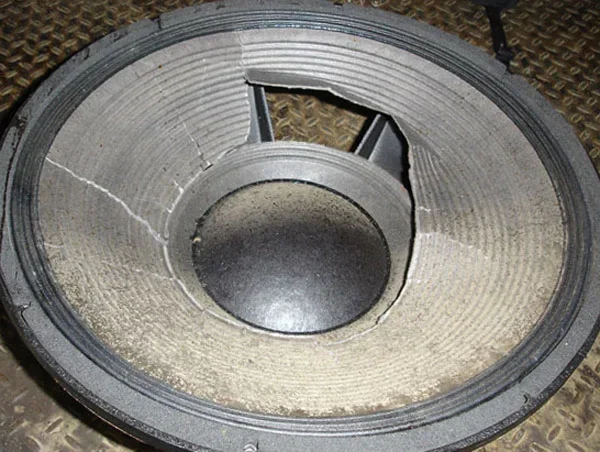
Sometimes you can spot a bad speaker just by looking at it. Inspect the speaker cone for tears, holes, or visible sagging. A damaged cone will not produce sound properly. Even a small tear can cause noticeable audio quality problems. Check the surround (the flexible ring connecting the cone to the frame) for tears or separation as well.
Excessive Heat From the Speaker
Speakers warm up during use, but they should never feel hot to the touch. If your speaker cabinet is uncomfortably warm, something is wrong. Excessive heat often comes from voice coil damage or from pushing too much power through the speaker. Prolonged overheating will eventually kill the speaker entirely.
What Causes Speakers To Go Bad
Understanding the causes of speaker failure helps you prevent it. Most speaker problems come down to a handful of common culprits. Let us break them down.
Overexposure to High Volume
Playing your speakers too loud is the fastest way to damage them. When you push a speaker beyond its limits, the voice coil overheats. The cone may overstretch or tear. This is called “blowing a speaker,” and it happens more often than you might think. Many people damage their speakers by connecting them to an amplifier that is too powerful or by simply turning the volume up too high for too long.
Moisture and Humidity
Moisture is a silent killer of speakers. Humidity can rust the internal components, weaken the adhesive holding the cone, and cause short circuits in the speaker impedance circuitry. Bathrooms, kitchens, and outdoor setups are particularly risky. If your speaker is not rated for humid environments, keep it away from moisture.
Dust and Debris Buildup
Over time, dust accumulates inside the speaker cabinet. It settles on the cone, clogs the port (if it is a bass-reflex design), and can even work its way into the voice coil gap. This buildup restricts movement and degrades audio quality. Regular cleaning helps prevent this issue.
Age and Natural Wear
Even with perfect care, speakers age. The foam surrounds on older speakers dry out and crumble. The adhesive weakens. The magnet loses some of its strength. This is a natural part of the speaker lifecycle, and it is one reason why vintage audio equipment requires maintenance or restoration.
Power Surges and Electrical Issues
A sudden power surge can send too much electrical current through the speaker driver, damaging the voice coil instantly. Lightning strikes, faulty wiring, and cheap power strips can all cause electrical damage. Using a surge protector is a simple way to guard against this.
Physical Impact and Rough Handling
Speakers are not indestructible. Dropping a portable speaker, bumping a bookshelf speaker, or rough handling during transport can dent the cone, misalign the voice coil, or crack the enclosure. Physical damage often leads to speaker failure over time, even if the speaker seems fine at first.
How To Test If Your Speaker Is Failing
You do not need to be an audio engineer to test your speaker. A few simple methods can help you determine whether your speaker is going bad or if the problem lies elsewhere.
The Paper Test
This is one of the easiest and most effective speaker troubleshooting methods. Place a thin sheet of paper over the speaker cone and play music at a moderate volume. If the paper flutters smoothly, the cone is moving correctly. If it does not move at all, or if it moves unevenly, the speaker driver may be damaged. You can also look for tears or holes in the cone while you do this.
The Multimeter Test
Set your multimeter to measure resistance (ohms) and touch the probes to the speaker terminals. A healthy speaker should show a reading close to its rated speaker impedance (commonly 4, 8, or 16 ohms). If the reading is zero, the voice coil is shorted. If the reading is infinite, the voice coil is open. Either result means the speaker is bad.
The Listening Test
Play a track with a wide frequency range and listen carefully. Focus on the highs, mids, and lows. A blown tweeter will lack high-frequency detail. A damaged woofer will sound thin and weak in the bass. Uneven sound across frequencies often points to a specific driver problem.
Visual Inspection
Look closely at the speaker. Check for torn cones, ripped surrounds, loose connections, and burned smell. A burnt smell coming from the speaker is a clear sign of a burned voice coil. Visual damage combined with poor sound quality almost always means the speaker needs repair or replacement.
Swap Test
If you have two similar speakers, swap them between channels or positions. If the problem follows the speaker, you have confirmed the speaker is the issue. If the problem stays with the channel, the issue is in the amplifier, cable, or source device.
Can You Fix A Bad Speaker? Repair vs Replace
Once you confirm that your speaker has gone bad, the next question is whether to fix it or replace it. The answer depends on the type and severity of the damage.
When Repair Makes Sense
Minor speaker problems are often repairable. A torn speaker cone can be patched with speaker repair glue or a cone repair kit. A loose voice coil can sometimes be reseated. Damaged surrounds can be replaced with aftermarket parts. These repairs are affordable and can extend the life of your speaker by several more years.
Here are common repairs that are worth attempting:
- Cone glue repair: For small tears in the paper or polypropylene cone
- Surround replacement: For foam surrounds that have deteriorated over time
- Capacitor replacement: For crossover issues causing uneven sound
- Wire re-soldering: For loose or corroded internal connections
When Replacement Is the Better Option
Some speaker damage is not worth repairing. If the voice coil is completely burned out, replacement costs often exceed the price of a new speaker. Severely torn cones, cracked enclosures, and melted internal components usually mean replacement is the smarter choice.
Consider replacement when:
- The repair cost exceeds 50% of a new speaker’s price
- The damage affects multiple internal components
- The speaker is an older model with no available parts
- You want improved audio quality and modern features
How To Extend Your Speaker Lifespan
Prevention is the best approach. You can take several practical steps to keep your speakers healthy and avoid premature speaker failure.
Keep Volume at Safe Levels
Do not regularly push your speakers to their maximum volume. Leaving headroom reduces strain on the voice coil and speaker cone. A good rule of thumb is to keep the volume at about 70-80% of the maximum. This small adjustment can add years to your speaker’s life.
Use a Surge Protector
Always plug your audio equipment into a surge protector. Power spikes are one of the leading causes of sudden speaker death. A quality surge protector costs very little and can save you hundreds in replacement costs.
Control Humidity
Keep your speakers in a dry, well-ventilated area. If you live in a humid climate, consider using a dehumidifier in the room where your audio equipment is stored. Avoid placing speakers near windows, vents, or other sources of moisture.
Clean Your Speakers Regularly
Dust the speaker cones and enclosures regularly with a soft, dry cloth. Use compressed air to clear dust from ports and vents. Keeping your audio equipment clean prevents buildup that can degrade performance over time.
Handle With Care
Portable speakers are especially prone to physical damage. Use protective cases when traveling. Avoid dropping or bumping your speakers. For home speakers, place them on stable surfaces away from high-traffic areas where they might get knocked over.
Match Speakers With the Right Amplifier
Make sure your amplifier or receiver matches the power handling and speaker impedance of your speakers. Mismatched equipment is one of the most common causes of speaker damage. When in doubt, consult the manufacturer’s specifications or seek advice from an audio professional.
When To Seek Professional Help
Not every speaker problem is a DIY fix. If you have tried the basic tests and are still unsure about the issue, it is worth consulting a professional. An experienced audio technician can open up the speaker, inspect the internal components, and recommend the best course of action.
Professional help is especially valuable for expensive or vintage speakers. Repairing a high-end floor-standing speaker or a rare vintage model often makes more sense than replacing it. A technician can also re-foam surrounds, re-cone drivers, and perform other specialized repairs that require specific tools and expertise.
Final Thoughts
So, can a speaker go bad? Absolutely. Speakers are mechanical devices, and they wear out just like anything else. But with the right knowledge, you can catch the warning signs early, diagnose the problem, and take action before your audio setup suffers.
Remember the key warning signs: distortion, crackling, reduced bass, physical damage, and excessive heat. Use the testing methods we covered to confirm whether your speaker is the problem. And take preventive steps to protect your investment.
Whether you choose to repair or replace a bad speaker, the most important thing is to act quickly. Ignoring speaker problems can lead to further damage and even harm your amplifier or other connected equipment. Stay proactive, listen carefully, and your speakers will reward you with great sound for years to come.
Your home audio experience depends on the health of your speakers. Give them the care they deserve, and they will keep delivering the music, movies, and moments you love.
Frequently Asked Questions
How long do speakers typically last before they go bad?
Speaker lifespan varies based on quality and usage. A well-maintained mid-range speaker can last 7 to 10 years, while premium speakers may last 15 years or more. Heavy daily use and poor handling can shorten this significantly.
Can a speaker go bad from being too loud?
Yes, playing a speaker at excessively high volume is one of the fastest ways to damage it. Overdriving the speaker causes the voice coil to overheat, which can melt internal components and tear the speaker cone.
Is it worth repairing a blown speaker?
It depends on the damage and the speaker’s value. Minor cone tears and surround damage are often affordable to repair. But if the voice coil is burned out or the damage is extensive, replacement is usually the better option.
Can moisture cause a speaker to fail?
Absolutely. Moisture and humidity can rust internal metal parts, weaken adhesives, and cause electrical shorts. Keep speakers away from damp environments to prevent moisture-related failure.
How can I tell if my speaker is blown?
Common signs include distortion, crackling, no sound from one speaker, reduced bass, and visible damage to the cone. You can also perform a multimeter test or the paper test to confirm speaker damage.
Do Bluetooth speakers go bad faster than wired speakers?
Not necessarily. Bluetooth speakers can last just as long as wired ones if properly cared for. However, because they are portable, they face more risk of physical damage, moisture exposure, and battery degradation over time.
=== CONCLUSION ===
Can a speaker go bad? Yes, and it happens more often than most people realize. The good news is that speakers give you plenty of warning before they completely fail. By paying attention to distortion, crackling, reduced bass, and physical damage, you can catch problems early and take action. Use the testing tips and preventive measures in this guide to keep your speakers in top shape. Your ears will thank you every time you press play.