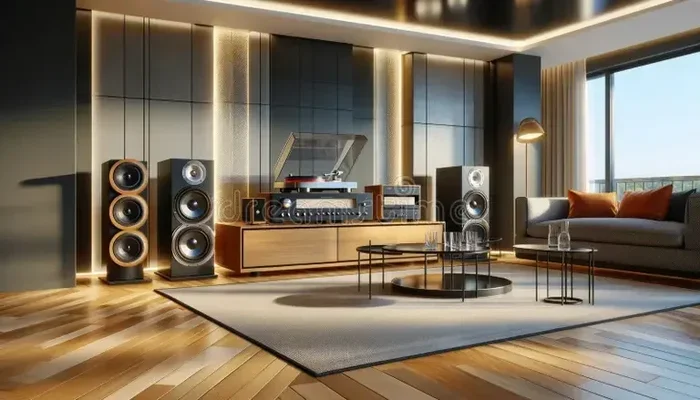
Are Tower Speakers Obsolete in Todays Audio World
Tower speakers are far from obsolete. Despite the rise of soundbars, Bluetooth speakers, and wireless systems, floor-standing speakers still deliver unmatched sound quality, power, and depth that compact alternatives simply cannot match. Whether you are an audiophile or a casual listener, understanding the strengths and weaknesses of tower speakers helps you make the best choice for your home audio setup.
This is a comprehensive guide about Are Tower Speakers Obsolete.
Key Takeaways
- Tower speakers still deliver superior sound: Their large drivers and cabinet size provide deep bass and rich audio that smaller speakers struggle to reproduce.
- Modern alternatives have their place: Soundbars and wireless speakers offer convenience but sacrifice audio depth and fidelity.
- Technology has not replaced tower speakers: Advances in digital signal processing and computer-aided design have actually improved tower speaker performance.
- Speaker placement matters: Proper positioning of tower speakers dramatically affects sound quality in any room.
- Tower speakers remain cost-effective: For the price, they often outperform compact systems in both durability and audio output.
- The future is hybrid: Many modern tower speakers now include wireless connectivity and smart features without sacrificing sound quality.
[FEATURED_IMAGE_PLACEHOLDER]
The Evolution of Tower Speakers in Home Audio
Tower speakers have been a staple of home audio for decades. They stand tall in living rooms, filling spaces with rich, full-bodied sound. But with so many new audio options available today, many people wonder if these classic floor-standing speakers still have a place in modern homes. The short answer is no, they are not going anywhere.
The history of tower speakers dates back to the mid-20th century. As vinyl records gained popularity, families wanted bigger, better sound. Tall speaker cabinets with multiple drivers became the standard for home stereo systems. Over the decades, speaker technology evolved, but the basic design remained the same. Large cabinets, woofers for bass, tweeters for highs, and mid-range drivers for vocals and instruments.
What is fascinating is how much the industry has changed around tower speakers. The rise of digital audio, streaming services, and wireless technology has transformed the entire home audio landscape. Yet tower speakers have adapted. They have not been replaced. They have evolved. Just as computers have transformed healthcare and revolutionized how medical professionals diagnose and treat patients, digital technology has also refined how speaker manufacturers design and test their products.
Today’s tower speakers benefit from decades of engineering refinements. Materials are better. Speaker drivers are more efficient. Crossovers are more precise. And the integration of modern digital technology has made them smarter without compromising the raw audio quality that made them popular in the first place.
Why Tower Speakers Still Deliver Unmatched Sound Quality
The Physics Behind Big Sound
The reason tower speakers still hold an edge comes down to basic physics. Larger speaker cabinets can house larger drivers. Larger drivers move more air. More air movement means deeper bass, wider frequency response, and a more immersive listening experience. This is something that compact speakers and soundbars simply cannot replicate.
When you listen to music on a quality pair of floor-standing speakers, you hear details that smaller speakers simply filter out. The low rumble of a bass guitar. The crisp snap of a snare drum. The warmth of a cello. All of these frequencies come through with clarity and power.
Here are the key advantages of tower speakers when it comes to audio quality:
- Wider frequency response: Tower speakers cover more of the audible spectrum, from deep bass to sparkling highs.
- Greater dynamic range: They handle quiet whispers and loud explosions with equal ease.
- Better dispersion: Tall cabinets distribute sound more evenly across a room.
- Lower distortion: Larger drivers move with less strain, reducing audio distortion at higher volumes.
- Natural sound reproduction: The cabinet design supports a more authentic, uncolored sound.
Power Handling and Efficiency
One area where tower speakers shine is power handling. A quality pair of floor-standing speakers can handle significantly more wattage than a soundbar or a set of bookshelf speakers. This means they can fill large rooms without straining. They maintain clarity even at high volumes.
Speaker efficiency is another important factor. Tower speakers are generally more efficient at converting electrical energy into sound. This means they produce more volume for the same amount of power compared to smaller alternatives. For listeners who enjoy loud, impactful audio, this efficiency is a huge advantage.
The Rise of Modern Audio Alternatives
Soundbars: Convenience Over Performance
Soundbars have become incredibly popular in recent years. They are sleek, compact, and easy to set up. For many casual listeners, a soundbar provides a noticeable upgrade over television speakers. But convenience does not always mean better audio.
Soundbars use multiple small drivers packed into a narrow enclosure. While some high-end models include subwoofers and surround speakers, they still cannot match the sheer audio depth of a pair of tower speakers. The sound tends to be flatter, less dimensional, and less dynamic.
For movie watching and casual music listening, soundbars work well. But for serious music lovers and home theater enthusiasts, they fall short. The surround sound experience a soundbar creates is simulated, not true. Tower speakers, especially in a proper 5.1 or 7.1 setup, deliver genuine directional audio that wraps around the listener.
Wireless and Bluetooth Speakers
Wireless speakers have exploded in popularity. Brands like JBL, Sonos, and Bose have made portable, Bluetooth-enabled speakers a household staple. These devices are perfect for outdoor gatherings, quick playlists, and casual listening.
However, portable wireless speakers are not designed to replace tower speakers. Their small size limits driver size, which limits bass response and overall audio power. They are convenient, but they sacrifice the depth and richness that tower speakers deliver effortlessly.
The same digital advances that power these wireless devices also benefit tower speakers. The computational power that enables advanced medical imaging and diagnostics is the same kind of processing power that helps audio engineers fine-tune speaker designs with incredible precision. Digital signal processing allows modern tower speakers to correct for room acoustics, reduce distortion, and optimize frequency response in real time.
Smart Speakers and Voice Assistants
Smart speakers like the Amazon Echo and Google Nest have changed how people interact with audio. They offer voice control, streaming integration, and smart home connectivity. But their primary focus is convenience, not audio fidelity. These devices serve as entry points into the world of streaming audio, but they are not a replacement for dedicated tower speakers.
Tower Speakers vs. Modern Alternatives: A Comparison
Let us look at how tower speakers stack up against the most popular modern alternatives. This comparison helps you understand where each option excels and where it falls short.
| Feature | Tower Speakers | Soundbars | Wireless Speakers |
|---|---|---|---|
| Sound Quality | Excellent | Good to Very Good | Fair to Good |
| Bass Depth | Deep and powerful | Moderate (often needs sub) | Limited |
| Power Handling | High | Moderate | Low to Moderate |
| Room Size Suitability | Large to extra-large | Small to medium | Small |
| Convenience | Moderate | Very High | Very High |
| Price Range | Mid to High | Low to High | Low to Mid |
| Setup Complexity | Moderate | Low | Very Low |
| Longevity | 10+ years | 3 to 7 years | 2 to 5 years |
As you can see, tower speakers lead in nearly every audio-related category. They are not the most convenient option, but for listeners who prioritize sound quality, they are hard to beat.
The Role of Technology in Speaker Design
It is worth noting that technology has not bypassed tower speakers. In fact, it has enhanced them. Modern tower speakers often feature built-in digital amplifiers, Bluetooth connectivity, and USB inputs for streaming. They blend traditional audio hardware with modern digital conveniences.
The ways computers are used in medicine demonstrate how digital technology can improve precision and outcomes in any field. Similarly, computer modeling and simulation allow speaker designers to test thousands of cabinet shapes, driver configurations, and crossover designs before building a single prototype. This results in better-performing tower speakers than ever before.
Common Mistakes People Make With Tower Speakers
Even great speakers can underperform if set up incorrectly. Here are some common mistakes to avoid:
- Placing speakers too close to walls: This causes bass buildup and muddies the sound. Give your speakers some breathing room.
- Ignoring room acoustics: Hard floors and bare walls create reflections that distort audio. Rugs and curtains help absorb excess sound.
- Underpowering your speakers: Pairing tower speakers with a weak amplifier or receiver limits their potential. Make sure your AV receiver can deliver enough wattage.
- Skipping break-in: New tower speakers need time to reach optimal performance. Play them at moderate volume for 20 to 30 hours before judging their sound.
- Wrong speaker height: Tweeters should be at ear level when you are seated. Adjust stands or positioning accordingly.
Expert Tips for Getting the Best Sound From Tower Speakers
Want to maximize your tower speaker experience? Follow these practical tips:
- Position speakers at least 18 inches from walls. This reduces bass distortion and improves clarity.
- Angle speakers toward the listening position. A slight toe-in helps focus the soundstage.
- Use quality speaker cables. Good cables ensure clean signal transfer without loss.
- Calibrate your system. Many modern receivers include room calibration tools. Use them to optimize audio settings for your space.
- Add a subwoofer if needed. Some tower speakers benefit from an external subwoofer for even deeper bass.
The Future of Tower Speakers
So where do tower speakers go from here? The short answer is forward. The audio industry continues to innovate, and tower speakers are evolving alongside new technologies.
We are already seeing tower speakers integrate wireless connectivity, multi-room audio support, and smart assistant compatibility. Manufacturers are exploring new materials for cones and cabinets that reduce weight while improving durability. Digital signal processing is becoming more sophisticated, allowing speakers to adapt to room conditions automatically.
The audiophile community remains strong. There is a growing market for high-end tower speakers that prioritize pure audio quality over smart features. Brands like Klipsch, ELAC, KEF, and Q Acoustics continue to push the boundaries of what floor-standing speakers can achieve.
Streaming audio has made music more accessible than ever. People listen to higher-quality files and lossless formats more frequently. This trend benefits tower speakers because they are the best equipment for reproducing high-resolution audio files with full fidelity.
The future of home audio is not about replacing tower speakers. It is about enhancing them. Technology will make them smarter, more efficient, and more connected. But the fundamental appeal of a tall, powerful speaker cabinet delivering rich, immersive sound will remain unchanged.
Final Thoughts
So, are tower speakers obsolete? Absolutely not. They remain one of the best ways to experience music and movies at home. They offer sound quality, power, and durability that no soundbar, wireless speaker, or smart speaker can fully replicate.
Technology has changed the audio landscape, but it has not made tower speakers irrelevant. It has given them new features, better performance, and wider compatibility. If you are building or upgrading a home audio system, do not overlook floor-standing speakers. They are a proven, reliable, and rewarding choice for any listener who values quality sound.
Whether you are a dedicated audiophile or someone who simply wants better audio from your TV and music setup, tower speakers deserve a serious look. They have stood the test of time, and they are ready for the future.
Frequently Asked Questions
Do tower speakers still have a place in modern home audio setups?
Yes, tower speakers remain a top choice for serious listeners. They deliver superior sound quality, deep bass, and wide audio coverage that compact alternatives cannot match. Many modern tower speakers now include wireless features and digital inputs, making them more versatile than ever.
Can a soundbar replace tower speakers for a home theater?
A soundbar can work well for casual viewing, but it cannot fully replace tower speakers for a true home theater experience. Tower speakers provide genuine surround sound, deeper bass, and greater dynamic range. For the best movie and music experience, a tower speaker setup is still the preferred choice.
Are wireless speakers better than tower speakers?
Wireless speakers are more convenient and portable, but they are not better in terms of audio quality. Their small size limits driver size and bass output. Tower speakers offer far more power, clarity, and range. They are the better choice for dedicated home listening.
How do I know if tower speakers are right for my room?
Consider your room size, listening habits, and budget. Tower speakers work best in medium to large rooms where they have space to breathe. If you have a small apartment, bookshelf speakers or a soundbar might be a better fit. For larger living spaces and dedicated listening rooms, tower speakers excel.
Do tower speakers need a special amplifier or receiver?
Tower speakers work with most standard AV receivers and amplifiers. The key is matching the speaker’s power handling with the amplifier’s output. Look for a receiver that delivers enough wattage per channel to drive your speakers without distortion. Most quality tower speakers work well with receivers in the 50 to 200 watt range.
Are expensive tower speakers worth the investment?
For dedicated listeners, yes. High-end tower speakers offer better materials, more refined speaker drivers, and superior sound reproduction. They last longer, sound better, and retain value over time. However, excellent mid-range options also exist that deliver great performance without a premium price tag.
Frequently Asked Questions
What is Are Tower Speakers Obsolete?
Are Tower Speakers Obsolete is an important topic with many practical applications.