Do Smart Mirrors Need Electricity to Function Daily
Yes, smart mirrors need electricity to power their built-in features like displays, LED lights, touch sensors, and voice assistants. Most smart mirrors draw between 30 and 100 watts, depending on the model and features. Understanding how much electricity a smart mirror uses helps you make an informed decision before buying one for your home.
You have probably seen those sleek, high-tech mirrors in movies or fancy hotels. They display the weather, play music, and even show your schedule. But here is the big question many people ask. Do smart mirrors need electricity to work every day? The short answer is yes. But the full story is much more interesting.
A smart mirror is not just a regular mirror. It combines a reflective surface with hidden technology underneath. That technology needs power to light up, display information, and respond to your touch or voice. Without electricity, a smart mirror is just a plain mirror. In this article, we will explore everything you need to know about how smart mirrors use power, what features require electricity, and whether you can find options that save energy.
Whether you are thinking about buying one for your bathroom or dressing room, understanding the electricity needs of a smart mirror is essential. Let us break it all down in simple terms so you can make the best choice for your home.
Key Takeaways
- Smart mirrors require electricity: They cannot function without a power source to run their digital features.
- Power consumption varies: Basic models use around 30 watts, while feature-rich versions can draw up to 100 watts or more.
- Multiple power sources exist: Most smart mirrors plug into wall outlets, but some battery-powered options are available.
- Energy-efficient options are available: LED-lit mirrors and smart glass designs help reduce electricity usage.
- Smart home integration adds value: Connecting your smart mirror to other smart home devices enhances daily convenience.
- Installation matters: Proper wiring and placement ensure your smart mirror works safely and efficiently.
📑 Table of Contents
- How Do Smart Mirrors Work?
- Do Smart Mirrors Need Electricity Every Day?
- Types of Smart Mirrors and Their Power Needs
- Can a Smart Mirror Work Without Electricity?
- Smart Home Integration and Electricity
- Energy Efficiency and Cost of Running a Smart Mirror
- Installing Your Smart Mirror: Power Considerations
- Final Thoughts
How Do Smart Mirrors Work?
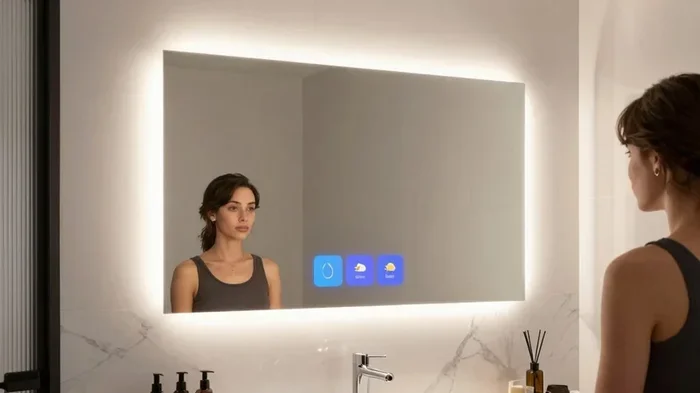
A smart mirror might look like magic, but the science behind it is quite simple. At its core, a smart mirror has two main parts. The first is a two-way mirror, also called a semi-transparent mirror. This special glass lets light pass through in one direction while reflecting light from the other side. The second part is a digital display placed behind the glass. This display shows information that appears to float inside the mirror.
The Display Technology
Most smart mirrors use LCD or LED displays behind the glass. These displays are very thin and lightweight. They shine light through the two-way mirror so you can see the information clearly. The display stays hidden when it is turned off, which is why the mirror still looks like a normal mirror when not in use.
Some higher-end models use OLED technology. OLED stands for Organic Light Emitting Diode. These displays are even thinner and produce richer colors. They also use less power than traditional LCD screens. The type of display your mirror uses directly affects how much electricity it needs.
The Sensors and Smart Features
Modern smart mirrors come loaded with sensors. These include touch sensors, motion detectors, and sometimes even cameras. Touch sensors let you swipe or tap the mirror surface to change settings. Motion detectors turn the display on when you walk up to the mirror.
Many smart mirrors also include built-in speakers and microphones. This lets you use voice commands to check the weather, set timers, or control other smart home devices. All of these features need a constant power supply. Without electricity, none of the smart functions work. The mirror simply becomes a regular reflective surface.
Do Smart Mirrors Need Electricity Every Day?
The answer is a clear yes. Smart mirrors need electricity daily to power all their features. Unlike a regular mirror that works with zero power, a smart mirror relies on a continuous electrical connection. When you unplug it or turn off the circuit breaker, the digital features stop working immediately.
However, the amount of electricity used each day is relatively small. Most smart mirrors use between 30 and 100 watts when running. To put that in perspective, a standard light bulb uses about 60 watts. So a smart mirror uses roughly the same amount of power as one or two light bulbs. Over a month, this adds up to a small increase in your electricity bill.
Daily Power Cycle
Most smart mirrors stay plugged in 24 hours a day. Some models have a standby mode that reduces power use when the mirror is not active. In standby mode, the mirror might use only 5 to 10 watts. It still draws power to keep the internal clock running and to respond to motion sensors.
If you want to save energy, you can unplug the mirror when you are not using it. But this means you lose access to smart features like the clock, weather display, and voice assistant. For most people, keeping the mirror plugged in all the time is the most convenient option.
Types of Smart Mirrors and Their Power Needs
Not all smart mirrors are the same. Different types use different amounts of electricity. Let us look at the most common types and how much power each one needs.
Bathroom Smart Mirrors
Bathroom smart mirrors are the most popular type. They usually include LED lighting around the edges, a built-in display, and sometimes a Bluetooth speaker. These mirrors typically use 40 to 80 watts. The LED lights alone can use 10 to 30 watts depending on brightness settings.
Many bathroom smart mirrors also have anti-fog features. These heating elements use extra electricity to keep the mirror clear after a hot shower. If you use the anti-fog feature often, your mirror will use more power each day.
Dressing Room and Vanity Mirrors
Dressing room mirrors often come with color-changing LED lights and tablet-like displays. These can use 50 to 100 watts. The color-changing lights are especially power-hungry because they use RGB LEDs that mix different colors. Some high-end vanity mirrors also include built-in cameras for virtual try-ons. Cameras add to the overall power draw.
Compact and Portable Smart Mirrors
Smaller smart mirrors designed for travel or small spaces use less electricity. Some compact models run on rechargeable batteries and only need a USB cable to charge. These battery-powered mirrors typically use 10 to 25 watts. They are great if you want a smart mirror without a permanent electrical outlet nearby.
Keep in mind that battery-powered mirrors have limited feature sets. They usually skip the built-in speakers and large displays to conserve battery life. They focus on basic functions like a clock, dimmable LEDs, and a small touchscreen.
Can a Smart Mirror Work Without Electricity?
Here is an important point to understand. A smart mirror can still function as a regular mirror even when the power is off. The reflective glass works the same way whether or not the digital display is on. So if the power goes out, you can still use it to check your reflection.
But all the smart features will be unavailable. No weather updates. No music. No touch controls. No voice assistant. You basically have a regular mirror with a dead screen behind it. This is an important consideration when deciding where to place your smart mirror.
Some people install smart mirrors in places where power outlets are hard to reach. In these cases, you might need to hire an electrician to run a dedicated line. This adds to the upfront cost but ensures your mirror always has the electricity it needs to work properly.
Battery Backup Options
A few smart mirror brands now offer models with battery backup systems. These mirrors have a small internal battery that keeps the display running for 2 to 4 hours during a power outage. This is not enough to power the mirror all day. But it gives you enough time to get ready in the morning if the power goes out unexpectedly.
If you live in an area with frequent power outages, a battery backup feature can be very useful. Just keep in mind that these models cost more than standard smart mirrors. The battery adds to the manufacturing cost and the overall weight of the mirror.
Smart Home Integration and Electricity
One of the biggest benefits of a smart mirror is its ability to connect with other smart devices in your home. You can link your mirror to your smart lighting system, voice assistant, and entertainment setup. This creates a seamless experience where one device controls many others.
For example, you can ask your smart mirror to turn on the lights in your bathroom while you are getting ready. Or you can check your calendar and see if you have any meetings while brushing your teeth. These integrations make daily routines smoother and more convenient.
Entertainment Features
Many smart mirrors now include entertainment features that rival dedicated devices. You can stream music, listen to podcasts, or even watch short videos on some models. These features require a constant internet connection and extra electricity to run the display and speakers.
Some users even connect their smart mirrors to entertainment setups similar to how you might sing karaoke on a smart TV using connected apps and streaming services. The mirror becomes a hub for daily entertainment, especially in bathrooms and bedrooms where people spend time getting ready.
Connecting to other devices does increase power consumption. Each connected device adds a small load to your home network and electrical system. But the increase is usually minimal. A smart mirror connected to a smart speaker and smart lights might use an extra 5 to 15 watts compared to a standalone mirror.
Energy Efficiency and Cost of Running a Smart Mirror
One of the most common questions about smart mirrors is whether they are expensive to run. The good news is that most smart mirrors are quite energy efficient. They use far less power than many other smart home gadgets.
To give you a clear picture, let us look at a quick comparison of common smart mirror types and their estimated daily electricity costs.
| Mirror Type | Wattage | Daily Cost (approx.) | Monthly Cost (approx.) |
|---|---|---|---|
| Basic LED Smart Mirror | 30W | $0.036 | $1.08 |
| Mid-Range Bathroom Smart Mirror | 60W | $0.072 | $2.16 |
| Premium Vanity Mirror | 100W | $0.12 | $3.60 |
| Battery-Powered Compact Mirror | 15W | $0.018 | $0.54 |
These estimates are based on an average electricity rate of $0.12 per kilowatt-hour. Your actual costs may vary depending on your local energy rates and how many hours per day you use the mirror.
Tips to Reduce Smart Mirror Energy Use
You can lower your smart mirror’s electricity use with a few simple habits. First, dim the LED lights when full brightness is not needed. Most smart mirrors let you adjust brightness through a touch panel or app. Second, turn off the display when you are not actively using it. Some models auto-dim after a few minutes of inactivity.
Third, choose a mirror with an energy-saving standby mode. This ensures the mirror uses minimal power when idle. Fourth, unplug the mirror during extended trips or when you are away from home for several days. These small steps add up over time and can keep your energy costs very low.
Installing Your Smart Mirror: Power Considerations
Proper installation is key to making sure your smart mirror works safely and efficiently. Before you buy a smart mirror, check the room where you plan to install it. Make sure there is a nearby electrical outlet that can handle the mirror’s power needs.
Most smart mirrors come with a standard plug that fits any regular wall outlet. However, some larger models may require a dedicated circuit. If you are not sure about your home’s electrical setup, it is always a good idea to consult a licensed electrician before installation.
Placement also matters. Keep the mirror away from direct water spray in bathrooms. While most smart mirrors are water-resistant, prolonged exposure to moisture can damage the internal electronics. A dry wall-mounted installation works best for long-term use.
If you are replacing a regular mirror, you will need to decide whether to keep the existing outlet or install a new one. Some smart mirrors come with hardwired installation options that hide the wiring behind the wall. This gives a clean, seamless look but requires professional installation.
Final Thoughts
Smart mirrors need electricity to function daily. There is no way around this. Every smart feature, from the display to the LED lights to the voice assistant, relies on a steady power supply. But the good news is that the electricity cost is very low. Most smart mirrors use about as much power as a single light bulb.
When you weigh the convenience and features a smart mirror offers, the small energy cost is well worth it. You get a device that shows the weather, plays your favorite music, lights up your room, and makes your morning routine smoother. It is a small investment in daily comfort and modern convenience.
Before buying, think about where you will place the mirror, how you will power it, and which features matter most to you. With the right setup, your smart mirror will serve you well for years to come. Just remember to keep it plugged in, and you will enjoy all the smart features every single day.
Frequently Asked Questions
Can I use a smart mirror without plugging it in?
No, a smart mirror needs a power source to run its digital features. Without electricity, the display, lights, and sensors will not work. The mirror can still function as a regular reflective surface, but you will lose all smart capabilities.
How much electricity does a smart mirror use per month?
Most smart mirrors use between $1 and $4 worth of electricity per month, depending on the model and features. Basic LED mirrors use around 30 watts, while premium models with large displays and speakers can use up to 100 watts. The cost is very low compared to other smart home devices.
Are there battery-powered smart mirrors available?
Yes, some compact and portable smart mirrors run on rechargeable batteries. These battery-powered options usually use 10 to 25 watts and need to be charged via USB every few days. They have fewer features than plug-in models but are great for travel or spaces without nearby outlets.
Do smart mirrors use a lot of electricity compared to other devices?
No, smart mirrors are quite energy efficient. They use less power than most smart TVs, laptops, and gaming consoles. A typical smart mirror uses about as much electricity as one or two standard LED light bulbs. The daily cost is usually less than a few cents.
Can I turn off the smart features and use it as a regular mirror?
Yes, most smart mirrors let you turn off the display while keeping the mirror surface active. This stops the digital features from using electricity. However, some models still draw a small amount of standby power to keep sensors and the internal clock running.
What should I consider before buying a smart mirror?
Think about where you will install it, the availability of a power outlet, and which features matter most to you. Consider the mirror’s wattage, whether it has a standby mode, and if it fits your bathroom or dressing room setup. Checking reviews and comparing models helps you find the best option for your needs.