Do Solar Phone Chargers Really Work or Are They Fake
Do Solar Phone Chargers Really Work? Yes, they absolutely do. These devices use solar power to charge your phone from sunlight. They are not a scam or a fake product. However, their performance depends on several factors like sunlight strength, charger quality, and your device needs. This guide covers everything you need to know before buying one.
Have you ever been on a camping trip and watched your phone battery die? Or maybe you got stuck in a power outage with a dead device? That is where do solar phone chargers really work becomes more than just a question. It becomes a real problem you need to solve.
Solar phone chargers sound great in theory. You set them in the sun, and they charge your phone. No outlets needed. No batteries to buy. Just free renewable energy from the sky. But do they actually deliver? Are they a clever piece of sustainable tech or just another gadget that disappoints?
The short answer is yes, they work. But the full answer is much more interesting. There is a lot to understand about how these devices function, what to look for, and what mistakes to avoid. This guide breaks it all down in simple, honest terms. By the end, you will know exactly whether a portable solar charger is right for you.
Key Takeaways
- Solar phone chargers really work: They convert sunlight into usable electricity for your devices.
- Not all chargers are equal: Quality, panel size, and battery capacity make a big difference in performance.
- Weather and placement matter: Direct sunlight gives the best solar charging speed and results.
- They are great for outdoor use: Camping, hiking, and emergency situations are ideal use cases.
- Expect realistic charging times: Solar charging is slower than wall outlets, and that is normal.
- Avoid cheap no-name brands: They often overpromise and underdeliver on battery capacity and output.
📑 Table of Contents
- How Do Solar Phone Chargers Actually Work
- Types of Solar Phone Chargers Available
- Do Solar Phone Chargers Really Work? The Truth
- What Affects Solar Charging Speed and Efficiency
- Best Solar Phone Chargers Worth Your Money
- Common Myths About Solar Phone Chargers
- How to Get the Most Out of Your Solar Charger
- Final Verdict: Are Solar Phone Chargers Worth It?
How Do Solar Phone Chargers Actually Work
Understanding how solar phone chargers work helps you set realistic expectations. The technology is simpler than most people think. Let us break it down into easy-to-understand parts.
The Science Behind Solar Charging
Every solar charger uses something called photovoltaic cells. These are special materials that turn light into electricity. When sunlight hits these cells, it knocks electrons loose in the material. This creates a flow of electrical current. That current then flows through wires to your phone.
This process is called the solar energy conversion. It has been around for decades. You see it on rooftops, calculators, and now in phone chargers. The same basic science applies whether the panel is big or small.
What Is Inside a Solar Charger
A typical USB solar charger has a few key parts. The solar panel collects sunlight. A charge controller manages the power flow so it does not fry your phone. A battery stores energy for later use. And the USB output port connects to your device.
Some models skip the battery and charge your phone directly from sunlight. Others store energy in a built-in solar battery pack so you can charge your phone even when the sun goes down. Both designs work, but they serve different needs.
Quick Tips
- Look for a built-in battery if you want to charge your phone after sunset.
- Check the wattage rating before buying. Higher watts mean faster charging.
- Make sure the USB output matches your phone for the best charging time.
Types of Solar Phone Chargers Available
Not all solar chargers are the same. They come in different shapes, sizes, and designs. Each type works best for certain situations. Let us look at the three main kinds you will find on the market.
Foldable Solar Panels
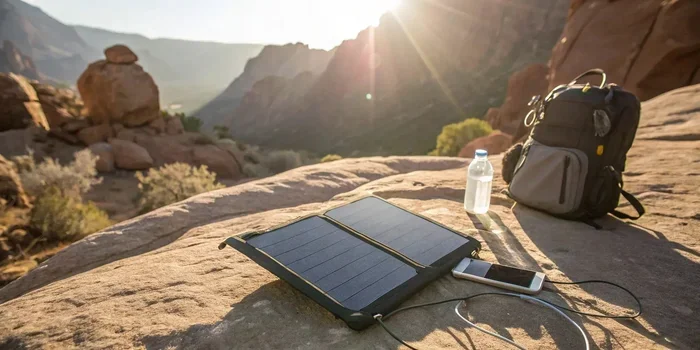
Foldable solar panels are the most popular type. They unfold like a book and lay flat on the ground or a backpack. They usually range from 10 to 30 watts of power. These are perfect for camping trips and outdoor adventures.
You connect your phone directly to the panel with a USB cable. The solar charging speed depends on the panel size and how strong the sunlight is. These panels are lightweight and easy to carry. Many hikers and campers swear by them.
Solar Battery Packs
A solar battery pack combines a power bank with a small solar panel. You charge the battery pack from the wall at home first. Then you use it on the go. Some models also let you top off the battery using sunlight.
These are great for everyday carry. They fit in your pocket or bag. The battery capacity usually ranges from 5,000 mAh to 20,000 mAh. That is enough to charge most phones two to four times over.
Solar Phone Cases
Solar phone cases are a newer option. They have a thin solar panel built into the back of your phone case. They provide a small trickle charge throughout the day. They are not meant to fully charge your phone from zero. But they can extend your battery life when you are outdoors.
These are best for people who need a little extra juice, not a full recharge. They are lightweight and convenient. Just do not expect lightning-fast solar energy conversion from these slim designs.
Do Solar Phone Chargers Really Work? The Truth
This is the question everyone wants answered. And the honest truth is that do solar phone chargers really work depends on what you expect from them. They are not magic. They are not going to charge your phone as fast as a wall outlet. But they do work, and they work well when used correctly.
What Independent Tests Show
Several tech reviewers and outdoor publications have tested solar phone chargers in real-world conditions. The results are consistent. A good quality charger with a 20-watt panel can charge a phone from 0 to 50 percent in about 3 to 4 hours of direct sunlight.
That is slower than a standard wall charger. But it is not bad at all when you are outdoors and have no other options. The key factor is consistent, direct sunlight. Cloudy days, shade, and indirect light will slow things down significantly.
When Solar Charging Works Best
Off-grid charging is where solar chargers shine the most. Think about these situations:
- Camping and hiking trips where there are no power outlets nearby.
- Emergency preparedness during power outages or natural disasters.
- Beach days and outdoor festivals where you want to keep your phone alive.
- Travel in remote areas where electricity is unreliable or unavailable.
- Backpacking and long trails where every ounce of weight matters.
In all of these scenarios, a portable solar charger is a game-changer. It gives you outdoor power without weighing you down. That is the real value of this technology.
Expert Insight
According to outdoor gear experts, the best way to get the most from your solar charger is to angle the panel directly toward the sun. Keep it clean and free of dust or shadows. Even a small shadow on part of the panel can reduce output by a surprising amount. Think of it like a garden hose, the more direct the flow, the better the result.
When Solar Charging Falls Short
It is also important to know when solar charging is not ideal. Weather dependency is the biggest challenge. On cloudy or rainy days, your charger will produce very little power. Indoor light is not strong enough to charge most solar panels at all.
Also, if you need to charge your phone quickly, a solar charger will frustrate you. It works best as a slow, steady trickle charge. Think of it more like a gentle stream than a fire hose. That is just how solar technology works right now.
What Affects Solar Charging Speed and Efficiency
Not all solar charging experiences are the same. Several factors determine how fast and how well your charger works. Understanding these factors helps you get the best results every time.
Sunlight Strength and Angle
The most important factor is how much direct sunlight your panel receives. Bright midday sun gives the best results. Early morning and late afternoon light is weaker. The angle of the panel also matters a lot. A panel pointed straight at the sun captures more energy than one lying flat on the ground.
This is why many foldable panels come with built-in kickstands or hanging hooks. They help you position the panel at the right angle. Even a small adjustment can make a noticeable difference in solar charging speed.
Panel Size and Quality
Bigger panels capture more sunlight and produce more power. A 10-watt panel will charge your phone slower than a 25-watt panel. But bigger panels are also heavier and take up more space. You have to find the right balance for your needs.
Panel quality matters too. Cheap, low-efficiency panels waste a lot of sunlight. High-quality panels convert more sunlight into usable electricity. Look for panels made by reputable manufacturers with verified efficiency ratings.
Your Phone and Battery
The device you are charging also plays a role. Newer phones with large batteries take longer to charge from any source. A phone with a 5,000 mAh battery will take more time than one with a 3,000 mAh battery. Also, some phones charge faster with certain cables and adapters.
Battery capacity is a key spec to understand. The mAh rating tells you how much energy a battery can hold. The higher the number, the more charges it can provide. Keep this in mind when comparing solar battery packs.
Common Mistakes to Avoid
- Placing your panel in partial shade. Even a small shadow can cut output dramatically.
- Using a low-quality USB cable. Cheap cables reduce charging speed and efficiency.
- Expecting fast charging. Solar is inherently slower than wall power. Accept this and you will be happier.
- Ignoring weather forecasts. Plan your charging time around sunny periods for the best results.
- Buying the cheapest option. Ultra-budget chargers often use poor-quality cells and deliver disappointing results.
Best Solar Phone Chargers Worth Your Money
Not all solar chargers are created equal. Some deliver excellent performance while others are just expensive paperweights. Here is a look at what to look for and some trusted options.
Top Picks for Camping and Travel
When choosing a portable solar charger, focus on these three things. First, check the wattage. For most phones, 10 to 20 watts is the sweet spot. Second, look for a built-in battery if you want to store energy. Third, make sure the build quality feels solid and durable.
Some well-known brands in this space include Anker, RAVPower, Goal Zero, and BioLite. These companies have established track records and positive user reviews. Their products are tested for real-world use and reliability.
Budget vs Premium Options
Budget solar chargers under $30 can work for basic needs. They are fine for short trips or emergency backup. But they usually have smaller panels and lower efficiency. You will wait longer for a full charge.
Premium chargers in the $60 to $150 range offer better performance. They have larger panels, faster output, and more durable materials. If you camp often or travel to remote areas, the extra cost is worth it.
| Feature | Budget Option | Premium Option |
|---|---|---|
| Price Range | $20 – $35 | $60 – $150 |
| Panel Wattage | 5W – 10W | 15W – 28W |
| Charging Speed | Slow | Moderate to Fast |
| Built-in Battery | Rare | Common |
| Durability | Basic | Water-resistant, rugged |
| Best For | Occasional use | Frequent outdoor use |
Common Myths About Solar Phone Chargers
There are a lot of misconceptions about solar phone chargers. Let us clear up some of the most common ones so you can make an informed decision.
Myth 1: Solar Chargers Do Not Really Work
This is the biggest myth, and it is completely false. Do solar phone chargers really work? Yes, they absolutely do. The technology is proven and widely used. Military personnel, hikers, and emergency responders rely on them every day. The confusion comes from people expecting wall-outlet speeds, which is unrealistic for any solar device.
Myth 2: They Only Work in Hot Climates
Heat actually hurts solar panel efficiency. Cool, bright sunlight works better than hot, hazy conditions. People in temperate climates get excellent results. Even on cloudy days, modern panels produce some power. They just work best in direct, bright sunlight regardless of temperature.
Myth 3: You Can Charge Your Phone Overnight
Solar panels need light to produce power. They do not generate electricity at night. Some models with built-in batteries can store energy during the day and charge your phone at night. But the panel itself does not work in the dark. This is an important distinction to understand.
Myth 4: All Solar Chargers Are the Same
This could not be further from the truth. There is a huge range in quality, efficiency, and output. A cheap $10 solar charger from an unknown brand will perform very differently from a $80 panel from a trusted manufacturer. Always research before you buy.
How to Get the Most Out of Your Solar Charger
Once you have your charger, a few simple habits will help you get the best results. These tips come from experienced outdoor enthusiasts and tech reviewers.
Positioning Tips
Place your panel in direct sunlight with no obstructions. Keep it clean and free of dirt or fingerprints. Adjust the angle throughout the day to follow the sun. A south-facing position works best in the northern hemisphere. Even small improvements in placement can boost your solar charging speed noticeably.
Charging Best Practices
Start charging early in the morning when the sun is strong. Avoid charging through glass windows, as they block useful light wavelengths. Use a high-quality USB cable that supports fast charging. And be patient, solar charging takes longer than plugging into a wall. That is just the nature of renewable energy.
Maintenance Tips
Keep your solar panel clean and dry. Store it in a protective bag when not in use. Check the USB ports for dust or debris. If your panel has a built-in battery, charge it every few months even if you are not using it. This keeps the battery healthy and extends the life of your charger.
Final Verdict: Are Solar Phone Chargers Worth It?
So, do solar phone chargers really work? The answer is a clear yes. They are not fake, not a gimmick, and not a waste of money. Solar phone chargers are a practical, reliable way to keep your devices powered when you are away from traditional outlets.
Their real value shines in outdoor and emergency situations. When you are camping in the mountains or facing a power outage, having a reliable source of off-grid charging is incredibly valuable. They give you independence from the electrical grid and access to free green energy.
Just remember to set realistic expectations. They are not going to replace your wall charger at home. But as a backup, a travel companion, or an emergency tool, they are hard to beat. Choose a quality model, use it correctly, and you will get years of reliable service from your portable solar charger.
If you spend time outdoors or want peace of mind for emergencies, a solar phone charger is one of the smartest purchases you can make. The technology works. The products are available. And the benefits are real. Give it a try, and you might just wonder how you ever traveled without one.
Frequently Asked Questions
Can a solar phone charger charge my phone on a cloudy day?
Yes, but much slower than on a sunny day. Solar phone chargers still produce some electricity from indirect light. The output drops significantly, so plan for longer charging time on overcast days.
How long does it take to charge a phone with a solar charger?
It depends on the panel wattage and sunlight strength. A 20-watt panel in direct sun can charge most phones from zero to full in 4 to 6 hours. Cloudy conditions or lower wattage will extend this time considerably.
Are solar phone chargers waterproof?
Some models are water-resistant or waterproof, but not all. Check the IP rating before buying. Even water-resistant panels should be protected from heavy rain when possible. Always read the product specifications carefully.
Can I charge multiple devices at once with a solar charger?
Yes, many portable solar chargers come with multiple USB ports. You can charge two or more devices simultaneously. Just keep in mind that splitting the power will slow down the solar charging speed for each device.
Do solar chargers work in winter or cold weather?
They do work in cold weather. In fact, cooler temperatures can improve panel efficiency slightly. The main challenge is shorter daylight hours and weaker sun angles. As long as there is direct sunlight, your charger will produce power.
Is solar phone charging better for the environment?
Yes, absolutely. Solar energy conversion produces no emissions or pollution. It is a form of renewable energy that reduces your reliance on fossil fuels. Using a solar charger is a small but meaningful step toward sustainable tech and greener living.