Did They Have Bluetooth In The 90s Here Is The Answer
Yes, Bluetooth did exist in the 90s, but it was far from the wireless revolution we know today. The technology was developed by Ericsson in 1994, and the Bluetooth SIG was formed in 1998. However, consumer devices did not hit the market until around 1999 or 2000. The 90s laid the groundwork for the wireless connectivity we rely on every single day.
Did you ever wonder whether people in the 90s had Bluetooth? It is a fair question, especially since we now take wireless connectivity for granted. Today, we pair wireless headphones, share files, and connect speakers without a single cable. But back in the 1990s, things looked very different.
The short answer is yes, Bluetooth did exist in the 90s. But the long answer is much more interesting. The technology was still in its infancy during most of that decade. It took years of development, collaboration, and testing before Bluetooth became something the average person could actually use. In this article, we will walk through the full Bluetooth history, explore what wireless technology looked like in the 90s, and explain how we got from infrared beams to the seamless wireless revolution we enjoy today.
So grab a snack, settle in, and let us travel back to the era of brick phones, floppy disks, and dial-up internet. By the end, you will have a whole new appreciation for the wireless technology that powers your daily life.
Key Takeaways
- Bluetooth was invented in the mid-90s: Ericsson started developing the technology in 1994 as a wireless alternative to cables.
- The Bluetooth SIG launched in 1998: Major tech companies joined forces to create a universal wireless standard.
- No consumer devices until 1999: The first Bluetooth-enabled phone and headset arrived right at the turn of the millennium.
- Infrared was the dominant wireless tech in the 90s: IrDA was the go-to standard before Bluetooth took over.
- Bluetooth 1.0 had major flaws: Early versions were slow, unreliable, and rarely used in real products.
- The 90s set the stage for modern wireless life: Without the groundwork laid in the 90s, today’s wireless world would not exist.
📑 Table of Contents
The Origins Of Bluetooth In The 1990s
How It All Started At Ericsson
The story of Bluetooth begins in 1994. A Dutch engineer named Jaap Haartsen was working at Swedish telecom giant Ericsson. His task was to develop a short-range radio frequency link that could replace the cables connecting mobile phones to their headsets. At the time, wired headsets were the only option. Haartsen envisioned a world where phones could communicate wirelessly over short distances.
His work laid the foundation for what would become the Bluetooth wireless protocol. But it was not just about headphones. The vision was much bigger. Haartsen and his team wanted to create a universal standard that would let all kinds of devices talk to each other without wires. This was a bold idea in the mid-90s, when most electronics still relied on physical connections.
By 1997, Ericsson had a working prototype. But the company knew it could not do it alone. They needed help from other tech giants to turn this idea into a real-world standard. That is exactly what happened next.
The Formation Of The Bluetooth SIG
In 1998, a group of major technology companies came together to form the Bluetooth Special Interest Group, or Bluetooth SIG. The founding members included Ericsson, Intel, Nokia, and Toshiba. Later that same year, IBM and Microsoft joined the effort.
The goal was simple but ambitious. Create a universal wireless standard that any device manufacturer could adopt. This meant that a phone from Nokia could connect to a headset from any brand, a computer from IBM, or a printer from Toshiba. No proprietary cables, no proprietary software. Just wireless device pairing that worked across the board.
This collaboration was a game-changer. Before Bluetooth SIG, every wireless connection was its own isolated ecosystem. If you wanted to connect a Nokia phone to a headset, you needed a Nokia-specific solution. Bluetooth changed all of that by creating a shared language for wireless devices.
The Name “Bluetooth” And Its Viking Roots
You might have wondered why the technology is called Bluetooth. The name comes from a 10th-century Danish king named Harald “Bluetooth” Gormsson. He was famous for uniting warring Scandinavian tribes into a single kingdom. The idea was that Bluetooth technology would do the same thing for wireless devices. It would unite different brands and platforms under one standard.
The Bluetooth logo is actually a combination of two runes from the Viking alphabet. These runes represent the initials of Harald Bluetooth: H and B. So every time you see the Bluetooth symbol, you are looking at a piece of Viking history.
This naming choice may seem quirky, but it was deliberate. The founders wanted a name that communicated unity and connection. And in that sense, the name has proven to be perfect.
What Wireless Technology Existed Before Bluetooth
The Rise Of Infrared Data Association (IrDA)
Before Bluetooth became a thing, the dominant wireless technology in the 90s was infrared. The Infrared Data Association, or IrDA, was a standard that allowed devices to exchange data using beams of light. You have probably seen this in action if you ever used a TV remote or a old handheld calculator that could beam data to another device.
IrDA was everywhere in the late 90s. Most laptops came with IrDA ports. Many phones had infrared capabilities too. It was the go-to method for wireless audio and data transfer between devices. But it had significant limitations.
First, infrared requires a clear line of sight between devices. You could not send data through walls, around corners, or if something was blocking the path. Second, the range was very short, usually just a few feet. And third, the data transfer speed was painfully slow by today’s standards.
Despite these drawbacks, IrDA served its purpose in the 90s. It was better than nothing, and it helped people get used to the idea of wireless data transfer. But everyone in the tech industry knew that a better solution was needed. That solution turned out to be Bluetooth.
Other Early Wireless Experiments
Bluetooth was not the only wireless technology being explored in the 90s. Several other connectivity standards were in development during this period. Radio Frequency (RF) technology was used in some wireless microphones and remote controls. But these systems were not designed for the kind of universal device-to-device communication that Bluetooth aimed to achieve.
Wi-Fi was also in its early stages during the late 90s. The IEEE 802.11 standard was being developed, and the first consumer Wi-Fi products appeared in 1999. But Wi-Fi was designed for local area networking, not for the kind of short-range, low-power device pairing that Bluetooth excelled at.
So in the 90s, the wireless landscape was fragmented. Different devices used different technologies for different purposes. Bluetooth promised to simplify all of that with one unified standard.
When Did Bluetooth Actually Launch For Consumers
The First Bluetooth Devices In 1999
The first consumer Bluetooth device appeared in 1999. IBM released the IBM ThinkPad 380ED, which featured a built-in Bluetooth module. This was a laptop, so it was not exactly a mainstream consumer product, but it proved that the technology worked.
Later that same year, Ericsson released the Ericsson T36m, which was billed as the first Bluetooth-enabled mobile phone. However, very few of these phones actually made it to market. The technology was still too new, too expensive, and too unfamiliar to most consumers.
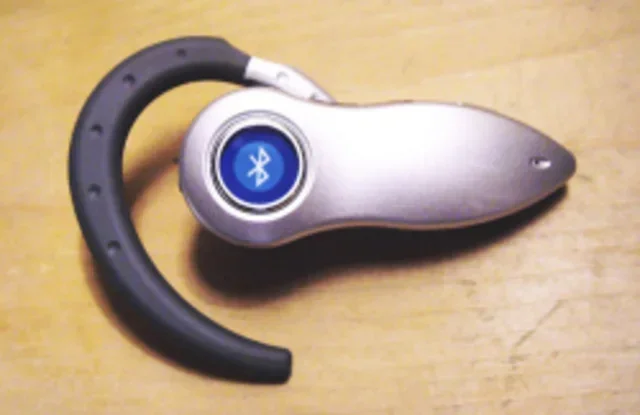
The real breakthrough came in 2000. The Ericsson HBH-30 Bluetooth headset hit the market, and it was the first widely available Bluetooth consumer product. Suddenly, people could talk on their phones without holding a wire to their ear. It was a small step, but it was a huge leap for wireless connectivity.
Bluetooth 1.0 And Its Shortcomings
The first official Bluetooth specification, Bluetooth 1.0, was released in 1999. But it was far from perfect. The standard had significant interoperability issues. Devices from different manufacturers often could not communicate with each other, even though they both supported Bluetooth.
The data transfer speed was also very slow. Bluetooth 1.0 supported a maximum throughput of about 721 kilobits per second. Compare that to modern Bluetooth 5.0, which can handle up to 2 megabits per second. The early version was also prone to dropped connections and interference from other wireless devices.
Because of these problems, very few consumer products used Bluetooth 1.0. Most manufacturers waited for the next version, Bluetooth 1.1, which was released in 2001 and addressed many of the reliability issues. The wireless standard was still finding its footing.
The Slow Adoption Through The Late 90s
Even though Bluetooth existed in the 90s, adoption was incredibly slow. Most people had never heard of it. The average consumer did not own a Bluetooth device, and there was very little marketing to raise awareness. The technology was mostly known within the tech industry and among early adopters.
One reason for the slow adoption was cost. Bluetooth chips were expensive to manufacture in the late 90s. Adding Bluetooth support to a phone or laptop increased the production cost significantly. Most manufacturers did not see the value in including it, especially when consumers were happy with wired alternatives.
Another factor was the lack of a critical mass of Bluetooth devices. Why would you buy a Bluetooth headset if you did not have a Bluetooth phone? And why would you buy a Bluetooth phone if you did not have a Bluetooth headset? It was a classic chicken-and-egg problem that took several years to resolve.
How Bluetooth Evolved From The 90s To Today
Bluetooth 2.0 And The Real-World Breakthrough
The real turning point for Bluetooth came with version 2.0, released in 2004. This version introduced Enhanced Data Rate, or EDR, which boosted the data transfer speed to up to 3 megabits per second. For the first time, Bluetooth was fast enough to handle wireless audio streaming with decent quality.
By the mid-2000s, Bluetooth was starting to appear in more consumer devices. Mobile phones from Nokia, Sony Ericsson, and Motorola began featuring built-in Bluetooth. Wireless headsets became more affordable and widely available. The wireless revolution was slowly taking shape.
In 2006, Apple introduced the first iPhone, and it had Bluetooth built in. This was a watershed moment. The iPhone brought Bluetooth to the mainstream consumer market in a way that no previous device had managed. Suddenly, millions of people had Bluetooth in their pockets, and the ecosystem of compatible accessories exploded.
Modern Bluetooth: From 3.0 To 5.0 And Beyond
The years that followed saw rapid improvements in Bluetooth technology. Bluetooth 3.0, released in 2009, introduced High Speed mode, which used Wi-Fi for data transfer while using Bluetooth for device discovery and setup. Bluetooth 4.0, released in 2010, introduced Low Energy mode, which was a game-changer for wearable devices and IoT sensors.
Bluetooth 5.0, released in 2016, doubled the speed and quadrupled the range of previous versions. It also introduced support for mesh networking, which allowed dozens of devices to connect in a single network. Today, Bluetooth 5.3 and 5.4 are the latest standards, offering faster speeds, lower power consumption, and better security.
What started as a simple idea in 1994 has grown into one of the most widely used wireless technologies in the world. Billions of Bluetooth devices are shipped every year. From wireless headphones to smartwatches, from car audio systems to smart home devices, Bluetooth is everywhere.
The Role Of Bluetooth In Today’s Wireless Ecosystem
Today, Bluetooth is so common that most people do not even think about it. You pair your wireless headphones with your phone in seconds. You connect your speaker to your laptop without a cable. You stream music from your car stereo to your phone while driving.
Many of these everyday use cases would not exist without the groundwork laid in the 90s. The Bluetooth SIG, formed in 1998, created the standards and specifications that made all of this possible. The early engineers at Ericsson solved problems that seemed insurmountable at the time. And the first consumer devices, however flawed, proved that wireless connectivity was the future.
If you are curious about how Bluetooth works today, you might enjoy reading about downloading Bluetooth drivers on your PC or turning your stereo into a Bluetooth device. These modern applications are a direct result of the technology that was born in the 90s.
Common Myths About Bluetooth In The 90s
Myth: Bluetooth Was Everywhere In The 90s
This is probably the biggest misconception. Many people assume that Bluetooth was a common feature throughout the 1990s. In reality, Bluetooth was barely available to consumers until the very end of the decade. The first Bluetooth phone did not hit the market until 1999, and even then, it was a rare and expensive product.
Most people in the 90s were still using wired headsets, infrared connections, and cables of all kinds. The wireless future was coming, but it was not here yet.
Myth: Bluetooth And Wi-Fi Were The Same Thing
Another common myth is that Bluetooth and Wi-Fi were interchangeable. They are not. Wi-Fi is designed for high-speed internet access over longer distances. Bluetooth is designed for low-power, short-range device-to-device connections. They serve completely different purposes, even though they are both wireless technologies.
In the 90s, these technologies developed in parallel but never overlapped. Wi-Fi was about connecting to the internet. Bluetooth was about connecting to your devices. Understanding this distinction helps explain why both technologies survived and thrived.
Myth: Bluetooth Was Invented In The 2000s
Some people believe that Bluetooth was a 2000s invention. The truth is that the core technology was developed in the mid-90s. The Bluetooth SIG was formed in 1998. The first specification was released in 1999. The 2000s were when Bluetooth became widely available to consumers, but the invention itself belongs firmly to the 90s.
Why The 90s Bluetooth Story Matters Today
The story of Bluetooth in the 90s is more than just a tech history lesson. It is a reminder of how innovation works. Great ideas do not always succeed immediately. They need time, investment, collaboration, and iteration. Bluetooth went from a concept in a Swedish engineering lab to a global wireless standard in less than two decades.
Today, we live in a world where wireless connectivity is expected, not appreciated. We expect our headphones to pair automatically. We expect our speakers to connect without fuss. We expect our cars to stream audio from our phones seamlessly.
None of this would be possible without the groundwork laid by the engineers and companies who worked on Bluetooth in the 90s. They took a risk on an unproven technology. They invested years of research and development. And they created a standard that would eventually transform how the world communicates.
So the next time you pair your wireless headphones or connect your speaker to your TV, take a moment to appreciate the journey. That little Bluetooth symbol on your screen represents decades of innovation, collaboration, and vision. It all started in the 90s.
If you are interested in more Bluetooth-related topics, check out our guide on using a Bluetooth adapter on your TV or learn about using a Bluetooth transmitter for your car. These modern applications trace their roots all the way back to the experiments of the 1990s.
Conclusion
So, did they have Bluetooth in the 90s? The answer is yes, but barely. The technology was invented in the mid-90s, the Bluetooth SIG was formed in 1998, and the first consumer devices appeared in 1999 and 2000. But for most of the decade, Bluetooth was a niche technology known only to engineers and early adopters.
The 90s were a transitional period for wireless technology. Infrared was still dominant. Wi-Fi was just emerging. And Bluetooth was a promising but unproven wireless standard. It took the full force of the 2000s for Bluetooth to become the ubiquitous technology we rely on today.
Understanding this history gives us a deeper appreciation for the wireless connectivity we enjoy every day. The 90s were the seed. The 2000s were the growth. And today, Bluetooth is the tree that provides shade for billions of devices around the world.
The next time someone asks you whether Bluetooth existed in the 90s, you can tell them the full story. It is a story of vision, collaboration, and perseverance. And it is a story that continues to unfold with every new Bluetooth innovation.
Frequently Asked Questions
When was Bluetooth first invented?
Bluetooth was first developed in 1994 by engineer Jaap Haartsen at Ericsson. The technology was initially designed as a wireless alternative to cables connecting mobile phones to headsets. However, it took several more years before the first consumer devices became available.
What was the first Bluetooth consumer device?
The first widely available Bluetooth consumer device was the Ericsson HBH-30 Bluetooth headset, released in 2000. Before that, IBM released a Bluetooth-enabled laptop in 1999, but it was not a mainstream product. These early devices proved that Bluetooth was a viable technology for everyday use.
Was Bluetooth available on phones in the 90s?
Very few phones had Bluetooth in the 90s. The Ericsson T36m, released in 1999, was marketed as the first Bluetooth phone, but it was extremely rare and expensive. Bluetooth did not become a standard feature on mobile phones until the early 2000s, when devices from Nokia, Sony Ericsson, and Motorola started including it regularly.
What wireless technology was used before Bluetooth?
Before Bluetooth, the most common wireless technology was infrared, specifically the IrDA standard. Infrared allowed devices to exchange data using beams of light, but it required a clear line of sight and had very short range. Other wireless technologies like radio frequency were used in specific applications, but none offered the universal connectivity that Bluetooth aimed to provide.
How is Bluetooth different from Wi-Fi?
Bluetooth and Wi-Fi serve different purposes. Bluetooth is designed for short-range, low-power device-to-device connections, such as pairing headphones with a phone. Wi-Fi is designed for high-speed internet access over longer distances. Both are wireless technologies, but they work in fundamentally different ways and are optimized for different use cases.
Did Bluetooth exist in the 90s or was it only created in the 2000s?
Bluetooth was created in the 90s, not the 2000s. The core technology was developed starting in 1994, the Bluetooth SIG was formed in 1998, and the first specification was released in 1999. However, consumer adoption did not take off until the early 2000s, which is why many people associate Bluetooth with that era instead.